@lowmegatron: Few things have such a powerfu...
@lowmegatron
60 views
Mar 14, 2025
1
Few things have such a powerful effect on health as correcting hypothyroidism.
Some people need thyroid hormone supplementation to get healthy and the type of thyroid hormone makes all the difference.
This thread explains different thyroid hormone supplements on the market. 🧵
Some people need thyroid hormone supplementation to get healthy and the type of thyroid hormone makes all the difference.
This thread explains different thyroid hormone supplements on the market. 🧵

2
History Of Thyroid Supplementation:
The first documented use of animal thyroid extract to treat hypothyroidism was in 1891 with Dr. George Murray. He had noted that myxedema, the deposition of mucopolysaccharides in the dermis, causing thickening and swelling of the skin, occurred when patients had their thyroid gland removed, and that successful thyroid gland transplantation in animals prevented these symptoms.
He suspected, correctly, that hypothyroidism was the common cause of myxedema. Murray developed a method of treating myxedema by injecting a preparation of sheep thyroid gland into humans.
Results in his case study of Mrs. S., age 46 after three months of treatment:
> Facial swelling decreased significantly
> Hand and foot swelling reduced
> Speech improved from slow and drawling to more fluent
> Mental activity and memory improved
> Physical activity increased
> Menstruation returned after a 4-year absence
> Skin became less dry, and perspiration returned
> Temperature normalized from consistently subnormal
[The photo is not Mrs S but another woman treated for myxedema with thyroid.]
By the 1930s, another thyroid preparation became commercially available—Natural Desiccated Thyroid (NDT), which is taken orally. NDT is made from livestock thyroid glands. Armour was a large producer of NDT for many decades, and the supplement is often known as Armour Thyroid.
NDT contains a protein containing both thyroid hormones (T3 and T4) in a ratio of about 4:1 T4:T3. T4 was synthesized in 1927 and became widely available in the 1950s, and T3 was also synthesized and brought to market in the 1950s.
Most people got better with NDT, but later lab-range errors and the widespread use of T4-only medication have led to less effective treatment of hypothyroidism today. Ray Peat explains the errors leading to this problem in the linked video.
The first documented use of animal thyroid extract to treat hypothyroidism was in 1891 with Dr. George Murray. He had noted that myxedema, the deposition of mucopolysaccharides in the dermis, causing thickening and swelling of the skin, occurred when patients had their thyroid gland removed, and that successful thyroid gland transplantation in animals prevented these symptoms.
He suspected, correctly, that hypothyroidism was the common cause of myxedema. Murray developed a method of treating myxedema by injecting a preparation of sheep thyroid gland into humans.
Results in his case study of Mrs. S., age 46 after three months of treatment:
> Facial swelling decreased significantly
> Hand and foot swelling reduced
> Speech improved from slow and drawling to more fluent
> Mental activity and memory improved
> Physical activity increased
> Menstruation returned after a 4-year absence
> Skin became less dry, and perspiration returned
> Temperature normalized from consistently subnormal
[The photo is not Mrs S but another woman treated for myxedema with thyroid.]
By the 1930s, another thyroid preparation became commercially available—Natural Desiccated Thyroid (NDT), which is taken orally. NDT is made from livestock thyroid glands. Armour was a large producer of NDT for many decades, and the supplement is often known as Armour Thyroid.
NDT contains a protein containing both thyroid hormones (T3 and T4) in a ratio of about 4:1 T4:T3. T4 was synthesized in 1927 and became widely available in the 1950s, and T3 was also synthesized and brought to market in the 1950s.
Most people got better with NDT, but later lab-range errors and the widespread use of T4-only medication have led to less effective treatment of hypothyroidism today. Ray Peat explains the errors leading to this problem in the linked video.
View Tweet


3
Synthetic T4-Only:
T4 is the storage form of thyroid hormone. It must be converted to T3 to have a beneficial effect. T4 is produced by the thyroid gland and converted everywhere in the body, with the liver being the main conversion point.
Some people convert T4 to active thyroid hormone (T3) very efficiently, some less so, and others not very well, if at all. Women have relatively smaller livers, which are more burdened by estrogen, which is one reason women suffer more from hypothyroidism, particularly conversion issues.
Many in the medical business believe that everyone converts T4 to T3 perfectly. This leads to a lot of unnecessary suffering and early death as patients don't get the benefit of T3.
📍The entire purpose of thyroid hormone supplementation is to get T3 to the cells (not simply to lower TSH).📍
T4 only is a great option for people who are efficient at converting it to T3. It can provide a relatively stable supply of thyroid hormone with less work in terms of tracking and dosing.
Unfortunately, many people have conversion issues and don't improve with T4 alone. T4, combined with poor conversion, can make things worse. T4 can be converted to reverse T3, which blocks T3, lowering the effect of any T3 in the body.
Natural T4 is called thyroxine. Synthetic/supplemental T4 goes by many names, LT4, Levothyroxine, Levothyroxine Sodium, L-Thyroxine.
Common brand names for T4 include:
Synthroid
Levoxyl
Unithroid
Tirosint
Eltroxin
Levothyroxine Sodium
Thyronorm
Thyrox
Euthyrox
L-Thyroxin Henning
Levo-T
Eutirox
Thyrax
T4 is the storage form of thyroid hormone. It must be converted to T3 to have a beneficial effect. T4 is produced by the thyroid gland and converted everywhere in the body, with the liver being the main conversion point.
Some people convert T4 to active thyroid hormone (T3) very efficiently, some less so, and others not very well, if at all. Women have relatively smaller livers, which are more burdened by estrogen, which is one reason women suffer more from hypothyroidism, particularly conversion issues.
Many in the medical business believe that everyone converts T4 to T3 perfectly. This leads to a lot of unnecessary suffering and early death as patients don't get the benefit of T3.
📍The entire purpose of thyroid hormone supplementation is to get T3 to the cells (not simply to lower TSH).📍
T4 only is a great option for people who are efficient at converting it to T3. It can provide a relatively stable supply of thyroid hormone with less work in terms of tracking and dosing.
Unfortunately, many people have conversion issues and don't improve with T4 alone. T4, combined with poor conversion, can make things worse. T4 can be converted to reverse T3, which blocks T3, lowering the effect of any T3 in the body.
Natural T4 is called thyroxine. Synthetic/supplemental T4 goes by many names, LT4, Levothyroxine, Levothyroxine Sodium, L-Thyroxine.
Common brand names for T4 include:
Synthroid
Levoxyl
Unithroid
Tirosint
Eltroxin
Levothyroxine Sodium
Thyronorm
Thyrox
Euthyrox
L-Thyroxin Henning
Levo-T
Eutirox
Thyrax
View Tweet

4
NDT:
Natural Desiccated Thyroid (NDT) is marketed under several brand names worldwide.
NDT contains T4 and T3 thyroid hormones, four to five times more T4 than T3.
The dose is measured in grains. One grain of Armour contains 9 mcg of T3, and 38 mcg of T4.
T4 is a storage form of thyroid that has to be converted to T3 to have a beneficial effect. NDT works well for many people because it has some T3, which helps T4 conversion, and the T4 gives it a longer-lasting effect. Some people need more T3 relative to T4 to convert T4 efficiently. Others need T3 only.
Brands of NDT include:
Armour Thyroid
NP Thyroid
Nature-Throid
Westhroid
Thyroid (Erfa)
Thyroid-S
WP Thyroid
Natural Desiccated Thyroid (NDT) is marketed under several brand names worldwide.
NDT contains T4 and T3 thyroid hormones, four to five times more T4 than T3.
The dose is measured in grains. One grain of Armour contains 9 mcg of T3, and 38 mcg of T4.
T4 is a storage form of thyroid that has to be converted to T3 to have a beneficial effect. NDT works well for many people because it has some T3, which helps T4 conversion, and the T4 gives it a longer-lasting effect. Some people need more T3 relative to T4 to convert T4 efficiently. Others need T3 only.
Brands of NDT include:
Armour Thyroid
NP Thyroid
Nature-Throid
Westhroid
Thyroid (Erfa)
Thyroid-S
WP Thyroid
View Tweet


5
Synthetic T4+T3:
People with mild to moderate conversion issues do well with synthetic T4 and synthetic T3 together. Some T3 can help energize the conversion system, and adding T4 creates a longer-lasting effect than T3 alone.
The combination is similar to NDT in that it provides both hormones - but the synthetic option allows for different ratios of T4:T3 compared to the relatively uniform ratio found in NDT, which is between 4:1 and 5:1 of T4:T3.
In recent decades, quality issues with NDT have led to many people switching to more reliable synthetic combinations.
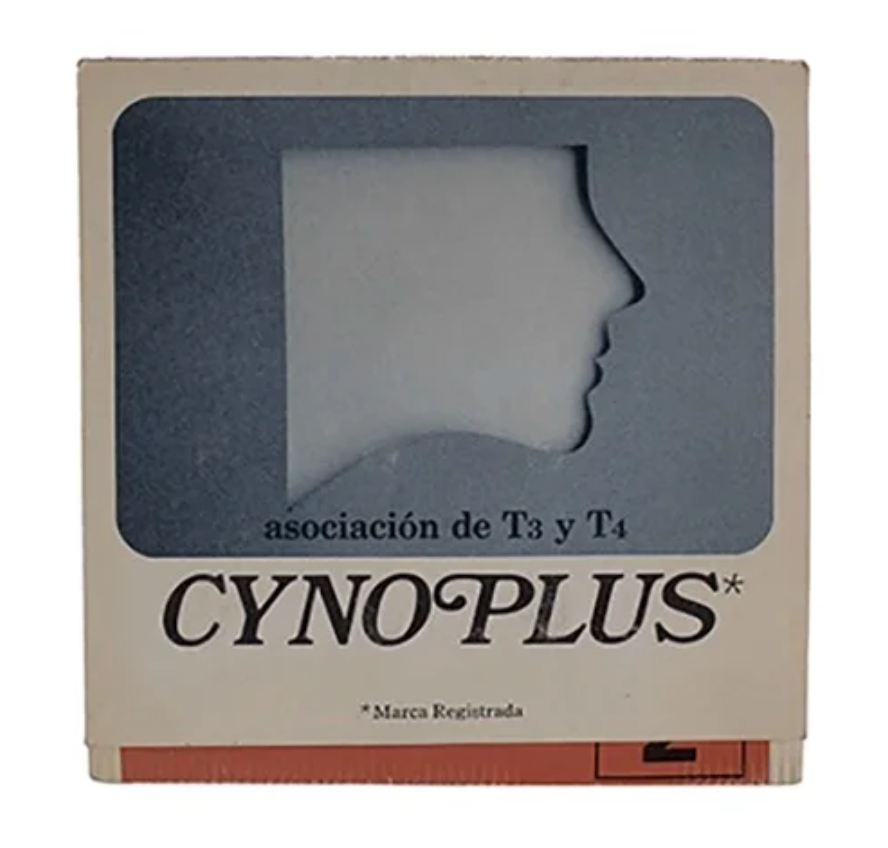
Combination T4+T3 synthetic medications exist, and there is also the option of combining separate T3 and T3 synthetic medications. Cynoplus is one well-known combination product with a 4:1 ratio of T4:T3, similar to NDT.
People with mild to moderate conversion issues do well with synthetic T4 and synthetic T3 together. Some T3 can help energize the conversion system, and adding T4 creates a longer-lasting effect than T3 alone.
The combination is similar to NDT in that it provides both hormones - but the synthetic option allows for different ratios of T4:T3 compared to the relatively uniform ratio found in NDT, which is between 4:1 and 5:1 of T4:T3.
In recent decades, quality issues with NDT have led to many people switching to more reliable synthetic combinations.
Combination T4+T3 synthetic medications exist, and there is also the option of combining separate T3 and T3 synthetic medications. Cynoplus is one well-known combination product with a 4:1 ratio of T4:T3, similar to NDT.

6
Synthetic T3-Only:
T3 is the active thyroid hormone. It is fast-acting and released by the thyroid gland in small amounts relative to T4.
In healthy people, most of the T3 cells use is made from T4 released by the thyroid and converted elsewhere.
Some people use synthetic T3 only due to poor conversion from T4 or issues with high reverse T3 (which blocks T3). The brain, in particular, suffers when conversion is poor.
The downside of T3-only is that it is fast-acting, easier to overdose on, and usually requires more frequent dosing compared to T4-only or a combination.
Natural T3 is called triiodothyronine, while the synthetic is called liothyronine.
Brand names include:
Cytomel
Tiromel
Triostat
Liothyronine Sodium (generic)
Letrox
Tertroxin
Thybon
T3 is the active thyroid hormone. It is fast-acting and released by the thyroid gland in small amounts relative to T4.
In healthy people, most of the T3 cells use is made from T4 released by the thyroid and converted elsewhere.
Some people use synthetic T3 only due to poor conversion from T4 or issues with high reverse T3 (which blocks T3). The brain, in particular, suffers when conversion is poor.
The downside of T3-only is that it is fast-acting, easier to overdose on, and usually requires more frequent dosing compared to T4-only or a combination.
Natural T3 is called triiodothyronine, while the synthetic is called liothyronine.
Brand names include:
Cytomel
Tiromel
Triostat
Liothyronine Sodium (generic)
Letrox
Tertroxin
Thybon
View Tweet

7
Thyroid-themed mystery products:
Finally, there are thyroid-themed mystery products, often labeled as "raw" and containing a mix of animal glands and whatever else is lying around. The defining characteristic of these products is that there is no stated amount of thyroid hormone in terms of T3/T4 or standardized grains of thyroid (in the case of NDT).
These are often marketed to infer that they are NDT, but you can tell the difference by the absence of stated hormones on the labels (T3, T3, grains). The absence of "USP" is another thing to look out for in the US. USP means United States Pharmacopeia. Regarding NDT specifically, it ensures that the thyroid hormone content in the NDT is consistent, accurate, and safe for use as a therapeutic product. In other words, the concentration of thyroid hormones (like T3 and T4) is regulated and consistent with the labeled dosage.
Thyroid-themed mystery products may or may not have thyroid hormones; when they do, the dose is unknown. Occasionally, people have had good results with these, at least in the short term. I would avoid them as they are usually just a waste of money and sometimes contain things that can harm your thyroid, like high doses of iodine.
If you want to learn more about the thyroid, check out my threads on the thyroid system and thyroid hormone tests!
Finally, there are thyroid-themed mystery products, often labeled as "raw" and containing a mix of animal glands and whatever else is lying around. The defining characteristic of these products is that there is no stated amount of thyroid hormone in terms of T3/T4 or standardized grains of thyroid (in the case of NDT).
These are often marketed to infer that they are NDT, but you can tell the difference by the absence of stated hormones on the labels (T3, T3, grains). The absence of "USP" is another thing to look out for in the US. USP means United States Pharmacopeia. Regarding NDT specifically, it ensures that the thyroid hormone content in the NDT is consistent, accurate, and safe for use as a therapeutic product. In other words, the concentration of thyroid hormones (like T3 and T4) is regulated and consistent with the labeled dosage.
Thyroid-themed mystery products may or may not have thyroid hormones; when they do, the dose is unknown. Occasionally, people have had good results with these, at least in the short term. I would avoid them as they are usually just a waste of money and sometimes contain things that can harm your thyroid, like high doses of iodine.
If you want to learn more about the thyroid, check out my threads on the thyroid system and thyroid hormone tests!
View Tweet

9
Correction: Letrox is T4, not T3.