@lowmegatron: A man admitted to the hospital...
@lowmegatron
52 views
Dec 17, 2024
1
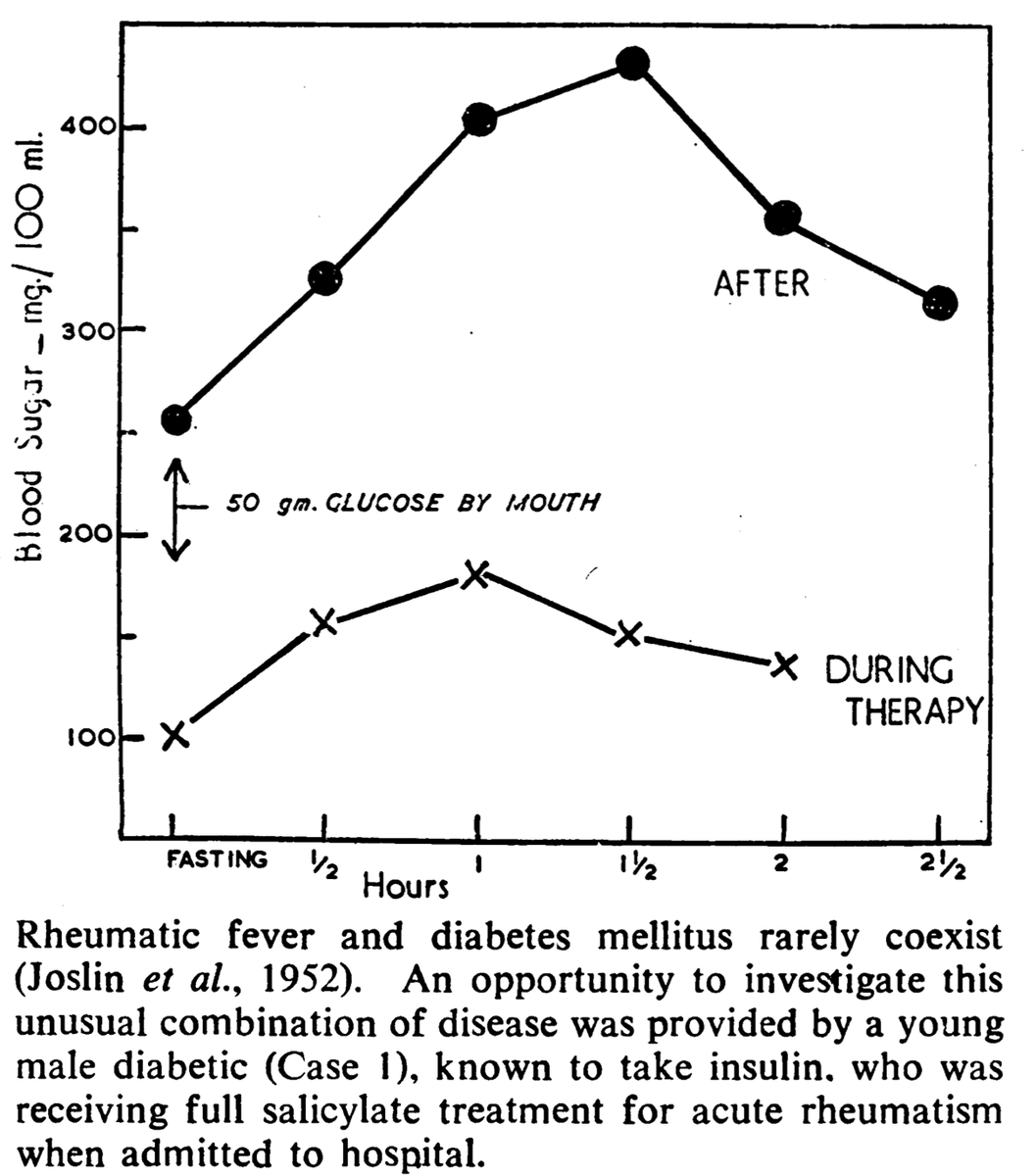
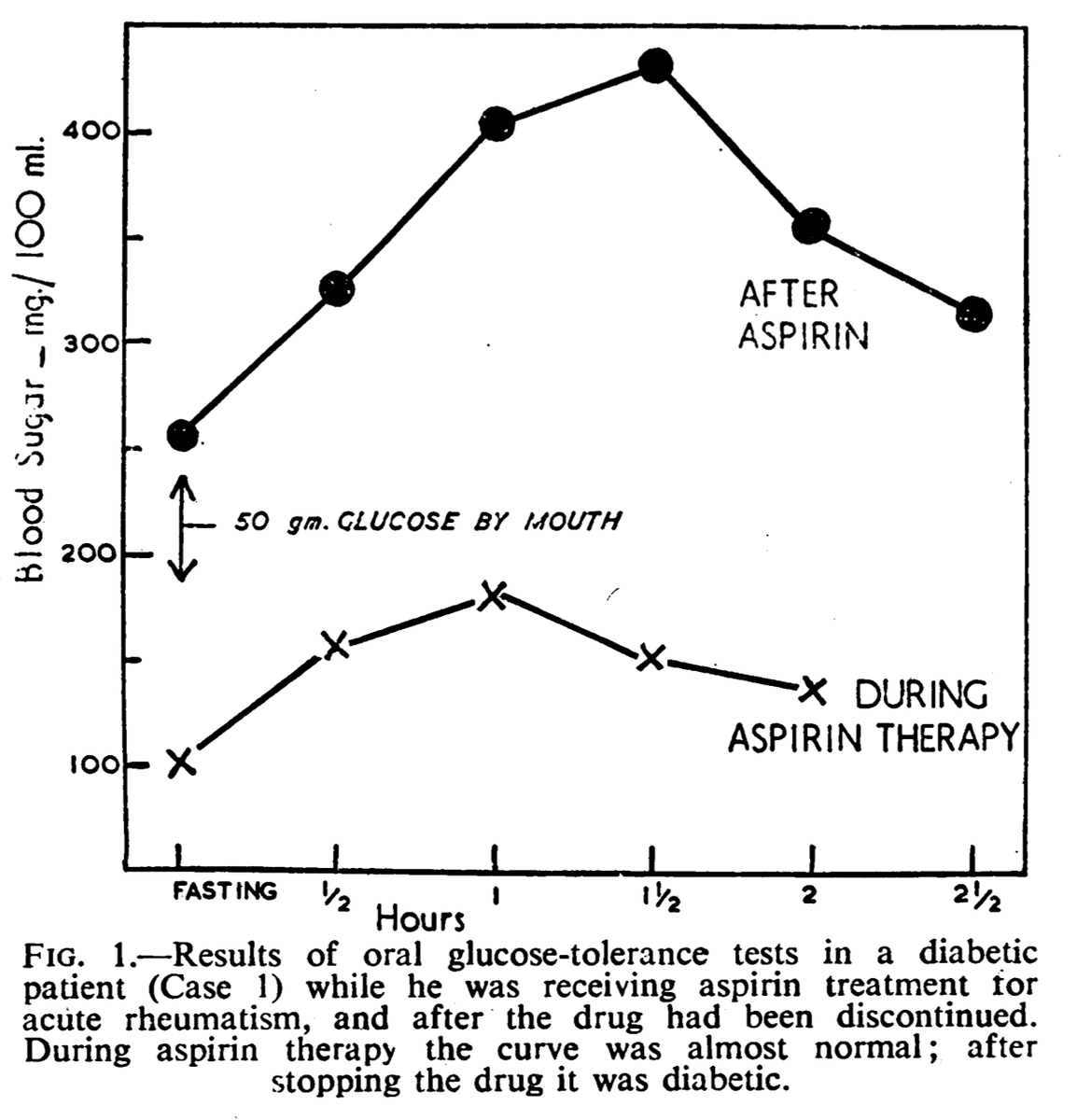
A man admitted to the hospital for rheumatic fever had complete remission from diabetes. His diabetes recurred a week after his release. 🧵
2
"The possibilities first entertained were that the previous diagnosis of diabetes was inaccurate or that spontaneous remission had occurred: neither seemed likely, and the diagnostic dilemma was resolved by the reappearance of sugar in the urine one week after discharge."
3
The only medication he was given while in hospital was aspirin and it seemed to have a profound effect on his diabetes.
4
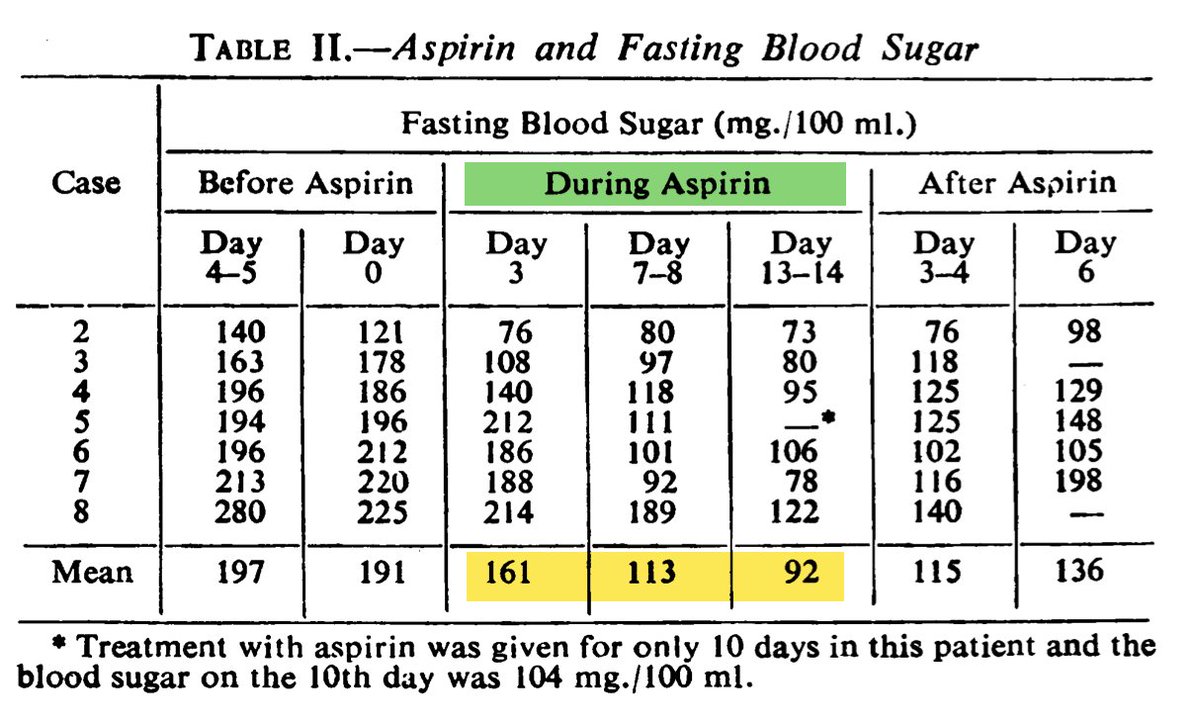
A follow-up investigated the effect of aspirin on seven diabetics.
"Doses of 1 to 1.6 g. were taken. four-hourly, omitting one dose in the middle of the night, to maintain as high a serum salicylate level as possible without inducing serious undesirable symptoms."
"Doses of 1 to 1.6 g. were taken. four-hourly, omitting one dose in the middle of the night, to maintain as high a serum salicylate level as possible without inducing serious undesirable symptoms."
5
High-dose aspirin lowered blood sugar in all patients.
6
“Without exception, aspirin reduced the fasting blood sugars and brought them to normal or near normal by the end of the course of treatment and after it was discontinued the sugar concentrations started to rise again.”
7
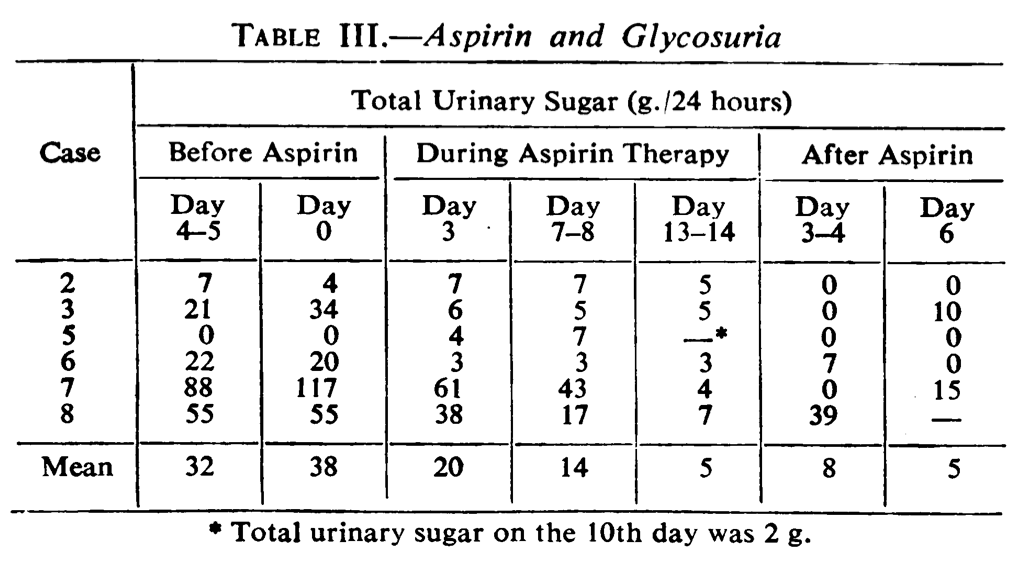
Sugar levels in urine dropped during treatment.
8
Other symptoms abated.
"...clinical symptoms of the disease, such as thirst, polyuria, and pruritus, which are intimately related to the high blood sugar and glycosuria, were completely relieved by the drug.”
"...clinical symptoms of the disease, such as thirst, polyuria, and pruritus, which are intimately related to the high blood sugar and glycosuria, were completely relieved by the drug.”
9
There were side effects of high-dose aspirin.

10
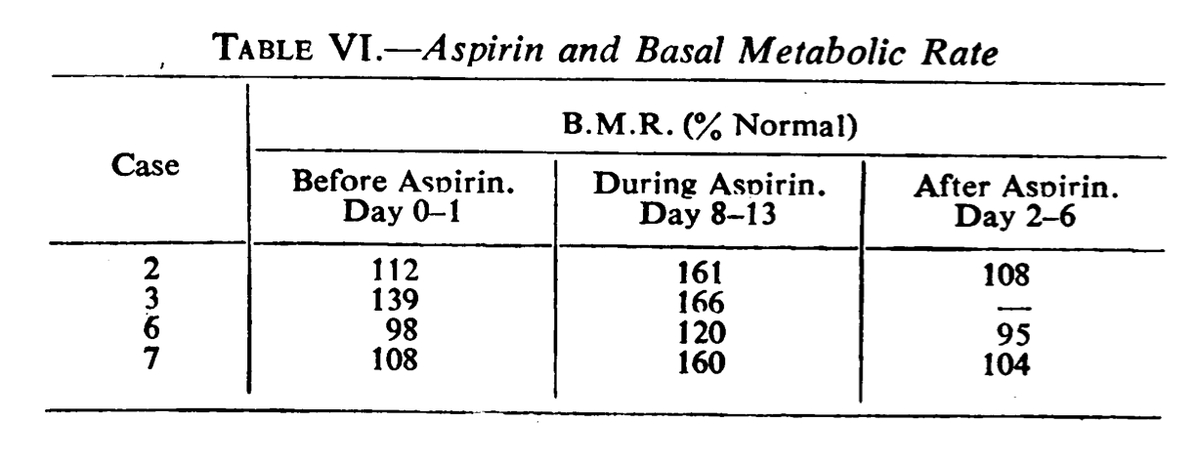
The researchers found a huge increase in basal metabolic rate during aspirin treatment.
11
Recent studies found similar improvements.
"25% reduction in fasting plasma glucose, approximately 15% reduction in total cholesterol and C-reactive protein, a approximately 50% reduction in triglycerides, and a approximately 30% reduction in insulin clearance."
"25% reduction in fasting plasma glucose, approximately 15% reduction in total cholesterol and C-reactive protein, a approximately 50% reduction in triglycerides, and a approximately 30% reduction in insulin clearance."
12
The production of sugar by the liver decreased.
"Aspirin treatment also resulted in a approximately 20% reduction in basal rates of hepatic glucose production and a approximately 20% improvement in insulin-stimulated peripheral glucose uptake..."
"Aspirin treatment also resulted in a approximately 20% reduction in basal rates of hepatic glucose production and a approximately 20% improvement in insulin-stimulated peripheral glucose uptake..."
13
The stress hormones cortisol and glucagon are the main drivers of increased sugar output from the liver.
14
When consumed, aspirin is first broken down into acetic acid and salicylate. Salicylate decreases 11β-HSD1, an enzyme that activates cortisol.
Reducing cortisol is one of the anti-diabetic effects of aspirin.
Reducing cortisol is one of the anti-diabetic effects of aspirin.

15
"Expression of 11β-HSD1 in adipose tissue is increased in vitro by proinflammatory cytokines and upregulated in obesity. 11β-HSD1 inhibition enhances insulin sensitivity."
"In men, salsalate reduced 11β-HSD1 expression in subcutaneous adipose."
"In men, salsalate reduced 11β-HSD1 expression in subcutaneous adipose."
16
Cortisol elevates free fatty acids.
"...free fatty acids induce insulin resistance in humans by initial inhibition of glucose transport/phosphorylation which is then followed by an approximately 50% reduction in both the rate of muscle glycogen synthesis and glucose oxidation.”
"...free fatty acids induce insulin resistance in humans by initial inhibition of glucose transport/phosphorylation which is then followed by an approximately 50% reduction in both the rate of muscle glycogen synthesis and glucose oxidation.”
17
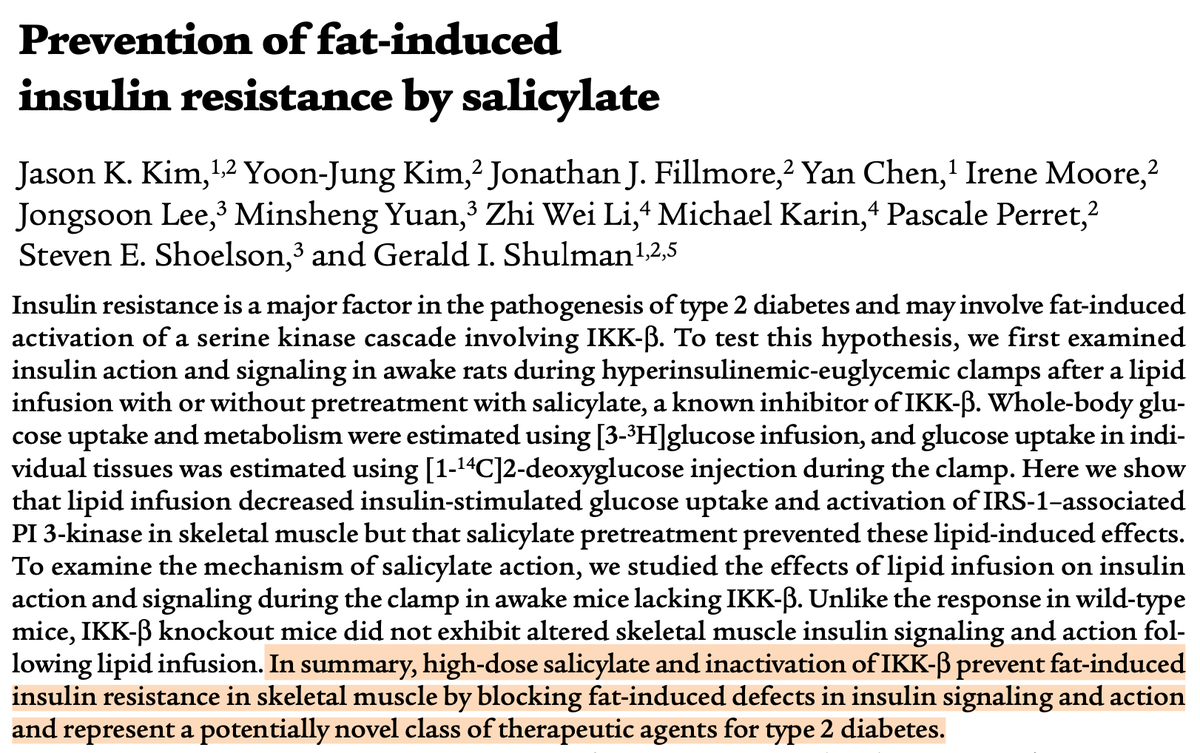
Injecting rodents with intralipid increases fats in the blood, elevating free fatty acids. Intralipid is usually mostly soybean oil, mimicking the standard diet.
18
Ray Peat had some interesting comments on this topic:
”There are articles on my website about diabetes, explaining how the unsaturated fats are an essential problem in causing diabetes and sugar is not a problem and has been used as a cure...
”There are articles on my website about diabetes, explaining how the unsaturated fats are an essential problem in causing diabetes and sugar is not a problem and has been used as a cure...

19
...So, getting the right diet and making sure the thyroid function is optimized, those are the basic things. Aspirin is well known to help to regulate blood sugar and lower inflammation problems associated with diabetes.”
20
“One of the reasons that aspirin for 100 years has been known to help lower blood sugar in that kind of diabetes is that aspirin does several things to interrupt the effects of the polyunsaturated fats."
21
“You've probably seen some of the news about a 100-year-old study. They used to use aspirin to cure diabetes, and in the last year there have been some articles commenting on that and confirming that it in fact helps you handle glucose fairly quickly to lower your blood glucose."
22
"Aspirin happens to be a very powerful antioxidant of a safe kind that prevents the excess electrons from things such as polyunsaturated fats, destroying cells such as the beta cells."
23
"So the aspirin is not only intensifying your ability to immediately use glucose, but it's also protecting against any of the residual polyunsaturated fats that are still stored in your body."
24
"And if you eat like 325 milligrams a day or -- Some people take that much with each meal to get their blood sugar down, but if you're taking that much, it's important to take vitamin K..."
25
"...since that's the only serious side effect of too much aspirin is that it can make you have a bleeding predisposition.
So if you take more than one baby aspirin a day, you need to take one milligram of vitamin K with each standard aspirin tablet of 325 milligrams.”
So if you take more than one baby aspirin a day, you need to take one milligram of vitamin K with each standard aspirin tablet of 325 milligrams.”
26
My takeaway?
Decrease PUFA intake and take steps to reduce cortisol and free fatty acids.
7g/day of aspirin does not have a great risk/reward profile, but these studies are educational.
Decrease PUFA intake and take steps to reduce cortisol and free fatty acids.
7g/day of aspirin does not have a great risk/reward profile, but these studies are educational.