@lowmegatron: How Serotonin Makes You Fat, C...
@lowmegatron
43 views
May 19, 2025
1
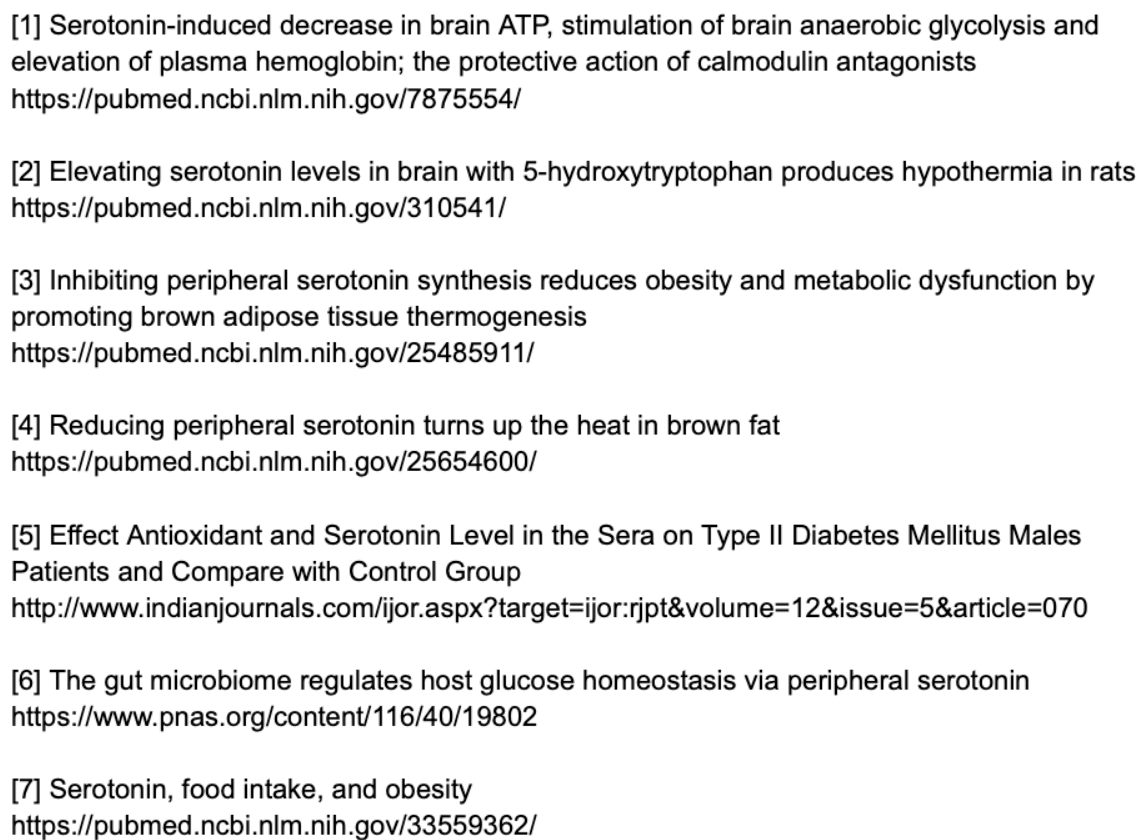
How Serotonin Makes You Fat, Cold, and Diabetic
► Serotonin decreases brain energy (ATP).
“Injection of serotonin to rats, induced a dramatic fall in brain ATP level... the activity of cytosolic phosphofructokinase, the rate-limiting enzyme of glycolysis, was significantly enhanced. Stimulation of anaerobic glycolysis was also reflected by a marked increase in lactate content in the brain.“ [1]
“Serotonin activates glycolysis, forming lactic acid. Excess lactic acid tends to decrease efficient energy production by interfering with mitochondrial respiration.“
Ray Peat
► Brain serotonin causes hypothermia, a sign of lower metabolic rate.
“The data suggest that an increase in serotonin levels in the brain decreases heat production and/or increases heat loss and leads to hypothermia in rats.” [2]
► Serotonin-deficient animals are resistant to obesity, insulin resistance, and nonalcoholic fatty liver disease,
► Serotonin reduces energy expenditure (“CO”).
“Recent findings suggest that increased peripheral serotonin and polymorphisms in TPH1 are associated with obesity; however, whether this is directly related to reduced BAT thermogenesis and obesity is not known.”
► TPH1 is an enzyme that creates serotonin in the brain.
► Genetic manipulation or the use of drugs to deplete serotonin via TPH1 induce resistance to metabolic destruction.
“We find that Tph1-deficient mice fed a high-fat diet are protected from obesity, insulin resistance and nonalcoholic fatty liver disease (NAFLD) while exhibiting greater energy expenditure by brown fat.”
“Small-molecule chemical inhibition of Tph1 in HFD-fed mice mimics the benefits ascribed to Tph1 genetic deletion, effects that depend on UCP1-mediated thermogenesis.”
► UCP1 is an enzyme that causes mitochondrial uncoupling, increasing the burn rate of “calories” by generating heat.
“As obesity increases peripheral serotonin, the inhibition of serotonin signaling or its synthesis in adipose tissue may be an effective treatment for obesity and its comorbidities.” [3]
[Tph1−/−are low serotonin mice]
► Serotonin decreases brain energy (ATP).
“Injection of serotonin to rats, induced a dramatic fall in brain ATP level... the activity of cytosolic phosphofructokinase, the rate-limiting enzyme of glycolysis, was significantly enhanced. Stimulation of anaerobic glycolysis was also reflected by a marked increase in lactate content in the brain.“ [1]
“Serotonin activates glycolysis, forming lactic acid. Excess lactic acid tends to decrease efficient energy production by interfering with mitochondrial respiration.“
Ray Peat
► Brain serotonin causes hypothermia, a sign of lower metabolic rate.
“The data suggest that an increase in serotonin levels in the brain decreases heat production and/or increases heat loss and leads to hypothermia in rats.” [2]
► Serotonin-deficient animals are resistant to obesity, insulin resistance, and nonalcoholic fatty liver disease,
► Serotonin reduces energy expenditure (“CO”).
“Recent findings suggest that increased peripheral serotonin and polymorphisms in TPH1 are associated with obesity; however, whether this is directly related to reduced BAT thermogenesis and obesity is not known.”
► TPH1 is an enzyme that creates serotonin in the brain.
► Genetic manipulation or the use of drugs to deplete serotonin via TPH1 induce resistance to metabolic destruction.
“We find that Tph1-deficient mice fed a high-fat diet are protected from obesity, insulin resistance and nonalcoholic fatty liver disease (NAFLD) while exhibiting greater energy expenditure by brown fat.”
“Small-molecule chemical inhibition of Tph1 in HFD-fed mice mimics the benefits ascribed to Tph1 genetic deletion, effects that depend on UCP1-mediated thermogenesis.”
► UCP1 is an enzyme that causes mitochondrial uncoupling, increasing the burn rate of “calories” by generating heat.
“As obesity increases peripheral serotonin, the inhibition of serotonin signaling or its synthesis in adipose tissue may be an effective treatment for obesity and its comorbidities.” [3]
[Tph1−/−are low serotonin mice]


2
“Inhibition of peripheral serotonin production protects from diet-induced obesity and related complications.”
► Serotonin inhibits thermogenesis by inhibiting the uncoupling protein UCP-1.
► Uncoupling allows for energy calorie sources to be “burned” at a higher rate, producing heat (thermogenesis).
► Peripheral serotonin is serotonin outside of the brain.
“Reducing circulating serotonin by inhibition of Tph1 or deletion of the Tph1 gene increases the sensitivity of BAT cells to noradrenaline and B-adrenergic receptor signaling.”
“This drives thermogenesis by fat and glucose oxidation via the actions of Ucp1.”
“Sustained thermogenesis recruits additional fat and glucose from peripheral tissues for oxidation by BAT cells, which reduces fat storage in WAT as well as in undesirable locations such as skeletal muscle and the liver, thereby providing protection against obesity, skeletal muscle insulin resistance and NAFLD.” [4]
► Serotonin is elevated in people with type II diabetes.
“The results also revealed a significant increase in serum levels serotonin and MDA in diabetic patients in comparing with healthy groups.” [5]
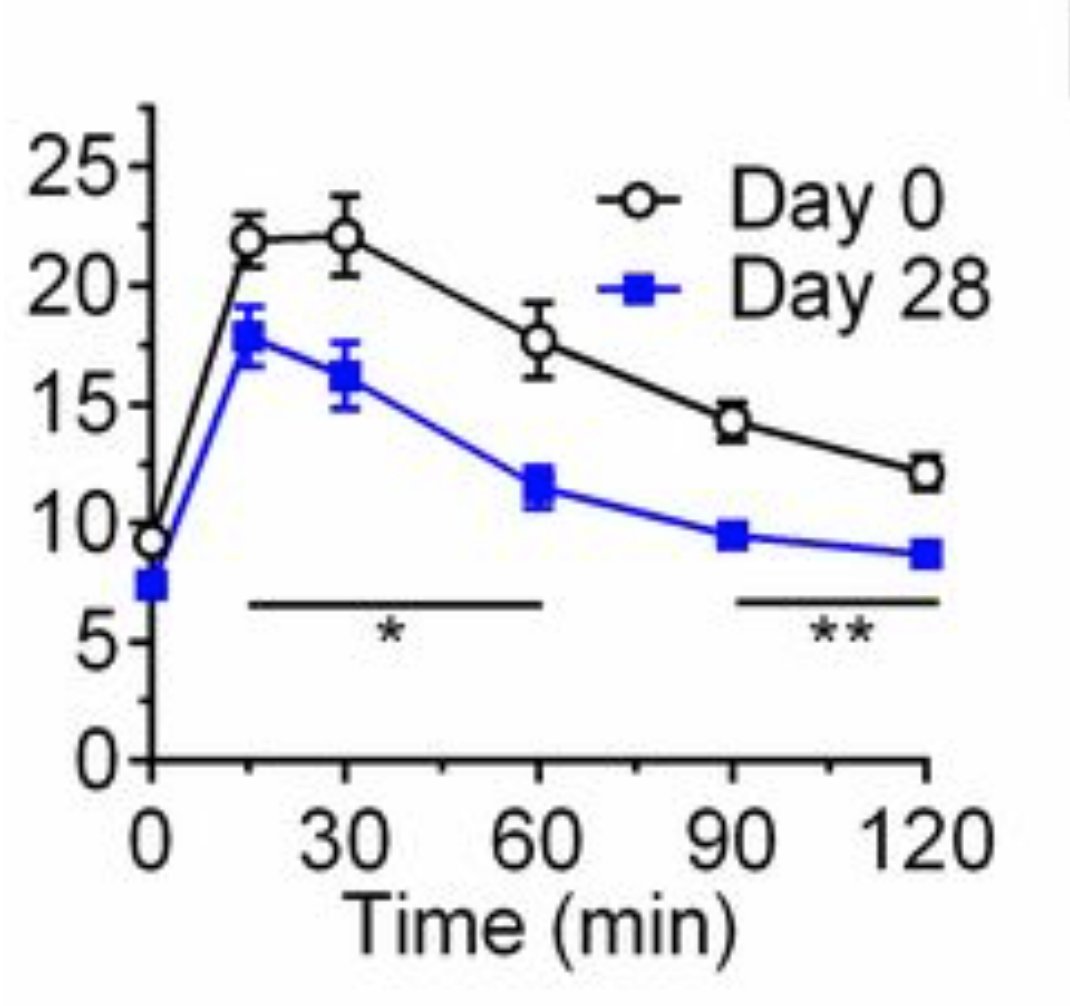
► Reducing gut serotonin improves blood sugar regulation.
“Using both pharmacological inhibition and genetic deletion of gut-derived serotonin synthesis, we find that the improvements in host glucose handling caused by antibiotic-induced changes in microbiota composition are dependent on the synthesis of peripheral serotonin.” [6]
Post-prandial blood sugar in control and antibiotic-treated, low serotonin animals (seen in blue).
► Serotonin promotes energy absorption and storage, meaning weight and fat gain.
“Peripherally acting serotonin promotes energy absorption and storage. Disturbed serotonergic signaling is associated with obesity, emphasizing the importance to understand the role of serotonergic signaling in food intake.” [7]
► GWAS studies report that serotonin-related polymorphisms are linked to obesity.
► Are 'fat genes' high serotonin genes?
“These genetic studies indicate that the identification of serotonergic system defects can be used for risk prediction and to develop individualized treatments for obesity and metabolic syndrome.” [8]
[TPH 1 and 2 create serotonin (5-HT).]
► Serotonin inhibits thermogenesis by inhibiting the uncoupling protein UCP-1.
► Uncoupling allows for energy calorie sources to be “burned” at a higher rate, producing heat (thermogenesis).
► Peripheral serotonin is serotonin outside of the brain.
“Reducing circulating serotonin by inhibition of Tph1 or deletion of the Tph1 gene increases the sensitivity of BAT cells to noradrenaline and B-adrenergic receptor signaling.”
“This drives thermogenesis by fat and glucose oxidation via the actions of Ucp1.”
“Sustained thermogenesis recruits additional fat and glucose from peripheral tissues for oxidation by BAT cells, which reduces fat storage in WAT as well as in undesirable locations such as skeletal muscle and the liver, thereby providing protection against obesity, skeletal muscle insulin resistance and NAFLD.” [4]
► Serotonin is elevated in people with type II diabetes.
“The results also revealed a significant increase in serum levels serotonin and MDA in diabetic patients in comparing with healthy groups.” [5]
► Reducing gut serotonin improves blood sugar regulation.
“Using both pharmacological inhibition and genetic deletion of gut-derived serotonin synthesis, we find that the improvements in host glucose handling caused by antibiotic-induced changes in microbiota composition are dependent on the synthesis of peripheral serotonin.” [6]
Post-prandial blood sugar in control and antibiotic-treated, low serotonin animals (seen in blue).
► Serotonin promotes energy absorption and storage, meaning weight and fat gain.
“Peripherally acting serotonin promotes energy absorption and storage. Disturbed serotonergic signaling is associated with obesity, emphasizing the importance to understand the role of serotonergic signaling in food intake.” [7]
► GWAS studies report that serotonin-related polymorphisms are linked to obesity.
► Are 'fat genes' high serotonin genes?
“These genetic studies indicate that the identification of serotonergic system defects can be used for risk prediction and to develop individualized treatments for obesity and metabolic syndrome.” [8]
[TPH 1 and 2 create serotonin (5-HT).]


3
► The overproduction of serotonin in the small intestine is a hallmark of human obesity.
► Gut-derived serotonin is a driver of blood sugar problems in humans.
► TPH1, the enzyme that creates gut serotonin, is 40% higher in obese people.
“Human obesity is characterized by an increased capacity to produce and release serotonin from the proximal small intestine, which is strongly linked to higher body mass, and glycemic control."
"Gut-derived serotonin is likely to be an important driver of pathogenesis in human obesity and dysglycemia.” [9]
► The PUFAs found in nuts, grains, seeds, and their oils, increase serotonin and suppress the metabolic rate, a tactic hibernating animals employ to lower ‘calories out’ during the hibernation period.
“In squirrels, hibernation is brought on by the accumulation of unsaturated fats in the tissues, suppressing respiration and stimulating increased serotonin production."
"In humans, winter sickness is intensified by those same antithyroid substances, so it’s important to limit consumption of unsaturated fats and tryptophan (which is the source of serotonin). When a person is using a thyroid supplement, it’s common to need four times as much in December as in July.”
Ray Peat
[TPH creates serotonin]
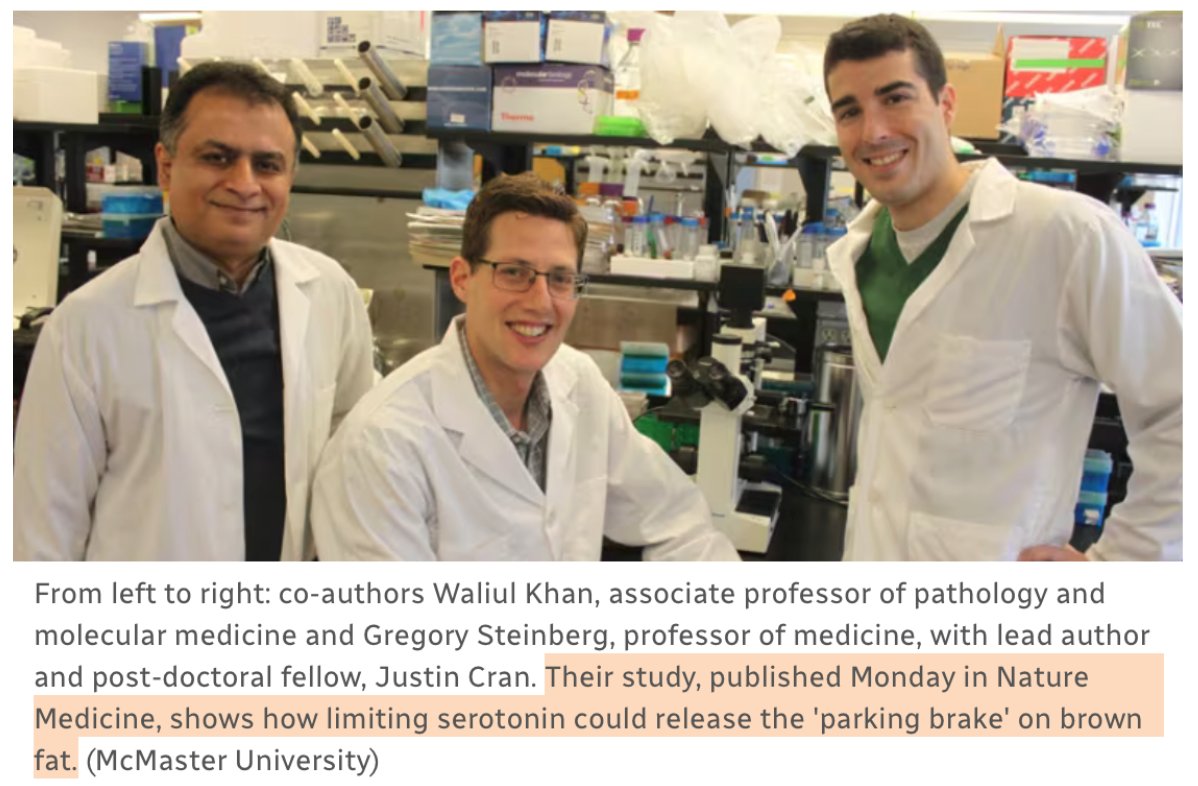
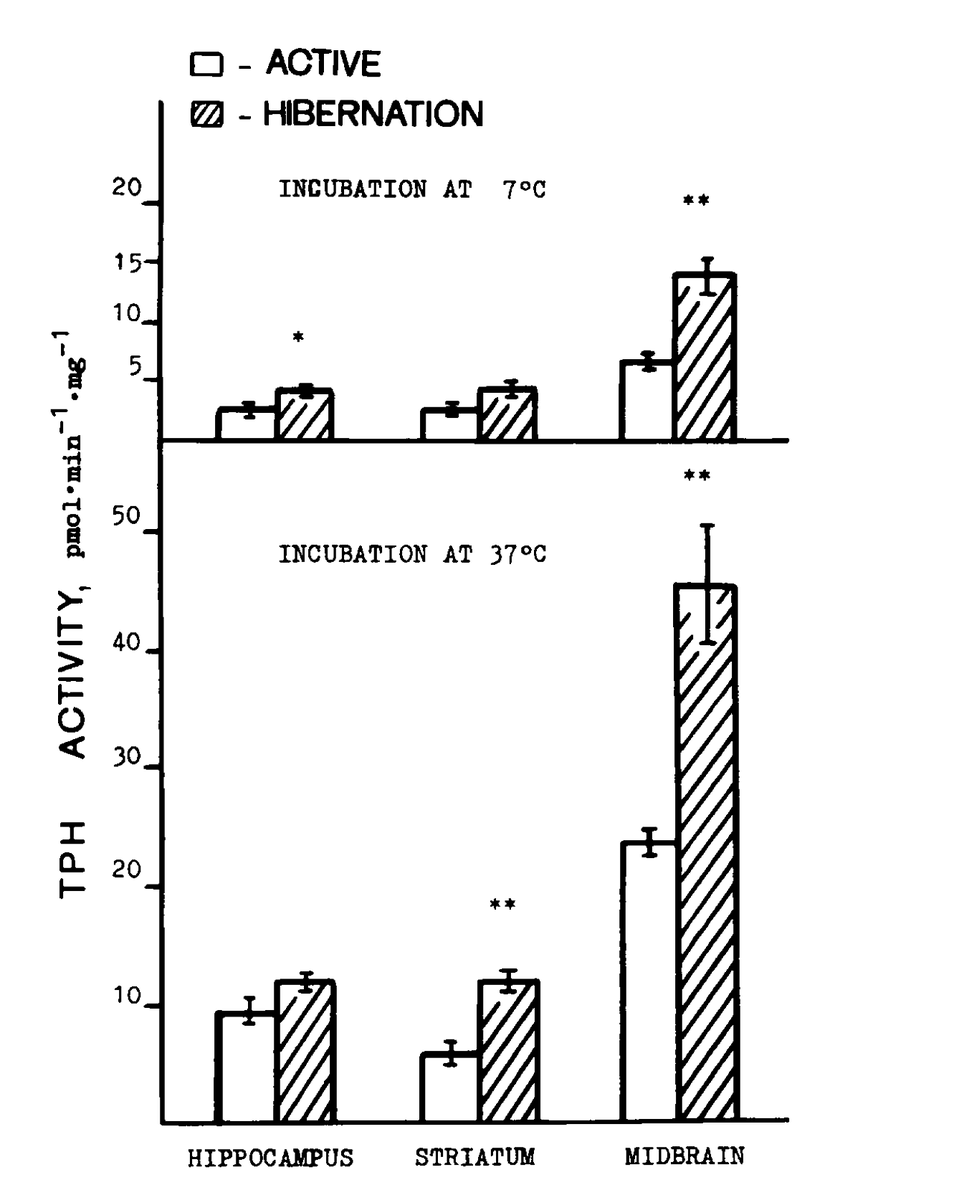
“An increase in TPH activity was found in the midbrain, hippocampus, and striatum during the prehibernation period in euthermic ground squirrels. A further increase in TPH activity was observed during the entry into hibernation. Significant elevation was found not only in potential TPH activity measured at the incubation temperature of 37 degrees C but also at incubation temperature of 7 degrees C, approximating the body temperature in hibernation.”
“Brain TPH maintains functionality during torpidity and is activated before the entry into hibernation. The results support the idea that brain serotonin is crucially involved in the transition to and the maintenance of the hibernation state.” [10]
► Gut-derived serotonin is a driver of blood sugar problems in humans.
► TPH1, the enzyme that creates gut serotonin, is 40% higher in obese people.
“Human obesity is characterized by an increased capacity to produce and release serotonin from the proximal small intestine, which is strongly linked to higher body mass, and glycemic control."
"Gut-derived serotonin is likely to be an important driver of pathogenesis in human obesity and dysglycemia.” [9]
► The PUFAs found in nuts, grains, seeds, and their oils, increase serotonin and suppress the metabolic rate, a tactic hibernating animals employ to lower ‘calories out’ during the hibernation period.
“In squirrels, hibernation is brought on by the accumulation of unsaturated fats in the tissues, suppressing respiration and stimulating increased serotonin production."
"In humans, winter sickness is intensified by those same antithyroid substances, so it’s important to limit consumption of unsaturated fats and tryptophan (which is the source of serotonin). When a person is using a thyroid supplement, it’s common to need four times as much in December as in July.”
Ray Peat
[TPH creates serotonin]
“An increase in TPH activity was found in the midbrain, hippocampus, and striatum during the prehibernation period in euthermic ground squirrels. A further increase in TPH activity was observed during the entry into hibernation. Significant elevation was found not only in potential TPH activity measured at the incubation temperature of 37 degrees C but also at incubation temperature of 7 degrees C, approximating the body temperature in hibernation.”
“Brain TPH maintains functionality during torpidity and is activated before the entry into hibernation. The results support the idea that brain serotonin is crucially involved in the transition to and the maintenance of the hibernation state.” [10]
4
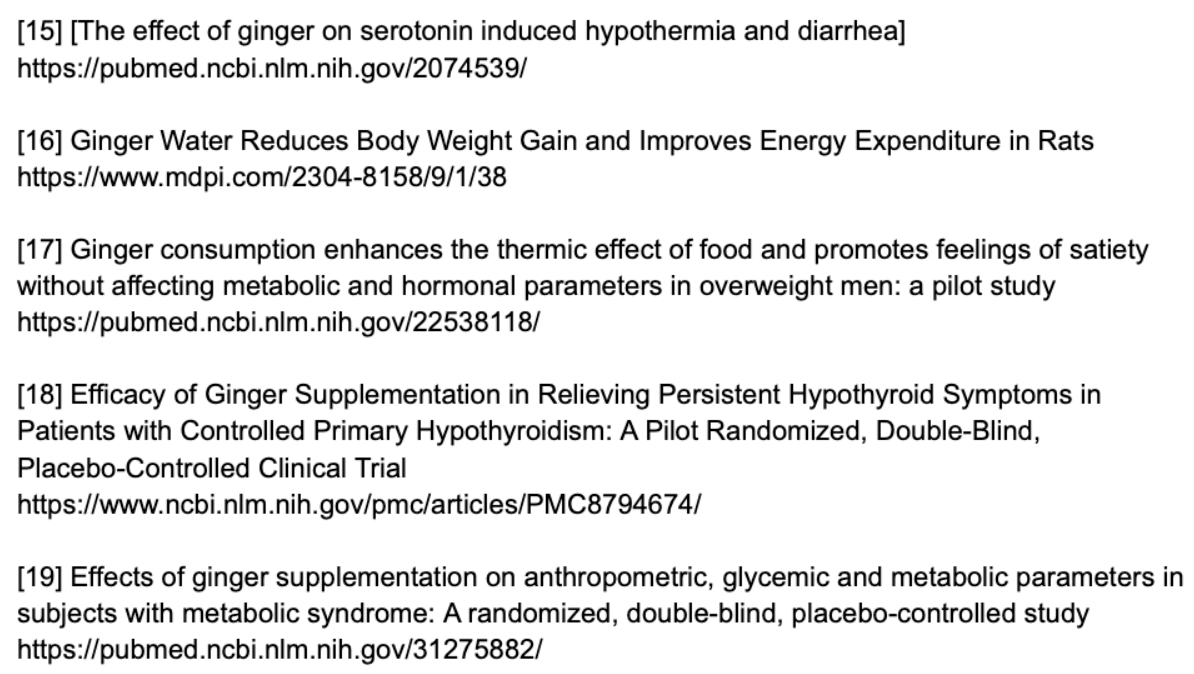
► Ginger is one example of a natral anti-serotonin substance.
► Ginger has compounds that correct serotonin-induced hypothermia.
“Our results imply that ginger and its pungent constituents exert antiemetic effects by blocking serotonin-induced emetic signal transmission in vagal afferent neurons.” [11]
“The acetone extract of ginger was found to possess an anti-serotonergic effect. The extract was further fractionated by column chromatography and results showed that [6]-, [8]- and [10]-gingerol were the active components exhibiting anti-5-HT action.” [12] [13]
“However, the serotonin levels and monoamine metabolizing enzyme activities in both chronic ethanol + ginger extract and chronic ethanol withdrawal + ginger extract group of rats was much lower as compared to the control group.” [14]
“One of the important medicinal properties of ginger is known to remove chills caused by common cold and to warm the body. In the present study, acetone extract of ginger at 100 mg/kg p.o. significantly inhibited serotonin induced hypothermia.” [15]
► Ginger minimizes weight gain and increases energy expenditure (CO).
“Average body weight gain decreased significantly in groups that received ginger water. In addition, both total cholesterol and serum triacylglycerol were reduced in the groups that received ginger water.”
“These results clearly revealed the lowering body weight gain effect of ginger water, which most likely occurs at the transcriptional level of energy metabolizing proteins.” [16]
► Ginger increases thermogenesis.
“The results, showing enhanced thermogenesis and reduced feelings of hunger with ginger consumption, suggest a potential role of ginger in weight management.” [17]
► Ginger improves symptoms of low metabolism in hypothyroidism.
[Hypothyroidism can increase serotonin.]
► Ginger reduces weight gain, cold intolerance, constipation, dry skin, appetite, fatigue, mental and memory deficits in hypothyroid patients.
“Ginger led to significant improvements in the mean scores of the weight gain, cold intolerance, constipation, dry skin, appetite, memory loss, concentration disturbance, and feeling giddy or dizzy domains.” [18]
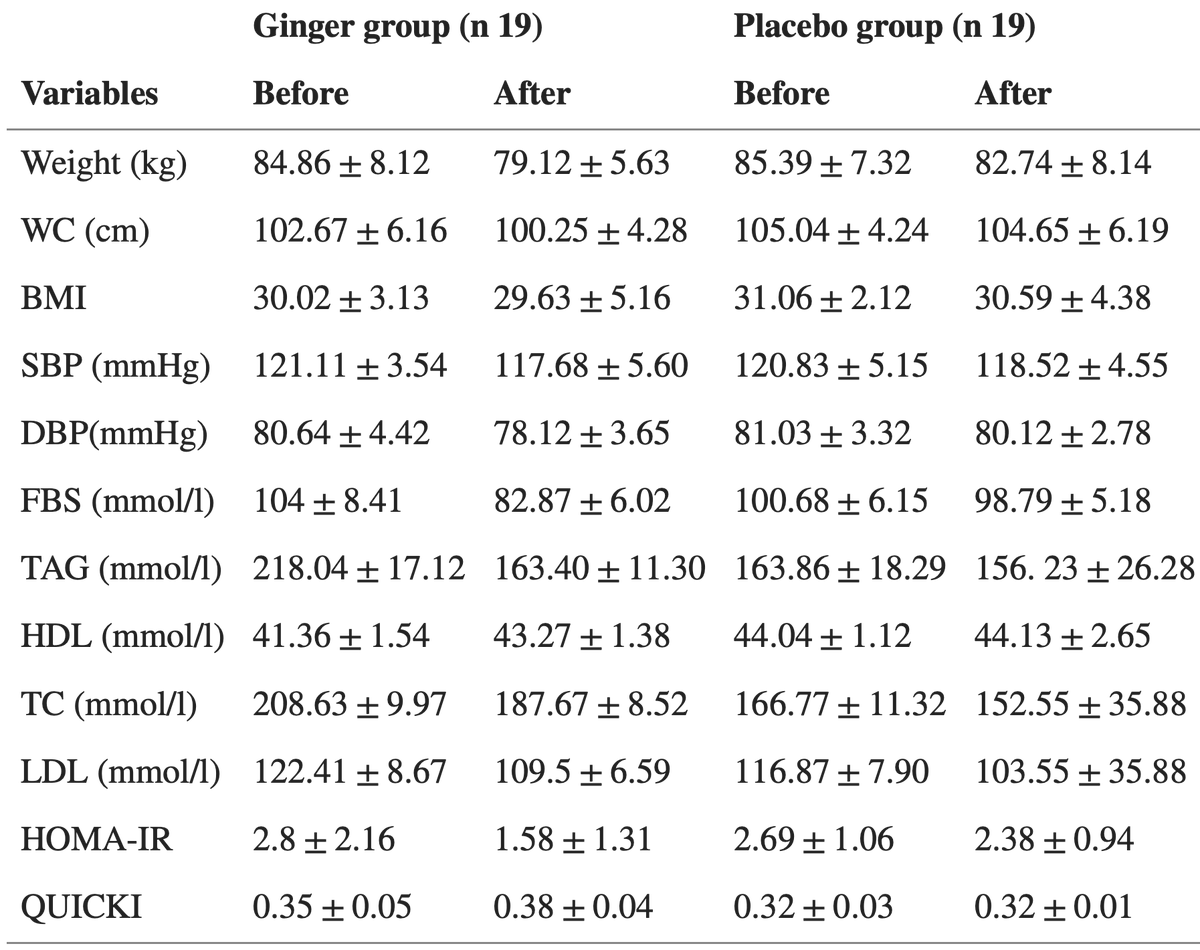
► Ginger reduces weight, waist circumference, insulin resistance, triglycerides, and fasting blood sugar in humans in 12 weeks.
“After 12 weeks of treatment, the levels of triglyceride, fasting blood sugar, and insulin resistance were significantly improved in the patients receiving ginger in compare to the placebo group.”
“Significant changes were observed in terms of weight, waist circumference, LDL, HDL, total cholesterol, systolic and diastolic blood pressure and energy intake between the groups.” [19]
► Ginger has compounds that correct serotonin-induced hypothermia.
“Our results imply that ginger and its pungent constituents exert antiemetic effects by blocking serotonin-induced emetic signal transmission in vagal afferent neurons.” [11]
“The acetone extract of ginger was found to possess an anti-serotonergic effect. The extract was further fractionated by column chromatography and results showed that [6]-, [8]- and [10]-gingerol were the active components exhibiting anti-5-HT action.” [12] [13]
“However, the serotonin levels and monoamine metabolizing enzyme activities in both chronic ethanol + ginger extract and chronic ethanol withdrawal + ginger extract group of rats was much lower as compared to the control group.” [14]
“One of the important medicinal properties of ginger is known to remove chills caused by common cold and to warm the body. In the present study, acetone extract of ginger at 100 mg/kg p.o. significantly inhibited serotonin induced hypothermia.” [15]
► Ginger minimizes weight gain and increases energy expenditure (CO).
“Average body weight gain decreased significantly in groups that received ginger water. In addition, both total cholesterol and serum triacylglycerol were reduced in the groups that received ginger water.”
“These results clearly revealed the lowering body weight gain effect of ginger water, which most likely occurs at the transcriptional level of energy metabolizing proteins.” [16]
► Ginger increases thermogenesis.
“The results, showing enhanced thermogenesis and reduced feelings of hunger with ginger consumption, suggest a potential role of ginger in weight management.” [17]
► Ginger improves symptoms of low metabolism in hypothyroidism.
[Hypothyroidism can increase serotonin.]
► Ginger reduces weight gain, cold intolerance, constipation, dry skin, appetite, fatigue, mental and memory deficits in hypothyroid patients.
“Ginger led to significant improvements in the mean scores of the weight gain, cold intolerance, constipation, dry skin, appetite, memory loss, concentration disturbance, and feeling giddy or dizzy domains.” [18]
► Ginger reduces weight, waist circumference, insulin resistance, triglycerides, and fasting blood sugar in humans in 12 weeks.
“After 12 weeks of treatment, the levels of triglyceride, fasting blood sugar, and insulin resistance were significantly improved in the patients receiving ginger in compare to the placebo group.”
“Significant changes were observed in terms of weight, waist circumference, LDL, HDL, total cholesterol, systolic and diastolic blood pressure and energy intake between the groups.” [19]


5
And finally, for now...
► Ginger decreases lipogenesis - the creation of fat cells.
“Ginger could modulate obesity through various potential mechanisms including increasing thermogenesis, increasing lipolysis, suppression of lipogenesis, inhibition of intestinal fat absorption, and controlling appetite.” [20] [21] [22]
► Ginger decreases lipogenesis - the creation of fat cells.
“Ginger could modulate obesity through various potential mechanisms including increasing thermogenesis, increasing lipolysis, suppression of lipogenesis, inhibition of intestinal fat absorption, and controlling appetite.” [20] [21] [22]

6


7
Pretty wide ranging anti-serotonin effects...
"[6]-gingerol is a bioactive compound extracted from ginger, a traditional anti-emetic herb in Chinese medicine.
Results: [6]-gingerol treatment significantly reduced the kaolin ingestion and the increase in 5-HT concentration in rats induced by cisplatin. TPH, MAO-A, SERT, and 5-HT3 receptor are important in 5-HT metabolism, and cisplatin-induced alterations in the associated protein/mRNA levels were restored when treated with [6]-gingerol.
Conclusion: This suggests that the antiemetic effect of [6]-gingerol against cisplatin-induced emesis may be due to 5-HT attenuation via modulating the TPH/MAO-A/SERT/5-HT/5-HT3 receptor system."
[[6]-Gingerol Ameliorates Cisplatin-Induced Pica by Regulating the TPH/MAO-A/SERT/5-HT/5-HT3 Receptor System in Rats]
"[6]-gingerol is a bioactive compound extracted from ginger, a traditional anti-emetic herb in Chinese medicine.
Results: [6]-gingerol treatment significantly reduced the kaolin ingestion and the increase in 5-HT concentration in rats induced by cisplatin. TPH, MAO-A, SERT, and 5-HT3 receptor are important in 5-HT metabolism, and cisplatin-induced alterations in the associated protein/mRNA levels were restored when treated with [6]-gingerol.
Conclusion: This suggests that the antiemetic effect of [6]-gingerol against cisplatin-induced emesis may be due to 5-HT attenuation via modulating the TPH/MAO-A/SERT/5-HT/5-HT3 receptor system."
[[6]-Gingerol Ameliorates Cisplatin-Induced Pica by Regulating the TPH/MAO-A/SERT/5-HT/5-HT3 Receptor System in Rats]
8
@BioavailableNd