@lowmegatron: Calcium is the most abundant m...
@lowmegatron
54 views
Dec 05, 2024
1
Calcium is the most abundant mineral in the human body, accounting for 1-2% of body weight.
Eating more calcium has massive benefits.
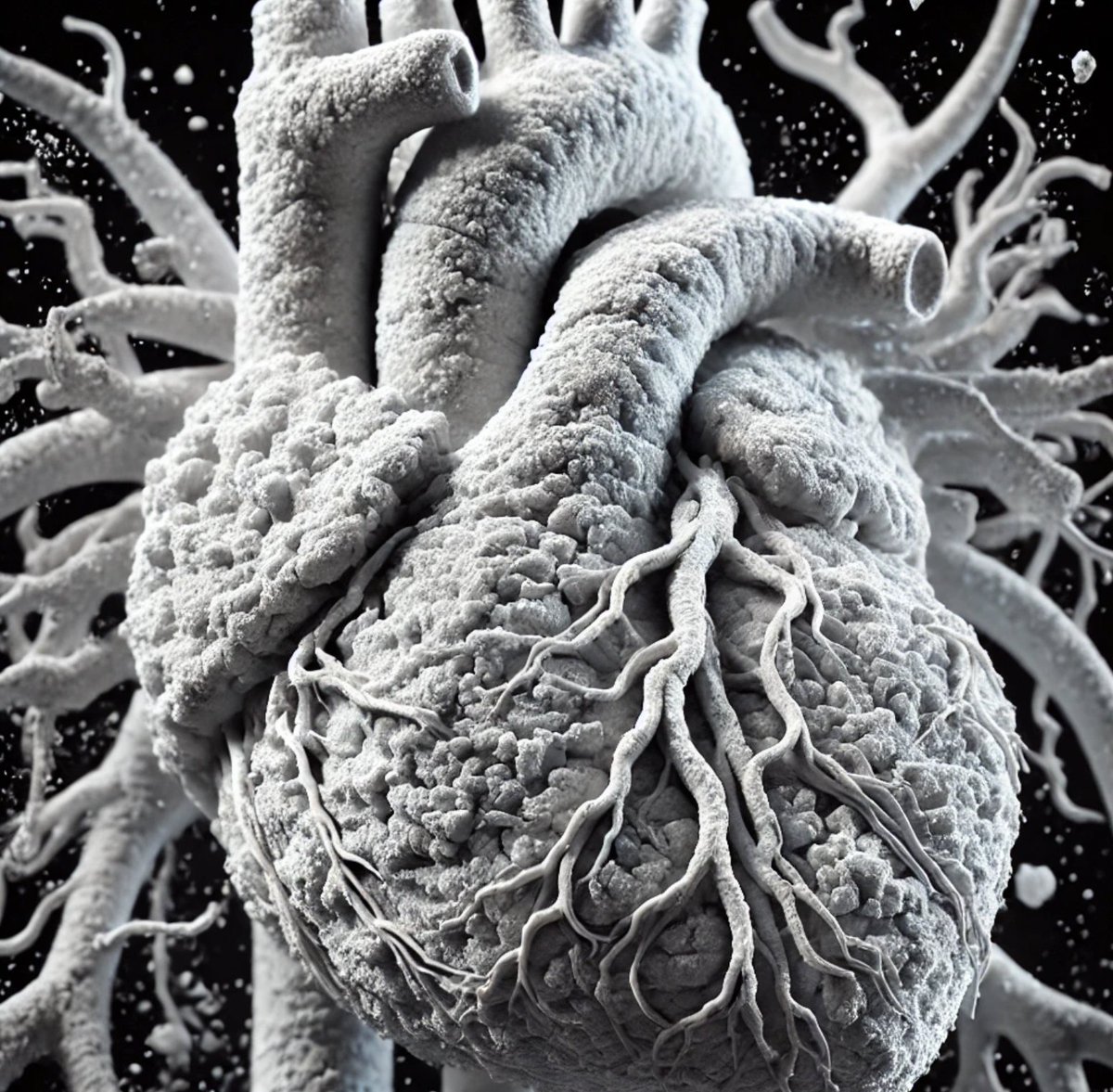
However, dysregulated calcium can clog your arteries and calcify your soft tissues.
Eating more calcium has massive benefits.
However, dysregulated calcium can clog your arteries and calcify your soft tissues.
2
Calcinosis is abnormal calcium deposition in soft tissue.
Calciphylaxis is the calcification of blood vessels.
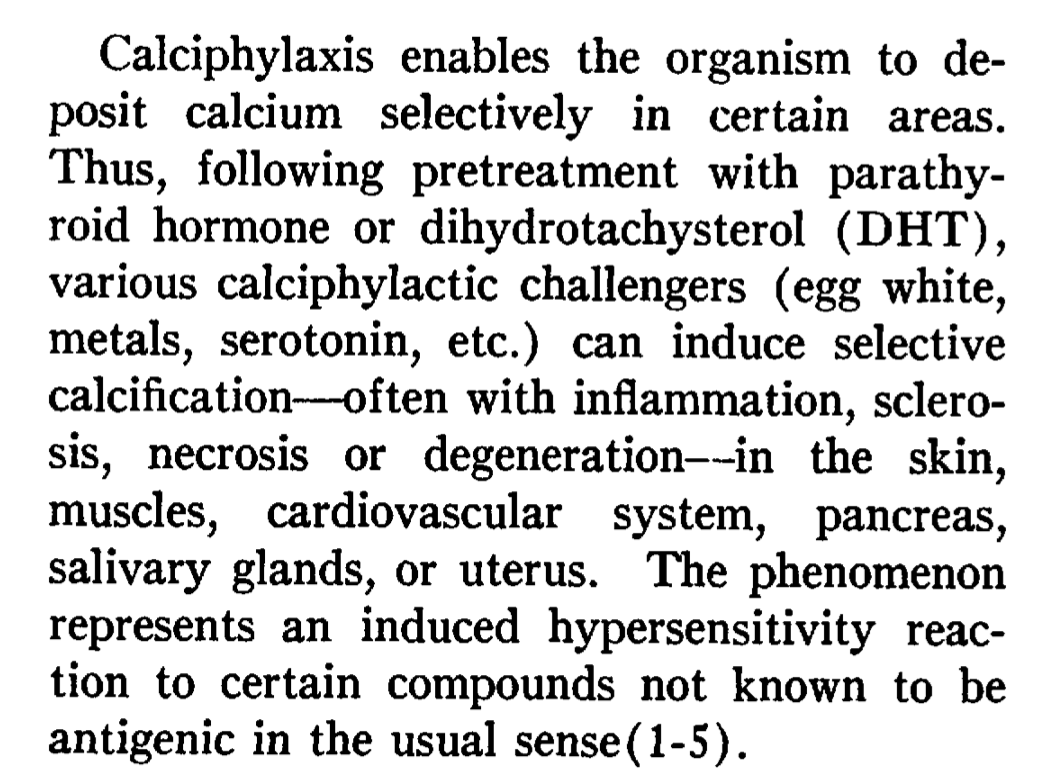
Hans Selye showed that calcinosis could be triggered by parathyroid hormone.
Adding a calciphylactic challenger like serotonin to the mix caused calciphylaxis.
Calciphylaxis is the calcification of blood vessels.
Hans Selye showed that calcinosis could be triggered by parathyroid hormone.
Adding a calciphylactic challenger like serotonin to the mix caused calciphylaxis.
3
Arterial calcification is a hallmark of atherosclerosis
The degree of calcification, quantified by a CAC score, is arguably the best predictor of cardiovascular problems.
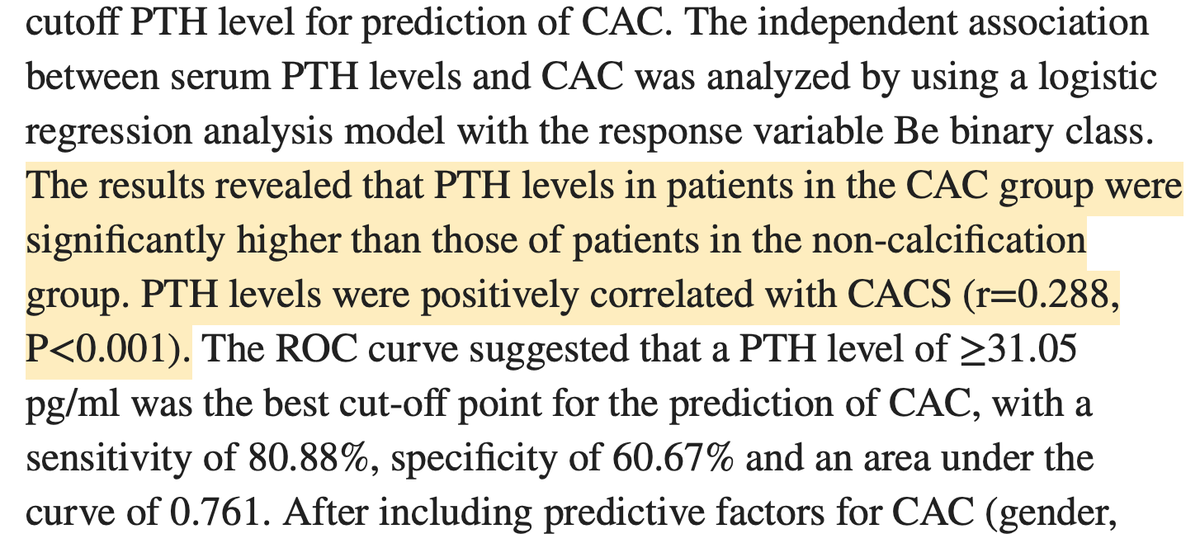
Elevated CAC score is strongly tied to parathyroid hormone (PTH) levels.
The degree of calcification, quantified by a CAC score, is arguably the best predictor of cardiovascular problems.
Elevated CAC score is strongly tied to parathyroid hormone (PTH) levels.
4
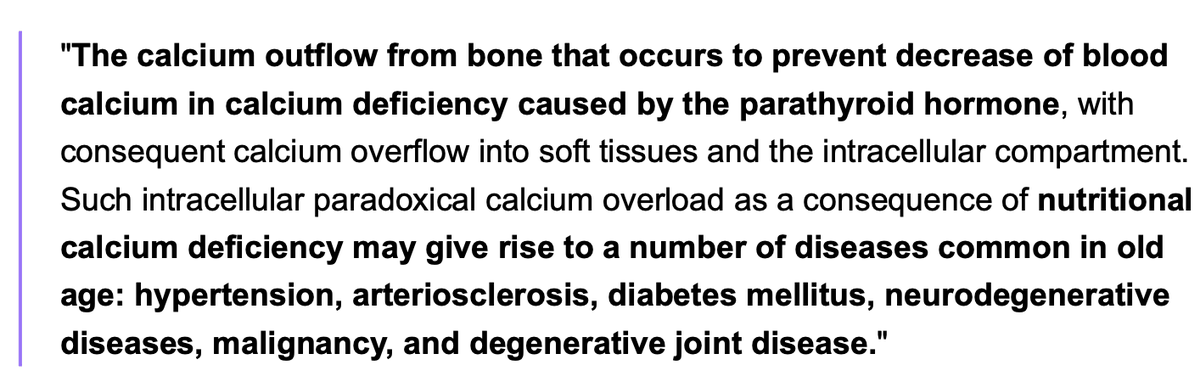
PTH pulls calcium from the bones and deposits it in soft tissues like the arteries.
PTH is elevated in people consuming inadequate calcium, leading to calcium deposition in soft tissue.
This has serious implications for many conditions associated with aging.
PTH is elevated in people consuming inadequate calcium, leading to calcium deposition in soft tissue.
This has serious implications for many conditions associated with aging.
5
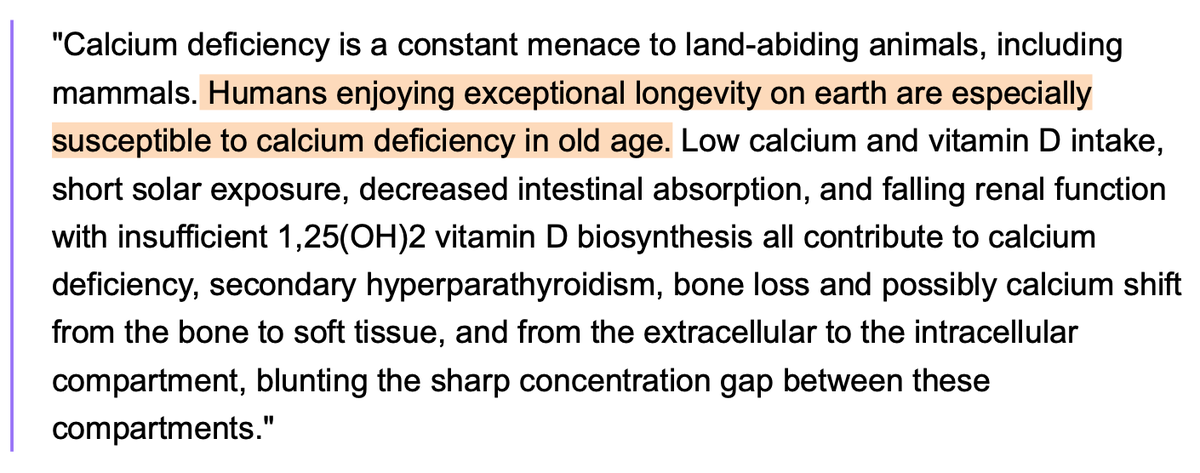
Increasing calcium consumption leads to reduced deposition of calcium in the soft tissues, an effect known as the calcium paradox.
6
Increasing calcium intake in the diet or via supplements reduces parathyroid hormone levels.

7
Phosphate is another player. Phosphate is the form in which the body absorbs and utilizes phosphorus.
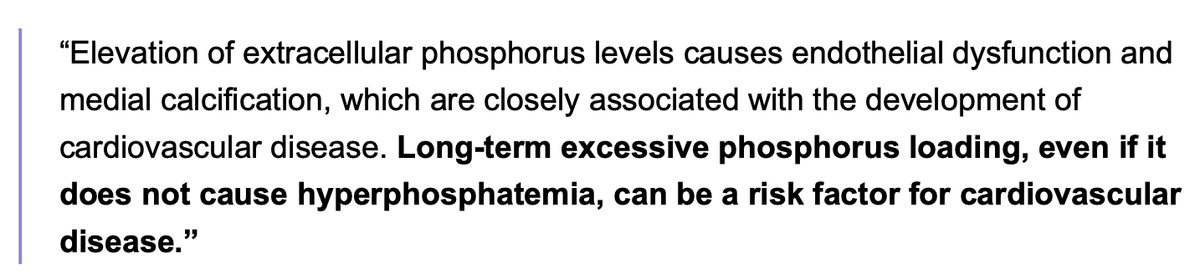
Higher dietary phosphate can increase parathyroid hormone and contribute to soft tissue calcification, endothelial dysfunction, and calcification of the artery walls (medial calcification).
Higher dietary phosphate can increase parathyroid hormone and contribute to soft tissue calcification, endothelial dysfunction, and calcification of the artery walls (medial calcification).
8
The ratio of dietary calcium to phosphate is an important factor.
MANY people consume too much phosphate compared to calcium.
This suboptimal ratio causes calcium to flow from the bones and teeth into the soft tissue.
MANY people consume too much phosphate compared to calcium.
This suboptimal ratio causes calcium to flow from the bones and teeth into the soft tissue.

9
Vitamin D is involved in the absorption of calcium
Low levels of D can elevate parathyroid hormone (hyperparathyroidism) - leading to diseases of soft tissue calcification.
Low levels of D can elevate parathyroid hormone (hyperparathyroidism) - leading to diseases of soft tissue calcification.

10
Supplementing vitamin D lowers parathyroid hormone.

11
And finally, Activator-X.
In the 1940s, Weston Price observed the effects of an unidentified dietary factor, which he called Activator-X.
Activator-X is found in foods such as eggs, cheese, butter, and organ meat. Consumption of Activator-X-rich foods was strongly tied to better dental, bone, and cardiovascular health.
Activator-X was later identified as vitamin K2 (menaquinone).
In the 1940s, Weston Price observed the effects of an unidentified dietary factor, which he called Activator-X.
Activator-X is found in foods such as eggs, cheese, butter, and organ meat. Consumption of Activator-X-rich foods was strongly tied to better dental, bone, and cardiovascular health.
Activator-X was later identified as vitamin K2 (menaquinone).

12
Vitamin K2 helps to regulate calcium by activating matrix GLA protein, preventing the buildup of calcium in the arteries and other soft tissues.
Vitamin K2 plays another crucial role by activating certain proteins through a process called carboxylation.
One of these proteins is osteocalcin, which is produced by osteoblasts (bone-forming cells).
When osteocalcin is carboxylated (by K2), it can bind calcium effectively and incorporate it into the bones.
Combining calcium and vitamin K2 reduces undercarboxylated osteocalcin (UcOC), increases osteocalcin carboxylation and increases bone mineral density.
Vitamin K2 plays another crucial role by activating certain proteins through a process called carboxylation.
One of these proteins is osteocalcin, which is produced by osteoblasts (bone-forming cells).
When osteocalcin is carboxylated (by K2), it can bind calcium effectively and incorporate it into the bones.
Combining calcium and vitamin K2 reduces undercarboxylated osteocalcin (UcOC), increases osteocalcin carboxylation and increases bone mineral density.

13
Solutions:
Maintain a high calcium intake, preferably from dairy, which has a great calcium:phosphate.
Cows milk has a ratio of 1.2:1.
Shoot for 1.5-2g of calcium per day.
Otherwise, maintain a high calcium-to-phosphate ratio - 1:1 or higher (more calcium than phosphate).
Cooked green leafy vegetables also have a high calcium-to-phosphate ratio. Boiling will extract some of the calcium into the water. For example, 36% of the calcium was extracted into cooking water when 2 oz of kale was cooked for 20 minutes in two cups of water. It's a good idea to use this calcium-rich water for broths or soups or to drink it as-is.
A table with the calcium-to-phosphate ratio (Ca:P) of some foods is available here
guinealynx.info/chart_CaP.html
Eggshell calcium or coral calcium powders are also good sources of supplemental
calcium.
Meat, fish, nuts, seeds, legumes, and many processed foods are high in phosphate and have little calcium. The exceptions are fish dishes with edible bones.
The inorganic phosphates in many processed foods are more easily absorbed than those found in whole foods - you can assume that they are twice as potent per unit of weight in this regard. Avoid.
Cheeses like Gouda, edam, and Brie are good sources of vitamin K2. Thorne and Idealabs produce high-quality vitamin K2 supplements.
Vitamin D from sunlight exposure or a D3 supplement in olive oil.
Maintain a high calcium intake, preferably from dairy, which has a great calcium:phosphate.
Cows milk has a ratio of 1.2:1.
Shoot for 1.5-2g of calcium per day.
Otherwise, maintain a high calcium-to-phosphate ratio - 1:1 or higher (more calcium than phosphate).
Cooked green leafy vegetables also have a high calcium-to-phosphate ratio. Boiling will extract some of the calcium into the water. For example, 36% of the calcium was extracted into cooking water when 2 oz of kale was cooked for 20 minutes in two cups of water. It's a good idea to use this calcium-rich water for broths or soups or to drink it as-is.
A table with the calcium-to-phosphate ratio (Ca:P) of some foods is available here
guinealynx.info/chart_CaP.html
Eggshell calcium or coral calcium powders are also good sources of supplemental
calcium.
Meat, fish, nuts, seeds, legumes, and many processed foods are high in phosphate and have little calcium. The exceptions are fish dishes with edible bones.
The inorganic phosphates in many processed foods are more easily absorbed than those found in whole foods - you can assume that they are twice as potent per unit of weight in this regard. Avoid.
Cheeses like Gouda, edam, and Brie are good sources of vitamin K2. Thorne and Idealabs produce high-quality vitamin K2 supplements.
Vitamin D from sunlight exposure or a D3 supplement in olive oil.
14