Autism was substantially improved with just a few 5 minute red light sessions, reducing behavioral symptoms by over 50% in a fascinating study.
(🧵1/8)


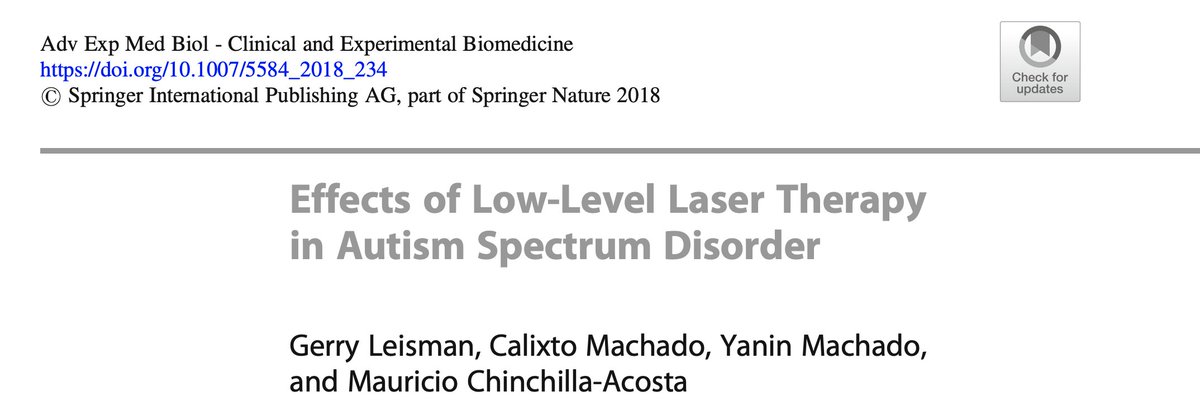
This study was published in 2018.
Children with autism were given a 635 nm (red) light therapy, administered as either a laser or LED (placebo) light.
While the lights were the same wavelength, the laser is more effective because of its superior:
◇ Spot area
◇ Coherence
◇ Power / intensity
compared to the LED.
They gave the children just twice weekly 5 min sessions at the base of the skull and temporal areas of the skull, for 4 weeks total.
The results were stunning.
Children with autism were given a 635 nm (red) light therapy, administered as either a laser or LED (placebo) light.
While the lights were the same wavelength, the laser is more effective because of its superior:
◇ Spot area
◇ Coherence
◇ Power / intensity
compared to the LED.
They gave the children just twice weekly 5 min sessions at the base of the skull and temporal areas of the skull, for 4 weeks total.
The results were stunning.
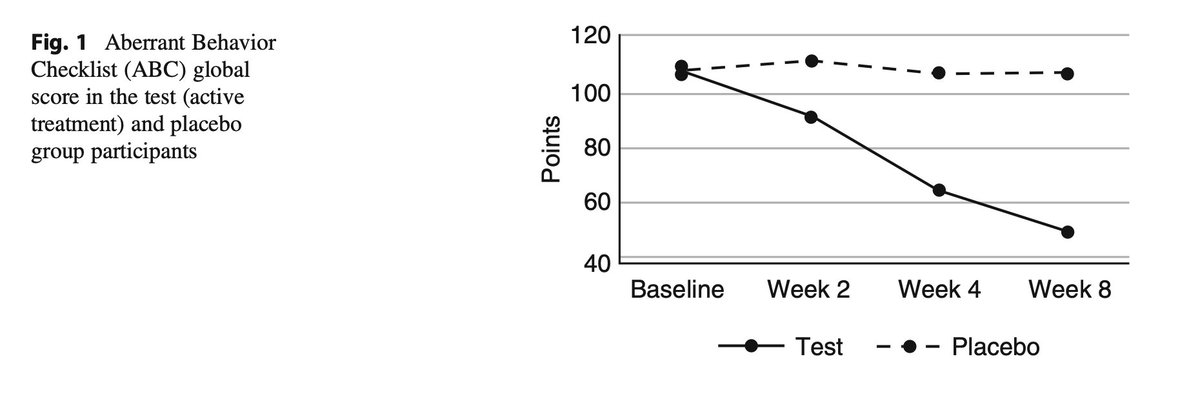
Total autism behavioral symptoms were cut by over HALF with laser therapy.
What's interesting is that scores continued to decline even after the treatment ended (4 weeks).
What's interesting is that scores continued to decline even after the treatment ended (4 weeks).
In the domains of irritability and lethargy + social withdrawal, we also see a huge reduction.
◇ Irritability cut by ~50% after 4 weeks, by ~65% 4 weeks later
◇ Lethargy + social withdrawal similar
Insane.
◇ Irritability cut by ~50% after 4 weeks, by ~65% 4 weeks later
◇ Lethargy + social withdrawal similar
Insane.

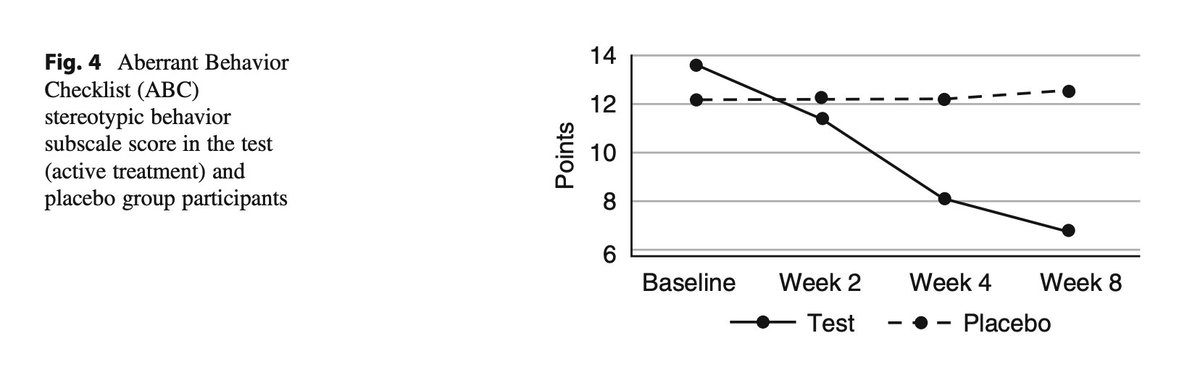
The same goes for stereotypic behavior.
Children started off with a 13.7 in this area, with the symptom dropping down to under 7 after 8 weeks.
Similar reductions were seen in hyperactivity/noncompliance + inappropriate speech symptoms.
Children started off with a 13.7 in this area, with the symptom dropping down to under 7 after 8 weeks.
Similar reductions were seen in hyperactivity/noncompliance + inappropriate speech symptoms.
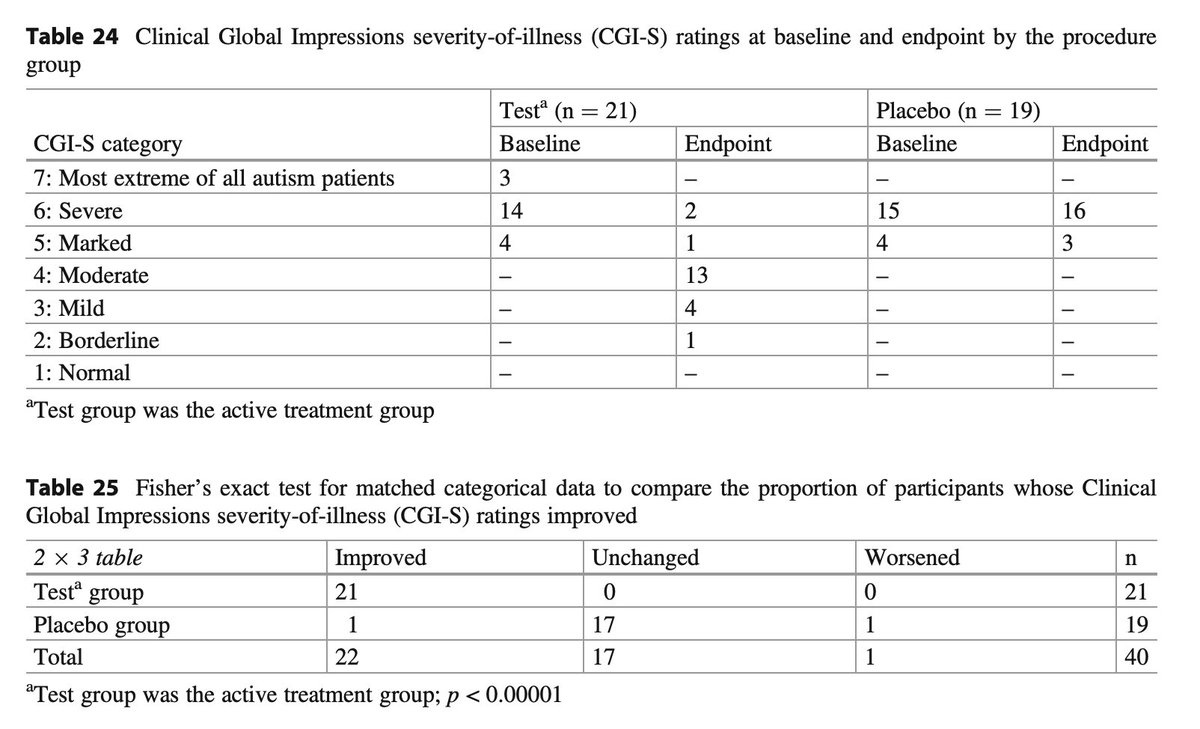
At baseline, 14 of the 21 children were rated as having severe autism, with all having more than "moderate" symptoms.
At study's end, only 2 were rated as severe, and 13 achieved moderate status.
All 21 patients reported improvement, with 17 rating the improvement as "very much improved" or "much improved.
Nobody improved in placebo.
At study's end, only 2 were rated as severe, and 13 achieved moderate status.
All 21 patients reported improvement, with 17 rating the improvement as "very much improved" or "much improved.
Nobody improved in placebo.

Why would red light have this effect?
Due to its longer wavelength than other light colors, red light has the ability to penetrate through the skull.
It's able to act on the outer layers of the brain, likely multiple areas of the cortex.
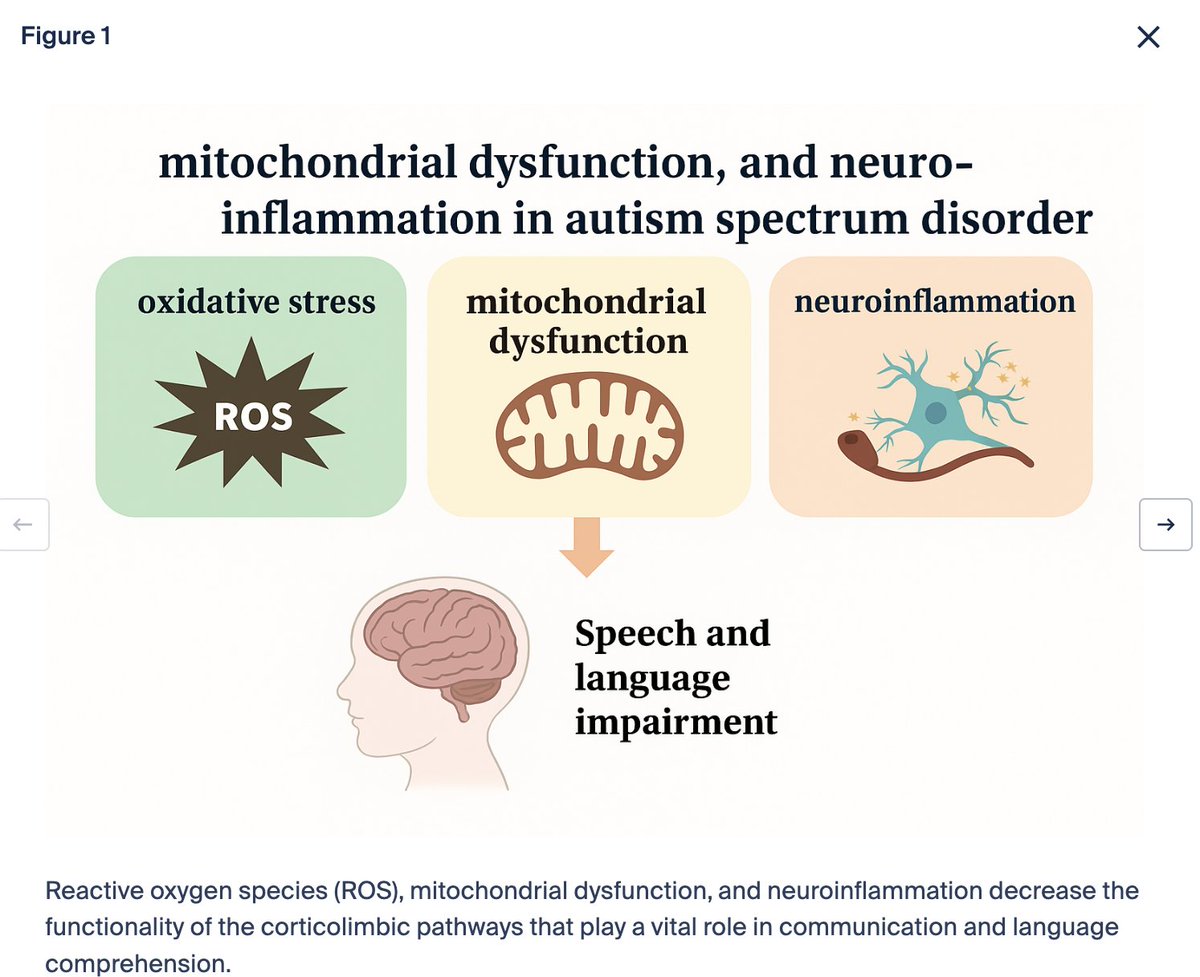
When it reaches this tissue, red light works mainly by being absorbed by a chromophore, an enzyme that is activated by light, known as cytochrome c oxidase.
This is an enzyme critical to harvesting energy in the mitochondria.
Downstream, this has critical impacts, since mitochondrial dysfunction can directly cause oxidative stress and inflammation.
These processes can:
◇ Physically damage brain cells
◇ Interrupt gene expression
◇ Alter synaptic plasticity
◇ Reduce neurotransmission
and essentially anything else you can think of.
That's why all three of these processes are hallmarks of autism.
Due to its longer wavelength than other light colors, red light has the ability to penetrate through the skull.
It's able to act on the outer layers of the brain, likely multiple areas of the cortex.
When it reaches this tissue, red light works mainly by being absorbed by a chromophore, an enzyme that is activated by light, known as cytochrome c oxidase.
This is an enzyme critical to harvesting energy in the mitochondria.
Downstream, this has critical impacts, since mitochondrial dysfunction can directly cause oxidative stress and inflammation.
These processes can:
◇ Physically damage brain cells
◇ Interrupt gene expression
◇ Alter synaptic plasticity
◇ Reduce neurotransmission
and essentially anything else you can think of.
That's why all three of these processes are hallmarks of autism.
The authors also try to make the case that red light could have an effect in modulating functional connectivity in the default mode network.
Essentially, this is a series of brain regions that act together to produce the resting brain state, like mind wandering and daydreaming.
It's been observed that this network is lower in those with autism, and is correlated with symptom severity.
Essentially, this is a series of brain regions that act together to produce the resting brain state, like mind wandering and daydreaming.
It's been observed that this network is lower in those with autism, and is correlated with symptom severity.

Red / near infrared light does show the capacity to alter functional connectivity, as I've written about here.
View Tweet
As with every study, there are a few caveats:
◇ Small sample size (21 or 22 in each group)
◇ Only study testing this
◇ High-functioning ASD only studied
◇ They only measured behavioral scales, so other symptoms were not measured.
Still, these are incredible results.
◇ Small sample size (21 or 22 in each group)
◇ Only study testing this
◇ High-functioning ASD only studied
◇ They only measured behavioral scales, so other symptoms were not measured.
Still, these are incredible results.
If you're interested in getting a research backed thorough systemic approach to your health, we’re taking clients virtually worldwide every day at PRISM.
Book a free call here for more: go.prism.miami/consultation
Book a free call here for more: go.prism.miami/consultation
If you’re interested in getting lab testing, we offer a ton of different tests you can get without even needing to go to a doctor below. revelationdiagnostics.com/?ref=AO
Generated by Thread Navigator
Press ⌘ + S to quick-export
auto_awesome
Image exported!
Pro export renders embedded tweets & media at 2x Retina resolution.
Upgrade — $5 for 30 days