High CORTISOL? Here are 7 KEY DIET PRINCIPLES to keeping it in check (🧵1/8).
#1 Minerals
Magnesium + potassium lower cortisol by ~40%. [study]
These are our two primary calming minerals, helping cells relax properly, especially those in the:
➠ Brain (hypothalamus)
➠ Pituitary
➠ Adrenals
which limits the excessive production of cortisol.


Salt is very important here, too.
An extra teaspoon of salt dramatically reduces stress.
Sufficient salt:
• Cuts adrenaline in half
• Cuts noradrenaline in half
• Lowers cortisol
• Lowers aldosterone
• Lowers angiotensin II
While typically dietary recommendations are to eat 2300 mg sodium, more than double that decreases these stress hormones.
Just make sure you get a good quality salt and plenty of other minerals as well.
An extra teaspoon of salt dramatically reduces stress.
Sufficient salt:
• Cuts adrenaline in half
• Cuts noradrenaline in half
• Lowers cortisol
• Lowers aldosterone
• Lowers angiotensin II
While typically dietary recommendations are to eat 2300 mg sodium, more than double that decreases these stress hormones.
Just make sure you get a good quality salt and plenty of other minerals as well.

#2 Carbs
A lack of glucose (carbohydrate) drives the stress response.
The brain’s hypothalamus has cells that increase CRH in response to low glucose levels, which activates:
1. HPA axis (cortisol)
2. Sympathetic nervous system (adrenaline)
Both of which stimulate the hormone glucagon as well.
These hormones stimulate our body’s creation of glucose.
This is why eating carbohydrate or sugar acutely lowers the stress cascade,
and restriction of carbs promotes it.
A lack of glucose (carbohydrate) drives the stress response.
The brain’s hypothalamus has cells that increase CRH in response to low glucose levels, which activates:
1. HPA axis (cortisol)
2. Sympathetic nervous system (adrenaline)
Both of which stimulate the hormone glucagon as well.
These hormones stimulate our body’s creation of glucose.
This is why eating carbohydrate or sugar acutely lowers the stress cascade,
and restriction of carbs promotes it.


#3 Calories
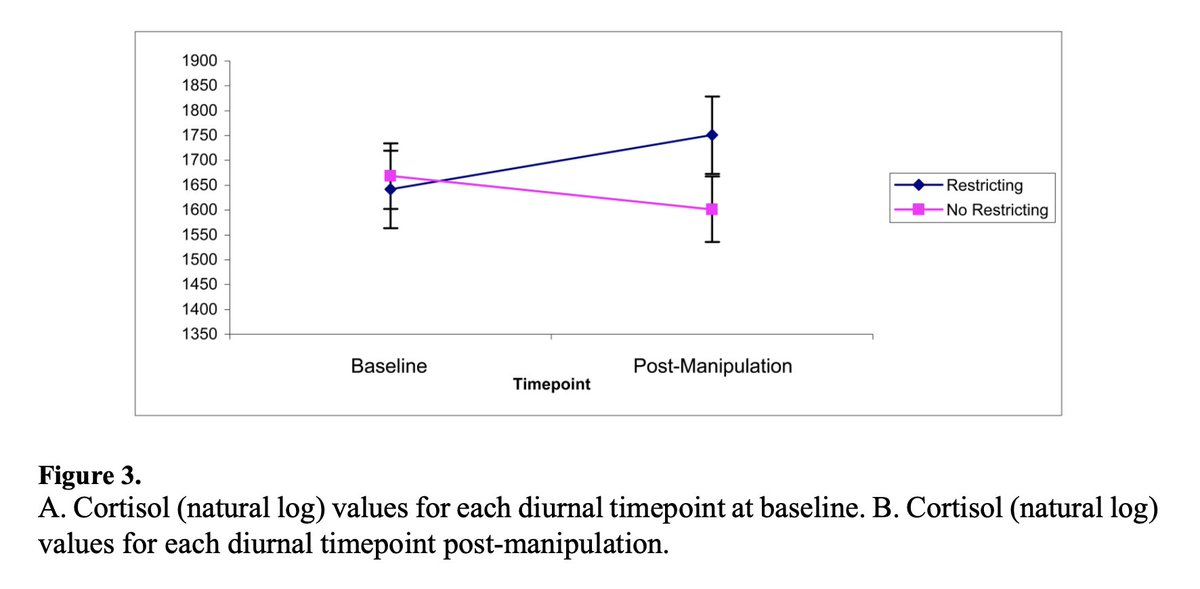
Calorie restriction is another stressor.
There is a reason people “stress eat” - the stress systems are there to serve as backup when there’s not enough food.
This doesn’t mean stuffing your face, it just means not intentionally restricting food intake.
Calorie restriction is another stressor.
There is a reason people “stress eat” - the stress systems are there to serve as backup when there’s not enough food.
This doesn’t mean stuffing your face, it just means not intentionally restricting food intake.
#4 Vitamin C
Vitamin C drastically lowers cortisol.
1,000 mg / day drops it by >35% after 2 months.
Vitamin C is released by the adrenal glands and becomes depleted during stress.
Vitamin C drastically lowers cortisol.
1,000 mg / day drops it by >35% after 2 months.
Vitamin C is released by the adrenal glands and becomes depleted during stress.

#5 Zinc
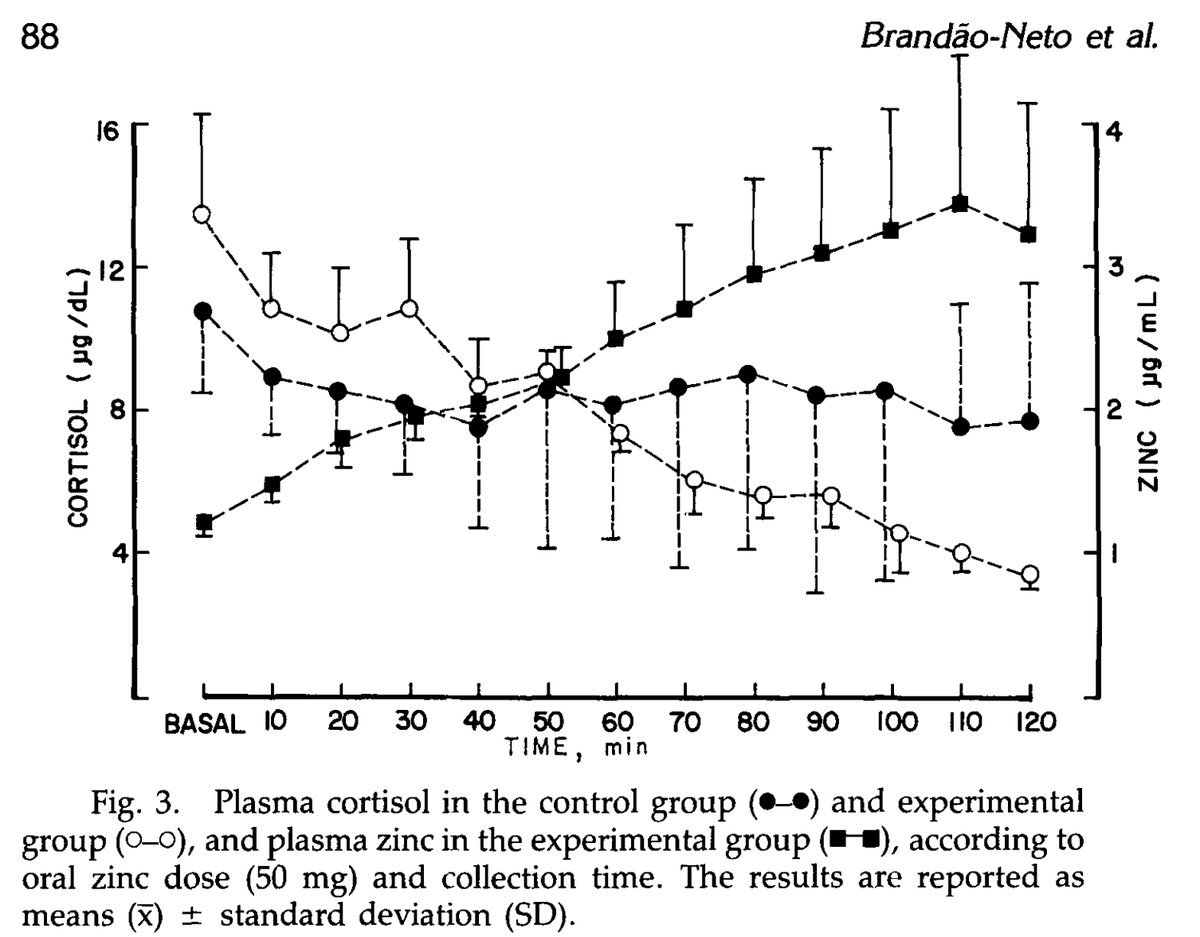
Zinc dramatically lowers cortisol.
A 50 mg zinc dose suppressed the stress hormone by around 70% here.
While the HPA axis, which produces cortisol, depletes zinc, adding it back in markedly lowers this stress system.
Zinc dramatically lowers cortisol.
A 50 mg zinc dose suppressed the stress hormone by around 70% here.
While the HPA axis, which produces cortisol, depletes zinc, adding it back in markedly lowers this stress system.
#6 Vitamin D + Calcium
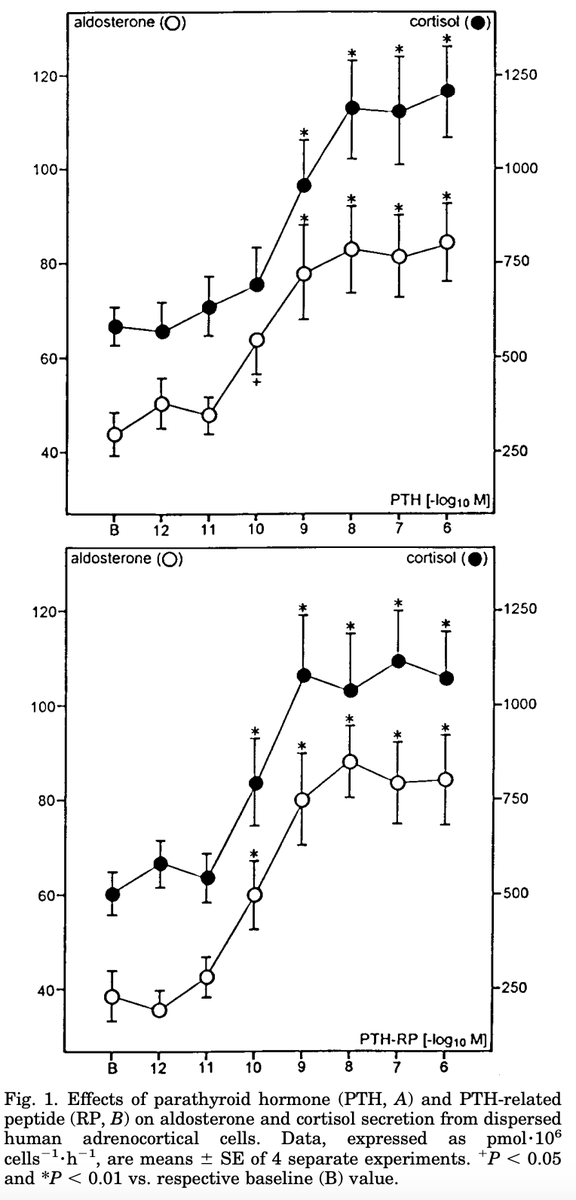
Another stress hormone is parathyroid hormone.
It increases with low dietary calcium and vitamin D.
High PTH can lead to high calcium in the blood, which can be very stressful and even toxic to the nervous system.
PTH increases other adrenal hormones, like cortisol.
Another stress hormone is parathyroid hormone.
It increases with low dietary calcium and vitamin D.
High PTH can lead to high calcium in the blood, which can be very stressful and even toxic to the nervous system.
PTH increases other adrenal hormones, like cortisol.
#7 Omega-6 / Omega-3 ratio
Omega-6 fats (like seed oils) metabolize into pro-inflammatory compounds,
while omega-3's metabolize into anti-inflammatory / inflammation resolving compounds.
Inflammation within the hypothalamus is one of the key triggers for the HPA axis - which increases cortisol.
Omega-6 fats (like seed oils) metabolize into pro-inflammatory compounds,
while omega-3's metabolize into anti-inflammatory / inflammation resolving compounds.
Inflammation within the hypothalamus is one of the key triggers for the HPA axis - which increases cortisol.

Generated by Thread Navigator
Press ⌘ + S to quick-export
auto_awesome
Image exported!
Pro export renders embedded tweets & media at 2x Retina resolution.
Upgrade — $5 for 30 days