Ivermectin has some striking anti-cancer properties.
(🧵1/8)

A study came out earlier this year in Nature, one of the biggest biology journals on the planet.
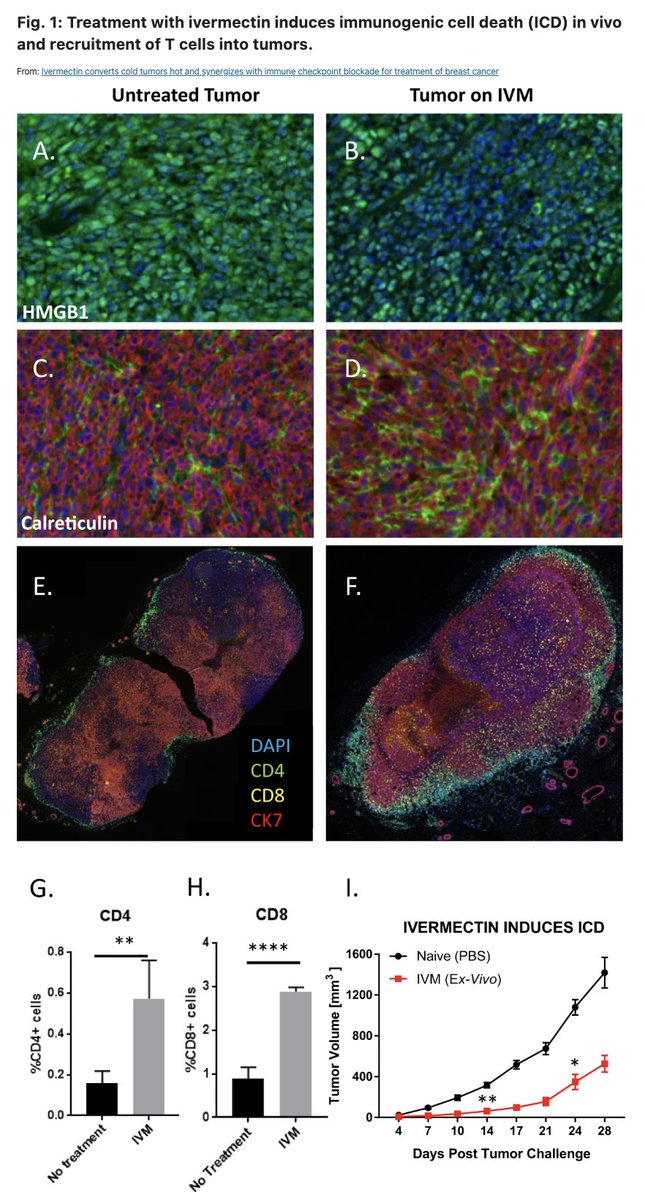
The big finding was that Ivermectin turned "cold tumors" into "hot tumors" - essentially meaning they were more likely to be seen and destroyed by the immune system.
Thus, it induced immunogenic cancer cell death (ICD).
CD4 + CD8 are markers for immune cells called T cells - as you can see they were in greater amounts around the tumor with ivermectin.
This shrank breast tumors.
(2/8)
The big finding was that Ivermectin turned "cold tumors" into "hot tumors" - essentially meaning they were more likely to be seen and destroyed by the immune system.
Thus, it induced immunogenic cancer cell death (ICD).
CD4 + CD8 are markers for immune cells called T cells - as you can see they were in greater amounts around the tumor with ivermectin.
This shrank breast tumors.
(2/8)
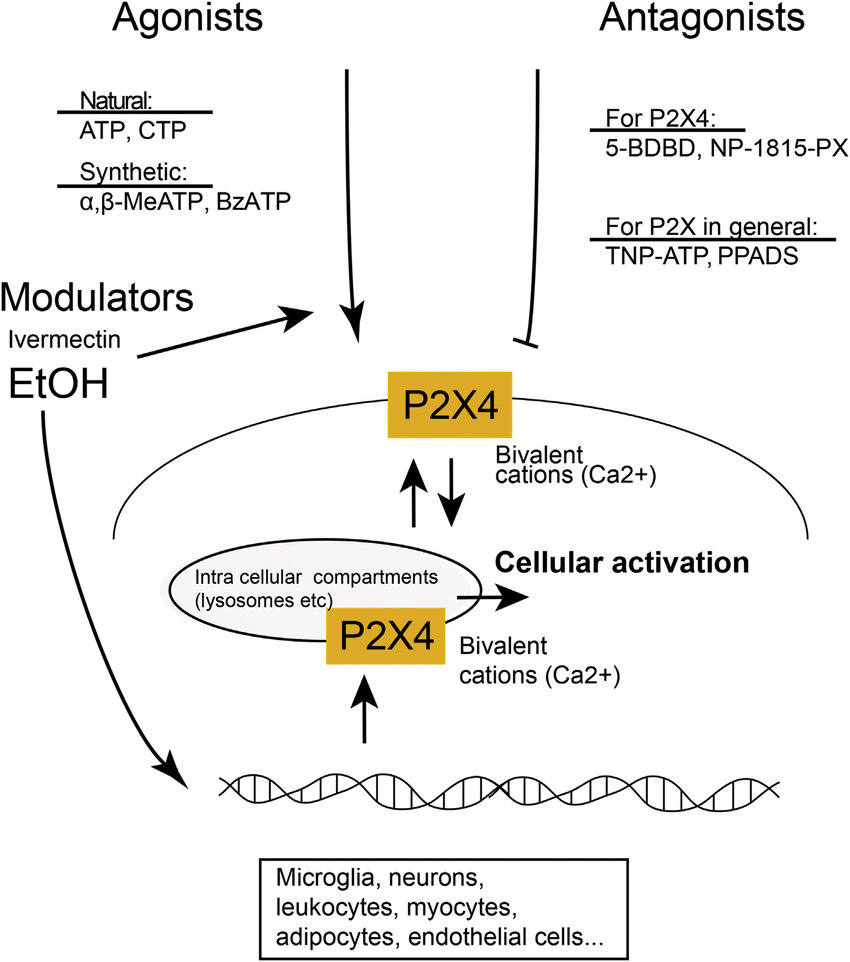
One of the main ways ivermectin was therapeutic here was by inducing ATP dependent pathways in immune cells.
ATP is the energy life force of our cells, but when it's outside the cells, that's usually a sign they're dying and releasing it - so it's an immune trigger.
Ivermectin acts on this pathway to activate immune cells, which in cancer therapy, is good, since the immune system clears out cancer cells.
(3/8)
ATP is the energy life force of our cells, but when it's outside the cells, that's usually a sign they're dying and releasing it - so it's an immune trigger.
Ivermectin acts on this pathway to activate immune cells, which in cancer therapy, is good, since the immune system clears out cancer cells.
(3/8)
Ivermectin can also be therapeutic by inhibiting key cancer cell growth pathways.
Here in gastric cancer - it inhibited the Wnt/β-Catenin pathway.
This is a key molecular switch for growth and proliferation and its mutation is common in cancer.
(4/8)
Here in gastric cancer - it inhibited the Wnt/β-Catenin pathway.
This is a key molecular switch for growth and proliferation and its mutation is common in cancer.
(4/8)

Ivermectin also prevented metastasis in colorectal and breast cancer cells.
Metastasis is when cancer cells spread from a tumor in a localized place to throughout the body.
By this same pathway, inhibiting Wnt/β-Catenin pathway, ivermectin was able to prevent this process and shrink down tumors.
(5/8)
Metastasis is when cancer cells spread from a tumor in a localized place to throughout the body.
By this same pathway, inhibiting Wnt/β-Catenin pathway, ivermectin was able to prevent this process and shrink down tumors.
(5/8)


In colon cancer without the TCF coactivator of the Wnt/β-Catenin pathway, ivermectin was of no help to reduce cancer.
This highlights a key point - that the specific cancer type and molecular profile matters a lot.
(6/8)
This highlights a key point - that the specific cancer type and molecular profile matters a lot.
(6/8)

Ivermectin also has some other important actions that help in its anti-cancer properties.
1. It induces apoptosis (intentional cell death) in cancer cells
2. It induces mitochondrial dysfunction in these cells
3. It induces oxidative stress
While these things are good for killing cancer cells, and ivermectin is selective for cancer cells,
it still has these effects on healthy cells - which is NOT good, very dangerous, even.
(7/8)
1. It induces apoptosis (intentional cell death) in cancer cells
2. It induces mitochondrial dysfunction in these cells
3. It induces oxidative stress
While these things are good for killing cancer cells, and ivermectin is selective for cancer cells,
it still has these effects on healthy cells - which is NOT good, very dangerous, even.
(7/8)


Ivermectin is very polarizing for a few reasons:
1. Highly prominent figures talking about it
2. Lots of stories of benefits in cancer (even within my immediate circle I know someone who's cancer was reversed)
3. The virus thing from a few years ago
It definitely has some promise, and is relatively safe, plus its cheap and widely available.
The stories are enough to make anyone intrigued.
BUT it is important to remember that there are no human studies with it, and again it can have negative effects or be useless depending on the cancer type.
It's also not the only drug to show this amount of evidence for cancer, far from it actually.
There's tons of other agents that show anti-cancer effects in animals without any human studies.
I look forward to seeing where this goes over the next few years.
(8/8)
1. Highly prominent figures talking about it
2. Lots of stories of benefits in cancer (even within my immediate circle I know someone who's cancer was reversed)
3. The virus thing from a few years ago
It definitely has some promise, and is relatively safe, plus its cheap and widely available.
The stories are enough to make anyone intrigued.
BUT it is important to remember that there are no human studies with it, and again it can have negative effects or be useless depending on the cancer type.
It's also not the only drug to show this amount of evidence for cancer, far from it actually.
There's tons of other agents that show anti-cancer effects in animals without any human studies.
I look forward to seeing where this goes over the next few years.
(8/8)
Generated by Thread Navigator
Press ⌘ + S to quick-export
auto_awesome
Image exported!
Pro export renders embedded tweets & media at 2x Retina resolution.
Upgrade — $5 for 30 days