Nicotine reverses signs of aging by reprogramming metabolism.
(🧵1/8)


Nicotine has been understood for a while to have broad acting anti-inflammatory effects.
However, a recent study out of Nature showed that nicotine's impacts go far beyond reducing inflammation.
(2/8)
However, a recent study out of Nature showed that nicotine's impacts go far beyond reducing inflammation.
(2/8)
View Tweet
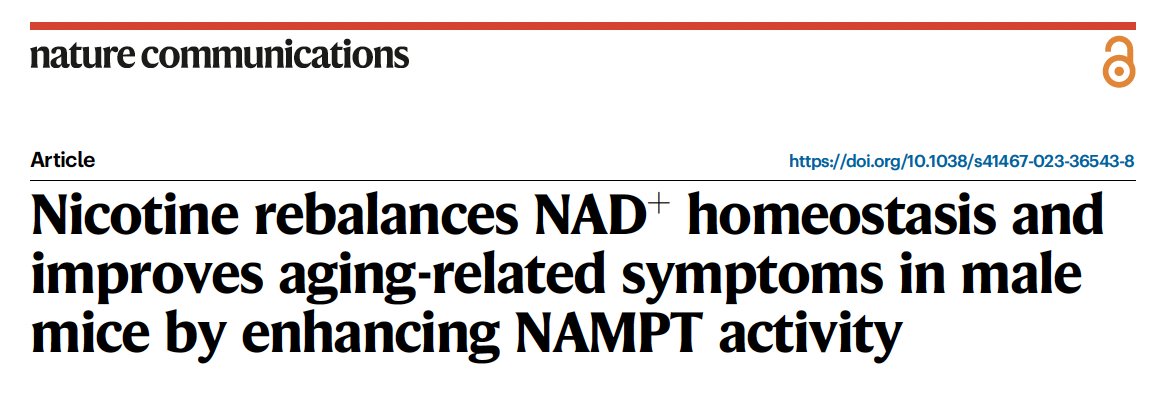
To understand nicotine's effects, we must understand a molecule called NAD+.
NAD+ essentially acts as energy currency - its "occupied" form is NADH.
The more NAD+ you have relative to NADH, the better your cells are at translating food energy into usable cellular energy, and the more food energy you are capable of turning into usable energy.
NAD+ is also important for activating certain enzymes involved in various protective processes, like antioxidant defenses and DNA repair.
In other words, it's a pretty big deal when it comes to health and aging.
NAD+ levels decline, as well as its relative ratio to NADH, in aging and disease.
(3/8)
NAD+ essentially acts as energy currency - its "occupied" form is NADH.
The more NAD+ you have relative to NADH, the better your cells are at translating food energy into usable cellular energy, and the more food energy you are capable of turning into usable energy.
NAD+ is also important for activating certain enzymes involved in various protective processes, like antioxidant defenses and DNA repair.
In other words, it's a pretty big deal when it comes to health and aging.
NAD+ levels decline, as well as its relative ratio to NADH, in aging and disease.
(3/8)

While aging decreases the NAD+ producing enzyme NAMPT in all tissues,
adding nicotine (2.2 mg / day human equivalent) increases it.
In fact, nicotine restores its activity back to youthful levels in every tissue.
(4/8)
adding nicotine (2.2 mg / day human equivalent) increases it.
In fact, nicotine restores its activity back to youthful levels in every tissue.
(4/8)

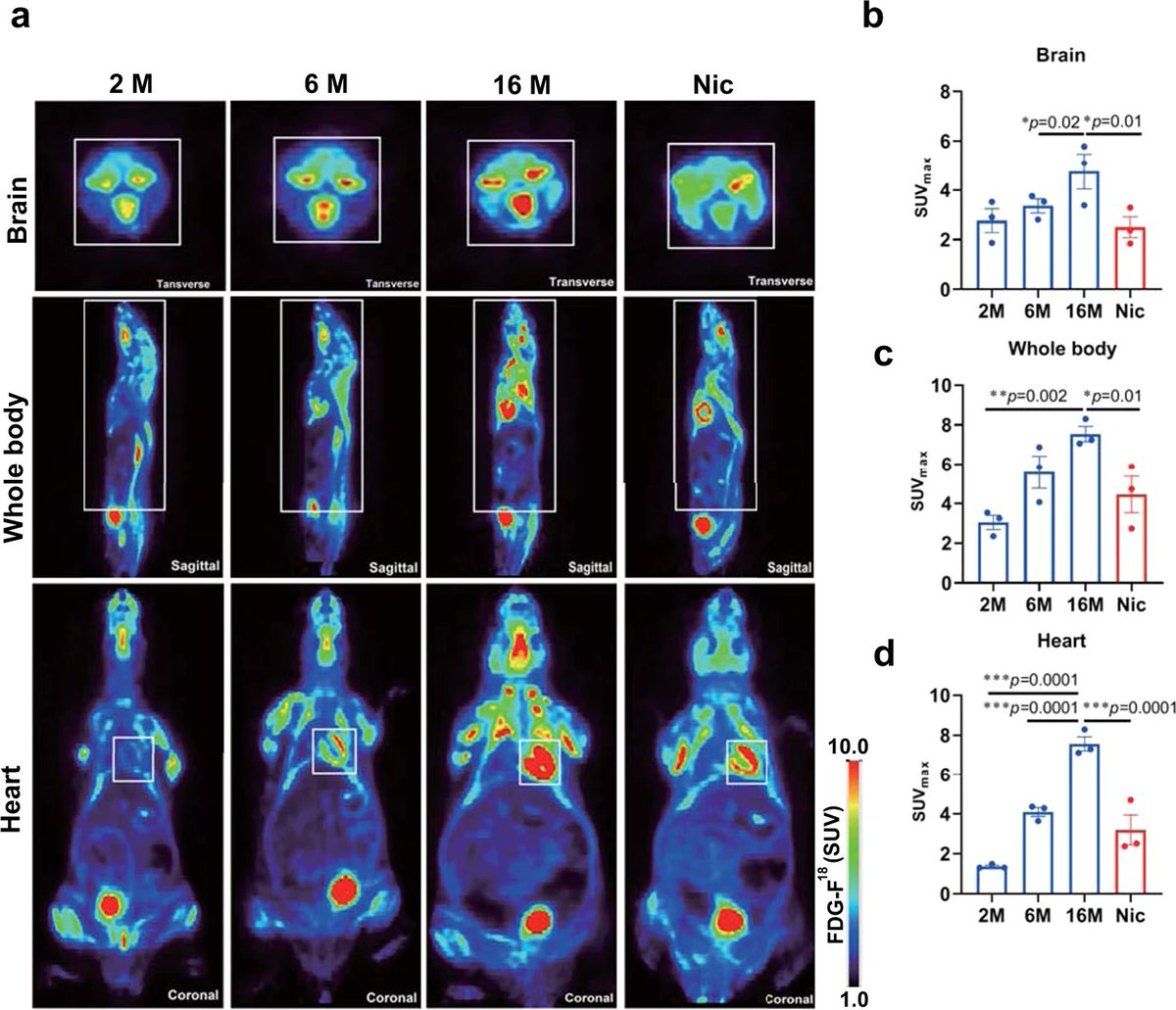
Nicotine also restored youthful metabolism.
As we age, our metabolism becomes less efficient - we get less energy out of the food we consume.
As a result, we observe glucose hypermetabolism (red) - cells metabolize more glucose but get less energy from it (lactic acid conversion).
Nicotine reversed this.
(5/8)
As we age, our metabolism becomes less efficient - we get less energy out of the food we consume.
As a result, we observe glucose hypermetabolism (red) - cells metabolize more glucose but get less energy from it (lactic acid conversion).
Nicotine reversed this.
(5/8)
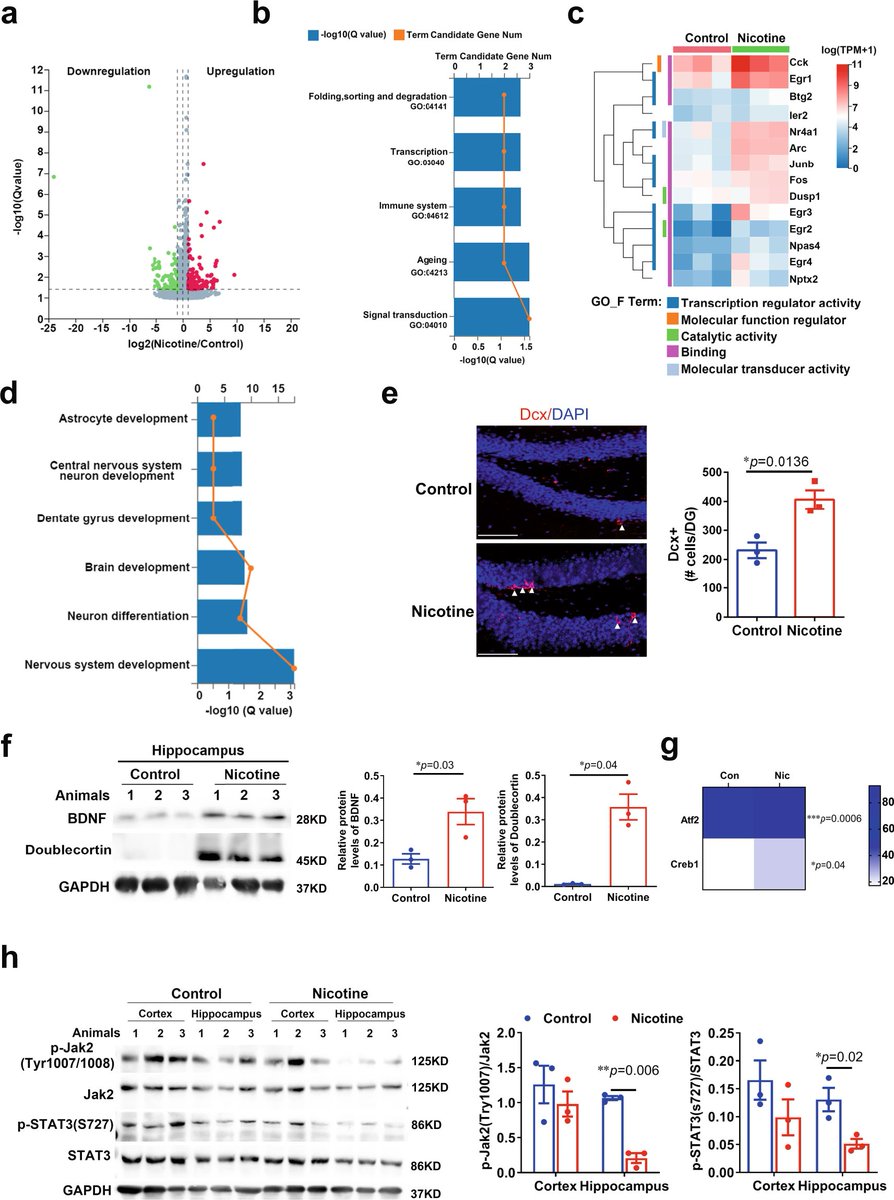
In the brain, nicotine also showed some protective effects.
It increased the expression of several genes involved in brain cell growth and migration.
This includes the famous BDNF protein - the most well known neurotrophic factor.
It also decreased markers of neuroinflammation (JAK - STAT pathway).
All of this culminated in animals having superior cognitive performance while on nicotine.
(6/8)
It increased the expression of several genes involved in brain cell growth and migration.
This includes the famous BDNF protein - the most well known neurotrophic factor.
It also decreased markers of neuroinflammation (JAK - STAT pathway).
All of this culminated in animals having superior cognitive performance while on nicotine.
(6/8)
Finally, nicotine reduced measures of oxidative stress (carbonyls),
while improving total antioxidant capacity (TEAC) and levels of the critical antioxidant superoxide dismutase (SOD).
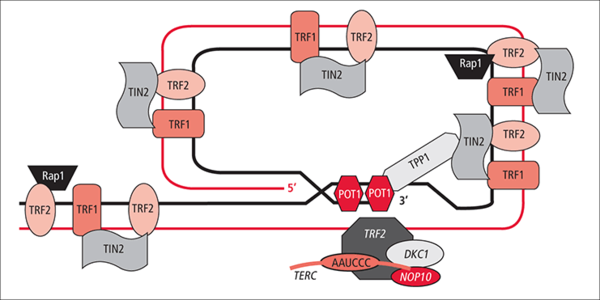
Nicotine increased the amounts of telomere protective proteins, important for the prevention of DNA damage with age.
(7/8)
while improving total antioxidant capacity (TEAC) and levels of the critical antioxidant superoxide dismutase (SOD).
Nicotine increased the amounts of telomere protective proteins, important for the prevention of DNA damage with age.
(7/8)

Nicotine again was only administered at around 2.2 mg (human equivalent) per day here, a pretty small amount.
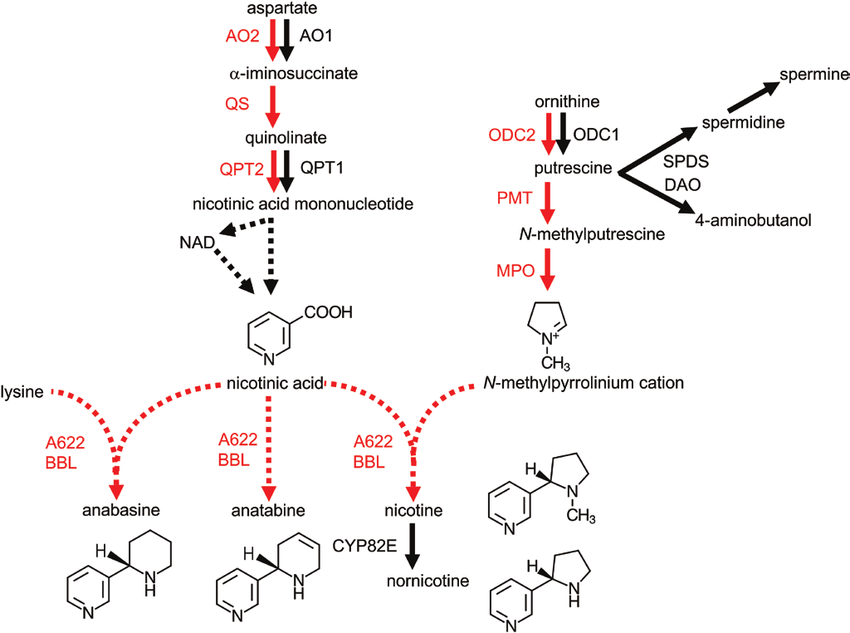
It's unclear precisely how nicotine does all of this, but it's interesting to note that nicotine is actually synthesized from NAD+ in tobacco.
What we can say though is that nicotine in small amounts (not to be confused with cigarettes or vaping) initiates multiple molecular events that counteract the metabolic processes of aging.
(8/8)
It's unclear precisely how nicotine does all of this, but it's interesting to note that nicotine is actually synthesized from NAD+ in tobacco.
What we can say though is that nicotine in small amounts (not to be confused with cigarettes or vaping) initiates multiple molecular events that counteract the metabolic processes of aging.
(8/8)
If you're about long term optimization or improving your metabolism or mitochondrial functioning today, we'll be able to help you get there.
Book a free call with us and we'll show you the way.
go.prism.miami/consultation
Book a free call with us and we'll show you the way.
go.prism.miami/consultation
See the full study here nature.com/articles/s4146…
Generated by Thread Navigator
Press ⌘ + S to quick-export
auto_awesome
Image exported!
Pro export renders embedded tweets & media at 2x Retina resolution.
Upgrade — $5 for 30 days