Bryan Johnson is wrong.
About everything.
This is the FUNDAMENTAL PROBLEM with "longevity" protocols (and what to do instead):

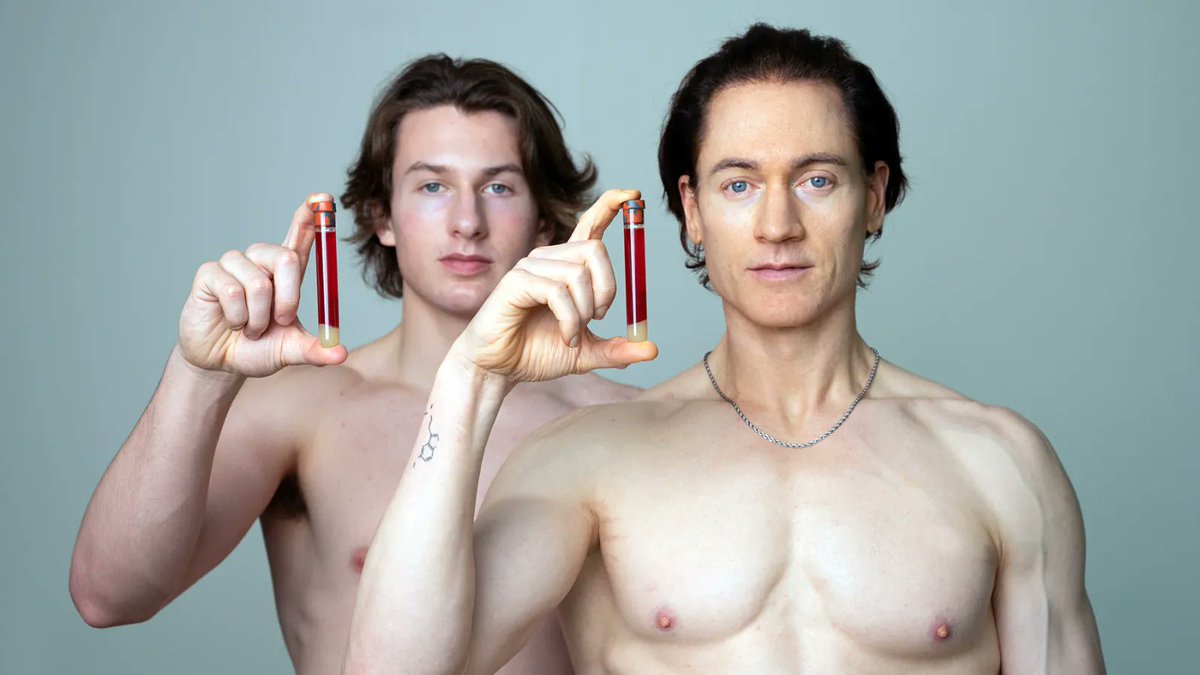
First off, there is a lot of good to take from Bryan and other people in the "longevity" space's stuff.
Mindset, being more careful with diet, circadian rhythms, focusing on sleep, exercise, self experimentation, prevention.
These are all awesome and I am happy these folks are helping to get more people on board with these interventions.
Second, this is NOT a personal attack on Bryan or anyone else in the longevity space. Genuinely do seem like well intentioned, good people.
I just disagree with the paradigm.
Let's get into it.
Mindset, being more careful with diet, circadian rhythms, focusing on sleep, exercise, self experimentation, prevention.
These are all awesome and I am happy these folks are helping to get more people on board with these interventions.
Second, this is NOT a personal attack on Bryan or anyone else in the longevity space. Genuinely do seem like well intentioned, good people.
I just disagree with the paradigm.
Let's get into it.
At the core of the typical “longevity” beliefs is the idea that slowing down your metabolism is good for longevity.
The “longevity genes," supplements, diets etc. are all centered around this idea.
Primarily, this is done by restricting calories.
This is why Bryan aims at lowering his body temperature - it’s a sign his metabolism is tanking
The “longevity genes," supplements, diets etc. are all centered around this idea.
Primarily, this is done by restricting calories.
This is why Bryan aims at lowering his body temperature - it’s a sign his metabolism is tanking

But lowering metabolism is not at all in line with being young or becoming healthier.
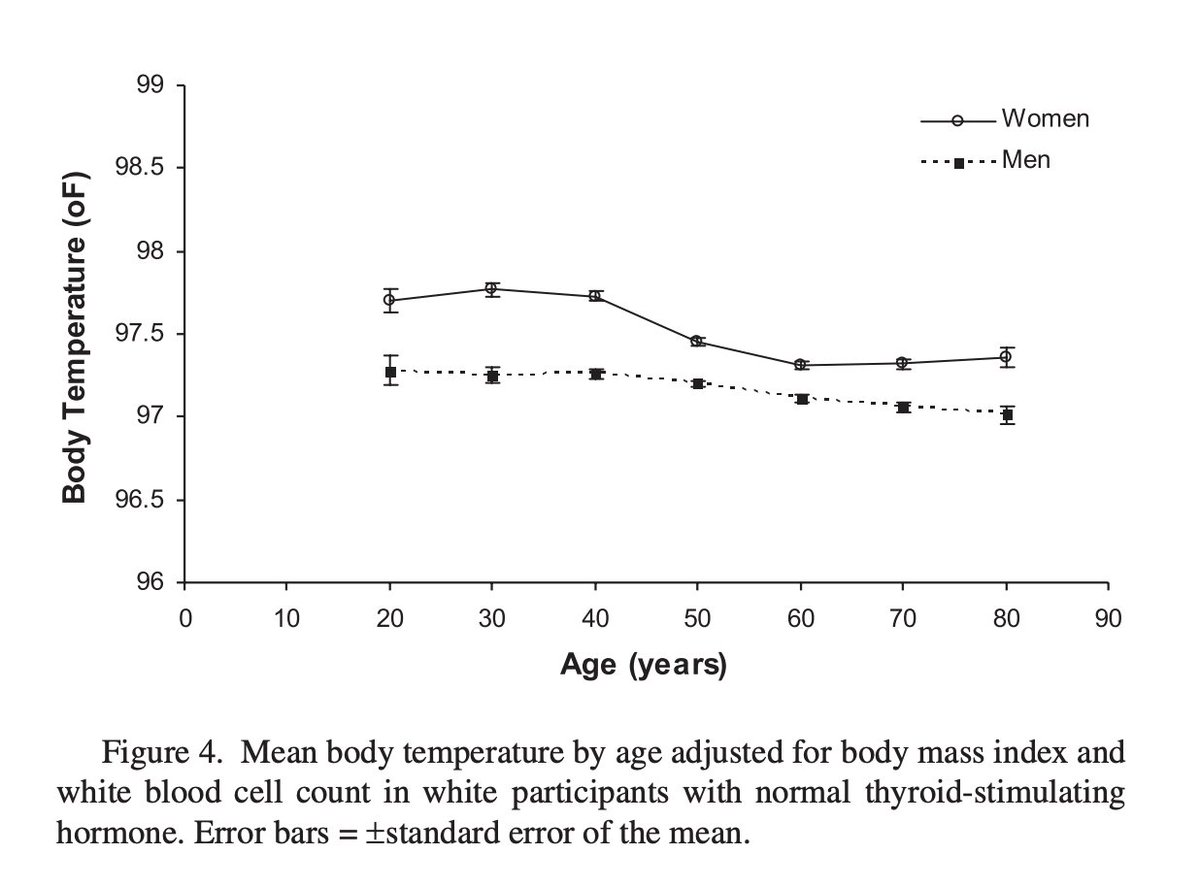
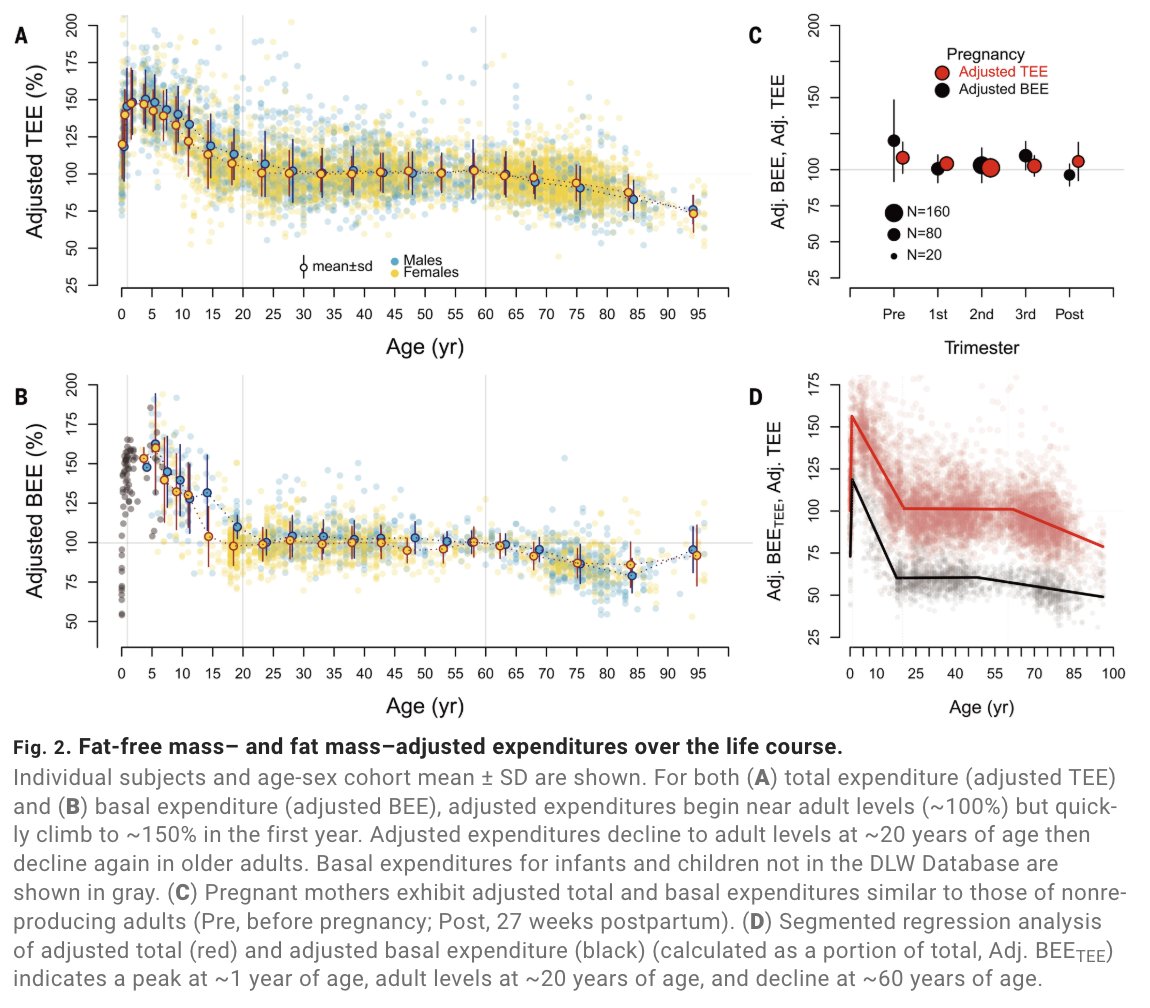
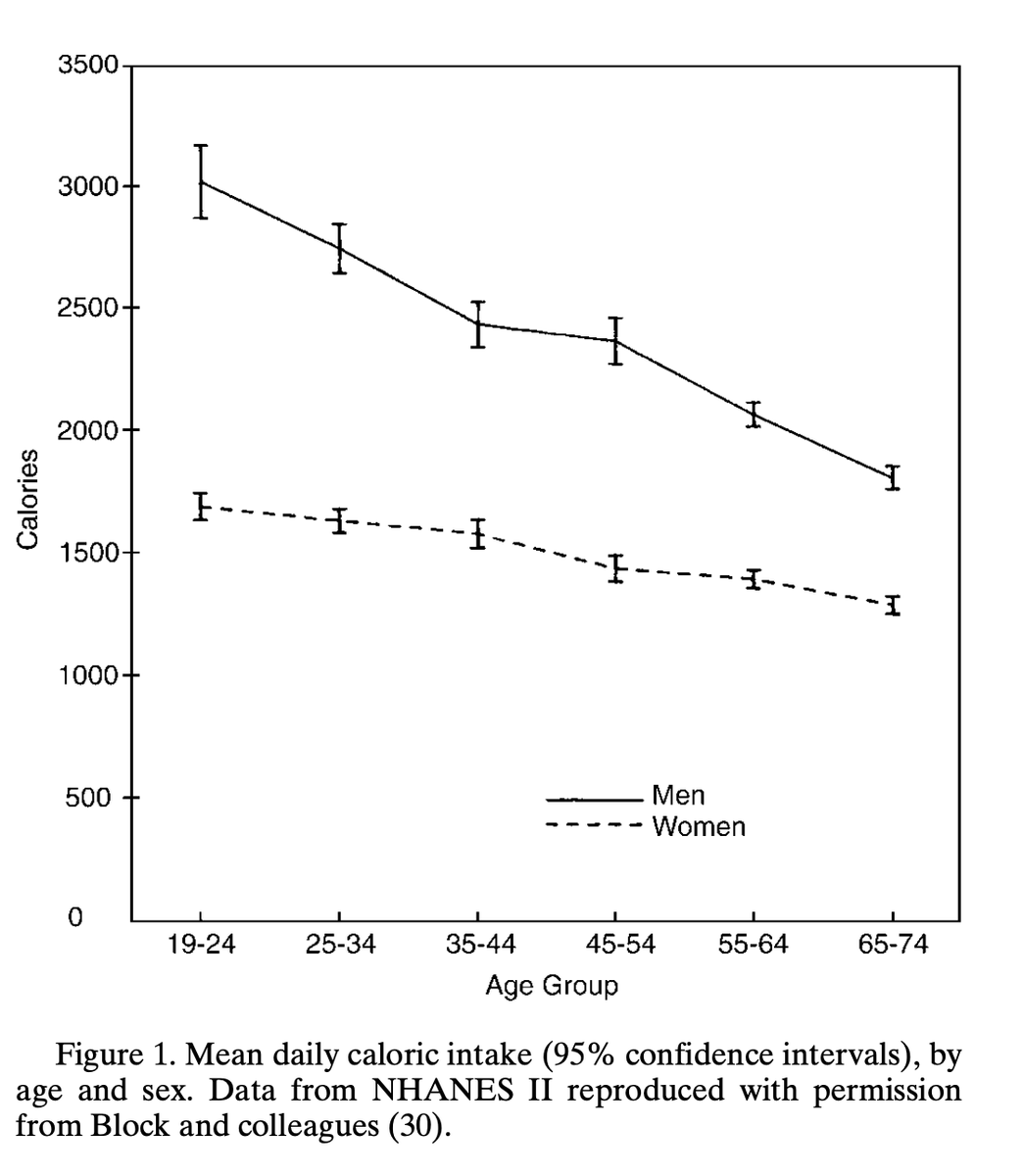
As we get older:
➮ Our temperatures drop
➮ Our metabolisms become slower
➮ We eat LESS and have lower appetite
Logically, shouldn’t you want to do the OPPOSITE of this to oppose aging?
As we get older:
➮ Our temperatures drop
➮ Our metabolisms become slower
➮ We eat LESS and have lower appetite
Logically, shouldn’t you want to do the OPPOSITE of this to oppose aging?
Calorie restriction or reducing temperature and metabolism can increase lifespan.
HOWEVER, it’s far from an open and shut case.
This is not a consistent finding. There is huge variation within species.
Roughly HALF of mouse species have better longevity if they eat as much as they want.
HOWEVER, it’s far from an open and shut case.
This is not a consistent finding. There is huge variation within species.
Roughly HALF of mouse species have better longevity if they eat as much as they want.

Animals given “normal” lab food WILL get fat and sick over extended periods of time.
This is well known and something I experienced up close when I was in research.
Is it caloric restriction or is it just eating less of a bad diet, and not getting fat?
This is well known and something I experienced up close when I was in research.
Is it caloric restriction or is it just eating less of a bad diet, and not getting fat?
View Tweet
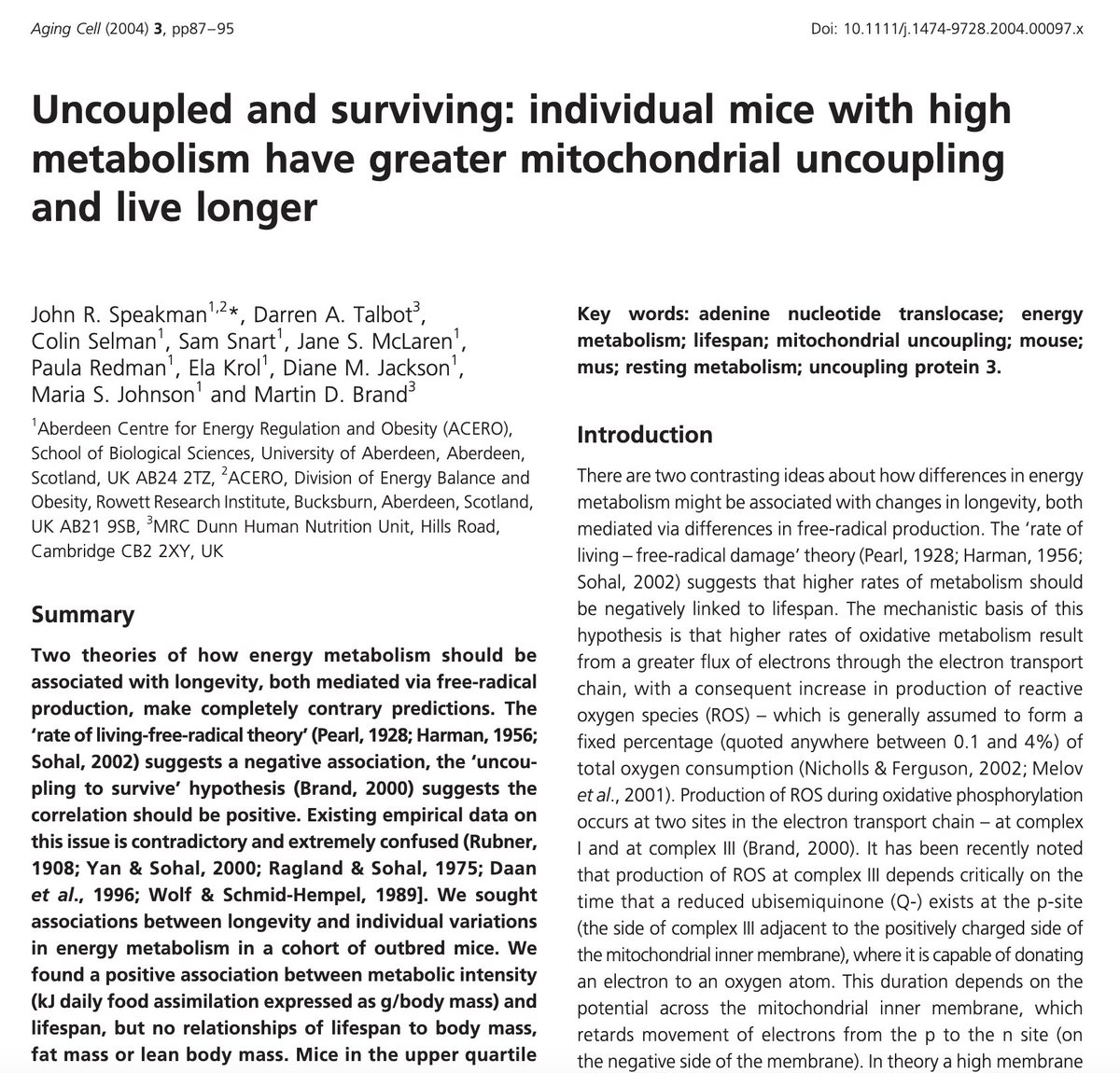
The “rate of living theory” is the idea that the slower your metabolism is, the longer you’ll live.
This is juxtaposed by the “uncouple to survive” theory, which proposes that the more heat you produce and calories you burn through, the longer you live.
Calorie restriction extending lifespan not ironclad doctrine, it’s an area of research / debate that's been going on for decades.
This is juxtaposed by the “uncouple to survive” theory, which proposes that the more heat you produce and calories you burn through, the longer you live.
Calorie restriction extending lifespan not ironclad doctrine, it’s an area of research / debate that's been going on for decades.
Thyroid hormones DROP as we get OLDER.
High reverse T3, which forms when thyroid hormones are inactivated, also is a predictor of death.
Caloric restriction is known to tank T3 (active thyroid hormone) and increase reverse T3.
Ask people with hypothyroidism if they feel young or like they’re aging slowly.
(They don't)
High reverse T3, which forms when thyroid hormones are inactivated, also is a predictor of death.
Caloric restriction is known to tank T3 (active thyroid hormone) and increase reverse T3.
Ask people with hypothyroidism if they feel young or like they’re aging slowly.
(They don't)

The transformation of people with hypothyroidism who have successfully done thyroid treatment clearly demonstrates that having high thyroid function is GOOD as an anti-aging strategy.
Do these folks look like they're aging faster?
Do these folks look like they're aging faster?
View Tweet
Increasing body temperature and metabolic rate is also capable of extending lifespan.
It prevents fat gain and insulin resistance
The complete opposite of restricting calories and getting cold to live longer.
Check out this mini thread for more on that:
It prevents fat gain and insulin resistance
The complete opposite of restricting calories and getting cold to live longer.
Check out this mini thread for more on that:
View Tweet
Caloric restriction also raises the levels of free fatty acids released from fat tissue, and the amount of fat that is burned.
Sounds good, right?
Well, not quite.
These are also processes that increase with age (and several other diseases)!
What decreases with age is the oxidation of GLUCOSE or carbohydrate.
Why would you want to increase fat release and burning to oppose aging?
Sounds good, right?
Well, not quite.
These are also processes that increase with age (and several other diseases)!
What decreases with age is the oxidation of GLUCOSE or carbohydrate.
Why would you want to increase fat release and burning to oppose aging?
View Tweet
When you restrict calories, your CORTISOL also tends to rise.
Meanwhile, high levels of cortisol to DHEA are an excellent predictor of death.
Once again, going in the opposite direction.
Meanwhile, high levels of cortisol to DHEA are an excellent predictor of death.
Once again, going in the opposite direction.
View Tweet

Long term calorie restriction combined with lots of exercise is known to result in the “low energy availability” state.
This state is consistently associated with impaired:
➤ Sleep quality
➤ Exercise performance + recovery
➤ Immunity
➤ Skin and bone regeneration
➤ Hormone status
This is not anti-aging!
This state is consistently associated with impaired:
➤ Sleep quality
➤ Exercise performance + recovery
➤ Immunity
➤ Skin and bone regeneration
➤ Hormone status
This is not anti-aging!

One major reason that lowering metabolism through calorie restriction is proposed to increase longevity is because it reduces free radicals (ROS) and thus oxidative stress.
However, you do not need to restrict calories to do this.
ROS are formed in the mitochondria when there is a disruption in the generation of energy.
Yes, just putting less energy in will make less ROS, but that isn’t fixing the issue.
However, you do not need to restrict calories to do this.
ROS are formed in the mitochondria when there is a disruption in the generation of energy.
Yes, just putting less energy in will make less ROS, but that isn’t fixing the issue.

In fact, thyroid hormones can raise metabolism, extend lifespan, and reduce oxidative stress, all in one shot.
This is all in direct contrast to the theory being presented by the longevity space.
There are TONS of things that can increase lifespan comparably that don’t involve restricting calories.
This is all in direct contrast to the theory being presented by the longevity space.
There are TONS of things that can increase lifespan comparably that don’t involve restricting calories.

Methionine restriction is a well studied extender of lifespan.
Yet, methionine restriction also raises metabolism, temperature and calorie consumption.
Yet, methionine restriction also raises metabolism, temperature and calorie consumption.

Adding glycine to the diet also extends lifespan.
Glycine supports antioxidant status by serving as substrate for glutathione production, and also acts as a buffer for excess methylation.
These processes can also be affected by calorie restriction, but again that isn’t our primary regulatory system.
Glycine supports antioxidant status by serving as substrate for glutathione production, and also acts as a buffer for excess methylation.
These processes can also be affected by calorie restriction, but again that isn’t our primary regulatory system.

Glycine + N-Acetylcysteine increases lifespan by ~25%.
As precursors to the master antioxidant glutathione, this combination:
✓ Reduces organ damage
✓ Preserves mitochondrial function
even at low amounts.
Again, no calorie restriction necessary for antioxidant support.
As precursors to the master antioxidant glutathione, this combination:
✓ Reduces organ damage
✓ Preserves mitochondrial function
even at low amounts.
Again, no calorie restriction necessary for antioxidant support.

Tryptophan restriction extends lifespan.
Tryptophan is the precursor to serotonin, which itself has a number of pro-aging effects by stimulating the stress systems and participating in inflammation.
Tryptophan is the precursor to serotonin, which itself has a number of pro-aging effects by stimulating the stress systems and participating in inflammation.
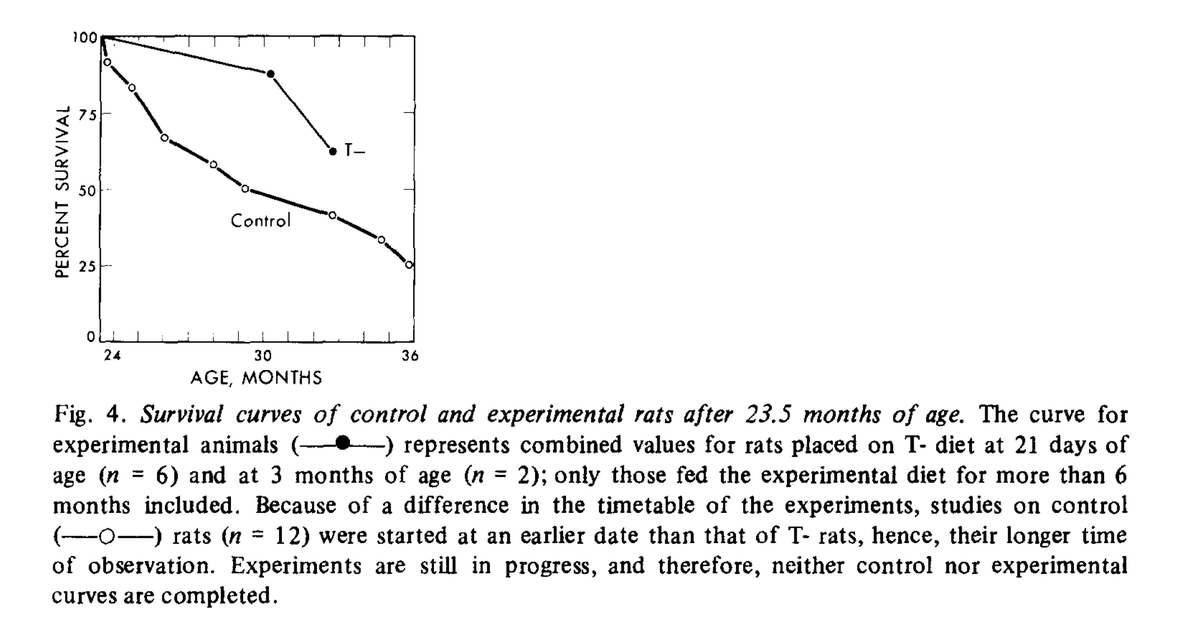
Vitamin E extends lifespan.
A primary antioxidant nutrient.
Average of 40% increase in male and 14% in female animals.
No calorie restriction needed.
A primary antioxidant nutrient.
Average of 40% increase in male and 14% in female animals.
No calorie restriction needed.

Generated by Thread Navigator
Press ⌘ + S to quick-export
auto_awesome
Image exported!
Pro export renders embedded tweets & media at 2x Retina resolution.
Upgrade — $5 for 30 days