Thread Truncated (Cap Enforced)
Only the first 20 tweets are unrolled into slides to ensure reliable PDF exporting and high server performance.
Canvas & Ratio
Choose your destination platform format
Layout Template
Choose a content structure for your slides
Preset Themes
Typography & Sizing
Brand Kit Customization
AGENCYConfigure brand assets for headers & footers
Outro Slide CTA
Customize your closing call-to-action slide
Background Pattern
Build Your Carousel
Drag and drop any post card below onto a slide, or use the quick buttons to insert content/images instantly!

Most people use Claude like a search box. Ask, answer, close tab. They are leaving the best feature locked.

Save this :)
Stanford built a research system called STORM. In peer reviewed testing it produced articles <b>25 percent more organized</b> than the next best method. It is open source. It is free. Almost nobody knows you can run the same idea inside Claude with 4 prompts.
No software. No GitHub. No setup. Just paste. 5 minutes from now you will know more about your topic than people who spent days reading.
Here is the full method.

---
## <b>Phase 1: What STORM Actually Is</b>
STORM stands for <b>Synthesis of Topic Outlines through Retrieval and Multi perspective Question Asking.</b> It was published at NAACL 2024 by the Stanford OVAL Lab.
You can try the live version at storm.genie.stanford.edu. Free. No sign up. Type a topic and watch it write a sourced article in front of you.
A 12 minute walkthrough video is here: STORM by Stanford on YouTube. Worth watching once.
The full code is at github.com/stanford-oval/storm. MIT license. Run it on your own laptop if you want.
But here is the real prize. <b>You do not need any of it.</b> The Stanford method is just a way of thinking. You can run that same thinking inside Claude with 4 copy paste prompts.
That is what the rest of this article is.
---
## <b>Phase 2: Why One Prompt Will Always Fail</b>
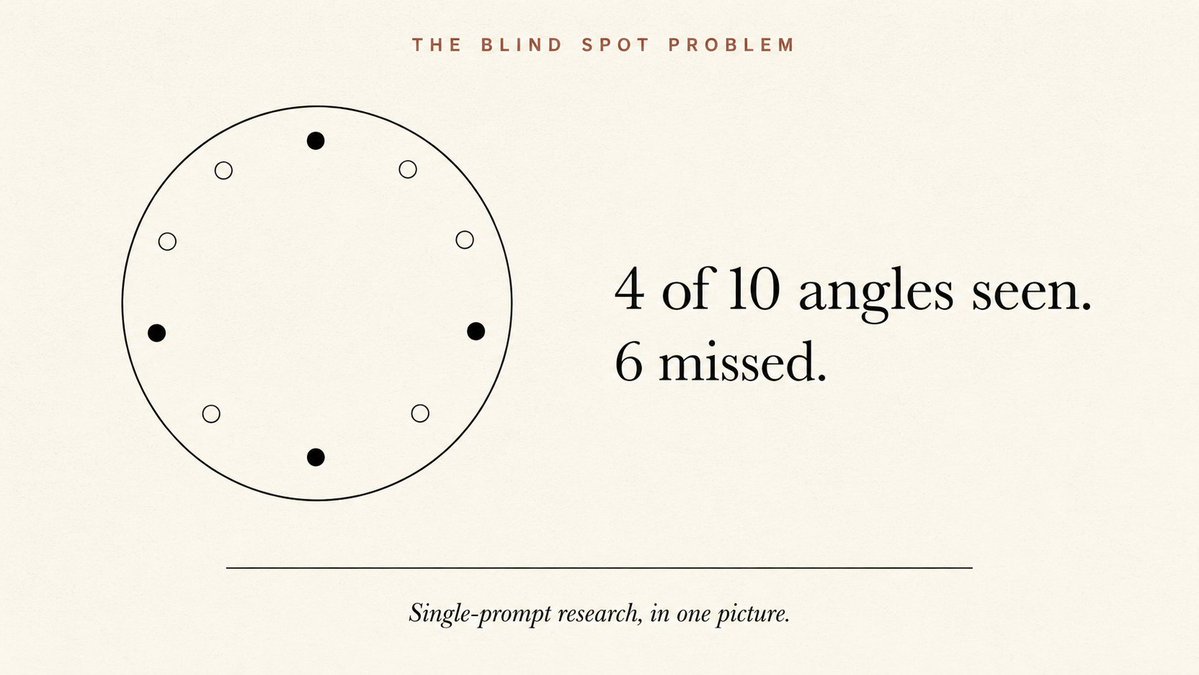
When you ask Claude "tell me about X" you get the majority view. The most common framing. The surface.
What you do not get is the practitioner who works with X every day. The skeptic who thinks the field is wrong. The economist who follows the money. The historian who has seen the pattern before. The academic who actually read the studies.
Those five voices all see different things. That is what a PhD student does. They do not ask one question. They ask five.