Canvas & Ratio
Choose your destination platform format
Layout Template
Choose a content structure for your slides
Preset Themes
Typography & Sizing
Brand Kit Customization
AGENCYConfigure brand assets for headers & footers
Outro Slide CTA
Customize your closing call-to-action slide
Background Pattern
Build Your Carousel
Drag and drop any post card below onto a slide, or use the quick buttons to insert content/images instantly!

A newspaper essay about the president’s uncle, MIT Prof. John G. Trump, tells the extraordinary history of his role in D-Day. But there is much more to the story. We’d like to share more about Prof. J.G. Trump as we knew him—a scientist, engineer, educator, entrepreneur, patriot, and MIT legend whose work still impacts us all today. ⚡️🧵1/10 <a target="_blank" href="https://www.washingtonpost.com/opinions/2026/06/04/john-trump-mit-engineer-who-altered-history-d-day/?pwapi_token=eyJ0eXAiOiJKV1QiLCJhbGciOiJIUzI1NiJ9.eyJyZWFzb24iOiJnaWZ0IiwibmJmIjoxNzgwNTQ1NjAwLCJpc3MiOiJzdWJzY3JpcHRpb25zIiwiZXhwIjoxNzgxOTI3OTk5LCJpYXQiOjE3ODA1NDU2MDAsImp0aSI6IjQ3OTljNzFhLTEyYzEtNGI1Yi04NjBjLTE4NGE0M2FkZGRkOSIsInVybCI6Imh0dHBzOi8vd3d3Lndhc2hpbmd0b25wb3N0LmNvbS9vcGluaW9ucy8yMDI2LzA2LzA0L2pvaG4tdHJ1bXAtbWl0LWVuZ2luZWVyLXdoby1hbHRlcmVkLWhpc3RvcnktZC1kYXkvIn0.jv2b5XgIEZR1O08_Nj2mb_qBDqgB6w9Nz7ZSfuFnA3U" color="blue">washingtonpost.com/opinions/2026/…</a>


John G. Trump was an electrical engineer who began his career at Western Electric (Bell Labs) in the 1920s. In 1931, he started a PhD at MIT, where he was introduced to the legendary MIT professor Robert Van de Graaff. Their decades-long collaborations would unlock wonders in physics and medicine and train hundreds of students. 2/10


At MIT, John G. Trump found more than a collaborator in Robert Van de Graaff—he discovered the kind of visionary partnership the Institute works to foster. In the revolutionary high-voltage work they explored, this MIT duo saw healing power that saved thousands of lives. Then came WWII. 3/10
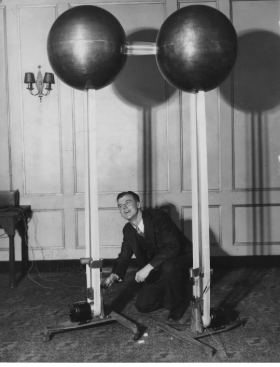


Like Turing and Hopper, John G. Trump was tapped to help the Allied war effort. He joined the National Defense Research Committee as technical aid to then MIT President Karl Taylor Compton eighteen months before Pearl Harbor and became a key builder of MIT's Radiation Laboratory—work that revolutionized radar technology and brought a swifter end to the war. 4/10


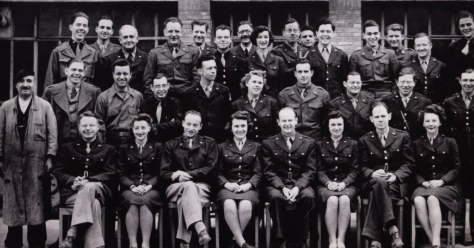
John G. Trump led the British Branch of the MIT Rad Lab in 1944 and is seen here in Paris driving Dr. Lee DuBridge, the lab’s director. He was forward deployed with Eisenhower’s central command, supporting radar integration for D-Day and after, as part of FDR’s strategy for leveraging tech innovations in the war effort. 5/10

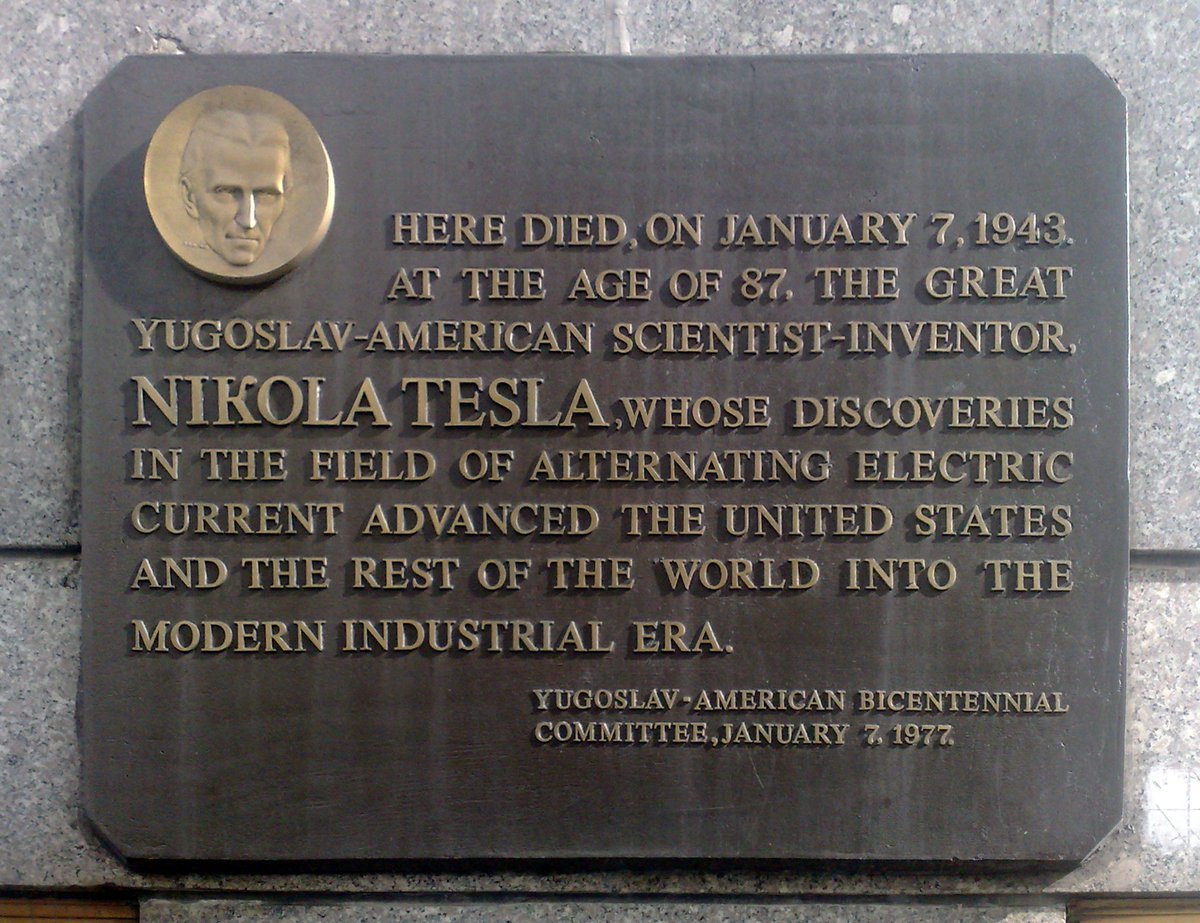
In 1943, when Nikola Tesla—legendary engineer and inventor—passed away in his NYC hotel room, the FBI called MIT Prof. John G. Trump, whose expertise made him the person they trusted to evaluate Tesla's innovations and determine their significance to national security. 6/10

Returning to his lab at MIT from the war, John G. Trump led the spin-out of his research, founding High Voltage Engineering Corp in Cambridge with Drs. Van de Graff and Robinson in 1946. HVEC, funded by America’s first modern venture capital firm, became the template America follows today, including Silicon Valley: translating cutting-edge university research and government investment into market innovations. 7/10


Radar for national defense. Radiation therapy for public health. Research in nuclear science, materials, food and environmental safety solutions, and training youth. All were born from a partnership among a brilliant mind, generations of his students, a university, and a government that, over decades, valued the power of investing in science. 8/10


One of MIT's longest-serving faculty members, Prof. John G. Trump was more than a teacher and researcher—he was a mentor who ignited a passion for discovery in his students. A champion of making science accessible, he co-designed and funded the Boston Museum of Science and its Theater of Electricity enjoyed by millions of visitors since the 1970s. 9/10

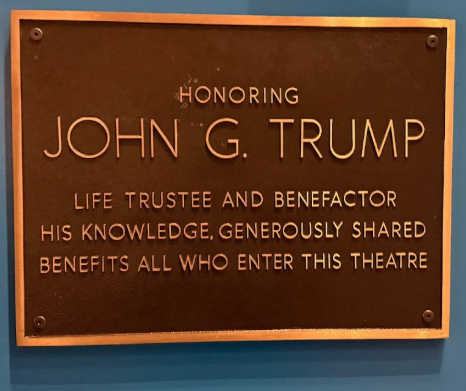
Prof. John G. Trump not only embodies the spirit of thousands of MIT faculty and researchers past and present—he was a foundational figure in the public-private innovation engine that has engaged broad talent and secured America's technological dominance for generations. His curiosity and determination led him on scientific missions that continue to serve us all. 10/10

🧵 Footnotes 1/10 [1] MIT News Photo, via MIT Museum. Trump with 3MV cancer treatment generator (Building 28). [2] Eisenstadt, Alfred for LIFE Magazine, via Google Arts & Culture . Trump with unknown student. 1949 2/10 [1] HVEC photo. 1962 HVEC annual report (Feb. 1963), NYT Sept 1963. Image source: AIP Emilio Segrè Visual Archives. Denis Robinson, Trump, and Van de Graaff and HVEC Burlington facility [2] Journal of Applied Physics, Vol. 8, September 1937, p. 602. Image source: Megan Smith [3] Newspaper Enterprise Association (NEA), May 1956. Image source: MIT Archives MC 0223 Box 8, Photo 34, D Series. Trump with Kenneth A. Wright at MIT High Voltage Research Lab 3/10 [1] NYT/Wide World, published in MIT Technology Review, Dec 1931, via MIT Museum. Van de Graaff at American Institute of Physics inaugural dinner, Nov 10, 1931 Washington, DC. [2] MIT Dept. of Electrical Engineering. via MIT Museum (GCP-00024651). Trump and student with Oncologic Generator No. 2 , 1940. [3] HVEC. Marketing brochure. n.d. 4/10 [1] MIT Radiation Lab. 1941. Originally published: Five Years at the Rad Lab (p.15). Albert Hayes in the Roof Lab. [2] Unknown [3] MIT Radiation Lab. 1945. Originally published: Five Years at the Rad Lab (p.183) Director Trump with Advanced Service Base in Paris. 5/10 [1] Associated Press. April 8, 1945, via MIT Museum, GCP-00024649 6/10 [1] Napoleon Sarony. Image source: Nikola Tesla Museum, via Wikipedia [2] Wikipedia user Aspersions, via Wikipedia 7/10 [1] HVEC photo. 1962 HVEC annual report (Feb 15, 1963). Image source: AIP Emilio Segrè Visual Archives. Denis Robinson, Trump, and Van de Graaff and HVEC Burlington facility [2] HVEC. HVEC JR Model brochure, before 1954 8/10 [1] William Vandivert, Fortune Magazine, 1950. Image source: MIT Archives [2] MIT Department of Electrical Engineering, n.d. via MIT Museum [3] MIT Department Electrical Engineering, c. 1965, via MIT Museum 9/10 [1] Boston Museum of Science, via Wikipedia [2] Boston Museum of Science plaque, MJ Smith. 10/10 [2] MIT Dept of Electrical Engineering, via MIT Museum GCP-00024633. Trump in N10 Director’s Office, 1965.