Thread Truncated (Cap Enforced)
Only the first 20 tweets are unrolled into slides to ensure reliable PDF exporting and high server performance.
Canvas & Ratio
Choose your destination platform format
Layout Template
Choose a content structure for your slides
Preset Themes
Typography & Sizing
Brand Kit Customization
AGENCYConfigure brand assets for headers & footers
Outro Slide CTA
Customize your closing call-to-action slide
Background Pattern
Build Your Carousel
Drag and drop any post card below onto a slide, or use the quick buttons to insert content/images instantly!

the oedipal toji: a deeply psychoanalytical reading on his life🧵 understanding his deep-seated motives, trauma-driven permanence, and the reason why early experience shape your autonomy and ego

contents: 0. what to expect i. intro ii. upbringing and trauma iii. finding love iv. old habits die hard v. the mentality of power vi. the final days vii. life after death viii. conclusion

0. what to expect this reading is incredibly extensive, pretty dense, and will include a lot of jargon so if you want a quick scroll or light read this is NOT for you... this is for the ones who love deep character analysis through academic frameworks, so please.. be prepared. quick disclaimer as well: oedipus complex is VERRYYYY controversial, but since it is widely discussed in psychological context. i noticed it aligns with toji's character to a decent degree, it will be applied sparingly (not too literal) btw happy tsumiki day (i posted this today on purpose) anyways: this essay utilizes a multi-disciplinary theoretical lens that combines traditional psychoanalysis with modern trauma psychology and existential literature. by pairing freud's concepts of the oedipus complex, thanatos (the death drive), and repetition compulsion. we will also discuss adler's theories on organ inferiority and psychological compensation, we can map how a childhood defined by systemic degradation shapes adult behavior. the framework is further deepened by erikson's stages of psychosocial development, which pinpoint exactly where toji’s development fractured, and bessel van der kolk’s book: the body keeps the score, which illuminates how trauma is written directly onto his physical flesh. finally, this essay will utilize dostoevsky's "the gambler," a novel that provides the framework for understanding the psychological self-sabotaging nature of toji's risk-seeking behavior this essay argues that toji's life represents a tragic failure of psychic mastery; stripped of symbolic value by the patriarchal zenin clan, he over-invests in a hyper-masculine existence, utilizing destructive repetition compulsion, existential gambling, and maternal transference in a lifelong struggle to survive his original childhood wound. tl;dr: psychology, theory, existential literature, and symbolism will be used to describe toji's psychological development and character arc.

i. intro at the outset, toji fushiguro is one of jujutsu kaisens most infamous antagoinsts of all time. he is known for vaunting the alias as the definitive "sorcerer killer" and having what appears to be an egotistical personality, to truly understand his character we must analyze what defines his motives.

how we should approach this character: from a psychological standpoint, toji fushiguro must be read symptomatically rather than biographically. the reasoning behind this is due to his backstory being deliberately fragmented and obscured by significant narrative gaps. toji cannot be understood through a standard biographical reading; instead, his character demands a symptomatic investigation through freudian etiology. the reader is forced to read his character development though a psychoanalyist viewpoint, similar to a therapist, so understanding his character psychological is like unraveling someones deep-seated trauma. for us to read toji's character properly, we must reconstruct an history of trauma by tracking the structural residues left behind, this transforms his brief presence into an intricate case study of human fracturing.
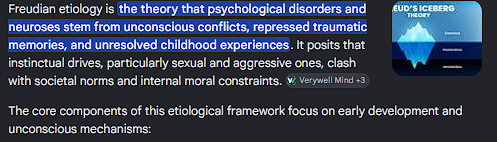
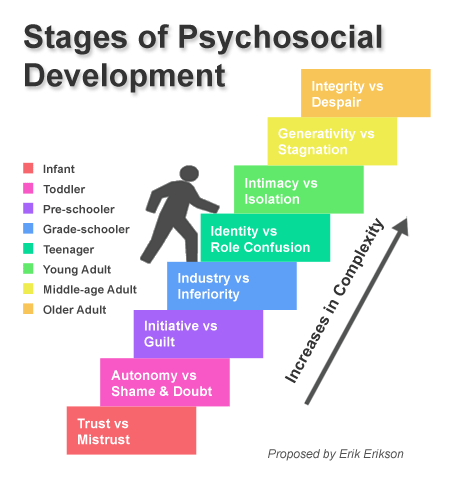
ii. upbringing and trauma tracing origins & erikson's theory: to trace the chronological nature of toji's psychological fracturing, one must first look at his childhood within the zenin clan: a space that functions as an internal scar from heavy abuse and mistreatment. in a patriarchal hierarchy where a subject’s worth, protection, and humane treatment are tied to inherited sorcery, toji’s total lack of cursed energy relegates him to an immediate zone of social death. applying erik erikson’s stages of psychosocial development, this hostile environment causes a catastrophic failure at the literal threshold of his psychic life: we can connect the first few stages of his life to the erikson model, observed by notes by gege akutami, we understand toji was deprived of any maternal protection or foundational validation, and subjected instead to systematic abuse by the clan elders, toji's developing ego was denied a safe holding environment. rather than cultivating a sense of trust in the world, his psyche internalizes a profound unshakable mistrust. he learns that the environment is inherently predatory, human relationships are strictly transactional (important one), and survival requires an absolute emotional detachment from the social order that birthed him. toji’s early life in the clan spans everything from infancy up to identity vs. role confusion (stages 1 through 5). because he was trapped in the abusive, insular environment until he was an older teenager or young adult, his childhood was essentially a consecutive cycle of psychological failures.
expanded origins and adlers theory: alfred adler’s theory of organ inferiority provides a useful framework for understanding toji's formative psychology. within the zenin clan, cursed energy operates not as power, but as symbolic humanity itself; one’s value, legitimacy, and social existence are entirely determined through proximity to jujutsu ability and inherited factors. (aristocracy) as a result, toji’s complete lack of cursed energy becomes interpreted by the clan not as difference, but as deficiency. to the clan, toji is rendered “incomplete” within the symbolic structure governing his environment. in theoretical framework, adler argues that individuals marked by profound feelings of inferiority frequently respond through psychic compensation, constructing exaggerated abilities or identities in an attempt to overcome an internalized sense of inadequacy. toji embodies adler's theory to a pathological degree. denied symbolic worth by the patriarchal standards of the zenin family, he redirects his entire identity into the cultivation of bodily supremacy. his physicality becomes compensatory excess: impossible speed, insane strength, sharpened senses, and overwhelming combat instinct all emerge as responses to an environment that defined him as fundamentally lacking. one major thing to notice however is that this compensation never resolves the original wound, the scar on his face is almost symbolism of how his past will never be erased from his future.

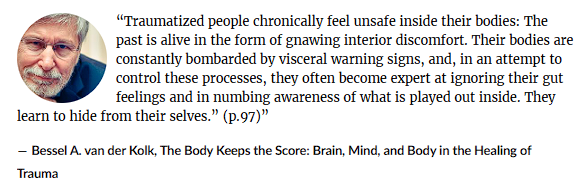
bessel van der kolk’s trauma theory: tojis mental scar and need for over-compensation finds physical manifestation through frameworks outlined in bessel van der kolk's trauma-exploration book: the body keeps the score. when a traumatized subject is denied the tools to process systemic abuse, the psychic wound is written directly onto the physical flesh. for toji, his heavenly restriction serves as the ultimate subversion of this trap: the very world that branded his body as "deficient" accidentally forged a physical vessel that is terrifyingly "excessive." denied symbolic value within his family, toji’s psyche translates his trauma into unmatched physical strength, hyper-competence, and lethal violence. his sharpened five senses and heightened instincts are the symptoms of an organism primed for survival against a predatory environment. toji's nervous system was hard-wired into a survival-first mindset from constant abuse, he treats his own body as a physical armor meant to lock out a world that actively rejected him.
bridge: before getting into the next section, i wanted to mention this so that theres minimal weird looks (i hate incest a lot) BUT since this is a psychological reading of toji and his role inside of the zenin clan we have to mention it the zenin clan has incestous elements within it, this is not a secret and yes, a lot of the time its implied, but there is clearly some incestous elements (including towards the minors) there is a very huge change that this is the case to preserve cursed techniques and stuff, but..... honestly i dont know theres this huge theory that toji went with mamaguro to "break the cycle" but the ironic thing is..... she kinda looks like a zenin (ill talk about this more after the bridge) the attachments: - naoya describing the twins in a very perverted way, likely discussing on marrying and mistreating them (fundamentally viewing them as a concubine) - naoya's implied to have sa mai - mai's crushes on maki and megumi (likely a trauma-response) - a discourse on mai and naoyas relationship and the controlling factor (note how maki and mais mom is basically treated as a tool/inhumanely, showing how the women are treated in this clan)
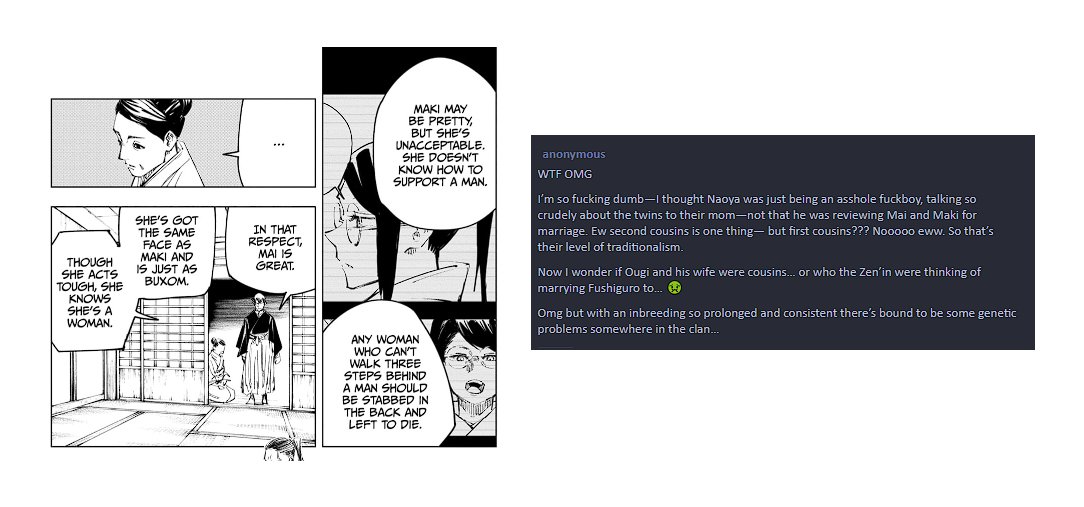
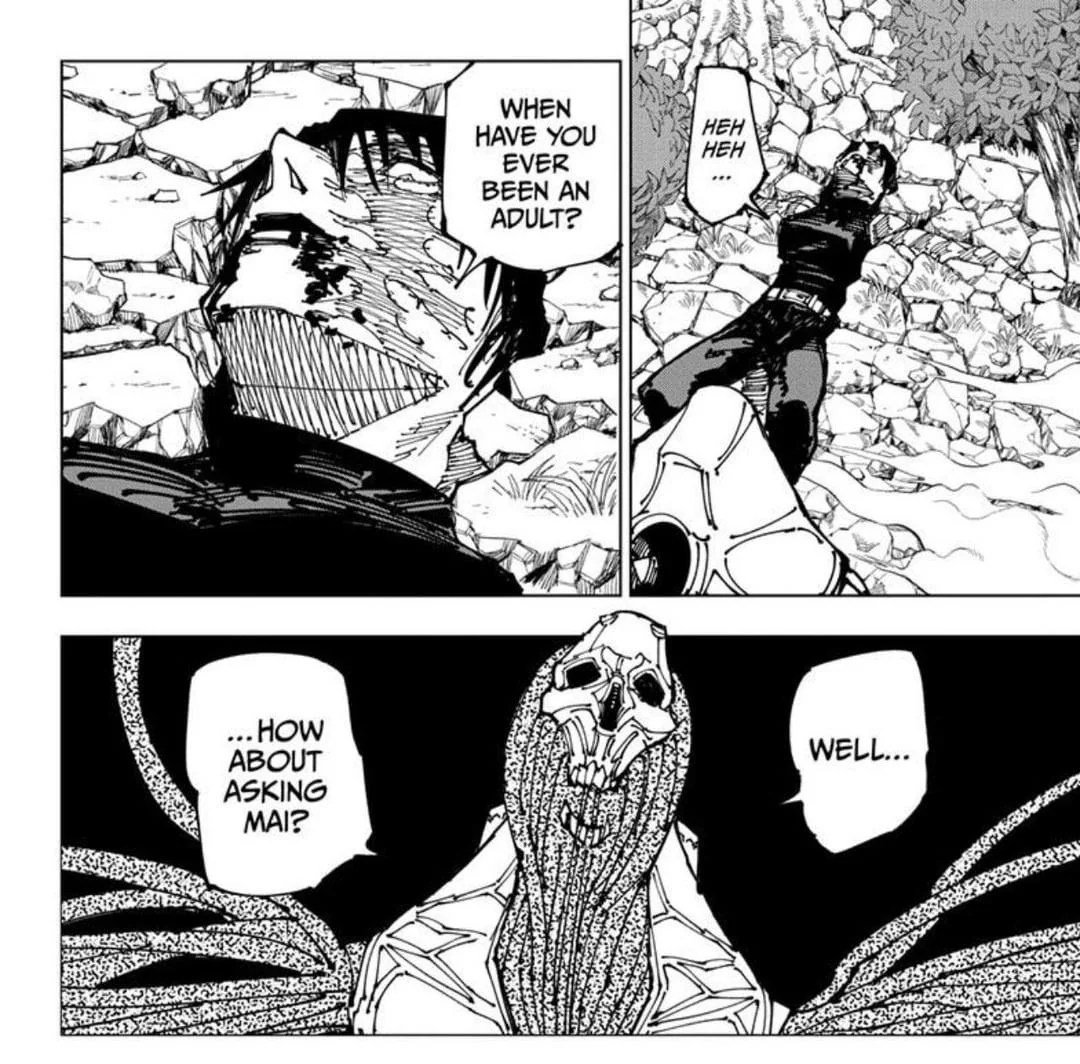
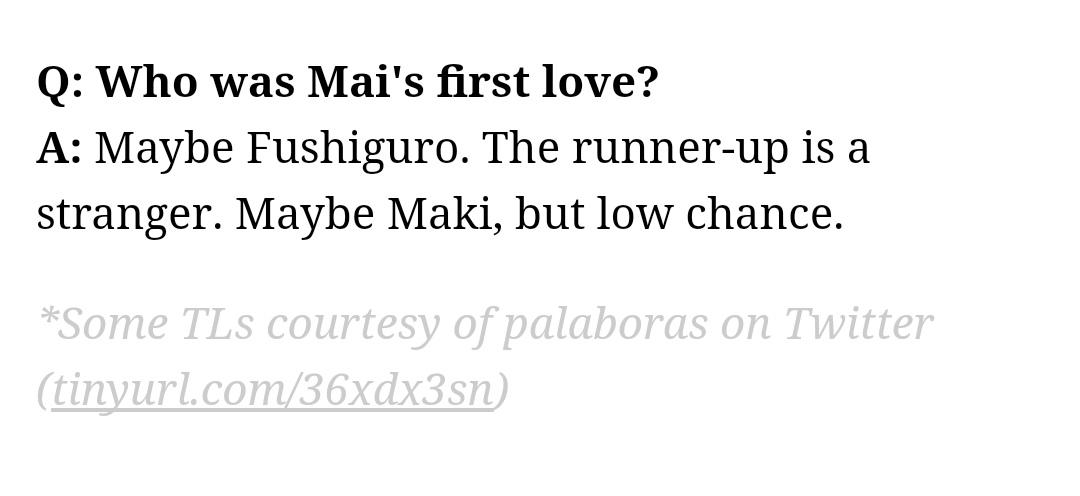

iii. finding love oedipal complex and maternal transference: (disclaimer: the oedipal elements are speculative, however, since his mother was likely not a good parental figure in his beginnings, we can assume this is the case) the brief domestic stability toji fushiguro experiences with megumi’s mother can be interpreted through psychoanalytic theories of object relations and maternal transference. while the series reveals little about her directly, the psychological impact she leaves upon toji is immense; she appears to represent the sole figure capable of temporarily interrupting his compulsive self-destructive drift. significantly, her physical resemblance to a zenin woman (see first attachment) opens the possibility that toji unconsciously gravitated toward familiarity, seeking within her the maternal security and emotional validation absent throughout his childhood. (see second attachment) in object relations theory, individuals deprived of stable affection frequently become intensely attached to figures who replicate or repair early emotional wounds. (this is where the oedipal interpretation comes from) megumi’s mother functions as what feels like a "good mother" within toji’s fractured psyche. unlike the patriarchal violence of the zen’in clan, she appears to offer unconditional recognition detached from cursed energy, status, or utility. for perhaps the first time in his life, toji is not forced to perform monstrosity in order to justify his existence. this explains the abnormal emotional dependence he develops toward her despite his otherwise detached demeanor. his attachment is not simply romantic, but psychologically restorative; she becomes less a partner and more a stabilizing emotional structure capable of soothing the inferiority, mistrust, and alienation embedded into him since childhood.


on the fushiguro family: within this framework of maternal transference, toji’s decision to build a domestic life and ultimately have a child with megumi's mother takes on a heavy psychoanalytic weight. in traditional object-relations theory, a traumatized individual who finds a stabilizing "good object" will often attempt an unconscious process of absolute fusion and permanence. (see second attachment) for toji, the pregnancy is not merely a biological byproduct of romance; it represents a desperate, structural attempt to anchor this maternal safety to his reality forever. by reproducing and establishing a family unit outside the boundaries of the jujutsu world, his ego attempts a rewriting of his own history. having a child becomes a proxy through which toji can experience the nurturing, untainted childhood that was stolen from him by the zenin clan. it is a fragile attempt at psychological regeneration. having a child with mamaguro is a subconscious gamble to prove that he is capable of creating life and safety, stepping away from the aggressive, death-driven nature of the patriarchs and embedding himself into peaceful domestic life with an unparalleled mother figure.


but we all know thats not how it ended. this fragile domestic peace shatters completely with mamaguro's untimely death, an event that inflicts a catastrophic, secondary maternal loss upon toji’s psyche. this singular event shaped his entire life plan, and this is what caused him to completely get rid of the role of a caretaker of his child. in psychoanalytic terms, the sudden disappearance of his sole "good object" triggers an immediate and severe ego collapse, plunging him into a state of psychic regression. because toji's internal stability was entirely dependent on mamaguro's external regulation, her absence leaves him utterly defenseless against his baseline trauma. rather than mourning adaptively, toji suffers a brutal retraumatization that forces him to default back to the toxic, cynical psychological structures originally engineered by the zenin clan. he abandons the potential for emotional healing, completely abdicates his role as a nurturing caregiver, and retreats into a destructive lifestyle characterized by nihilistic drifting, chronic impulsivity, and cold detachment. this total collapse proves that his brief period of domestic calm was not a permanent cure, but a temporary containment; without the stabilizing mother figure, toji’s psyche reverts to the only language it truly knows violence, transaction, and self-preservation.
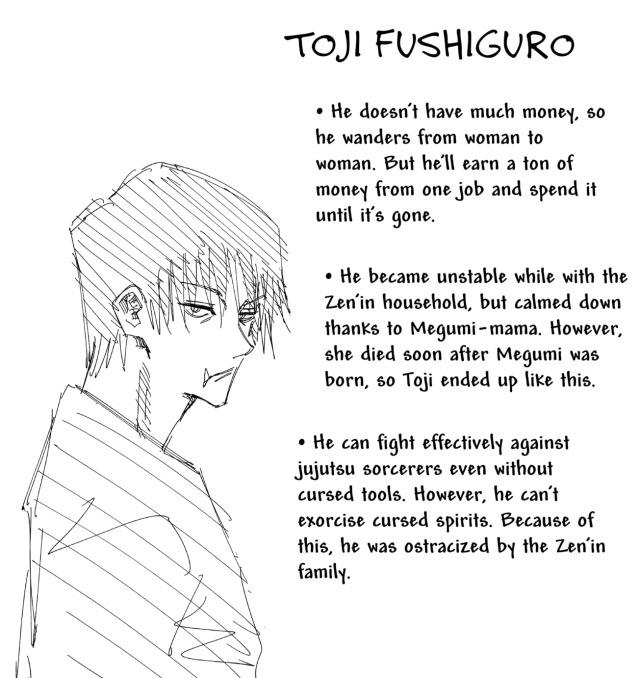
the lingering effect of mamaguro: after the death of mamaguro, toji enters a pattern of compulsive relational drifting that mirrors freud's theory of repetition compulsion. (see attachment) although he physically abandons the zenin clan, psychologically he remains trapped within the traumatic structures that shaped him, unconsciously recreating cycles of attachment, loss, and emotional detachment throughout his adult life. his repeated movement between women suggests less a pursuit of pleasure than an inability to recreate the singular emotional stabilization mamaguro once provided. in psychoanalytic terms, he continually searches for a replacement of the lost maternal object, yet sabotages each attempt because the original wound itself remains unresolved. his relationship with tsumiki’s mother particularly reflects this failure of psychic restoration. while the relationship outwardly resembles an attempt to reconstruct domestic normalcy and intimacy, toji’s deteriorating mental state prevents emotional reintegration and connection. after the death of mamaguro, toji is unable to sustain stable attachment, he gradually defaults back into dissociation, gambling, mercenary violence, and emotional absence. this collapse leaves the burden of symbolic caregiving displaced onto tsumiki fushiguro, who effectively assumes parental responsibilities toward megumi despite being a child herself. (second attachment) in doing so, toji unconsciously reproduces the same abandonment structure inflicted upon him by the zenin clan, demonstrating how unresolved trauma perpetuates itself through repetition rather than intention.
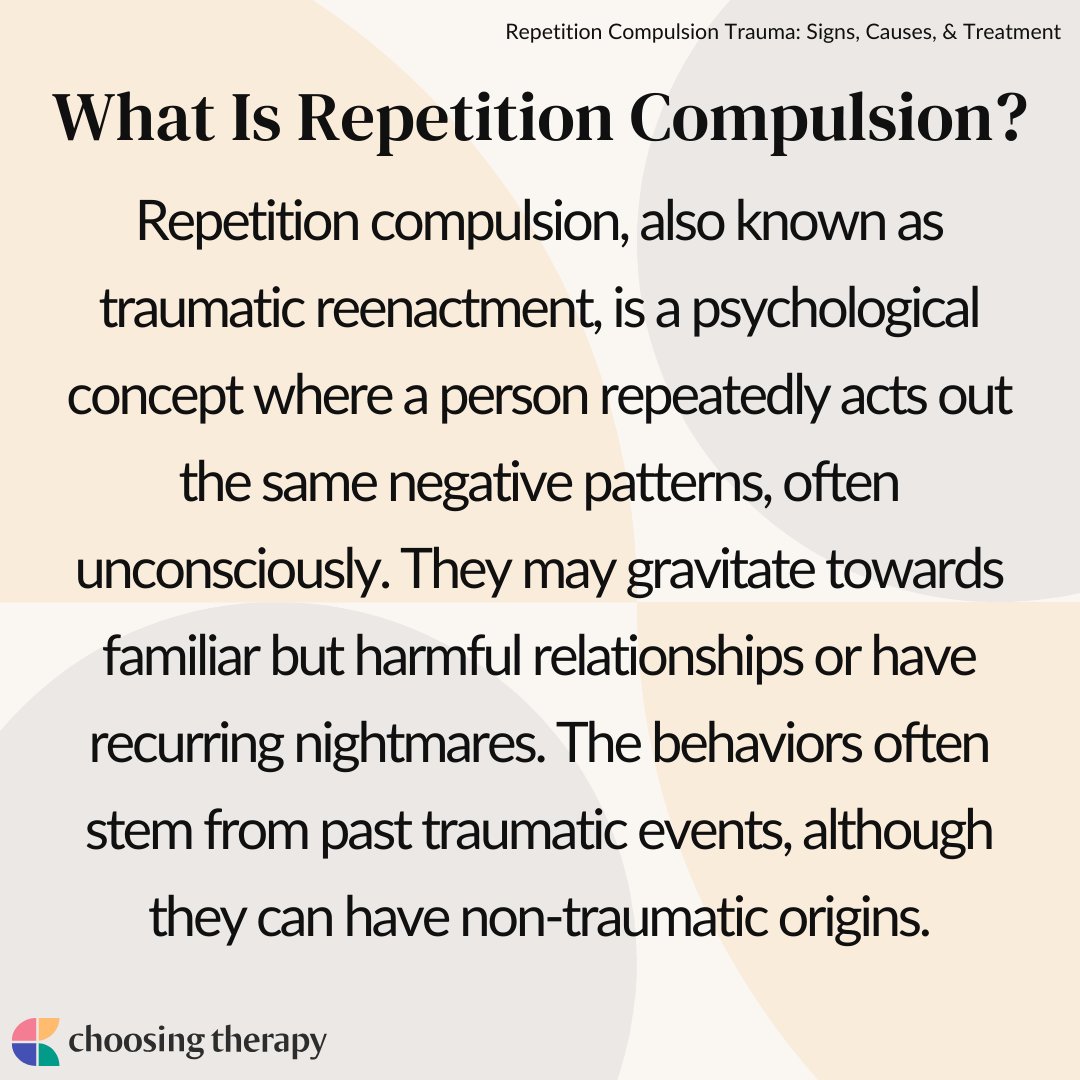

iv. old habits die hard freud’s concept of repetition compulsion (refer back to the last attachment if you are confused) becomes most visible in toji's adult occupation as the “sorcerer killer.” although he outwardly rejects the jujutsu world and the clan that abused him, he remains psychologically incapable of escaping them. instead, he repeatedly sells his labor, body, and violence back to the very symbolic structure that originally dehumanized him. every assassination functions as a re-enactment of his childhood trauma. psychoanalytically, toji’s violence can be interpreted as a form of symbolic parricide: an unconscious attempt to destroy the patriarchal “fathers” who denied his humanity and defined him as defective due to his lack of cursed energy. yet repetition compulsion is inherently self-defeating; the subject continuously reenacts the wound not to heal it, but because the psyche remains trapped within its unresolved logic. toji is stuck in an cycle of self-sabotage

on his gambling addiction: in addition to his harmful profession, this self-destructive loop of repetition compulsion extends seamlessly from the battlefield to something bigger and purely chance-based, gambling.

in 1866, acclaimed author fyodor dostoevsky wrote his acclaimed novella "the gambler" in response to pay off gambling debts and cope with his addiction. fyodor's gambling addiction spiraled as a coping mechacism to his depression and grief of his first wife. sounds familiar?

toji’s chronic gambling addiction cannot be dismissed as a simple search for wealth or a careless habit; rather, it functions as a existential ritual. like dostoevsky's cahracter: alexei ivanovich, toji is driven by a urge to surrender his entire being to the unpredictable forces of chance, luck, and impossible odds. within the context of his childhood trauma, the gambling table serves as a safe simulation of his original psychic wound. by repeatedly betting everything on risks and suffering continuous financial ruin, he is unconsciously reenacting his childhood degradation. every high-stakes bet is a desperate, recurring question thrown at fate: "will the universe finally reverse my fortunes and validate my existence, or will it prove my father right and destroy me?" he is addicted not to the prize of winning, but to the razor-thin margin between total annihilation and survival, using the pure terror of the gamble to briefly anchor his fractured ego.

this existential surrender to chance clarifies why toji consistently pursues moments of radical self-sabotage, a behavior that bridges dostoevsky’s literary insights with bessel van der kolk’s neurobiological descriptions of trauma. van der kolk observes that traumatized individuals frequently suffer from profound emotional deadening and dissociation; when a person is stripped of basic human safety early in life, their nervous system adjusts by flatlining ordinary emotional responses. as observed with toji, this manifests as a pervasive numbness where even ordinary pleasures feel entirely flattened. (likely why he didnt feel much with tsumiki's mother) consequently, his compulsive gambling, reckless lifestyle, and pursuit of high-stakes assassinations are not acts of casual impulsivity, but deliberate, unconscious mechanisms to pierce through his chronic psychological dissociation. similar to dostoevskian narratives, toji actively sabotages opportunities for peace or structural stability because a calm environment feels alien to his conditioned mentality. (check attachment for another dostoevskian comparison)

v. the mentality of power another antagonist from this series who is born from trauma, grief, and unwanted presence is none other than ryomen sukuna himself. these two antagonists emerge from environments defined by rejection, dehumanization, and societal indifference, yet the psychological trajectories they develop in response to this rejection are interesting to compare.

on toji: its worth mentioning that toji internalizes his degradation, he was treated by his clan as defective and subhuman due to his lack of cursed energy. as a result, he absorbs this judgment into his self-concept, developing a depressive worldview structured around worthlessness, emotional detachment, and self-erasure. Toji remains a tragic slave to the jujutsu world, unable to form an independent sense of self outside his negative attachment to it
