Canvas & Ratio
Choose your destination platform format
Layout Template
Choose a content structure for your slides
Preset Themes
Typography & Sizing
Brand Kit Customization
AGENCYConfigure brand assets for headers & footers
Outro Slide CTA
Customize your closing call-to-action slide
Background Pattern
Build Your Carousel
Drag and drop any post card below onto a slide, or use the quick buttons to insert content/images instantly!

Fujairah is on fire, and with it, the energy ceasefire. Critical infrastructure at the strategic oil terminal is currently ablaze. 🧵
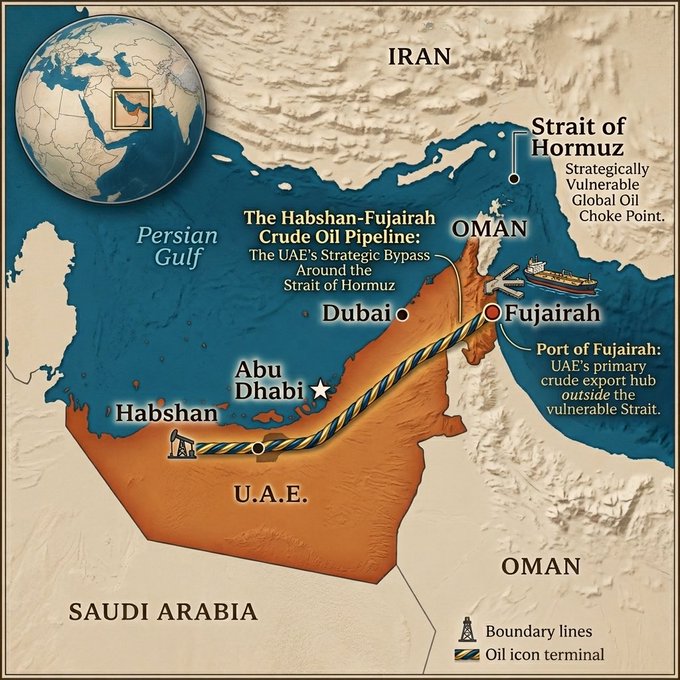
While President Trump seeks to “liberate” Hormuz, the drones and missiles launched from Iran toward the UAE are the first definitive signs that the energy ceasefire is on the verge of collapse. We are arguably witnessing the most dramatic hours for global energy politics since
the ceasefire was extended. The United States is attempting to implement a new plan to “escort” and guide vessels through the Strait of Hormuz to evade the Iranian blockade. In direct response to this American initiative, Iran resumed fire today against pivotal energy
infrastructure in the Gulf. Although several missiles and drones were intercepted over the UAE, these represent the first shots fired by Iran toward a Gulf nation in a fortnight. Not all projectiles were neutralized by air defences. A major fire has broken out at the
Fujairah Oil Industry Zone, one of the most critical facilities in the nation’s oil and gas sector. Injuries have been reported at the site; significant damage to energy infrastructure is certain, as are the geopolitical repercussions. It is worth noting that only five days ago
, the UAE exited the OPEC and OPEC+ alliances—a clear indication of increasing strain between the Emirates and other major oil producers. While the UAE has departed, both Saudi Arabia and Iran remain within OPEC, and Saudi Arabia continues its cooperation with Russia in the
broader OPEC+ alliance. Furthermore, at least two additional vessels—one South Korean and another located north of Dubai—have reportedly been struck by drones. As oil and gas prices surge once more, energy markets must soon decide whether to believe the White House rhetoric of
a “liberated” Hormuz or heed the sirens sounding across the UAE, which herald a new wave of Iranian strikes on regional energy infrastructure. Don't forget to subscribe to my blog and newsletter 🫴<a target="_blank" href="https://rebrand.ly/EGSTwitter" color="blue">rebrand.ly/EGSTwitter</a>
Don't forget to subscribe to my blog and newsletter 🫴<a target="_blank" href="https://rebrand.ly/EGSTwitter" color="blue">rebrand.ly/EGSTwitter</a>