Canvas & Ratio
Choose your destination platform format
Layout Template
Choose a content structure for your slides
Preset Themes
Typography & Sizing
Brand Kit Customization
AGENCYConfigure brand assets for headers & footers
Outro Slide CTA
Customize your closing call-to-action slide
Background Pattern
Build Your Carousel
Drag and drop any post card below onto a slide, or use the quick buttons to insert content/images instantly!

DEEP DIVE INTO SPACE TOILETS Urine and fecal collection on the first US manned spacecraft The first two U.S. manned Mercury flights (Mercury-3: Alan Shepard, May 5, 1961; Mercury-4: Virgil Grissom, July 21, 1961) were short suborbital missions (15–16 minutes) with no urine or feces collection systems onboard.
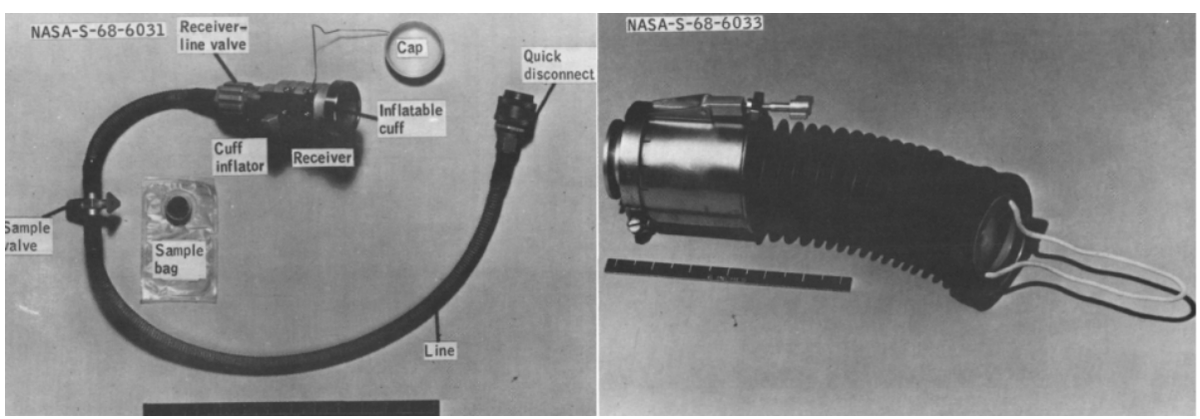
The first urine collection device (UCD) was introduced on Mercury-6 during the first orbital flight (John Glenn) and consisted of a tube with a rubber cuff and a container for urine collection
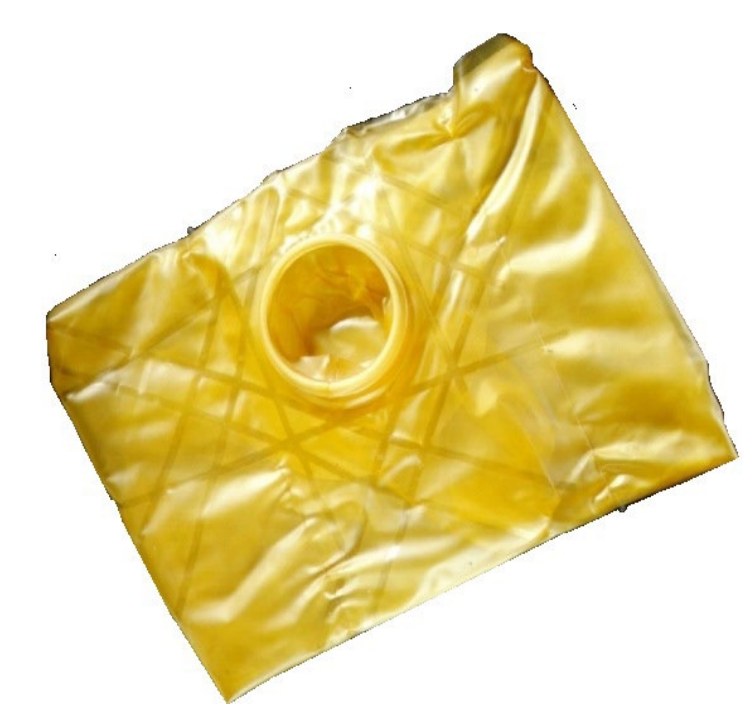
UCDs were not sufficient for long-duration flights in the two seat Gemini spacecraft, and new long duration aids were developed for use in orbit. The original urine collection system designed for Gemini-3 and Gemini-4 used a urinal connected to a hand-pumped "accordion" receiver that generated thrust to move urine. Major drawbacks: The hand pump required assistance from the second astronaut. The flawed accordion design frequently ejected urine outward instead of properly transferring it.
With Gemini 5, the system was modified - the urinal was made to fit tightly, like a condom, a non-return valve was added to the tube to prevent urine ejection, and the receptacle was replaced by a simple soft container

The extended flights of the Gemini Program led to the requirement for a defecation system. Special bags were developed to collect feces The bag had an adhesive neck and had to be taped to the buttocks around the anus. After defecation, it was necessary to insert one's fingers into the special finger cot, separate the feces from the body, and push them further into the bag so that they would remain contained

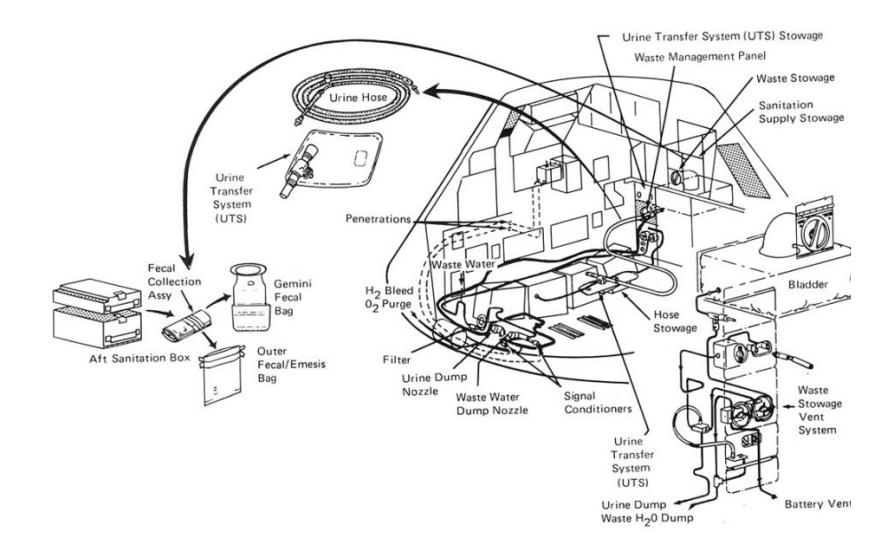
The urine collection and transfer processes for the Apollo missions were similar to all previous space missions When crewmen wore space suits during launch, extravehicular activity, and emergency modes, a special device was provided for collection and intermediate storage of urine

Apollo’s waste management system collected & stowed feces while collecting & dumping urine overboard. The star piece was the handheld Urine Receiver Assembly (URA) — a cylinder with a honeycomb capillary insert that held liquid in zero-g via surface tension, allowing up to 700 ml effective capacity before venting/dumping through the waste panel. It also supported urination from the couch and suit. Simple but effective for the Moon missions.
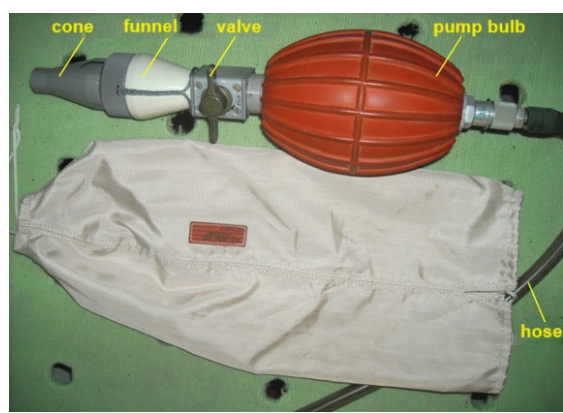
The first Soviet Vostok spacecraft was equipped with a toilet, Sewage and sanitation device (ASU) from the very beginning. Urine and air formed a gas-liquid mix in microgravity. It was pulled through a hose into a capillary-based moisture collector filled with porous TPVF foam cubes. The cubes absorbed the liquid completely while labyrinth channels let air pass with low resistance. A deodorizing filter cleaned the air before a fan returned it to the cabin.

For the Soviet L-3 Moon landing mission, the ASU-VII urine system was chosen to save return mass. It used a receiver + 3 swap-out cylindrical moisture collectors (TPVF-filled) + deodorizing fan unit. Each collector held enough for the full 2-person lunar return trip. The first two were used early, then dropped (with urine) in lunar orbit or on the surface before heading home — massively reducing return weight. Included visual overfill sensor & emergency hand-pump “receptacle with wringer” backup.
The Skylab toilet was the first U.S. toilet to use an air pump (fan) to suck urine through the urinal hose and feces into a holding tank. A filter installed at the inlet of the suction fan provided odor removal. The toilet was placed vertically on the wall of the Skylab cabin in such a way that a male astronaut could use it conventionally "standing" for urine disposal. However, for feces disposal crew had to fix it to the wall parallel to the floor.

The Space Shuttle era revolutionized space toilets. Both the US Shuttle and Soviet Buran programs introduced major upgrades over earlier systems, creating the first true “full-fledged” space toilets with big improvements in comfort and function. These designs became the foundation for all future spacecraft toilets. Shuttle WCS featured dual redundant separator fans for high reliability. Urine was pumped and separated; feces were air-transported under the seat, gathered by vanes, vacuum-dried to slow decay, then returned to Earth. It was mostly automated but needed training for the big seat alignment. Later upgraded with Oxone tablets to prevent urine mineral buildup. A big leap forward in space toilets.
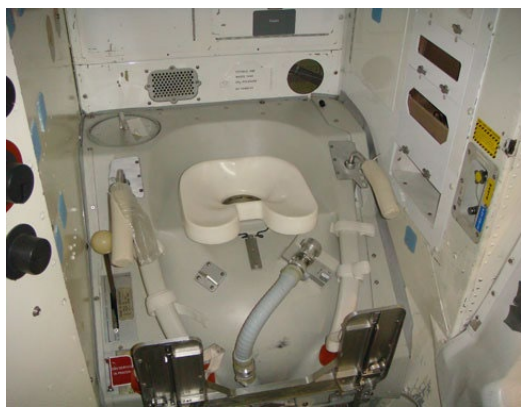
The Soviet ASU-8 toilet for Buran kept the core design but got major upgrades over ASU-VII: a proper toilet seat with integrated urinal, a large removable solid-waste container (30+ crew-days), electrical overflow alarm instead of visual checks, a more powerful fan for better airflow, and preservative-treated TPVF to cut ammonia and ease the deodorizing filter. Much more comfortable and user-friendly.
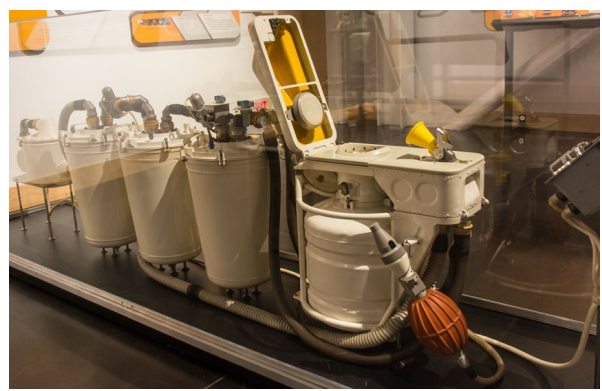
Mir (1986–2001), the first long-duration multi-module station, hosted crews for up to 437 days. It flew 86k+ orbits over 5511 days (4594 inhabited). Shuttle visited 9 times. From 1990 it pioneered urine-to-water regeneration, which shaped its toilet design. Until then it used the ASU-8A — an upgraded Buran-style space toilet.

ISS got its first toilet in Nov 2000: the Russian ASU-SPK-UM on the Service Module (only toilet until 2008). Upgraded from Mir’s ASU-8A, it featured a feces-only receiver, collapsible 20 person-day solid waste container, urine valve startup, and portable EDV tanks. Urine was pre-treated for future recycling. Still the backbone of Russian segment toilets today.
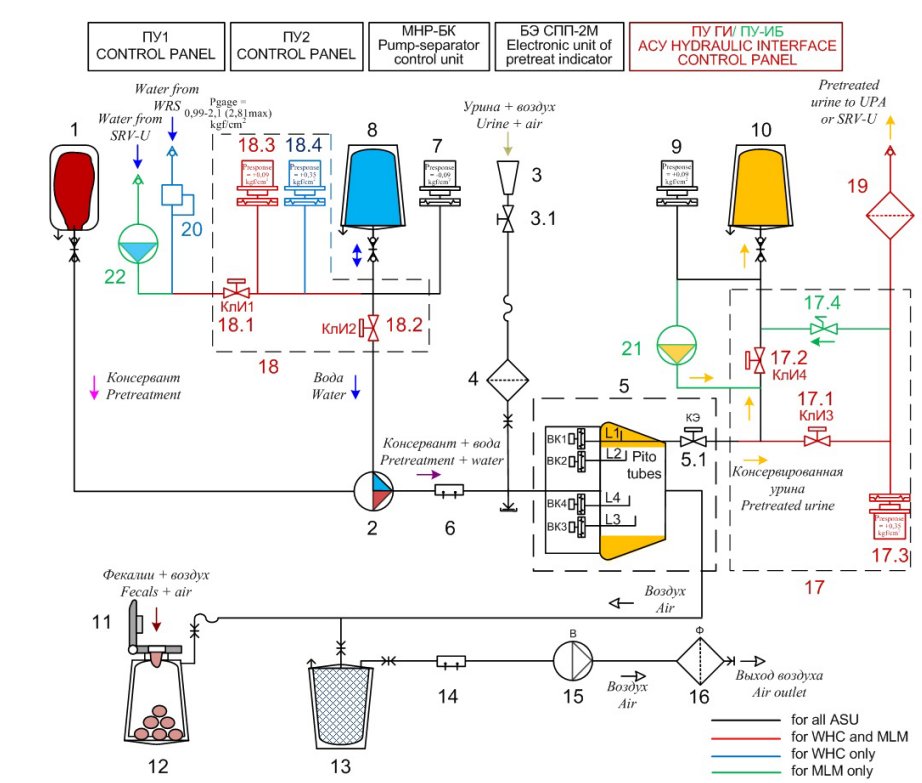
ISS now has 4 toilets: 2008: 2nd Russian-style toilet (ASU-SPK-UM-IB) in US WHC — international collab, automated urine transfer to UPA, orthophosphoric acid pretreatment. 2021: 3rd Russian toilet on Nauka module (ASU-SPK-UM MLM) with integrated urine processor. 2020: New US-designed Universal Waste Management System (UWMS) in USOS. All evolved from earlier Russian designs.

Artemis II Orion’s UWMS is a $23 million 3D-printed titanium space toilet. Uses airflow suction for microgravity, has a private curtained stall, unisex funnels & odor-control canisters. …though it was plagued by issues during the flight.

The SpaceX Crew Dragon features a built-in, vacuum-based toilet system located behind a privacy panel on the capsule's ceiling. Using air suction fans instead of gravity, it separates liquid and solid waste, storing urine in tanks and fecal matter in containers. The system was redesigned after a 2021 leak, using a fully welded tube system to prevent failures.
