Canvas & Ratio
Choose your destination platform format
Layout Template
Choose a content structure for your slides
Preset Themes
Typography & Sizing
Brand Kit Customization
AGENCYConfigure brand assets for headers & footers
Outro Slide CTA
Customize your closing call-to-action slide
Background Pattern
Build Your Carousel
Drag and drop any post card below onto a slide, or use the quick buttons to insert content/images instantly!

The UAE exits OPEC and OPEC+. A seismic shift for global oil markets. 🛢️🇦🇪 The news emerging from the Persian Gulf today is enough to make even the most seasoned market observers tremble, and for once, it is not directly related to kinetic warfare. 🧵
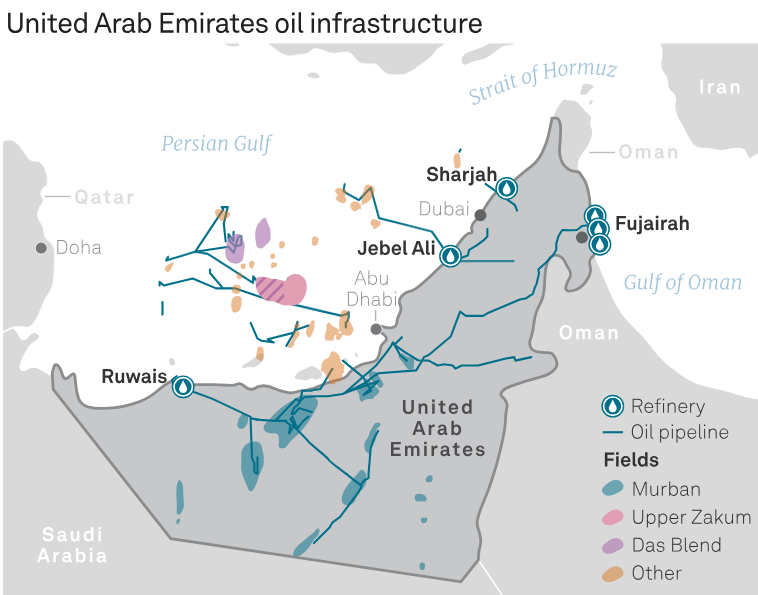
The United Arab Emirates—one of the world’s ten largest oil producers and a member of the OPEC alliance since nearly its inception—has announced its exit from both OPEC and OPEC+. The UAE’s Energy Minister, Suhail Mohamed al-Mazrouei, informed Reuters earlier today that the
government reached this decision following a comprehensive review of the regional powers' long-term energy strategies. This departure signals that the long-standing friction with Saudi Arabia over production quotas has evolved from a diplomatic disagreement into a structural
hindrance to any meaningful energy cooperation. Moreover, it marks the latest and most significant rupture in the Saudi-UAE relationship. These two powers recently saw their allied forces clash in Yemen, even before the outbreak of the current conflict involving the
U.S., Israel, and Iran. Geopolitical rivalries between Abu Dhabi and Riyadh have intensified across the Middle East, the Horn of Africa, and North Africa. Today, oil policy has become the latest point of friction between two nations that for decades collaborated to ensure price
stability. It is a profound paradox that the UAE’s withdrawal comes amid record-high oil prices. This suggests that even significant price spikes are no longer sufficient to bridge the widening trust deficit between producers. This move will have lasting consequences for
post-war energy strategies and will undoubtedly inject fresh volatility into the markets. The era of a unified Gulf oil policy appears to be at an end. Energy geopolitics is becoming increasingly critical to understanding the future of global power.
Don't forget to subscribe to my blog and newsletter 🫴<a target="_blank" href="https://rebrand.ly/EGSTwitter" color="blue">rebrand.ly/EGSTwitter</a>