Canvas & Ratio
Choose your destination platform format
Layout Template
Choose a content structure for your slides
Preset Themes
Typography & Sizing
Brand Kit Customization
AGENCYConfigure brand assets for headers & footers
Outro Slide CTA
Customize your closing call-to-action slide
Background Pattern
Build Your Carousel
Drag and drop any post card below onto a slide, or use the quick buttons to insert content/images instantly!

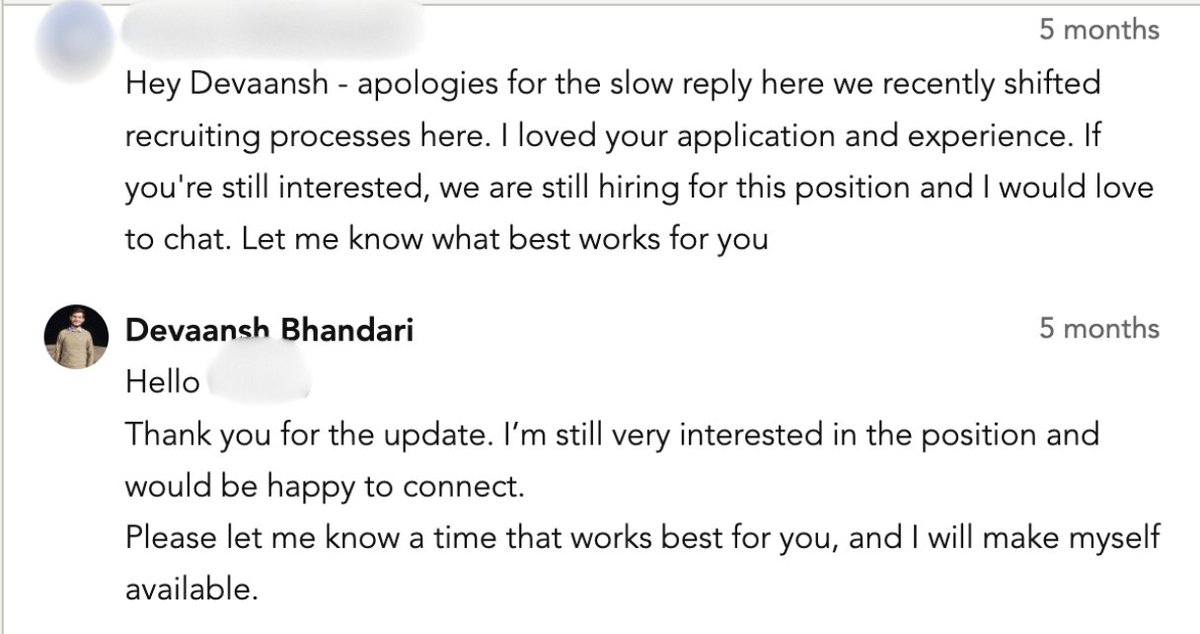
I landed a ₹3L/month in hand remote job at a YC backed startup with 0 years of full time experience. I want every one of you to do the same. On campus placement is a scam and it is much better to look for global opportunities. This is a no BS guide on how you can do the same. I am sharing my personal experience and the strategies used by my friends working in global roles. Everything you need to know is in this thread 🧵
First let's understand what "fresher" means in 2026. I have seen a lot of memes on this so let's clarify. A fresher in 2026 is a Product Builder. You don't just write code. You understand how a user uses the app and how the data is stored and how the API connects them. Startups are not looking for students. They want junior engineers who can ship features without hand holding.
Let's debunk some myths about remote jobs. 1. College and degree matter. I have given 6 interviews for remote roles and none of them asked about my college. My friends had the same experience. No one cares where you studied. 2. Grades matter. I once had 8 backlogs and a very low CPI (6.3 out of 10). I still landed a global role because I focused on my strengths. Your past grades do not define your future income. 3. They only hire seniors. Startups need quality freshers. A fresher in the US costs $120k. They would rather hire a "cracked" fresher in India for $40k. 4. Only apply when you know everything. Do not self reject. Startups want a "figure it out" mindset. No one knows everything but the right mindset gets you the job.
Now let's talk about what you need to have in your resume. You definitely need to make your resume standout. For this make sure you have at least two of these: 1. Great projects. In college we built an SEO tool and an edtech platform. These were built from scratch and had real users. Have projects that solve real problems. 2. Open source. Programs like GSoC and LFX give an edge. Contributing to real projects proves your skills are legit. I was the lead contributor for GSoC 24 and LFX 24 fall season. 3. Hackathons. These improve your credibility. The more valuable the hackathon the more it helps. I got 2nd place in Flipr hackathon in 2024 and also participated in the ONDC hackathon.

Essential soft skills you need to have: 1. Communication. It is a must that you know how to converse in English. If you lack communication skills you will always get rejected no matter how good your resume is. 2. Async culture. Most teams work in different time zones. You should be very good at working alone and know how to handle JIRA and documentation efficiently.
Technical Skills: There is no hard rule on what tech stack you should learn. You should be very good at one particular tech like Nodejs or Python. I got selected for a role using Golang and Rust even though I had no prior experience in those languages. But you should definitely be very good at system design. All of my interview rounds were based on system design and live coding where I had to build a feature. None of the startups asked me DSA so be prepared accordingly. Also learn to use AI coding tools like Cursor or Claude code. Being a fast builder is more important than being a fast typer in 2026.

Where to find such opportunities: 1. Y Combinator. This is one of the best communities for remote jobs. I got two interview opportunities through their Work at a Startup portal. 2. Wellfound. A great platform for startup roles. Use the filters to select remote and worldwide regions. 3. Less competitive sites. These often have a higher chance of giving you an interview. Check out Remotely Works and Underdog io and Jobs24x.

Other ways to find a remote job: 1. Follow remote companies. Follow companies that hire remotely and cold mail the founder about opportunities. 2. Contribute to open source. If a company is open source start contributing to their code. They might contact you first or it will greatly increase your chance of an interview. 3. Build a network. Make connections with people who already work remotely. If there is an opening in their company you can ask for a referral.
How to cold mail: 1. Do not just ask for a job. If you just say you are looking for work you will likely get rejected. 2. Show relevant experience. Tell them you have already worked on something similar. Explain exactly how you can add value to their product. 3. Find a problem to solve. Check their website and find bugs or things that can be improved. Mail the founder a list of these issues and tell them how you can fix them. This shows you are genuinely interested and have the skills they need.


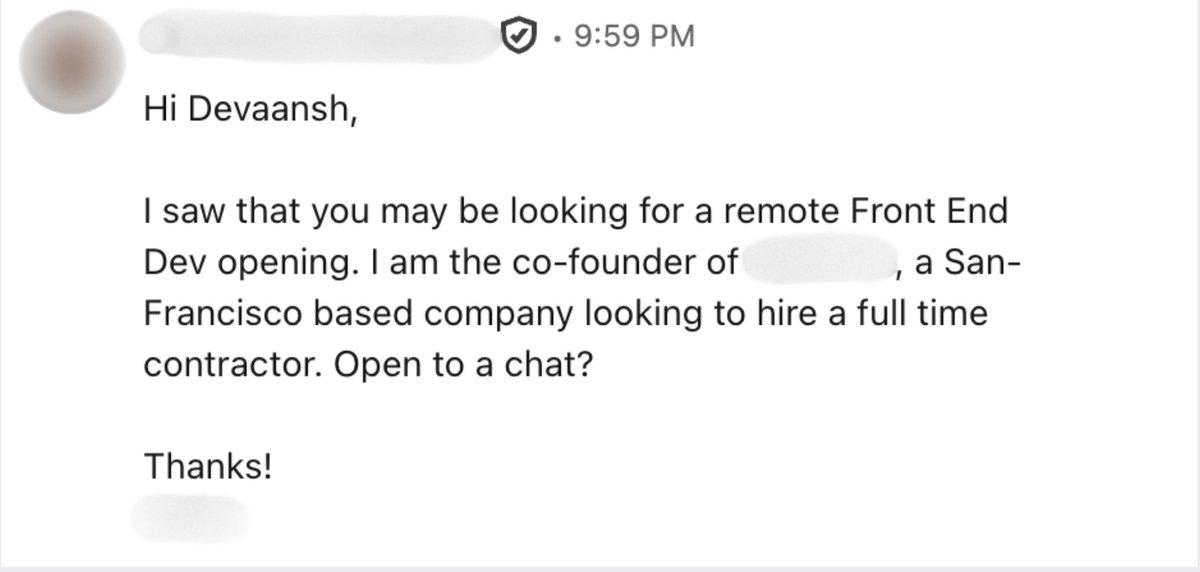
Build your personal brand. Many people do not understand the importance of having a good LinkedIn or X profile. I got several offers from LinkedIn alone. Make sure you keep building in public and sharing your experience online. You never know where your next opportunity comes from.


If you found this thread helpful: 1. Let's connect. I share lessons on scaling a YC startup and guide freshers to land global remote roles. 2. Repost the first tweet to help someone else escape the campus placement trap. Drop your questions below or you can DM me anytime. I am happy to help.