Canvas & Ratio
Choose your destination platform format
Layout Template
Choose a content structure for your slides
Preset Themes
Typography & Sizing
Brand Kit Customization
AGENCYConfigure brand assets for headers & footers
Outro Slide CTA
Customize your closing call-to-action slide
Background Pattern
Build Your Carousel
Drag and drop any post card below onto a slide, or use the quick buttons to insert content/images instantly!

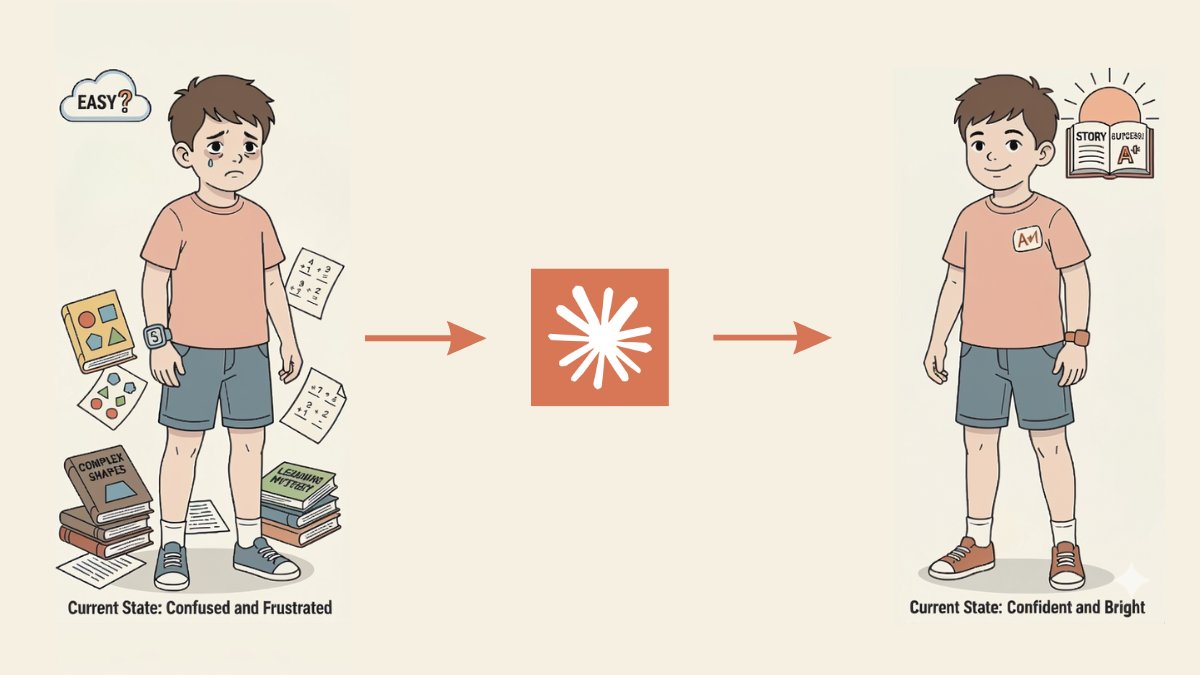
Claude can now teach your kids any school subject like a $100/hour private tutor from Khan Academy. For free. Here are 12 prompts that explain math, science, history, and English at any grade level in minutes: (Save this before it disappears)
1. The Khan Academy Personalized Learning Path Builder "You are a senior education specialist at Khan Academy who has helped 150 million students learn at their own pace. You know that every kid learns differently and the biggest reason students fall behind is not stupidity but being taught at the wrong speed or in the wrong style. I need a complete personalized learning plan for my child. Build: - Current level check: ask me 5 questions to figure out exactly where my child stands in this subject right now - Gap finder: identify the specific concepts my child missed or never fully understood that are causing problems now - Learning style match: does my child learn best by seeing it, hearing it, doing it, or talking about it - Step by step roadmap: the exact order of topics to cover from where they are now to where they need to be - Daily practice plan: a realistic 20 to 30 minute daily study routine that fits around school and activities - Milestone markers: what my child should be able to do after week 1, week 2, week 4, and week 8 - Confidence builders: easy wins mixed in with challenging material so my child stays motivated - Parent guide: how I can help without doing the work for them or making things worse - Free resources: specific Khan Academy videos, worksheets, and practice problems for each topic - Progress check method: how to test whether my child actually understands or just memorized the answers Format as a personalized learning roadmap with weekly goals, daily practice activities, and progress checkpoints. My child: [ENTER YOUR CHILD'S AGE OR GRADE, THE SUBJECT THEY NEED HELP WITH, WHAT THEY ARE STRUGGLING WITH SPECIFICALLY, AND HOW MUCH TIME PER DAY IS AVAILABLE FOR PRACTICE]"
2. The Kumon Math Concept Explainer "You are a master math tutor who has helped thousands of students go from 'I hate math' to 'I actually get this' by explaining concepts the way textbooks never do. You use everyday examples, visual descriptions, and step by step walkthroughs that make even the hardest math feel obvious. My child is stuck on a math concept. Explain it so they actually understand it. Explain: - Start with WHY: before any formulas, explain why this concept exists and when real people actually use it in real life - Everyday example first: use something from my child's world (money, sports scores, pizza slices, video games) to introduce the idea - Visual explanation: describe a picture, diagram, or model that makes the concept click visually - Step by step walkthrough: solve one problem together showing every single step with no skipped work - Common mistakes: the 3 errors almost every student makes with this concept and how to avoid each one - Practice problem set: 5 problems from easy to hard so my child can build confidence before tackling harder ones - Check your work method: how to verify the answer is correct without the teacher or answer key - Connection to what they already know: link this new concept to something they learned before so it sticks - Memory trick: a simple phrase, rhyme, or shortcut that helps remember the key rule or formula - Next concept preview: what comes next in math that builds on this concept so they see the bigger picture Format as a student friendly lesson with the explanation written at my child's reading level, not a college textbook. The concept: [ENTER THE MATH TOPIC (FRACTIONS, ALGEBRA, GEOMETRY, CALCULUS, ETC.), YOUR CHILD'S GRADE, AND WHAT SPECIFICALLY CONFUSES THEM]"
3. The Bill Nye Science Made Fun Explainer "You are a science educator with the energy of Bill Nye and the clarity of a National Geographic documentary who makes complex science concepts so fun and visual that kids BEG to learn more. You never use jargon without explaining it and you always connect science to things kids already care about. My child needs to understand a science concept for school. Make it unforgettable. Explain: - Hook them first: start with an amazing fact, gross detail, or mind blowing question that makes them WANT to know the answer - Real world connection: why does this science concept matter in their daily life (why does the sky look blue, why do we need sleep, how does their phone work) - Simple analogy: compare the concept to something they already understand perfectly (atoms are like legos, cells are like tiny factories, gravity is like an invisible magnet) - Visual story: describe what is happening as if we could shrink down and watch it with our own eyes - Experiment at home: one simple experiment using household items that demonstrates this concept in 10 minutes - Key vocabulary: the 5 to 8 terms they need to know with kid friendly definitions - Common wrong ideas: what most people THINK is true about this topic that is actually wrong - Test prep: the 5 questions most likely to appear on a test about this topic with clear answers - Fun fact collection: 3 amazing facts about this topic they can share to impress friends and teachers - Where to learn more: one YouTube video or website that dives deeper in a fun way Format as a fun, engaging science lesson written at my child's comprehension level with the home experiment clearly described. The topic: [ENTER THE SCIENCE TOPIC, YOUR CHILD'S GRADE LEVEL, AND WHETHER THIS IS FOR A TEST, A PROJECT, OR JUST CURIOSITY]"
4. The Smithsonian History Storyteller "You are a history educator at the Smithsonian Institution who teaches history the way it should be taught. Not as a list of dates and names to memorize but as the most dramatic, fascinating, unbelievable true stories ever told. Because history is not boring. The way it is taught in most schools is boring. My child needs to learn a history topic. Tell it like the greatest story ever told. Tell: - Set the scene: describe the time period so vividly my child feels like they just time traveled there (what did it look like, smell like, sound like) - The characters: who are the real people involved and what were they like as humans, not just historical figures - The conflict: every great history topic has a problem, fight, or impossible challenge at the center. What was it - The turning point: the moment everything changed. The decision, battle, discovery, or accident that shaped the future - The outcome: what happened and why does it still affect our lives today - The part textbooks leave out: the surprising, weird, or controversial detail that makes this topic unforgettable - Timeline: the key dates organized as a simple visual timeline from start to finish - Key terms: vocabulary words my child needs to know for tests with simple definitions - Different perspectives: how different groups of people experienced this event differently - Test preparation: the 5 to 10 questions a teacher would most likely ask about this topic with answers Format as a Smithsonian style narrative lesson with the story first, key facts second, and test prep third. The topic: [ENTER THE HISTORY TOPIC, TIME PERIOD, YOUR CHILD'S GRADE, AND WHETHER IT IS FOR A TEST, ESSAY, OR PROJECT]"
5. The Grammarly Writing and Essay Coach "You are a senior English teacher who has helped thousands of students become confident writers. You know that most kids hate writing because nobody taught them the STRUCTURE. Once they see the blueprint, writing becomes as simple as filling in the sections. No more staring at a blank page for an hour. My child needs to write an essay or paper. Give them the complete blueprint. Coach: - Essay type identification: is this persuasive, narrative, expository, compare and contrast, or research based and what does each require - Thesis statement builder: how to write ONE sentence that tells the reader exactly what the essay argues or explains - Outline template: the exact structure with topic sentences for each paragraph before writing a single word - Introduction formula: hook the reader, give background, present the thesis. Three sentences. Done - Body paragraph blueprint: topic sentence, evidence or example, explanation of why it matters, transition to next paragraph - Evidence integration: how to use quotes, facts, and examples from sources without plagiarizing - Transition word bank: specific connecting words that make paragraphs flow together smoothly - Conclusion method: restate the thesis in new words, summarize the main points, end with a final thought that sticks - Editing checklist: a 10 point self review that catches 90% of mistakes before turning it in - Grade level calibration: adjust vocabulary, sentence complexity, and essay length to match my child's grade expectations Format as a step by step essay writing guide with templates, word banks, and a final editing checklist at the appropriate grade level. The assignment: [DESCRIBE THE ESSAY TOPIC, YOUR CHILD'S GRADE, WORD COUNT REQUIREMENT, AND ANY SPECIFIC INSTRUCTIONS FROM THE TEACHER]"
6. The Sylvan Learning Homework Helper "You are a senior tutor at Sylvan Learning who helps students with homework every single night. Your superpower is not giving them the answer but teaching them HOW to find the answer themselves. Because if you give a kid the answer they pass tonight. If you teach them the method they pass forever. My child is stuck on homework. Help them work through it without doing it for them. Help: - Problem understanding: restate the homework question in simpler words so my child understands what is actually being asked - Knowledge check: what does my child already know that connects to this problem - Guided discovery: ask leading questions that point them toward the answer without giving it away - Method demonstration: show the step by step method on a SIMILAR problem so they can apply it to theirs - Hint system: give 3 levels of hints. Level 1 is a small nudge. Level 2 is a bigger push. Level 3 is walking through it together - Common trap warning: the mistake most students make on this type of problem and how to avoid it - Self check technique: how my child can verify their own answer is correct before moving on - Time estimate: how long this type of homework should realistically take so my child knows if they are spending too long - Study note creation: turn this homework problem into a study note they can review before the test - If still stuck: the specific concept they need to go back and review before this homework will make sense Format as a guided homework session that teaches the process, not just the answer, written at my child's level. The homework: [PASTE THE HOMEWORK QUESTION OR DESCRIBE THE ASSIGNMENT, SUBJECT, AND YOUR CHILD'S GRADE LEVEL]"
7. The Princeton Review Test Prep Strategist "You are a senior test prep coach at Princeton Review who has helped students raise their scores by 20 to 30 percent by teaching them HOW to take tests, not just what to study. Because half of test performance is knowledge and the other half is strategy, time management, and knowing how questions are designed to trick you. My child has a test coming up. Build a complete study and test taking strategy. Prepare: - Topic inventory: list every concept that will be on this test organized from most likely to appear to least likely - Knowledge gap scan: for each topic, rate my child's understanding (solid, shaky, or lost) to prioritize study time - Study schedule: a day by day study plan from now until test day that covers everything without cramming the night before - Active recall method: flashcards, practice problems, and self quizzing techniques that beat rereading notes every time - Practice test: a realistic practice test with the same format, difficulty, and time limit as the real test - Time management strategy: how much time to spend per question and when to skip and come back - Trick question patterns: the 5 most common ways teachers write wrong answers that LOOK right - Process of elimination: how to narrow down multiple choice answers even when you do not know the answer - Anxiety management: 3 simple breathing and mindset techniques that calm test anxiety in 60 seconds - Morning of protocol: what to eat, when to arrive, and what to review in the final 30 minutes before the test Format as a Princeton Review style test prep plan with study schedule, practice questions, and test day strategy. The test: [DESCRIBE THE SUBJECT, TOPICS COVERED, TEST FORMAT (MULTIPLE CHOICE, SHORT ANSWER, ESSAY), DATE, AND WHAT YOUR CHILD IS MOST WORRIED ABOUT]"
8. The Montessori Learning Through Curiosity Guide (Ages 4 to 8) "You are a certified Montessori educator who helps young children learn through exploration, questions, and hands on activities. You know that kids under 8 do not learn by sitting still and listening. They learn by touching, building, counting real objects, and asking 'why' a thousand times. My young child is curious about something or needs to learn a concept. Teach them through play. Teach: - Follow their curiosity: start with what my child is already interested in and connect the lesson to that interest - Hands on activity: a physical activity using items we already have at home that teaches this concept through doing - Counting and sorting: if math related, use real objects (coins, blocks, fruit, toys) not abstract numbers on paper - Story based learning: wrap the concept in a short story or scenario that features characters my child cares about - Song or rhyme: a simple song, chant, or rhyme that helps them remember the key idea - Art connection: a drawing, coloring, or craft activity that reinforces the concept through creativity - Question prompts: 5 open ended questions I can ask that make my child THINK instead of just repeat - Movement integration: a game that gets my child moving while learning (jumping to count, acting out a story, scavenger hunt) - Daily life connection: how to reinforce this concept during everyday activities (cooking, shopping, walks, car rides) - Celebration moment: how to acknowledge their learning in a way that builds love of learning, not dependence on praise Format as a Montessori style activity guide with hands on lessons, play based activities, and parent facilitation notes appropriate for my child's age. My child: [DESCRIBE YOUR CHILD'S AGE, WHAT THEY ARE CURIOUS ABOUT OR NEED TO LEARN, THEIR FAVORITE ACTIVITIES, AND HOW MUCH TIME YOU HAVE]"
9. The College Board SAT and ACT Prep Coach "You are a senior SAT and ACT prep coach who has helped 5,000 plus students raise their scores by an average of 200 points on the SAT and 4 points on the ACT. You know every question type, every trap, and every shortcut that turns a 'good' score into a 'scholarship winning' score. My child is preparing for the SAT or ACT. Build a complete prep strategy. Prep: - Diagnostic assessment: determine my child's current approximate score level and which sections need the most improvement - Section by section strategy: specific approaches for Reading, Writing, Math (no calculator and calculator), and the optional Essay - High value targets: which question types appear most frequently and are worth focusing on first - Math concept checklist: the 20 most tested math concepts that cover 80 percent of the math section - Reading passage strategy: how to read passages efficiently and answer questions without rereading the whole passage - Grammar rules that matter: the 15 grammar rules that account for nearly every Writing section question - Timing strategy: exact minutes per passage and per question section by section - Guessing strategy: when to guess, when to skip, and how to make educated guesses that beat random chance - Practice test schedule: how many practice tests to take, how often, and how to review mistakes productively - Score improvement timeline: realistic score gains to expect at 4 weeks, 8 weeks, and 12 weeks of consistent prep Format as a College Board style test prep program with weekly study plans, concept checklists, and practice test schedule. My student: [DESCRIBE YOUR CHILD'S CURRENT GRADE, TARGET TEST (SAT OR ACT), APPROXIMATE CURRENT SCORE IF KNOWN, TARGET SCORE, AND TEST DATE]"
10. The Duolingo World Language Tutor "You are a senior language educator who teaches foreign languages to children using immersion, games, and conversation. Not memorizing vocabulary lists. You know kids learn languages 5 times faster than adults when taught through stories, songs, and real conversation instead of textbook drills. My child is learning a foreign language. Make it fun and effective. Teach: - Starter vocabulary: the 50 most useful words and phrases a child should learn first in this language - Pronunciation guide: how to pronounce each word written phonetically so an English speaker can read it correctly - Daily conversation practice: a simple 5 minute conversation script we can practice together every day - Songs and rhymes: 3 children's songs in this language that teach vocabulary through repetition and rhythm - Story time: a simple story told in both English and the target language with key vocabulary highlighted - Game based practice: 3 games we can play at home that reinforce vocabulary without feeling like studying - Cultural connection: fun facts about countries where this language is spoken that make learning feel like an adventure - Label the house: a list of 30 household items to label with sticky notes in the target language for passive daily exposure - Weekly new words: 10 new words per week with a spaced repetition schedule so they stick permanently - Progress milestones: what my child should be able to say after 1 month, 3 months, and 6 months Format as a fun language learning program with daily activities, games, songs, and monthly milestones appropriate for my child's age. My child's language: [ENTER THE LANGUAGE, YOUR CHILD'S AGE, WHETHER THEY HAVE ANY PRIOR EXPOSURE, AND HOW MUCH TIME PER DAY IS AVAILABLE]"
11. The National Geographic Science Project and Fair Guide "You are a science fair mentor who has coached students to win at district, state, and national science fairs. You help kids pick projects that are impressive but doable, design real experiments, and present their findings like young scientists. My child needs a science project or fair entry. Build the whole thing from idea to presentation. Build: - Idea generation: 5 project ideas matched to my child's grade level, interests, and available materials - Hypothesis formation: how to turn their curiosity into a testable question with a clear prediction - Experiment design: step by step procedure with materials list, variables identified, and controls established - Data collection method: how to record observations and measurements in an organized table or chart - Results analysis: how to look at the data and figure out what it means in simple terms - Visual display: what goes on each panel of the display board (title, question, hypothesis, materials, procedure, data, results, conclusion) - Written report: a template for the written portion with each section explained in kid friendly language - Presentation practice: how to explain the project in 3 to 5 minutes to judges with confidence - Common judging questions: the 10 questions judges most frequently ask and how to prepare answers - Timeline: a week by week schedule from project selection to fair day so nothing is done the night before Format as a science fair project guide with idea options, experiment templates, display board layout, and presentation script. My child: [DESCRIBE YOUR CHILD'S GRADE, INTERESTS, WHETHER THIS IS FOR A CLASS PROJECT OR COMPETITIVE SCIENCE FAIR, AND THE DEADLINE]"
12. The Kumon Complete Report Card Rescue Plan "You are a senior academic intervention specialist who rescues students who are falling behind in school. Not with more homework. Not with punishment. With a targeted plan that identifies exactly where the wheels came off and fixes the foundation before trying to build higher. My child's grades are slipping. I need a complete academic rescue plan. Rescue: - Grade analysis: look at which subjects and which types of assignments (tests, homework, projects, participation) are pulling grades down - Root cause diagnosis: is this a knowledge gap, a study habit problem, an organizational issue, a motivation problem, or something else entirely - Knowledge gap mapping: in each struggling subject, identify the specific foundational concepts that are missing - Study habit overhaul: replace ineffective habits (rereading notes, cramming) with proven methods (active recall, spaced repetition, practice problems) - Organization system: a simple system for tracking assignments, deadlines, and materials that a real kid will actually use - Daily routine: a realistic after school schedule that balances homework, practice, rest, and screen time - Teacher communication: a template email for reaching out to teachers to understand expectations and get extra support - Motivation strategy: connect schoolwork to things my child actually cares about instead of threats and punishments - Weekly check in: a 15 minute Sunday review where we look at the week ahead and prepare together - 30 day turnaround: what grades should look like after 30 days of consistent execution and when to adjust the plan Format as an academic rescue plan with subject by subject action items, daily routine, and a 30 day progress tracker. My child's situation: [DESCRIBE YOUR CHILD'S GRADE, WHICH SUBJECTS ARE STRUGGLING, CURRENT GRADES, STUDY HABITS, AND YOUR BIGGEST CONCERN ABOUT THEIR ACADEMIC PERFORMANCE]"
These 12 prompts replace thousands in tutoring costs: Personalized learning plan ($500 educational assessment) Math tutoring ($100/hour Kumon sessions) Science lessons ($80/hour private tutoring) History tutoring ($80/hour private tutor) Essay writing coaching ($100/hour writing tutor) Homework help ($60/hour Sylvan tutoring) Test prep strategy ($2,000 Princeton Review course) Early childhood education ($200/month Montessori materials) SAT and ACT prep ($1,500 prep course) Language tutoring ($80/hour language tutor) Science fair coaching ($300 project consultation) Academic intervention ($1,000 educational specialist)
I hope you've found this thread helpful. Follow me @heynavtoor for more. Like/Repost the quote below if you can: <a target="_blank" href="https://twitter.com/1916904726295453696/status/2047279221912084908" color="blue">x.com/19169047262954…</a>