Canvas & Ratio
Choose your destination platform format
Layout Template
Choose a content structure for your slides
Preset Themes
Typography & Sizing
Brand Kit Customization
AGENCYConfigure brand assets for headers & footers
Outro Slide CTA
Customize your closing call-to-action slide
Background Pattern
Build Your Carousel
Drag and drop any post card below onto a slide, or use the quick buttons to insert content/images instantly!

THREAD: Why do Saudis wear the red-and-white Ghutrah, whereas Muslim historically have always worn an ‘Imamah/turban, everywhere from Morocco to Indonesia? The Ghutrah was popularized by the British, very likely with the purpose of giving Arabs a distinct look from the Ottomans.

Traditionally, Arabian tribes wore turbans and white or plain colored headdresses. Historically, the distinctive red and white pattern of the Ghutrah was unknown.

Traditionally in Western Arabia (Hijaz), the turban, in particular, was worn. But in 1964, there was a legal ban on wearing the traditional turban - to enforce the Saudi national dress that included a Ghutrah or Shemagh instead. See: Yamani, Mai; Lindisfame-Tapper, Nancy; Ingham, Bruce (2014). "Changing the Habits of a Lifetime: The Adaptation of Hejazi Dress to the New Social Order". Languages of Dress in the Middle East. Oxford: Routledge. pp. 55–66.

So where did the Ghutrah originate from? Arab News, a Saudi owned news site, claims it comes from... London just mere decades ago.

The Ghutrah was the style of British agent Lawrence of Arabia. After him, for decades, British soldiers would wear the Ghutrah in the Arab lands they occupied.

British General John Glubb, commander of Jordan's Arab Legion (1939–1956), is famously associated with the adoption of the red-and-white checkered Ghutrah for his Desert Patrol unit. He formalized this as part of the standardized uniform for his soldiers.

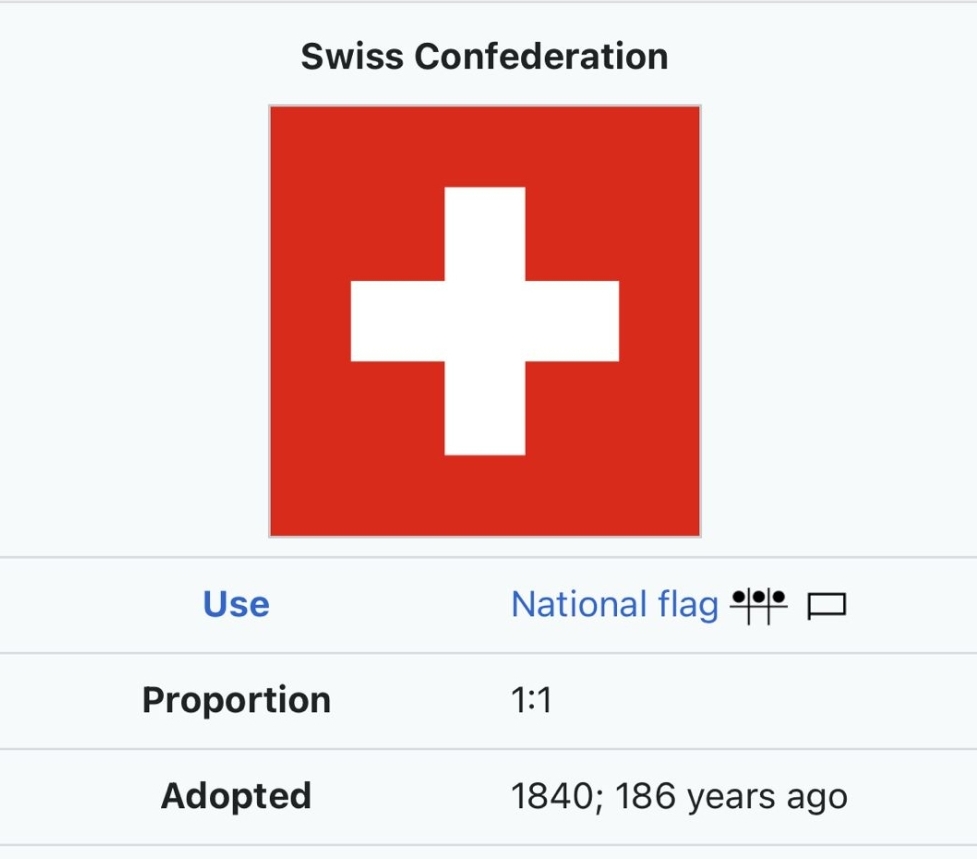
What makes the Ghutrah distinctive is the red and white pattern. Where is this from? Again, Arab News claims this is not from any local tradition or tribe, but from... Switzerland.

What's so special about the red and white square pattern? It is the national flag of the Swiss since 1840, featuring a prominent white cross.
In 1964, the Saudi government introduced laws to enforce cultural homogeneity, resulting in bans on wearing the traditional turban in the Hijaz. Essentially, the Saudi Wahhabi state mandated a symbol of British colonial power to be worn by all men.

The Ghutrah thus represents the Saudi attempt to craft a distinct national identity deeply connected to the British and distinct from traditional Muslim dress. Remember this next time you see the red and white pattern. It is the mark of loyal, slavish Western subjects.