Canvas & Ratio
Choose your destination platform format
Layout Template
Choose a content structure for your slides
Preset Themes
Typography & Sizing
Brand Kit Customization
AGENCYConfigure brand assets for headers & footers
Outro Slide CTA
Customize your closing call-to-action slide
Background Pattern
Build Your Carousel
Drag and drop any post card below onto a slide, or use the quick buttons to insert content/images instantly!

The glutes and the hip extensors as a whole are heavily involved in sprinting. What’s important is understanding what this research actually shows. This is correlation, not causation. Bigger glutes don’t automatically make someone fast. But athletes who sprint at high levels
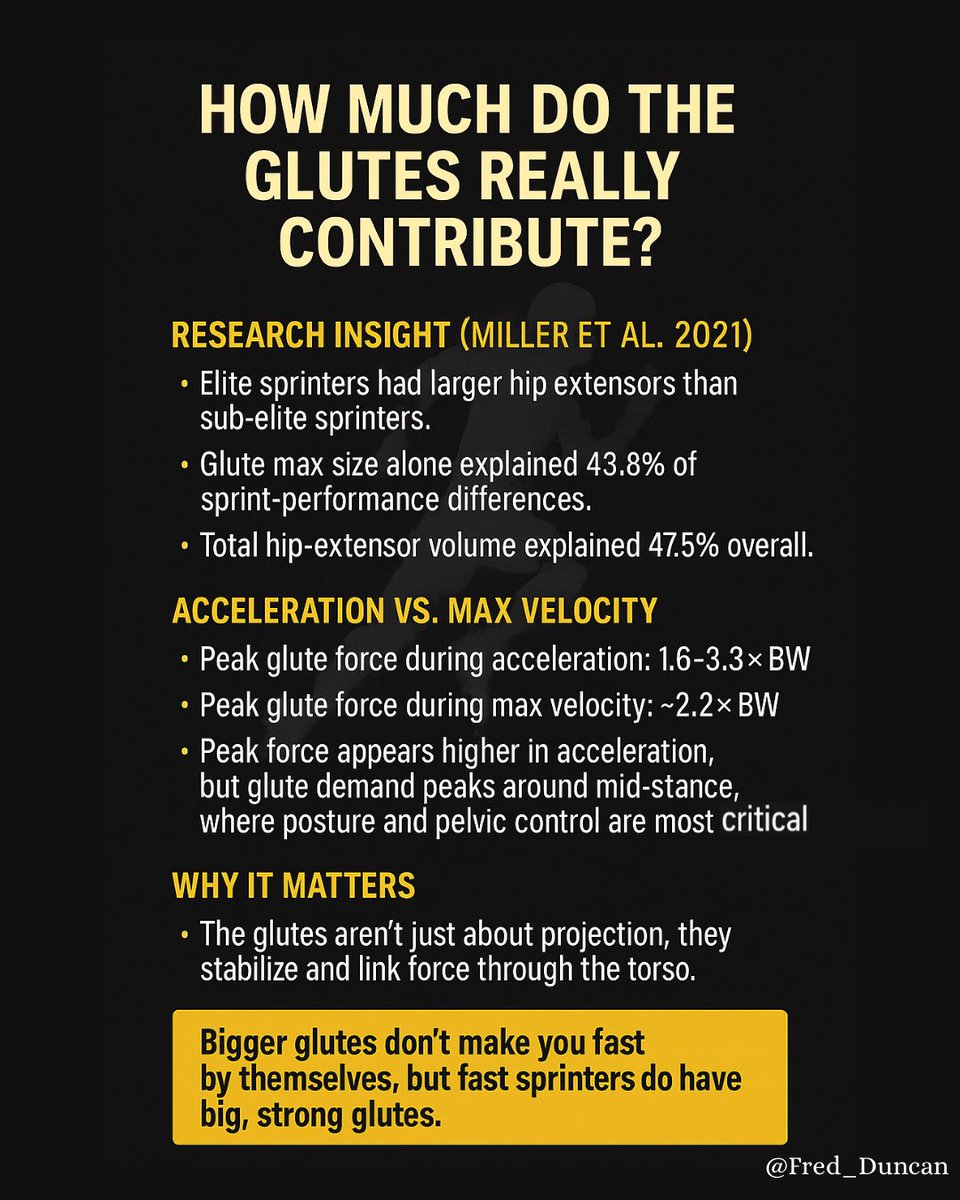
consistently possess well developed hip extensors, because these muscles are responsible for producing force, stabilizing the pelvis and transmitting energy from the lower body into powerful ground contacts. Strength gives you the capacity. Sprinting gives you the
coordination to use it. You don’t develop one in isolation. You develop both together. This is exactly how my programs are built: Project Speed Bundle, my most comprehensive resource, covering sprint mechanics, strength training, plyometrics, programming, and how everything
fits together. Strength X Speed, a structured entry point for building strength, power, and introducing sprinting safely and effectively. Custom Remote Programming, fully individualized based on your training history, goals, and needs.
<a target="_blank" href="https://fredduncantraining.com/product/speed-kills/" color="blue">fredduncantraining.com/product/speed-…</a>
Two athletes can squat the same weight, but the one who can produce force faster is the one who often jumps higher, accelerates faster and wins the play. RFD determines how quickly force can be expressed. And in sprinting, ground contact times often occur within 80–200
