Canvas & Ratio
Choose your destination platform format
Layout Template
Choose a content structure for your slides
Preset Themes
Typography & Sizing
Brand Kit Customization
AGENCYConfigure brand assets for headers & footers
Outro Slide CTA
Customize your closing call-to-action slide
Background Pattern
Build Your Carousel
Drag and drop any post card below onto a slide, or use the quick buttons to insert content/images instantly!

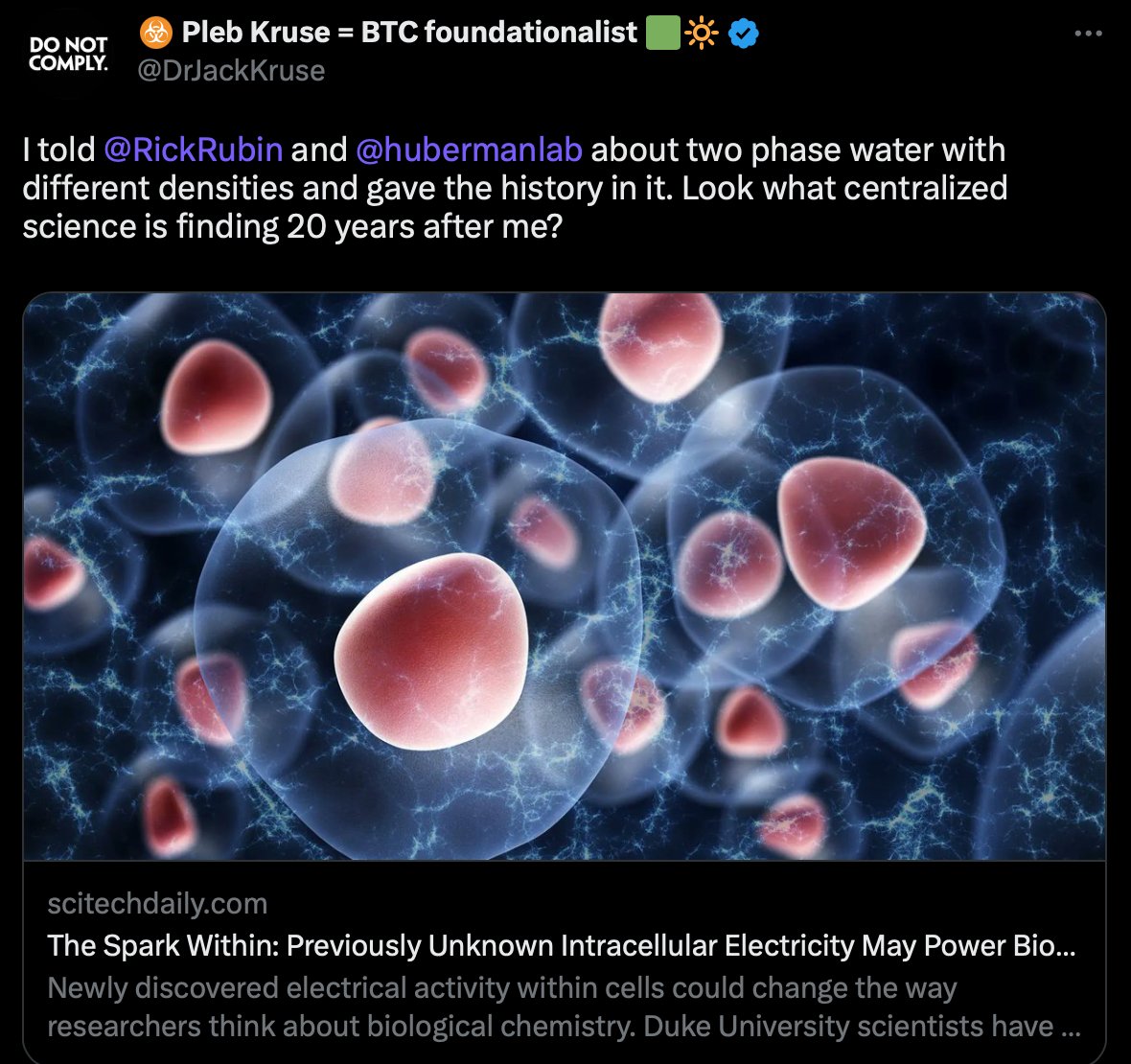
What did the paper miss? Fasting makes them bigger. Implications? What happens to energy resistance in your ankle when you sprain it? It increases and it SWELLS because of energy loss. What happens to energy resistance in the heart when it fails? IT increases in sizes and hypertropies because of energy loss. What happens to a G class star like our sun when it it dies? It increases its energy resistance because it can no longer burn hydrogen and helium and burns all the elements to be come a red giant. It increases and becomes larger, because of this energy loss. See the trend.......... What did the paper miss? Fasting causes mitochondria to get larger.......... It happens because of energy loss. The implications are vast for cell biology. Few. I bet when @msahsorin gets better technology and can measure endogenous UPEs from these mitochondria it will show the UPEs spectra widens and becomes less coherent. Few. @MitoPsychoBio <a target="_blank" href="https://twitter.com/SciFit_/status/1970883424652238930" color="blue">x.com/SciFit_/status…</a>
2. What happens in cells when UPEs output changes. Let us just look at one system to get a small picture of what light is capable of in information transfer? @msahsorin

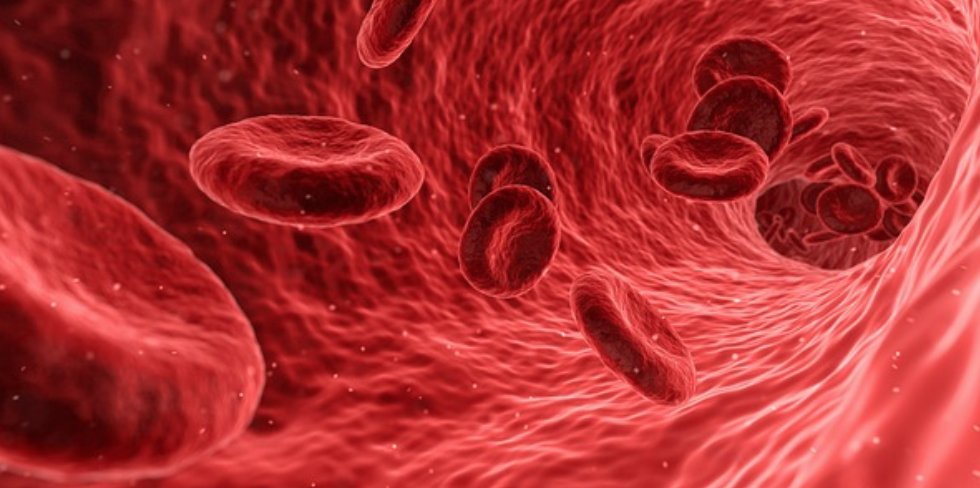
3. When I take my doctors and patients on the deep dive of our circulatory system they enter the fascinating world of porphyrin spectra and unpack the Soret and Q bands. Let me unpack them in a way that’s clear and straightforward. Porphyrins are these incredible, flat, ring-shaped molecules, think of them like nature’s own light-absorbing platforms, found in things like chlorophyll and heme. RBCs are loaded with porphyrins called hemoglobin.


4. When light from ANY source hits them, and this includes endogenous UPEs I am refering to in this post, they produce a unique absorption spectrum with two key features: a sharp, intense Soret band and a set of weaker Q bands. My tribe as already nailed the basics of this quantum biological dence, the Soret band comes from an electronic jump from the ground state (S0) to a higher excited state (S2), while the Q bands are from S0 to a lower excited state (S1).
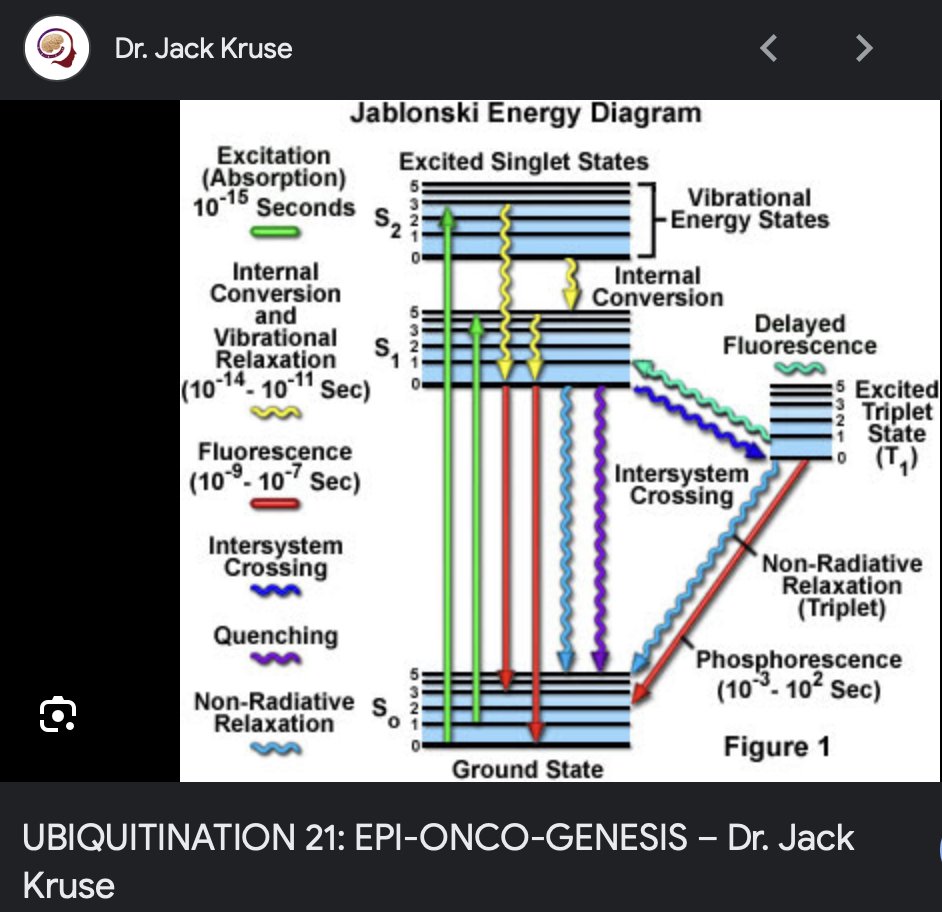

5. But why do we get four Q bands instead of just one? That’s where Gouterman’s four-orbital model comes in, and I’ll break it down without getting lost in the weeds of heavy theory. Picture the porphyrin ring as a big, symmetric playground for electrons. The electrons that matter here are the ones in the π-system, the delocalized cloud of electrons spread across the ring. Gouterman’s model focuses on four key molecular orbitals: two “highest occupied molecular orbitals” (HOMOs) and two “lowest unoccupied molecular orbitals” (LUMOs). These are the energy levels where electrons sit and where they can jump when light excites them. The HOMOs are close in energy but not identical, and the LUMOs are also close but distinct. Think of them like two starting points (HOMO-1 and HOMO) and two landing spots (LUMO and LUMO+1) on an energy ladder.
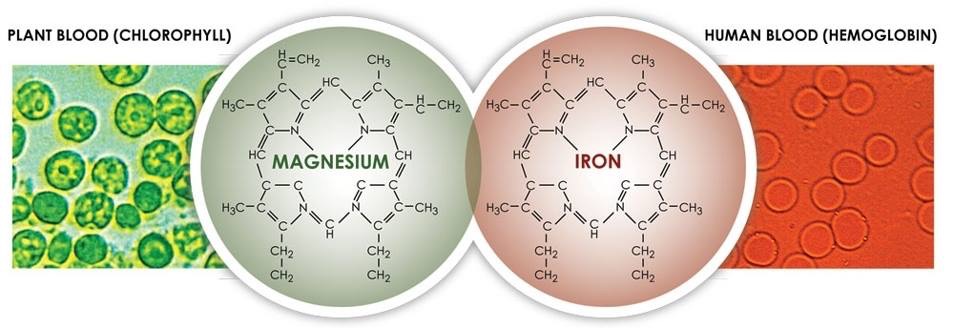
6. Now, when an electron gets excited by light, it can jump from either of the two HOMOs to either of the two LUMOs. In a perfect world, you might expect just one clean transition for S0 to S1, giving one Q band. But here’s the twist: the porphyrin’s symmetry and the way these orbitals interact mix things up. The S0 to S1 transition isn’t just one simple jump, it’s a combination of these possible HOMO-to-LUMO moves. This is why a changing UPE spectra has huge implication physiologically in a living system. Because the two HOMOs (let’s call them a1u and a2u in porphyrin lingo) have slightly different shapes and energies, and the two LUMOs (both labeled eg) are degenerate (meaning they’re at the same energy but oriented differently), the transitions don’t all line up perfectly into one band. This transition defines the signal to noise ratio in information transfer that Shannon's theorem covers.

7. Back to your mitochondria making UPEs and your RBC porphyrins capturing the signal. Instead, the electronic states get split and scrambled by something called vibronic coupling, where the molecule’s vibrations team up with the electronic transitions. This coupling adds extra complexity to the S1 state, splitting what could’ve been one Q band into multiple ones. In free-base porphyrins (ones without a metal in the center), the symmetry is a bit lower because of the two hydrogen atoms in the middle, which breaks the degeneracy slightly and makes the splitting even more pronounced. The result? Four Q bands, typically labeled Qx(0,0), Qx(1,0), Qy(0,0), and Qy(1,0). The “x” and “y” refer to the two polarization directions in the plane of the ring, and the “0,0” or “1,0” tags come from vibrational levels tied to each electronic transition.
8. So why do we get four and not one orbitals? It’s because you’ve got two starting orbitals (the HOMOs) and two ending orbitals (the LUMOs), and their interactions, combined with the molecule’s vibrations, create four distinct energy pathways for the S0 to S1 trip. The Soret band, on the other hand, comes from the S0 to S2 transition, which is a stronger, more allowed jump involving the same orbitals but aligned in a way that reinforces each other, giving one intense peak.
9. Where do these extra HOMO and LUMO states come from? They’re a natural consequence of the porphyrin’s large, conjugated π-system. The ring has 18 π-electrons (in its aromatic core), and quantum mechanics dictates that such a big cyclic system generates multiple molecular orbitals close in energy. The symmetry of the molecule (D4h in metal porphyrins, D2h in free-base ones) shapes these orbitals into the four key players Gouterman identified. No exotic physics is needed in the biology of your blood cells, just the beauty of a big, flat, electron-rich ring doing its thing.
10. In short: the four Q bands arise from the interplay of two HOMOs and two LUMOs, split further by vibrations and symmetry effects, while the Soret band’s simplicity comes from a more unified, high-energy leap. It’s like the porphyrin is playing a four-note chord for the Q bands and a single loud note for the Soret! There are other systems in humans that use different oiptical topology to the the job of life done. When it comes to blood cells we use simple physics to explain it. Not true with every system in us...........
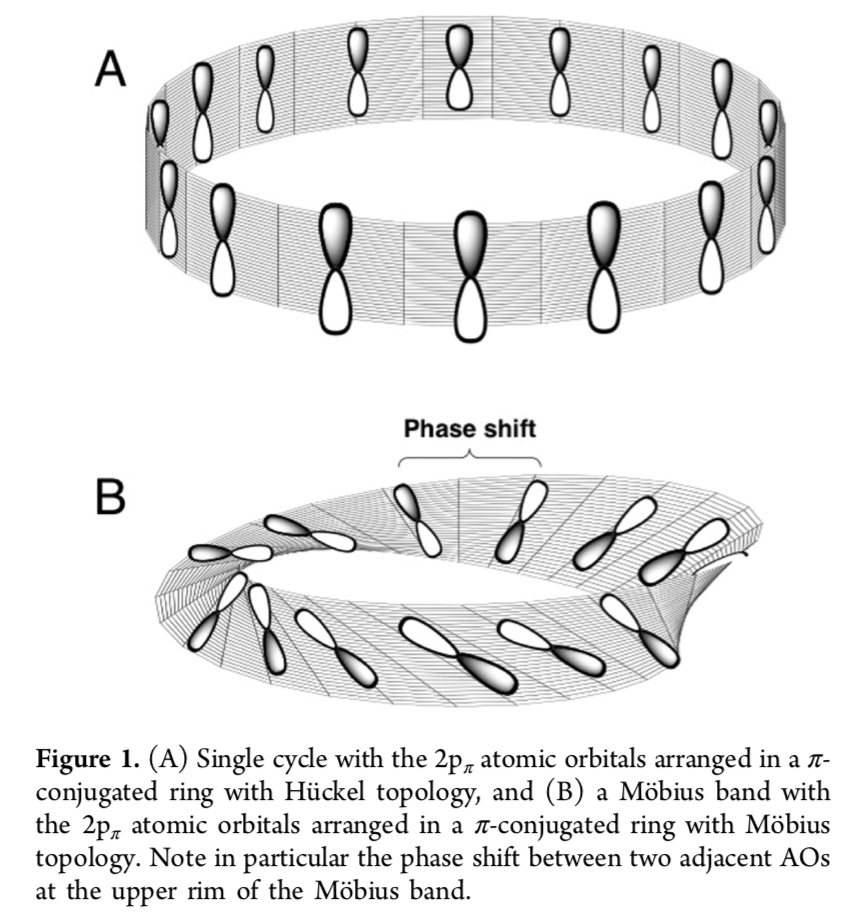
11. Now for the really smart in my class: Imagine electric charges as tiny magnets or batteries scattered around you, creating an invisible "push" called the electric field (let’s call it the "energy breeze"). Gauss's Law helps us understand how this breeze behaves. Here’s the breakdown: The "spread" of this energy breeze (think of it like air blowing outward from a fan) depends on how many charges are packed into a space—let’s call this the "charge crowd." Space itself has a natural "stretchiness" (we’ll call it its "give"), which affects how far the breeze can reach. The rule, simply put, is: The more crowded the charges are in a spot, the more the energy breeze spreads out from that spot, depending on the available space. Think about the mitochondria paper now during fasting........I DARE YOU TOO Picture a crowded room at a party. The more people (charges) crammed in, the more they push and spread out into the hallway (the electric field). But if the hallway is narrow or stiff (low "give" of space), the spread is limited. In science terms, this "give" is called the permittivity of free space, and the equation ∇ · E = ρ / ε₀ ties it all together: the spread of the breeze equals the charge crowd divided by space’s stretchiness. So, wherever there’s a big buildup of charge, the energy breeze gets stronger and spreads more, like people spilling out of a full room. The nature of the space around them decides how far they can go. Now you’ve got the gist of Gauss's Law, pretty cool, right? Melatonin was created and moved from the gut and brain and placed inside the mitochondria to take full advantage of Gauss' Law. Now you are beginning to understand quantum thermodynamics of life. IT is all about topology in optical systems. Topological Order from Measurements and Feed-Forward on a Trapped Ion Quantum Computer Experimental Demonstration of the Advantage of Adaptive Quantum Circuits <a target="_blank" href="https://www.patreon.com/posts/cpc-52-sunlight-46973450" color="blue">patreon.com/posts/cpc-52-s…</a>