Thread Truncated (Cap Enforced)
Only the first 20 tweets are unrolled into slides to ensure reliable PDF exporting and high server performance.
Canvas & Ratio
Choose your destination platform format
Layout Template
Choose a content structure for your slides
Preset Themes
Typography & Sizing
Brand Kit Customization
AGENCYConfigure brand assets for headers & footers
Outro Slide CTA
Customize your closing call-to-action slide
Background Pattern
Build Your Carousel
Drag and drop any post card below onto a slide, or use the quick buttons to insert content/images instantly!

Throughout the Naruto manga Kishimoto incorporates three types of shinjuu acts into it when it comes to Naruto and Sasuke, so let's discuss them

If you're familiar w/ Kishimoto's work & interviews you know he's a fan of Edo period Japan, particularly samurai & kabuki theater. This is also the period where we encounter shinjuu acts in Japan's literature A Shinjuu act is a demonstration of love and devotion between lovers

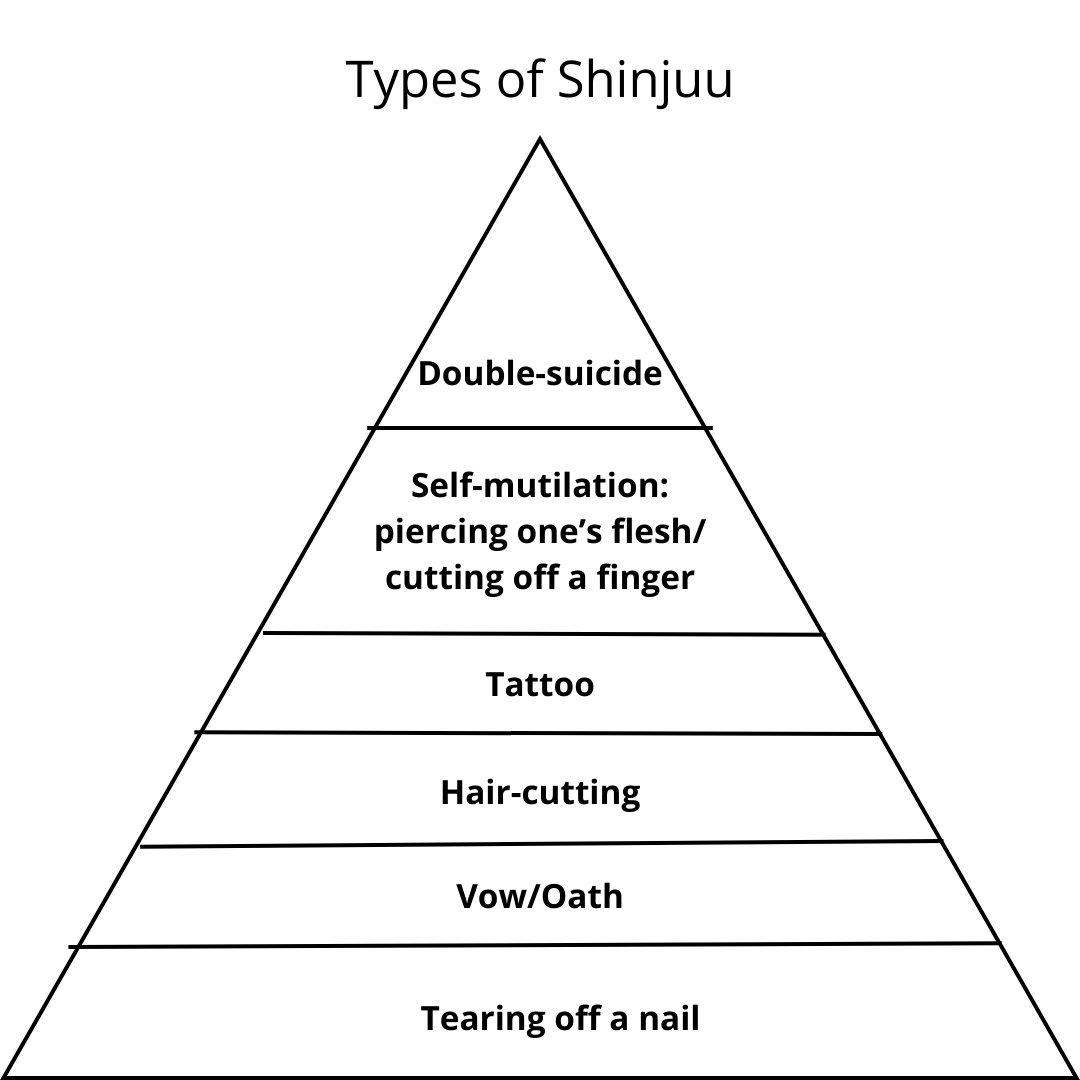
Depending on the scholar you will find different types of shinjuu (around 5-7) but this is more or less the ones you'll find in Edo Literature in their respective hierarchical order with double-suicide being the ultimate shinjuu
Shinjuu (心中) was a common practice amongst courtesans, female prostitutes as well as male kabuki actors and samurai warriors. Although the word came to mean "double-suicide" thanks to Chikamatsu's popular plays, the original meaning was "one's heart"

If you payed attention to the manga you must have noticed that Naruto ALWAYS makes rasengan w/ his right hand & Sasuke ALWAYS creates Chidori with his left hand (Kakashi does it usually w/ his right hand). Kishimoto made them right and left-handed respectively on purpose

In ch. 538 Iruka explains the etiquette for Shinobi fights, first you do the sign of confrontation & at the end the sign of reconciliation. In their very first fight Naruto & Sasuke do the sign of confrontation (Sasuke with his left & Naruto w/ his right) but not the other one


We'll go back to them not doing the sign of reconciliation later in the thread but keep it present as you keep reading. So how does that tie to shinjuu? Kishimoto uses three shinjuu types in his work and two of them involve Naruto and Sasuke's hands
The first shinjuu Kishimoto incorporates in his work is the vow/oath. It's one of the lowest ranked shinjuu because the thing about shinjuu is that for it to be a bigger demonstration of devotion it needs to not be able to be undone


Usually the oath would be hand-written in blood but there were ocassions in which it'd be spoken out loud (like Naruto did). Ihara Saikaku, one of Edo Japan's most famous writers, also incorporates this shinjuu type in his book "The Life of an amorous man"
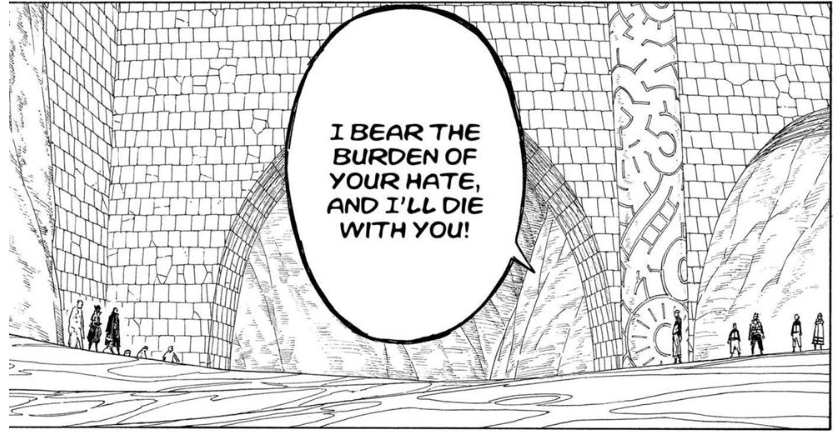
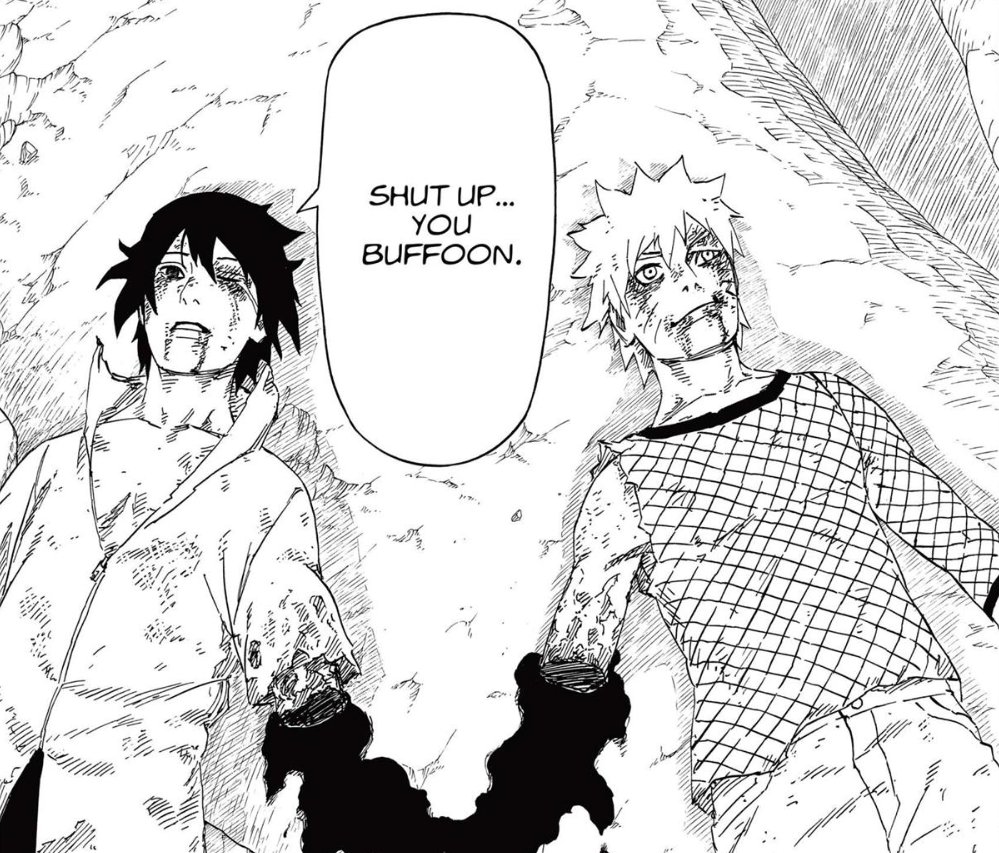
Kishimoto is referencing Chikamatsu Monzaemon plays in Naruto's oath to commit double suicide with Sasuke. At the end of ch. 272 (the WSJ version) he shares with us who's Chikamatsu and specifically highlights his play "Love Suicide at Amijima"

In this play the lovers, courtesan Koharu & bussiness man Jihei, commit double suicide because they cannot be together in their lifetime due to various circumstances and they believe they'll meet again in the afterlife. Koharu asks Jihei to stab her and later Jihei hangs himself

The belief was that through double suicide lovers would transcend confucian duties and be reborn in a Buddhist paradies, free of rigid requirements of honor of the earthly world. The film adaptation of the play called "Double suicide" (1969) also highlights this
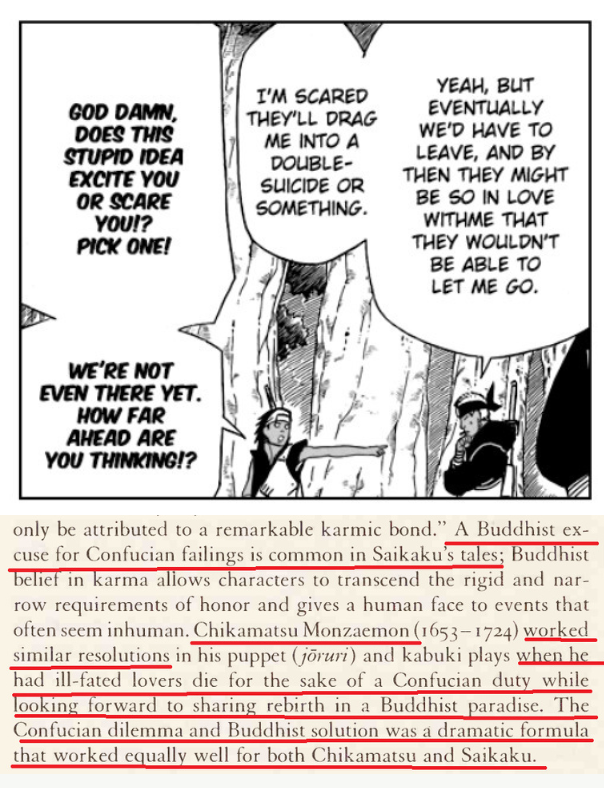


But Naruto & Sasuke don't commit double suicide in the end, thus it remains simply an oath. Its low rank is shown in Saikaku's work for example, when character Yonosuke receives one from a courtesan but he forgets it. So although a symbol of love, not one of the greatest

But what Kishimoto is doing here is introduce different shinjuu types for a purpose. The next we see in the manga is the tattoo, higher in the hierarchy

We also find this shinjuu demonstration in Edo literature. Saikaku introduces it for the love story of male youth Sansaburo and priest Keisu, where the youth gets the name of his lover tattooed on his left arm

But Kishimoto changes a bit how he incorporates the tattoo shinjuu for Naruto & Sasuke. Instead of their names they get the sun & moon tattoos on their dominant hand (right & left)

What Kishimoto is doing by giving them sun & moon tattoos is reinforce how Naruto & Sasuke represent yin & yang, heaven & earth, etc. But he's also incorporating irebokuro tattoos, popular practice amongst lovers where if they were to clasp hands the tattoos would line up
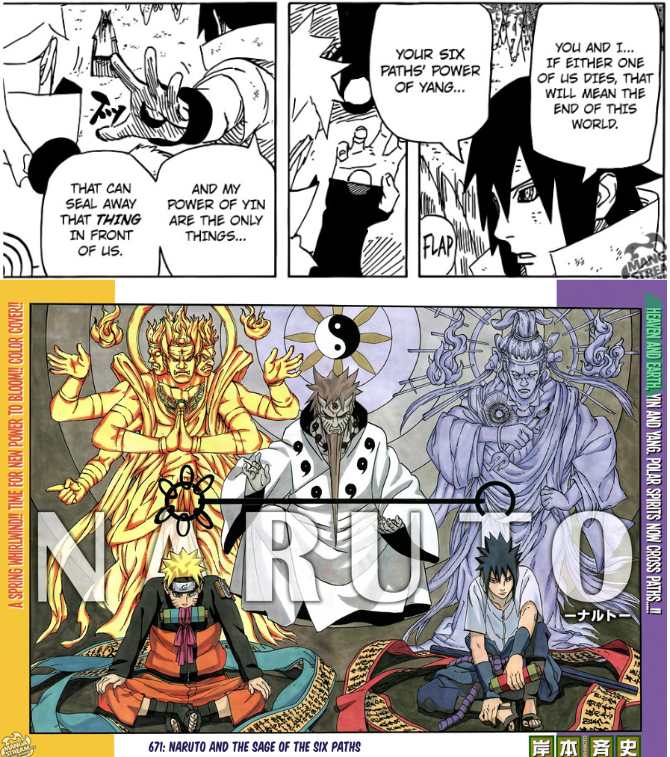


The fact that their final battle took place after the eclipse of the Tsukuyomi which is the battle that brought them together but the tattoos lined up also look like the Uchiha crest, UGHHHHH Kishimoto is insane

Then we get to the third shinjuu act found: self-mutilation. Once you do it you're "deformed for life, never able to undo what is done." An extreme act for those whose relationship is of the "deepest intimacy" and the sentiment leading them to this is of "the grandest nature"

This shinjuu act was very popular in Samurai & Kabuki actor tales. Ihara Saikaku mentions it in multiple of his erotic tales; in An Onnagata's Tosa Diary a devoted fan of kabuki actor Han'ya cut his own finger and gave it as a gift to the actor as proof of his sincerity
