Canvas & Ratio
Choose your destination platform format
Layout Template
Choose a content structure for your slides
Preset Themes
Typography & Sizing
Brand Kit Customization
AGENCYConfigure brand assets for headers & footers
Outro Slide CTA
Customize your closing call-to-action slide
Background Pattern
Build Your Carousel
Drag and drop any post card below onto a slide, or use the quick buttons to insert content/images instantly!

This is Eugene Schwartz. In 1966, he published Breakthrough Advertising, a book so good the original hardcover sells for $247. Inside, he shared the daily writing routine that helped him write effortless, high-converting copy. Here's how it works:🧵
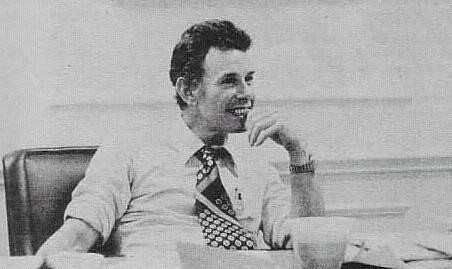
Eugene's secret: He treated his writing like athletes treat going to the gym. It started with accepting a simple truth: Writing every day is one of the hardest things in the world. So if he wanted to do it consistently, he needed a system that didn't rely on willpower.
Imagine showing up to the gym every day to meet your trainer. And every day you had no clue: • What type of workout you would do • How difficult the workout would be • How long the workout would last This would be torture! Yet, this is how most people write.
They set a goal to "write every day." And they set this goal without any kind of constraint. This lack of constraint is the root cause of: • Burnout • Writer's block • Creative friction And leads most writers to quit before they get any real momentum.
So, what made Eugene's system work? It started with choosing a time of day, a daily length, and a weekly cadence. • Every morning at 9AM • Three hours per day • Five days per week This cadence was: • Long enough to move the needle • Short enough to stick to consistently
But these weren't your regular three hours. These were intense, three-hour focus blocks. And to get the most out of them, Eugene divided them into five chunks of 33 minutes and 33 seconds. And during these 33-minute blocks, he had two rules.
Rule 1. There could be nothing on his desk but pen & paper. Rule 2. He could not get up from his chair. • He could sip his coffee • He could stare out the window • He could doodle in his notebook • He could complain about how he didn't want to write But he could not get up.
And every day, for the first few minutes of his first session, he would squirm. But then, he'd get warmed up. The creative juices would start flowing. And silky-smooth ad copy would stream from the end of his pen. And before he knew it, that 33:33 timer would ring.
When the timer went off, he had to drop his pen, even if he was midsentence. And then he *had* to get up, walk around, and move for 10 minutes. But during this 10-minute break, his subconscious continued to work. And by the end of his break, he was itching to get back to it.
There are 3 lessons we can learn from Eugene's system: Lesson 1: This routine worked because it eliminated guesswork. He knew when, where, and for how long he was writing every day. This eliminated precious mental bandwidth that let him focus on what mattered: writing.
Lesson 2: This system made gave Eugene an objective way to measure his writing. At the end of every day, he could point to the writing he did during his five writing blocks. And at the end of every week, he could look at all 25 blocks and reflect. This kept him accountable.
Lesson 3: Simple systems like this compound over time. Eugene stuck to this system one block at a time, every day, every week, for decades. And this consistency, paired with systems thinking, made great writing an inevitable byproduct of his daily life.
Boom, that's it! Mastering the art of writing has helped me build a 7-figure writing business. But 95% of my success came from creating a Category Newsletter. This is how you build an email engine to make money on autopilot: <a target="_blank" href="https://categorynewslettercreator.com/?el=dickie_cta&htrafficsource=twitter_organic" color="blue">categorynewslettercreator.com/?el=dickie_cta…</a>
Thanks for reading! If you enjoyed this, follow me @dickiebush for more on digital writing. Then, I'd appreciate it if you reposted the first post so we can share these frameworks with more people: <a target="_blank" href="https://x.com/dickiebush/status/1861403602931327347" color="blue">x.com/dickiebush/sta…</a>