Canvas & Ratio
Choose your destination platform format
Layout Template
Choose a content structure for your slides
Preset Themes
Typography & Sizing
Brand Kit Customization
AGENCYConfigure brand assets for headers & footers
Outro Slide CTA
Customize your closing call-to-action slide
Background Pattern
Build Your Carousel
Drag and drop any post card below onto a slide, or use the quick buttons to insert content/images instantly!

Paul Graham once said: "Like having a child, running a startup is hard to imagine unless you've done it yourself." This quote hit hard while I read Paul's latest essay, Founder Mode. I've found 3 valuable lessons every leader needs to hear:🧵

In the essay, Graham says: "Whatever founder mode consists of, it's pretty clear that it's going to break the principle that the CEO should engage with the company only via his or her direct reports." Here's why it's important:

Founder Mode challenges the conventional wisdom of "Manager Mode." People have compared it to the WAM Model. Let's dive into 3 lessons I learned from Paul's essay:

1. Managers can't do what Founders can. Elon Musk is known for his hands-on approach. Steve Jobs was famous for his attention to detail and relentless pursuit of perfection. Here's Brian Chesky (founder of Airbnb) on why founders are so important:

2. Break the org chart rules of Manager Mode. The best ideas can come from anyone in the organization. That's why Brian Chesky believes founders should have regular meetings with more employees. Brian explains how being a shameless learner will grow your business:

3. Hire good people and let them do their jobs ONLY if they’re committed to your mission. • Be hands-on • Let them express their ideas This is how you find & remove "fakers" fast. And as a founder, you'll dislike some parts of your work—Bezos spoke about this problem here:

Let's look at Mark Zuckerberg's early days at Facebook. He encouraged his team to: • Move fast • Break things • Take more risks Here, he speaks about how a culture of ownership and initiative skyrocketed growth at Facebook:

It's not just Graham's ideas that make Founder Mode a must-read. It's also his writing style. Because clear writing is the result of good thinking. And good thinking makes you a great leader. Here are 3 quick writing takeaways from Graham's style:

1. Focus on a Core Idea Graham's essays are always centered around a clear, sharp core idea. This serves as the organizing principle. This summary of Founder Mode by Ben Lang (@benln) shows how the essay is structured:
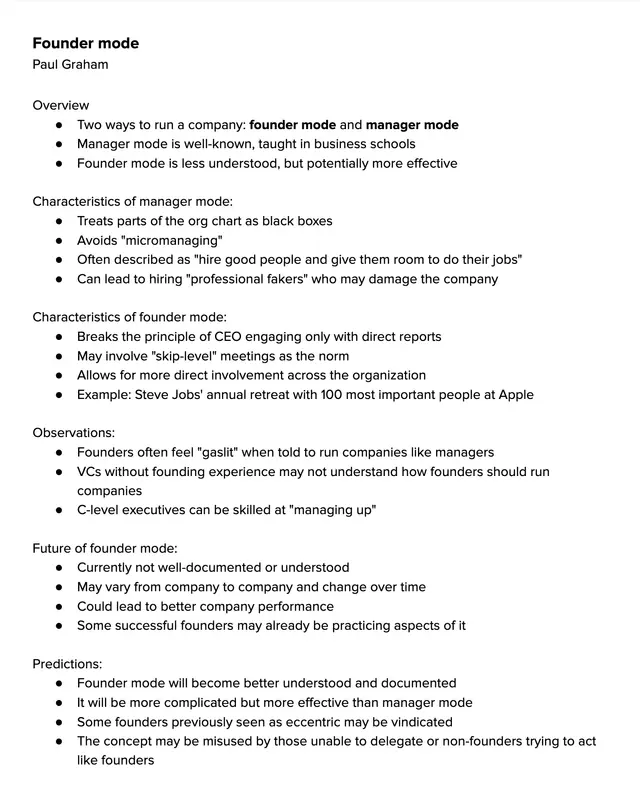
2. Use simple language to convey deep insights. Most of Graham's words are about 5 letters, making his writing easy to digest. Here's an example from his essay "How to Start a Startup":

3. Use concrete examples Throughout Founder Mode, Graham shares clear evidence. The classic "Show Don't Tell" technique: • Steve Jobs represents Founder Mode. • Brian Chesky explains the pitfalls of traditional management.
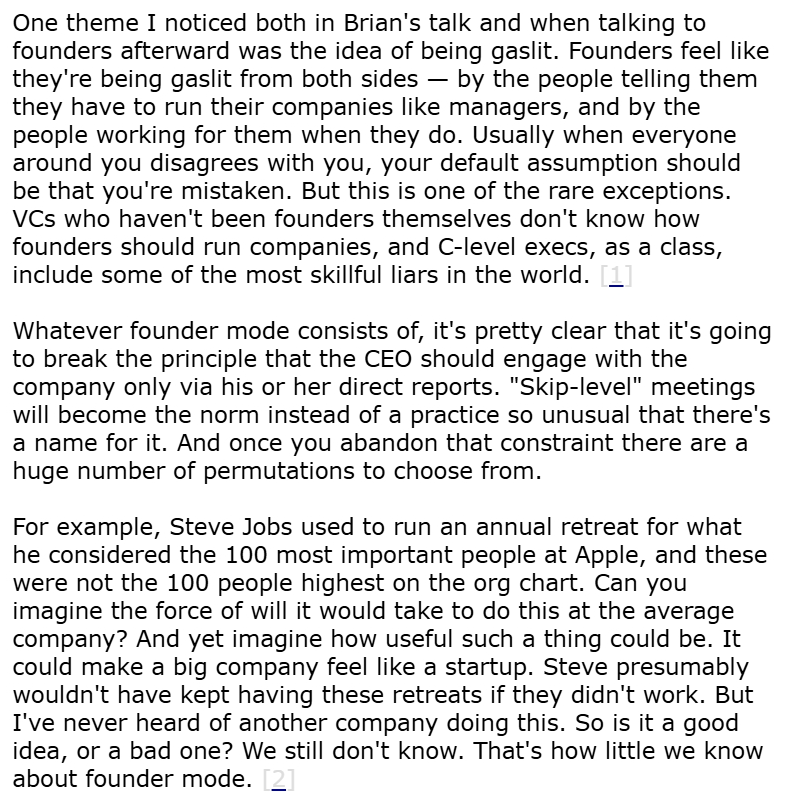
My TL;DR from Founder Mode: 1. Managers can't do what Founders can 2. Break the org chart rules of Manager Mode 3. Hire people who love the same things you do (but find the "fakers") Written with simplicity and concision, Founder Mode is must read for entrepreneurs & writers.
I study leadership principles as I build my digital business. But most people don't know I made my first $10k online as a ghostwriter. This ultimately helped me escape the Wall Street rat race. Become a Premium Ghostwriter in 5 steps here: <a target="_blank" href="https://x.premiumghostwritingblueprint.com/?el=dickie_autoplug&htrafficsource=twitter_organic" color="blue">x.premiumghostwritingblueprint.com/?el=dickie_aut…</a>
Thanks for reading! If you enjoyed this, then follow me @dickiebush for more posts on digital writing and digital businesses. Then, I'd appreciate it if you jumped back to the top and reposted the first post to share it with others: <a target="_blank" href="https://x.com/dickiebush/status/1837106380940931305" color="blue">x.com/dickiebush/sta…</a>