Thread Truncated (Cap Enforced)
Only the first 20 tweets are unrolled into slides to ensure reliable PDF exporting and high server performance.
Canvas & Ratio
Choose your destination platform format
Layout Template
Choose a content structure for your slides
Preset Themes
Typography & Sizing
Brand Kit Customization
AGENCYConfigure brand assets for headers & footers
Outro Slide CTA
Customize your closing call-to-action slide
Background Pattern
Build Your Carousel
Drag and drop any post card below onto a slide, or use the quick buttons to insert content/images instantly!

Why are cities dominated by highways and cars? It's partly because of one of the most influential people you've never heard of: Norman Bel Geddes. In 1939 he created "Futurama", a huge exhibition that tried to predict the future — and ended up changing the world...

Norman Bel Geddes designed everything from radios to theatre sets. And in 1936 he approached Shell Oil with the idea of an advertising campaign about "the City of Tomorrow". They liked his proposal and so he created models for them — a world dominated by cars and highways:

General Motors saw this campaign and found in Bel Geddes a man with sufficient talent, energy, and audacity to convince the world that the car was the future. At the 1939 World's Fair in New York Bel Geddes was asked to design the General Motors exhibition. Its name? Futurama.
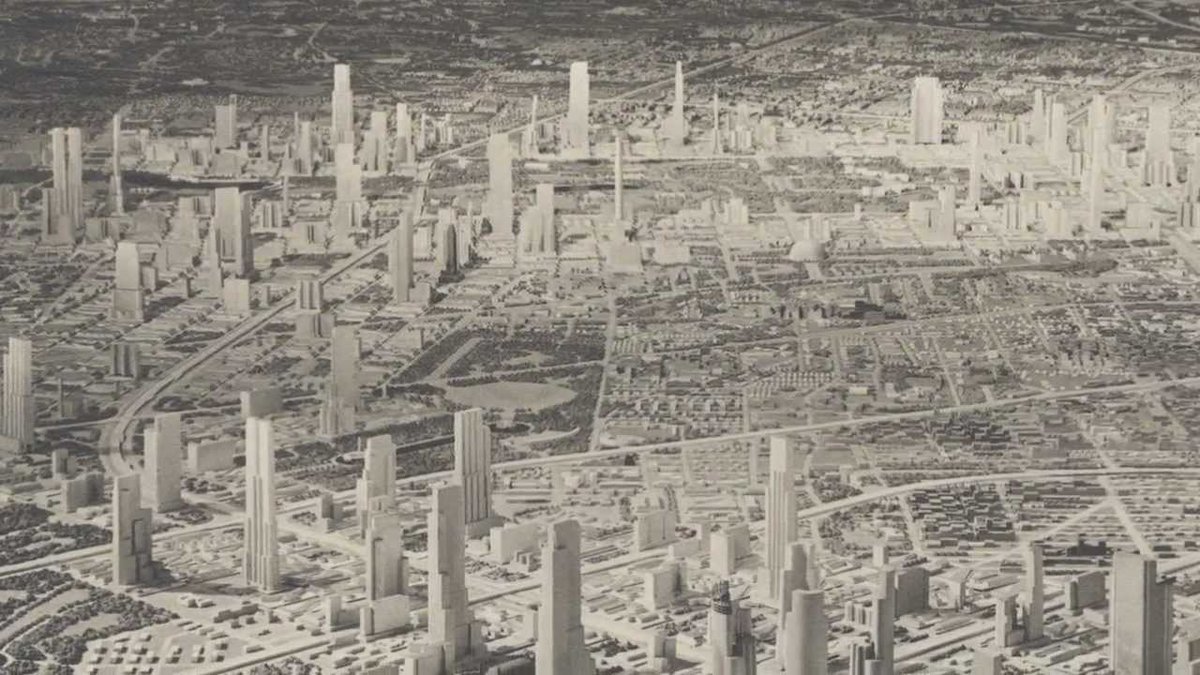
It was a colossal installation: a one-acre model with 500,000 buildings, 1 million trees, and 50,000 cars. It depicted American cities in the year 1960, with large stretches of farmland and mountains between, all connected by immense highways. Familiar to us; radical then.

Spectators sat in moving armchairs fitted with microphones and had Futurama narrated to them. This was a wildly futuristic vision of America where motorways stretched from city to city, over gorges and rivers, connecting the country with "safety, comfort, speed, and economy."

Over five million people attended Futurama. It didn't only tell them that the car could, in theory, shape the future of America — it gave them a clear vision of what that future it would look like. Bel Geddes was shaping popular imagination... and also expectation.

National road networks had been in progress since 1916, but none was standardised or on the scale of what lay ahead: the Federal Highway Act 1956. $100 billion and three decades later came an Interstate Highway System almost identical to the one imagined by Bel Geddes:
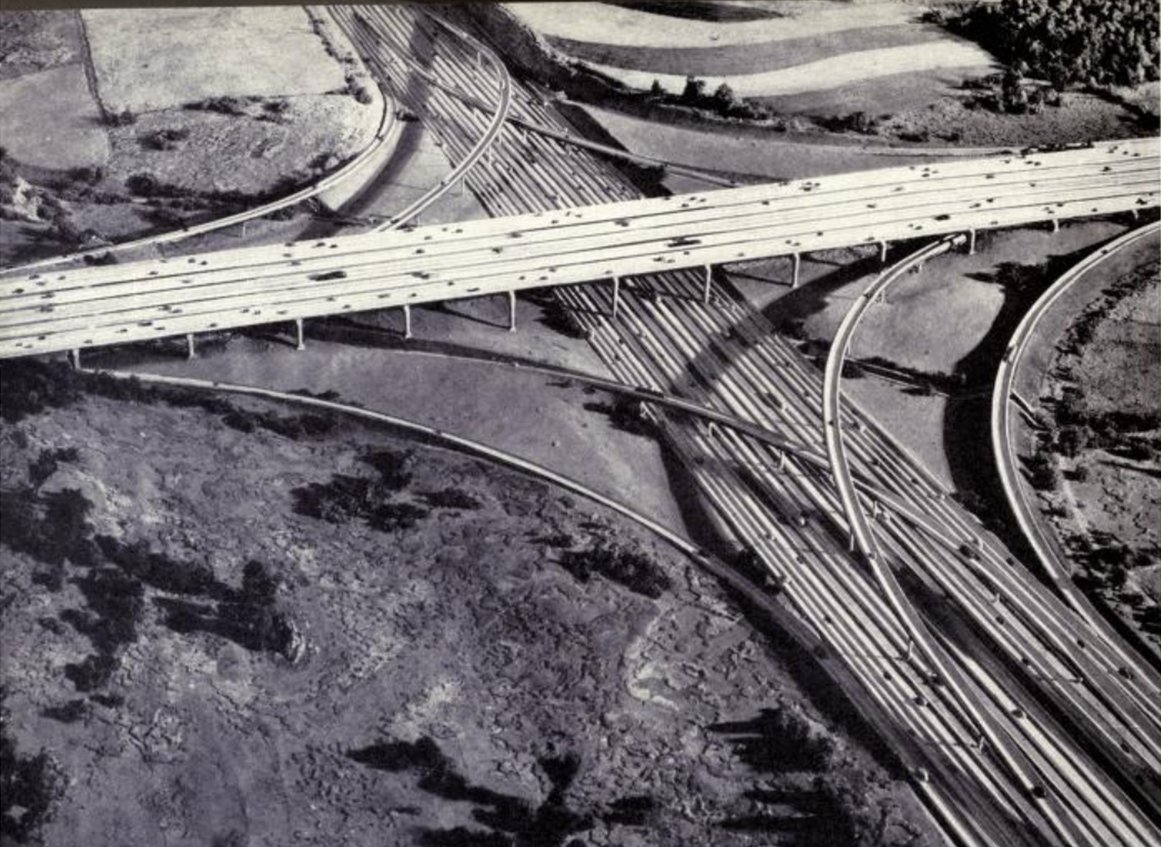
In a book called Magic Motorways Bel Geddes explained Futurama — both why it was so popular and his own hopes for what it would achieve. Bel Geddes was passionate about highways. He thought they would create a safer, happier, more prosperous, more unified society.

He also seemed to predict self-driving cars in a chapter titled "Eliminate the Human Factor in Driving". Ever-concerned for road safety, Bel Geddes pointed out that even if technology improved, humans didn't. The key, then, was to remove them altogether.

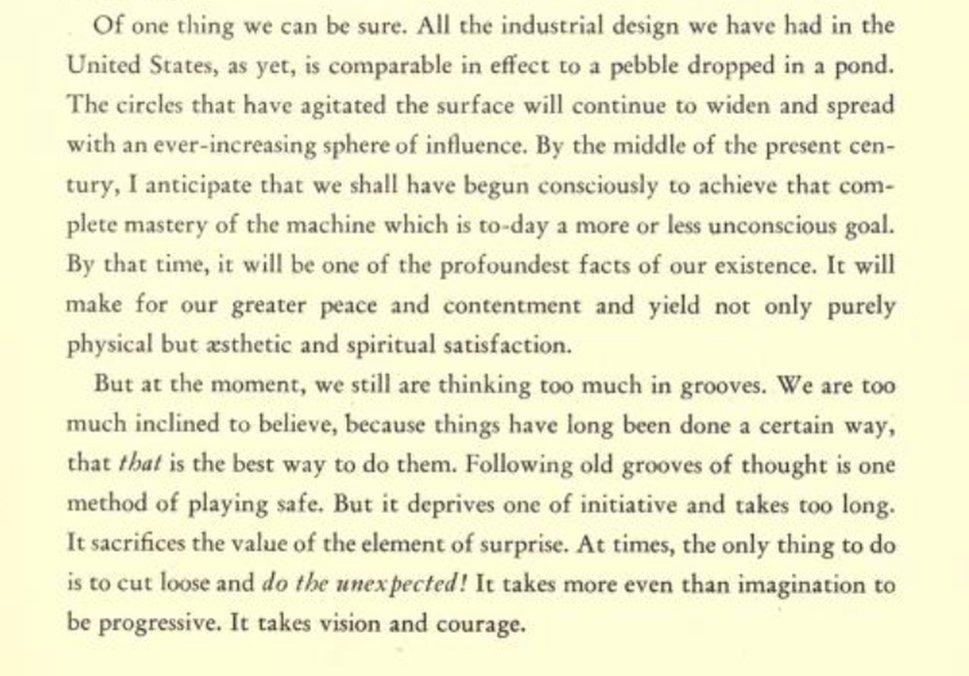
And in the closing chapter of another book, called Horizons, written all the way back in 1932, we find a rallying cry that sums up Bel Geddes' whole outlook. He was a leading member of that generation across art, architecture, and urban design who created our modern world.
But that's not all. Norman Geddes (or Big Norm, to friends) had been born in 1893 in Michigan. He married Helen Belle Schneider in 1916 and thereafter added Bel to his name. He started out as a theatre set designer, first in LA and then for the Metropolitan Opera in New York.

In 1927 Bel Geddes founded his own studio — he had discovered a personal philosophy and vision of the future. He called himself an "industrial designer" and sought to design ordinary objects in a way suited to modern materials (plastic, steel) and methods (mass-manufacture):

So, along with radios and dressing tables he designed cocktail sets:
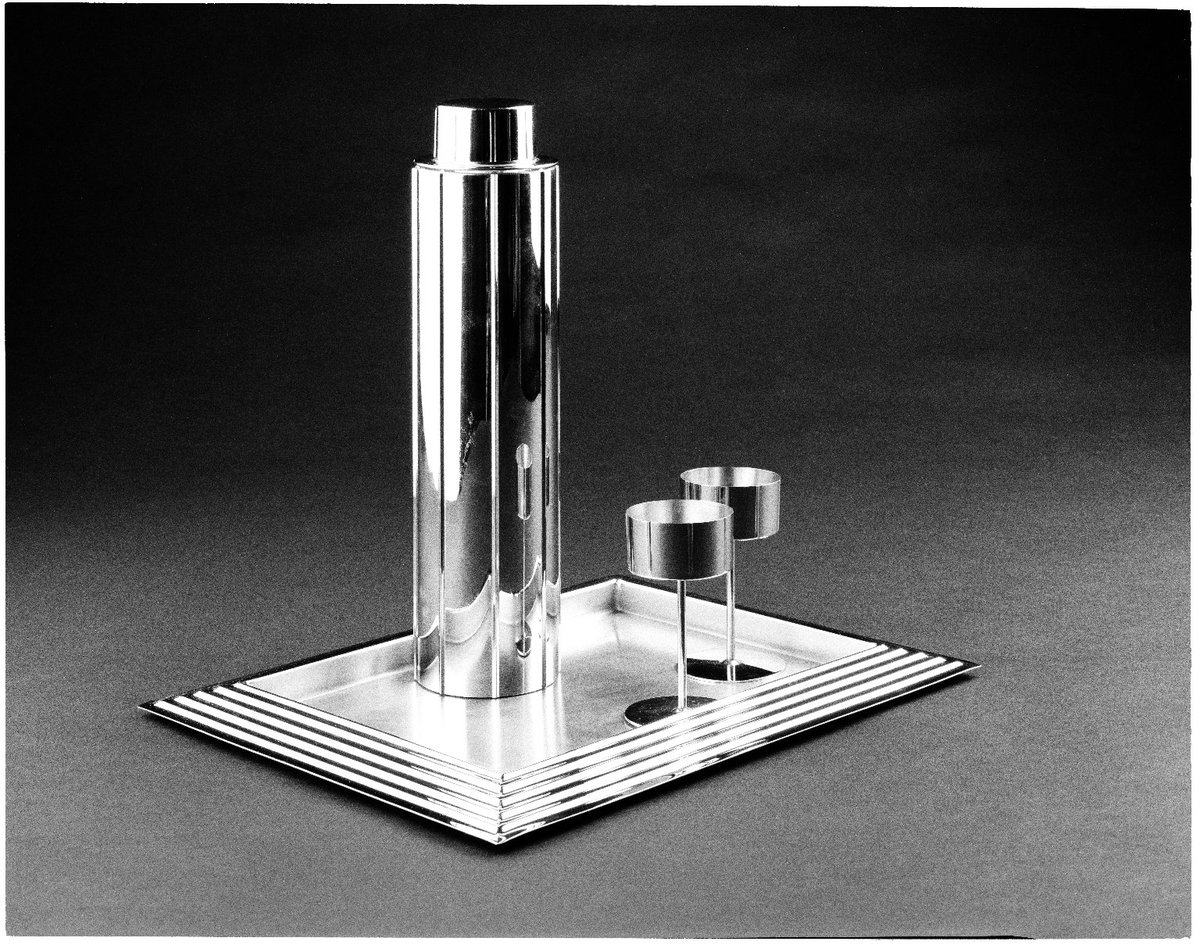
And sofas and lamps:

He also made a submission to the 1931 competition to design the Ukrainian State Theatre — architecture was one of his interests, too. And he even designed a circus building for Ringling Bros. and Barnum & Bailey...

And, when trying to imagine the future of restaurants and the amusement industry, Bel Geddes proposed a revolving restaurant at the top of a tower:

Even calendars and filing cabinets interested him! Bel Geddes saw opportunities for improvement everywhere; he knew that everything around us is a result of design, whether intentional or not, and thus wanted them to be designed properly. A visionary, as they say.

He had a rare mixture of creative boldness, unshakeable optimism, and perceptive thinking. In Horizons he predicted the rise of the mall: a huge, climate-controlled building in which cinemas, banks, restaurants, and shops would gather under one roof. Startlingly accurate.

In 1942 he designed a huge installation called the "War Maneuver Models" for Life Magazine. Land and naval battles all across the world, from the Pacific to Europe, were envisaged on great scale and in scrupulous detail.

But, above all, Bel Geddes was fascinated and excited by vehicles and transport. He worked with Chrysler, among other companies, and designed "cars of the future" like this one. He also designed fuel trucks for Texaco, one of his few vehicular designs that went into production.
