Canvas & Ratio
Choose your destination platform format
Layout Template
Choose a content structure for your slides
Preset Themes
Typography & Sizing
Brand Kit Customization
AGENCYConfigure brand assets for headers & footers
Outro Slide CTA
Customize your closing call-to-action slide
Background Pattern
Build Your Carousel
Drag and drop any post card below onto a slide, or use the quick buttons to insert content/images instantly!

If you're interested in the Middle Ages, here are 16 paintings you'll absolutely love...
1. The Accolade by Edmund Leighton (1901) Edmund Leighton was a master painter of the Middle Ages who loved to tell thoroughly romanticised miniature stories based on some important element of Medieval life. In this case the moment of knighthood.

2. Godspeed! by Edmund Leighton (1900) What seemed to interest Leighton above all was, indeed, romance — knights and maidens. And he delighted in details, carefully painting every glittering link of chainmail and every sumptuous thread of embroidered gowns.

3. Knight at the Crossroads by Viktor Vasnetsov (1882) For something completely different there is Vasnetsov's famous, mysterious, sombre painting of a knight contemplating a gravestone. More realistic? Or is this, instead, a sort of dark rather than romantic Medieval fantasy?

4. Jacques Molay Conquers Jerusalem by Claude Jacquand (1846) The Crusades were, unsurprisingly, a popular subject in Neo-Medieval art. Here Jacques Molay, the last Grand Master of the Knights Templar, captures Jerusalem... even though he never did — this was a French myth.

5. The First Meeting of Petrarch and Laura by Marie Stillman (1889) The fabulous, underrated Stillman shows us the famous Florentine poet Petrarch meeting his muse Laura in the early 14th century. Notice, in particular, Stillman's glorious evocation of Gothic architecture.
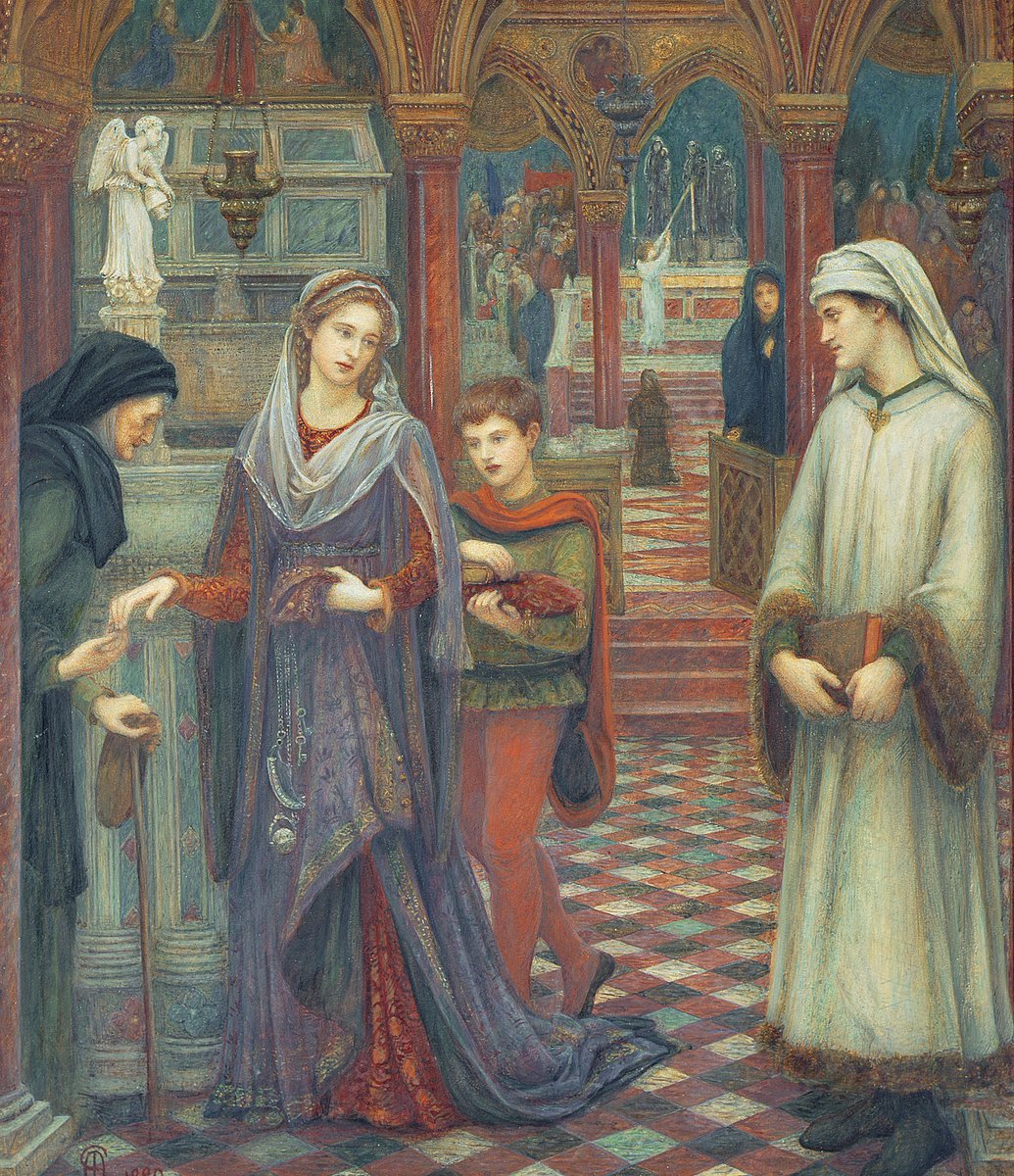
6. Dante and Beatrice by Henry Holiday (1883) Dante, like Petrarch, features frequently in portrayals of the Middle Ages — he was, after all, the greatest Medieval poet. Here we see him in his usual outfit and, passing by without looking at him, the love of his life, Beatrice.

7. Tristan and Isolde by John William Waterhouse (1916) The legend of Tristan and Isolde (the basis of Richard Wagner's opera), originally from the 12th century, was one of the most popular stories in the Middle Ages. Dramatically, vividly, lavishly painted by Waterhouse.

8. The Lady of Shalott by John William Waterhouse (1888) Another literary painting by Waterhouse, and among the most famous works of 19th century Neo-Medieval art. The Lady of Shalott is a poem by Tennyson, written in 1832 and based on a 13th century Italian tale.

9. Joan of Arc Kissing the Sword of Deliverance by Dante Gabriel Rossetti (1863) Rossetti was the leader of the Pre-Raphaelites, a British movement which tried to cast off the influence of the Renaissance and return art to the vividity, colour, and detail of the Middle Ages.

10. The Vision to the Youth Bartholomew by Mikhail Nesterov (1890) The first in a series of paintings about Saint Sergius of Radonezh (who later took the name Bartholomew) by Nesterov, whose style somehow mixed realism with an allusive sense of mystery, magic, and wonder.

11. After Igor Svyatoslavich's Battle by Viktor Vasnetsov (1880) We have seen the romance, the knights and maidens, the shining armour and colourful costumes, the legends and fairytales — now we see, in another dark Medieval painting by Vasnetsov, a less idealised world.

12. Chivalry by Frank Dicksee (1885) And back to something idealised. Dicksee — like Leighton a master of Neo-Medieval art — gives us a painting straight from books and films about the Middle Ages. A stereotype? Maybe. But it hardly diminishes Dicksee's glittering visions.

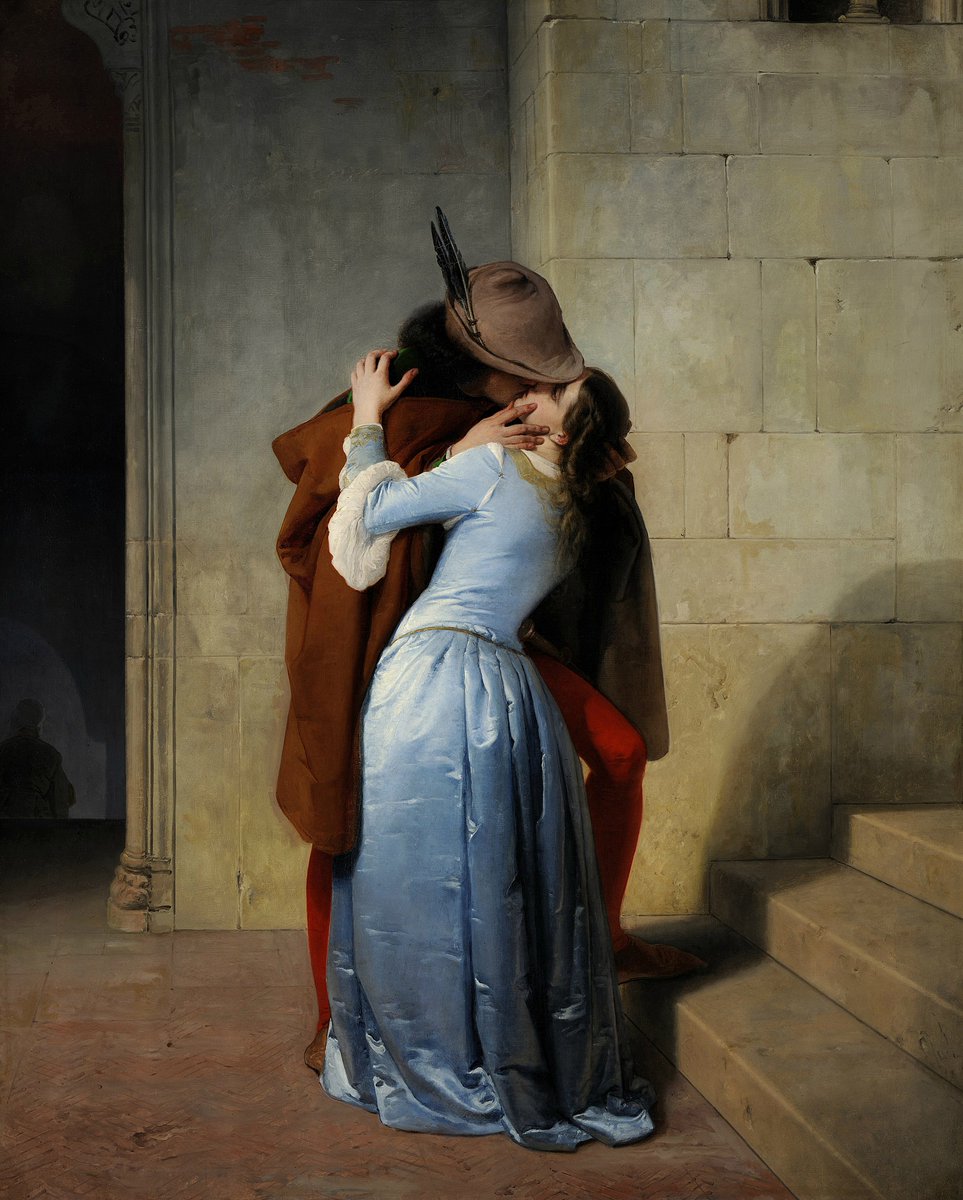
13. The Kiss by Francesco Hayez (1859) On the surface an iconic, gorgeously romantic Medieval moment. And, also, a subtle reference to a recent alliance between France and the Count of Cavour, leader of the Italian resistance, symbolising hopes for the unification of Italy.
14. The Two Crowns by Frank Dicksee (1900) Perhaps Dicksee's masterpiece. A king in shimmering, fantastical golden armour, looking up at a shadowed crucifix, surrounded by ladies in colourful dresses, flowers, and armoured guards. What does it mean? A compelling work of art.

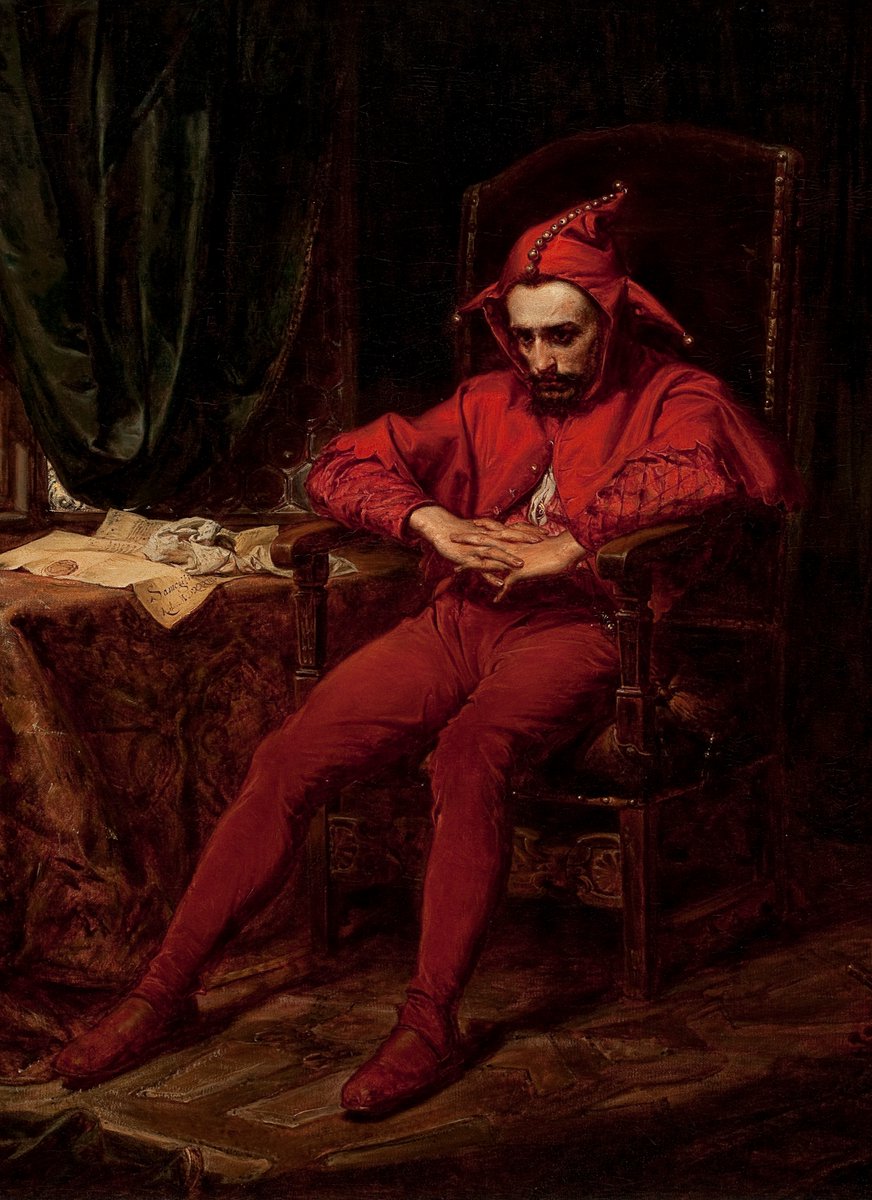
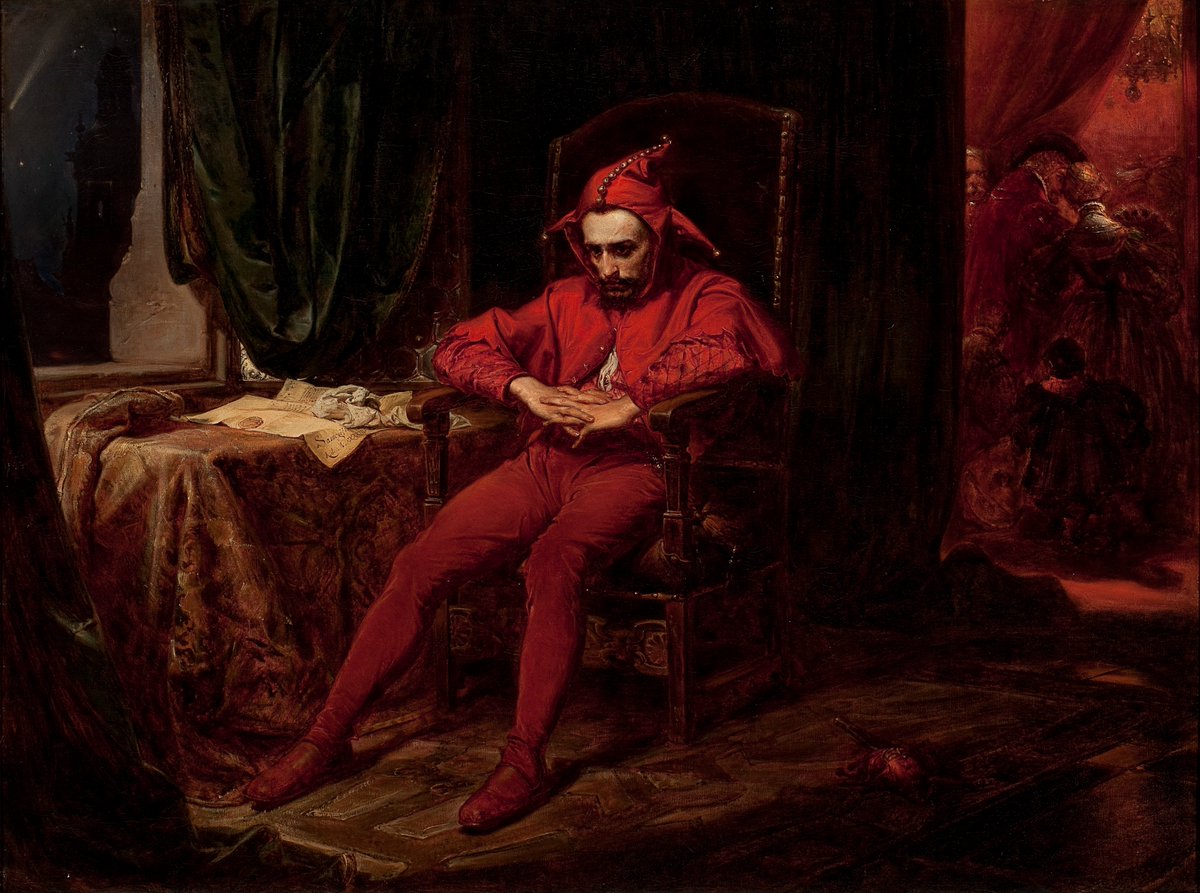
15. Stańczyk by Jan Matejko (1862) Jan Matejko — perhaps Poland's greatest ever painter — shows us a Polish national hero, the jester Stańczyk. News of a crushing defeat has arrived but this joker is the only one who seems bothered; everybody else is busy with their party.
16. The Shadow by Edmund Leighton Where better to end than with another Leighton? Here he adapts the Greek legend of a woman painting her lover's shadow to a Medieval setting and gives us another moving, idealised, dreamlike vignette of romance in the Middle Ages.

There's a big difference between the Middle Ages themselves and how they've been depicted in art, books, and films. Still, these artists who indulged in those romantic ideals of knights and maidens have surely produced some of history's most enchanting art.