Canvas & Ratio
Choose your destination platform format
Layout Template
Choose a content structure for your slides
Preset Themes
Typography & Sizing
Brand Kit Customization
AGENCYConfigure brand assets for headers & footers
Outro Slide CTA
Customize your closing call-to-action slide
Background Pattern
Build Your Carousel
Drag and drop any post card below onto a slide, or use the quick buttons to insert content/images instantly!

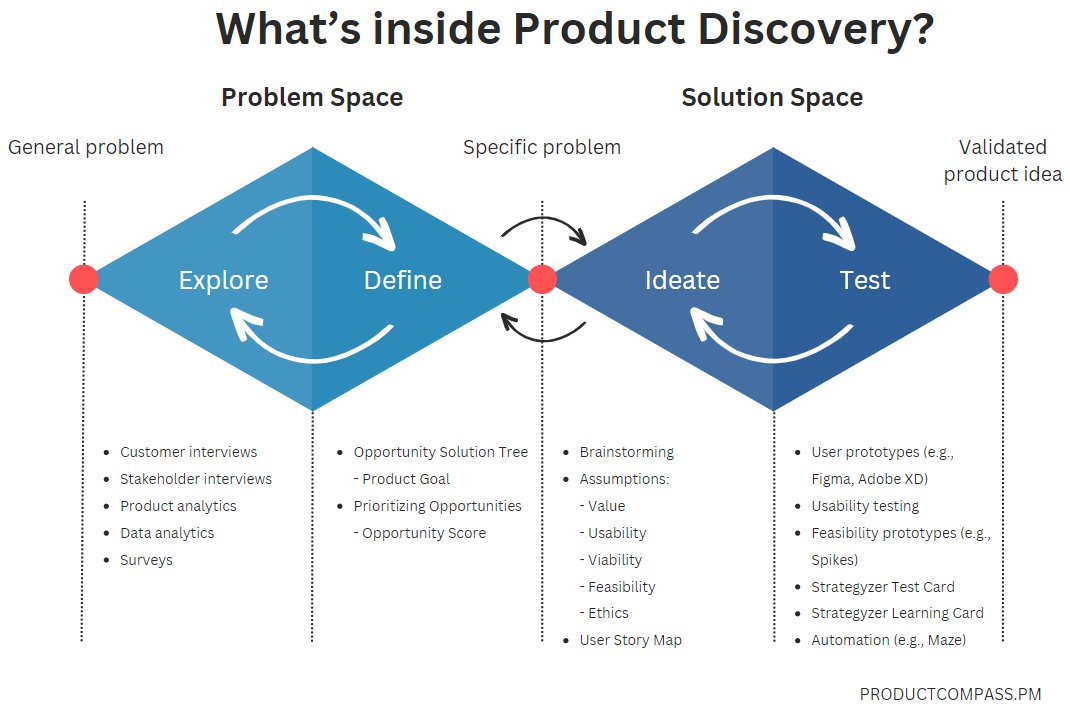
Product Discovery is the most important area for a Product Manager. But it's often misunderstood. People waste time and energy rushing to deliver features that don't work and don't drive the expected outcomes. The feature factory. It often looks like this: - Product Manager asks customers about the requirements - She creates detailed user stories and gets an estimation - The ideas that seem promising are selected for the Sprint - Developers do the magic - Designers make the thing prettier (it's like lipsticking a pig) - When everything is ready, nothing changes, or things become even worse Some say "the risk is limited to the length of the Sprint." But this will happen every Sprint. And the best ideas might not even be on the list. - Here's how to fix this: 1. Prerequisites: - Start with the product goal. My favorite approach is using OKRs. - Product Discovery is not a task for a single person. The Product Trio (Product Manager, Designer, and at least one Engineer) must work together. 2. Problem Space: - Every week, interview customers to identify opportunities (problems, needs) that, when solved, will drive the desired product outcome. - Map opportunities using the Opportunity Solution Tree - Prioritize opportunities. My favorite approach is using the Opportunity Score by Dan Olsen. 3. Solution Space: - Brainstorm possible solutions. The more, the better. The best approach is brainstorming individually and combining the results in a group. - Identify risks related to value, usability, feasibility, viability, and ethics. A great technique is using a User Story Map. - Test the riskiest hypotheses by experimenting. I love Strategyzer Test and Learning cards. - Product Discovery results in a validated Product Backlog. High-risk assumptions are tested before the implementation. - Tips: - People are biased. Ask about specific situations. Prioritize facts and behaviors over opinions. - Talk to the sales, success, customer support, and founders. They spend hundreds or thousands of hours with your customers every month. - Product analytics will tell you WHAT people are doing across their customer journey. Interviewing customers will help you understand WHY they are doing it. - Don’t verify every hypothesis. Factors that suggest you should test a hypothesis: high risk, low test cost, and a short time. - Eliminate waste by automating your UX testing. I fell in love with Maze, which allows you to test ideas and also recruit participants. Hope that helps!