Thread Truncated (Cap Enforced)
Only the first 20 tweets are unrolled into slides to ensure reliable PDF exporting and high server performance.
Canvas & Ratio
Choose your destination platform format
Layout Template
Choose a content structure for your slides
Preset Themes
Typography & Sizing
Brand Kit Customization
AGENCYConfigure brand assets for headers & footers
Outro Slide CTA
Customize your closing call-to-action slide
Background Pattern
Build Your Carousel
Drag and drop any post card below onto a slide, or use the quick buttons to insert content/images instantly!

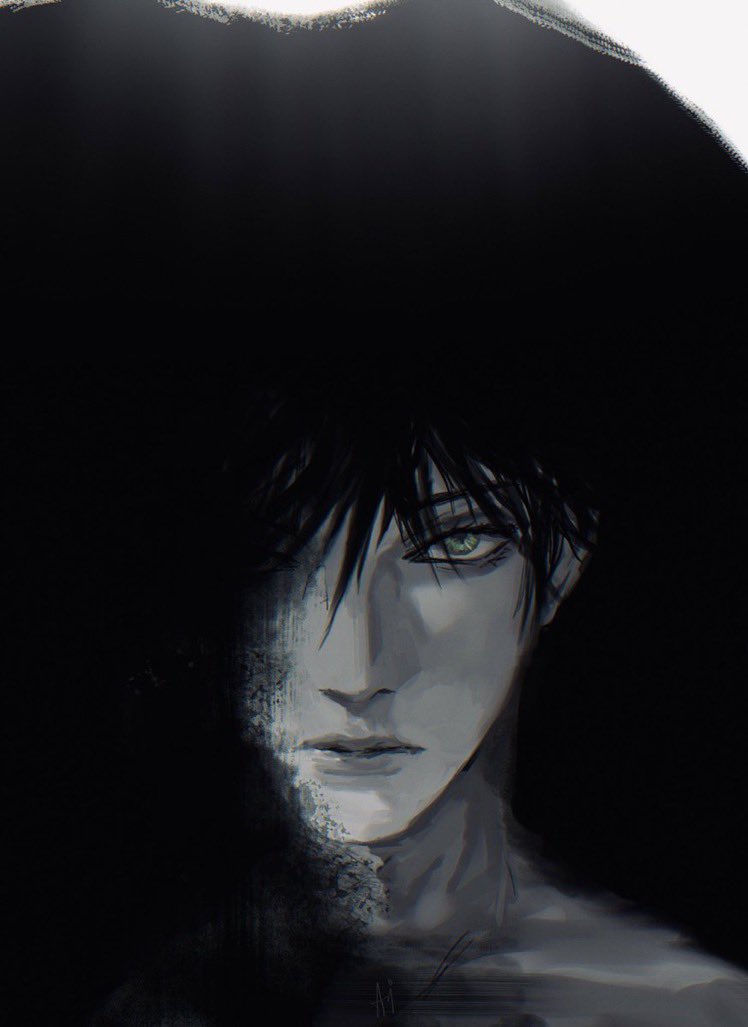
Megumi Fushiguro; the Shadow Self A dive into the Jungian shadow as the basis of Megumi’s character and what it forebodes for his future. art: @n06ara
One of the major conversations happening right now in the community is on whether or not Megumi will have a role to play out in the furthering of the story. I think what Megumi is going through right now is essentially the rock bottom he has to hit before emerging fully
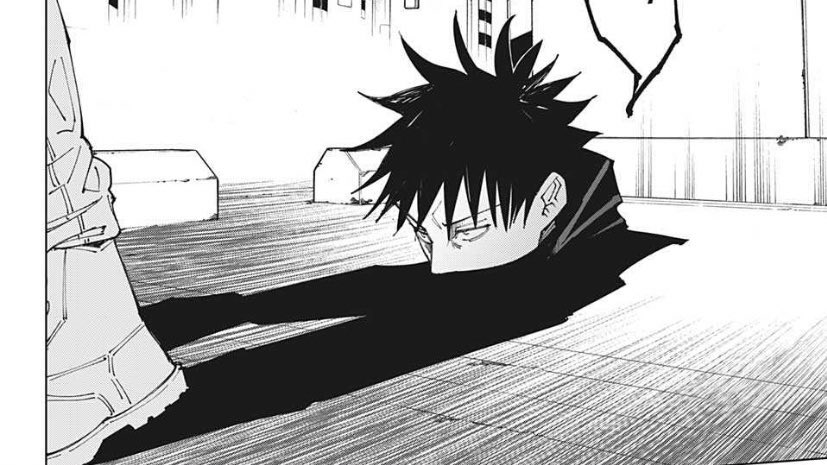
As with all major sorcerers we have seen so far in the series CT’s reflect major characteristics of those they belong to.
What is a shadow? It is a dark shape caused by an opaque obstruction in front of light. There’s two important aspects to derive from this; light is needed for a shadow to be cast and a shadow is ever adapting to the figure that casts it.
Now, where does Jungian psychology come in? Jung developed multiple interconnected psychoanalytic theories. The shadow within ourselves is a part of our unconscious self that harbors our repressed feelings, thoughts, desires and ideas, often those we find shameful to be seen by
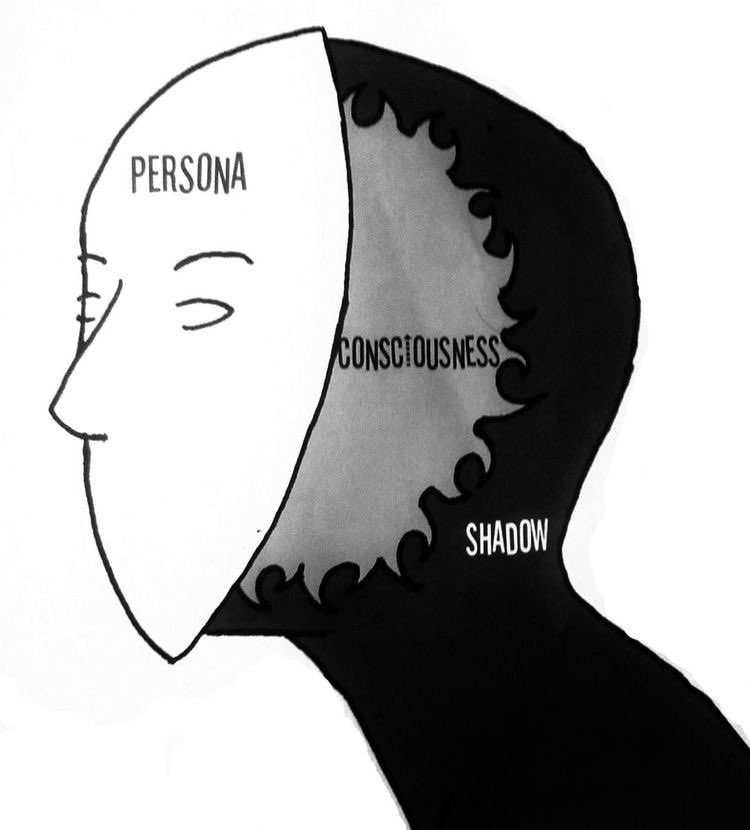
others. It is not only negative traits that the shadow consist of, it can also contain good qualities. The figure that casts that shadow is the persona; the part of ourselves that we want to be seen as from others, the socially “desirable” part of ourself which at the same

time serves to conceal the parts of ourselves we want to remain hidden in the shadow. Megumi’s morality is a big part of his character and something that is emphasized time and time again. After Tsumiki got cursed, Megumi put her on a pedestal, his light that became his purpose
in life. He had essentially lost the only family he had, the only person he’d have an emotional bond with and that left him alone. He held the idea that she could still be saved while knowing he couldn’t be the one to do so leading to him projecting this concept of saving Tsumiki
unto others like her that he could save. This external drive of a life purpose has kept him from looking to his internal self, distracted from the shadows by the light. It is striking how quickly he gave Itadori an almost equal position of importance, after having met him just

once, he opposed his self established standard of who is to be saved and who is not. This due to the fact that he saw in Yuji the same standard of “good” that he had derived from Tsumiki. This standard being awfully close to someone that simply didnt leave him, someone that
took the effort to protect him, like Tsumiki did. There is a sense of selfishness in how Megumi decides to categorize good and bad people. It seems as if Megumi has a low sense of self esteem, as he deems himself unworthy of receiving the same protection and care as good people

like Yuji and Tsumiki do, apparent in how easily he is willing to sacrifice his life to save them. He doesn’t consider himself worth saving because he himself falls outside of the rigid structure of justice he has established. At the same time he seems desperate to be a hero for
those good people, even if he denies that fact. That hidden feeling of unworthiness is part of a larger framework of suppressed thoughts and feelings. We haven’t seen Megumi have any thoughts about his parents, something quite odd seeing as to how his only left over “family”
member is central in his life. These emotions and worries are hidden in a part of him he is unaware of yet still affects his mood and behavior. As much as he seems nonchalant about his parents, the reality of the lack of parents in his life from early on informed much of his
outlook on life, morality and the formation of his persona. Megumi’s biggest fear is losing the few people he cares about and subsequently being alone. The fear of loneliness being a worse reality than death is what has informed most of his decision early on in the story.
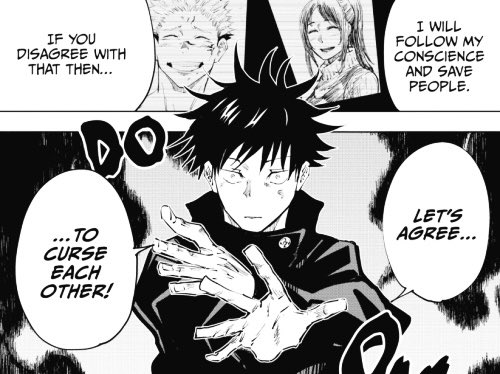
It is also why he keeps projecting Tsumiki unto Yuji; he’s afraid of being alone but somehow all the people he considers good have bad luck; life is unfair. Someone who is led by their shadow always lives below their level, just like when Gojo made a statement on how Megumi has
constantly been trying to match others, and who has unconsciously held himself back. Gojo tells him to be more selfish, this is a part of Megumi that he has been supressing, a part that conflicts with the version Megumi sees as ideal for himself.
He desires a compassionate self; someone who stays near those he cares about, even in strength. However, the extreme altruism (selective) he has been shown to portray is what has stunted his growth, in both strength but also the development of his own person.
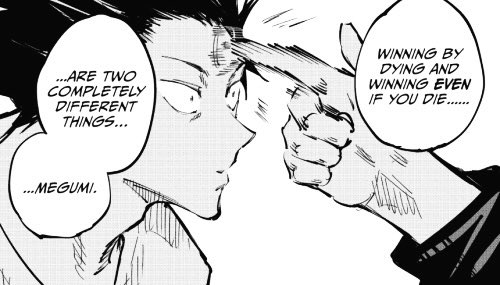
His nonchalant attitude also stems from the fact that his strong emotions have been suppressed in order to protect himself against confronting what hurts him the most.However, it is important to bring these hidden aspects into light because it allows one to correct themselves but
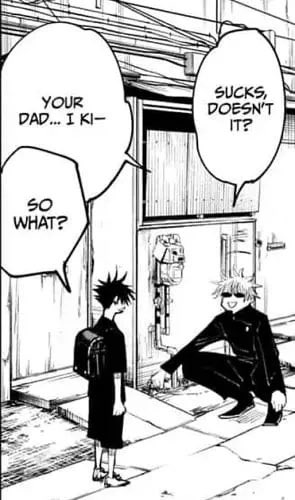
if they are repressed and never corrected, it will come out in moments of emotional turmoil. This perfectly describes how Megumi’s initial reaction had been to give up his life, essentially give it up easily even if it was unnecessary to win, but later on we see, how after his