Thread Truncated (Cap Enforced)
Only the first 20 tweets are unrolled into slides to ensure reliable PDF exporting and high server performance.
Canvas & Ratio
Choose your destination platform format
Layout Template
Choose a content structure for your slides
Preset Themes
Typography & Sizing
Brand Kit Customization
AGENCYConfigure brand assets for headers & footers
Outro Slide CTA
Customize your closing call-to-action slide
Background Pattern
Build Your Carousel
Drag and drop any post card below onto a slide, or use the quick buttons to insert content/images instantly!

We've all heard of the Seven Wonders of the Ancient World. But where are they? Who built them and why? Were they even real? Well, the first thing is that the idea of "Seven Wonders" is itself 2,000 years old...
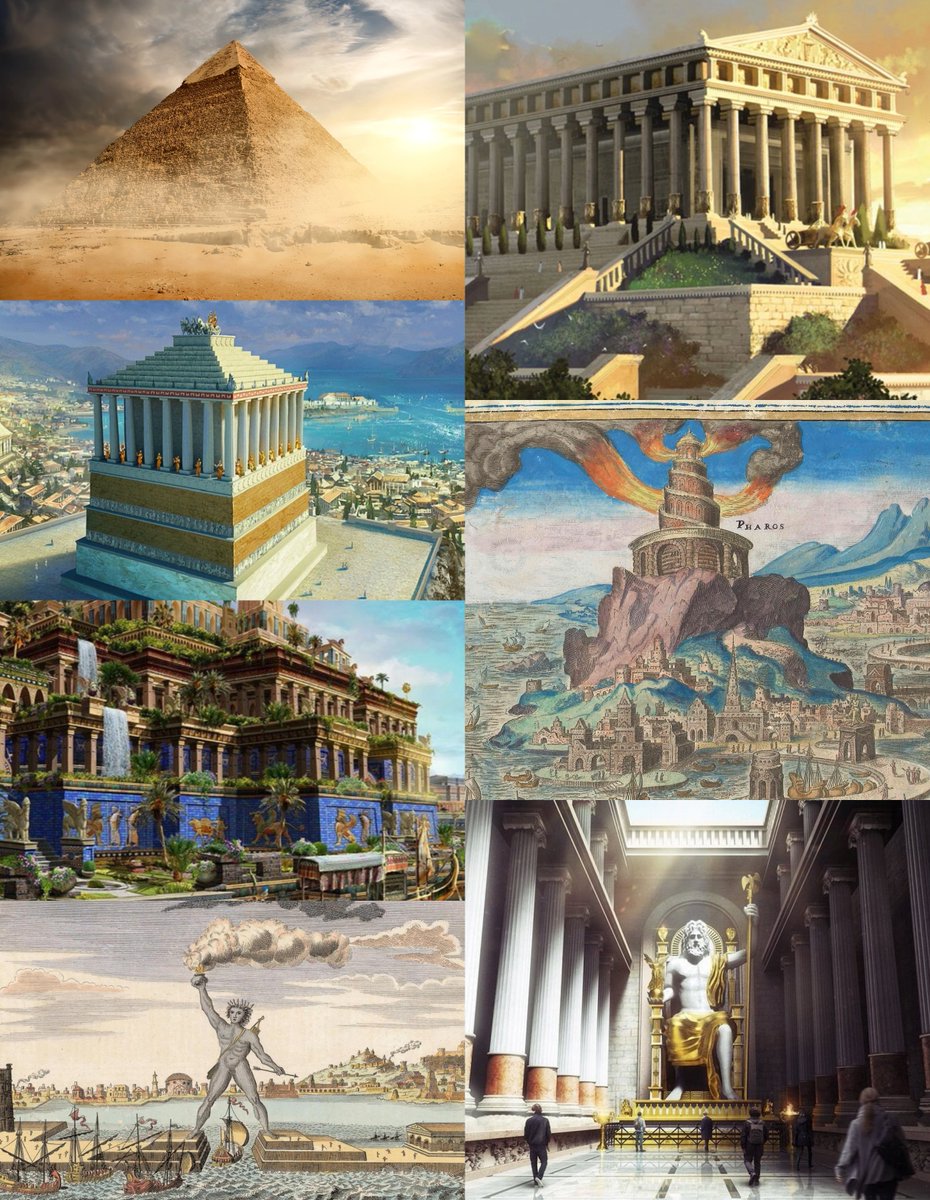
So, the idea of "Seven Wonders" is older than you might imagine. As long ago as 60 BC Diodorus of Sicily listed them, and even before that there was a trend of describing the great monuments of the world, as Herodotus did in the 5th century BC when he wrote of Babylon and Egypt.

But the canonical "seven" that has been handed down (which focusses mainly on Greek or Hellenistic buildings) was actually established by Antipater of Sidon in around 100 BC. For over two thousand years they have indeed been considered, as a group, wonders of the world...
1. Great Pyramid of Giza Perhaps the world's most famous building; it has held sway over our imaginations for millennia. The Great Pyramid is astonishingly old. There's a greater span of time between its construction and the birth of Jesus than his birth and the present day.

It was built in about 2,700 BC on the orders of the Pharaoh Khufu, to be both his tomb and a monument to his semi-divine rule for all time. So it is by far the oldest of the Seven Wonders, not so distant from the birth of human civilisation itself.


The Great Pyramid was the world's tallest building for nearly 4,000 years. And what we see today is really just the inner structure - it was once clad in shimmering white limestone.

2. Hanging Gardens of Babylon The most controversial of all the ancient wonders. Nobody agrees about whether it really existed, and - even if it did - where it was or what it looked like. The original theory is that King Nebuchadnezzar II built it in the 6th century BC.


The Mesopotamians built ziggurats - large tiered temples - all across modern-day Iraq. When the Ziggurat of Ur (an ancient Sumerian city) was excavated in the 1920s, archaeologists noticed that it had a complex irrigation system, suggesting it once featured raised gardens.

And so the "Hanging Gardens" may have looked something like this. As for its real location: who knows? But it entered the realm of quasi-historical myth and has been subject to endless fanciful retellings and theorisations down the centuries. A half-real wonder, perhaps.

3. Statue of Zeus at Olympia This statue was forty feet tall, made from ivory and gold over a wooden frame, and stood in the Temple of Zeus at Olympia, in Greece. Zeus was King of the Gods, after all, and so he deserved the ultimate sanctuary of worship. It dates to 435 BC.

The statue's creator was Phidias, famed as the greatest of all Ancient Greek sculptors: he also made the Parthenon Friezes. The statue's fate is uncertain, though the temple itself fell into disuse when the Roman Emperor Theodosius banned pagan worship in the 4th century AD.

Phidias also made the Statue of Athena which once stood inside the Parthenon, in Athens. Like the Statue of Zeus it was colossal and - to our surprise - colourful. Our view of Greek statues as pure white marble is inaccurate; they were originally brightly painted or decorated.

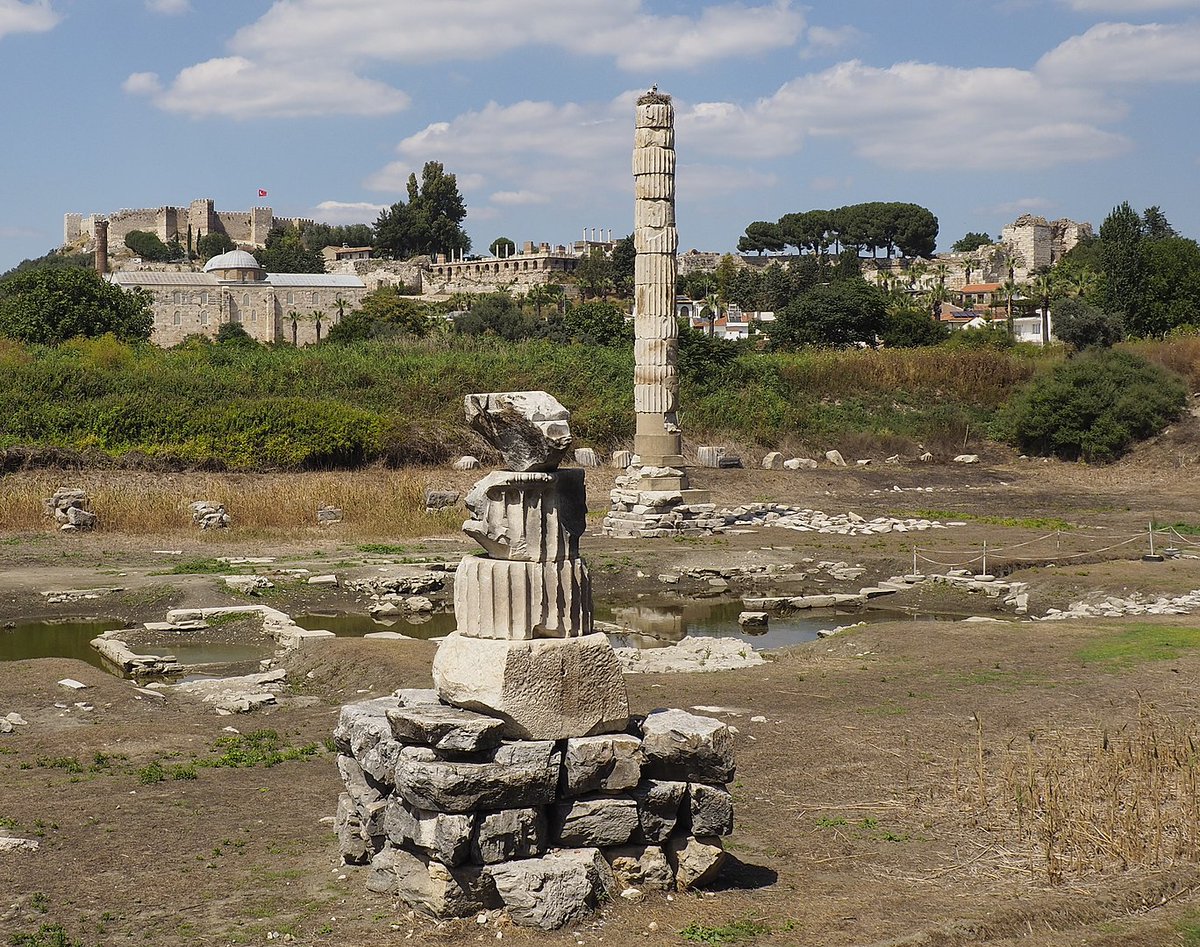
4. Temple of Artemis at Ephesus It had three different versions. The oldest was a Bronze Age shrine, the second was built on a larger scale in the 6th century, and the wonder itself was built in the 4th century BC, dedicated to a local, quasi-Egyptian version of the goddess.
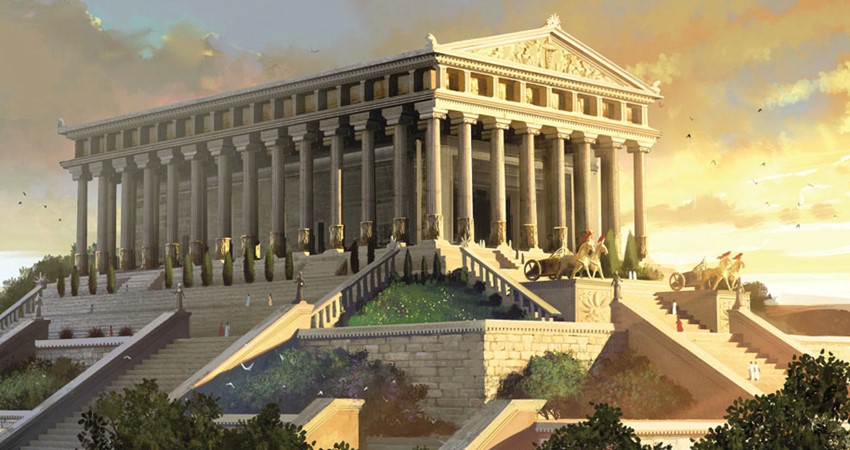

Where is Ephesus? It's an ancient city in what is now Western Anatolia, in Turkey. This is an important reminder that what we call "Ancient Greece" was really a loose collection of cities and communities spread right across the Eastern Mediterranean.

The third Temple of Artemis was - like many pagan shrines - destroyed once and for all in the 5th century AD, having first been closed down as the Roman Empire embraced Christianity and cracked down on paganism. A watershed moment, given the former greatness of this temple.
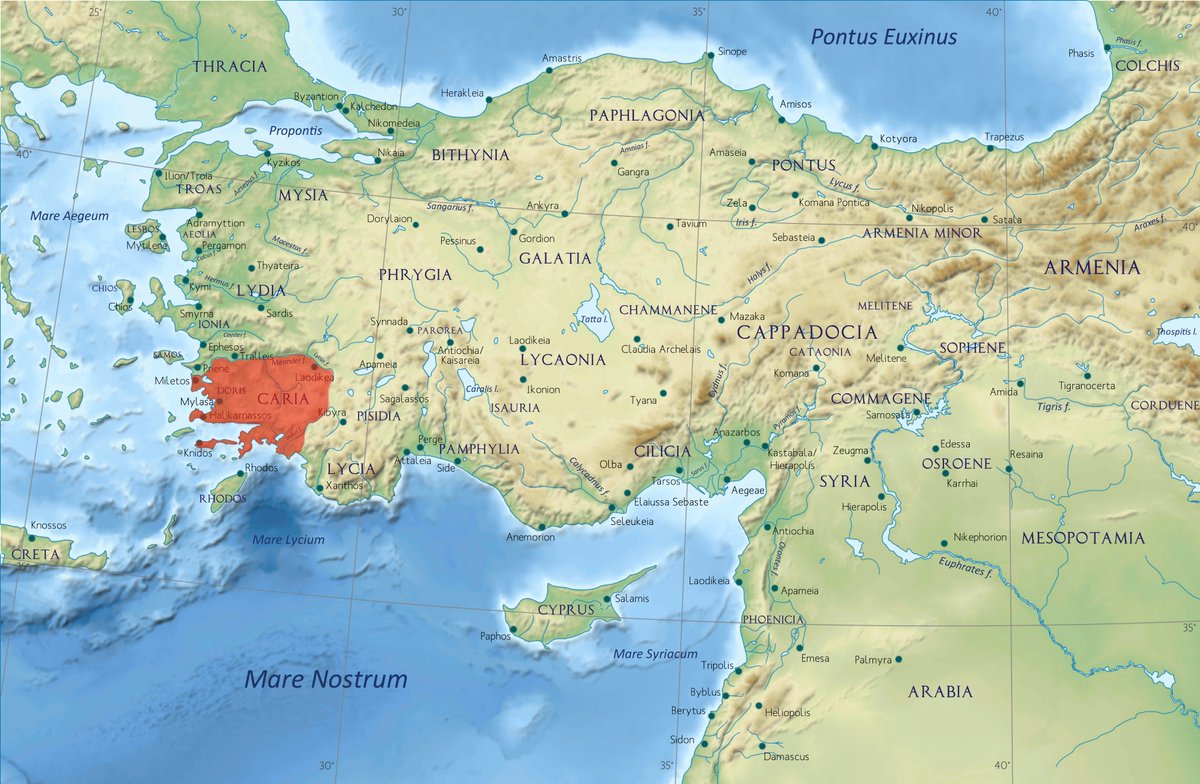
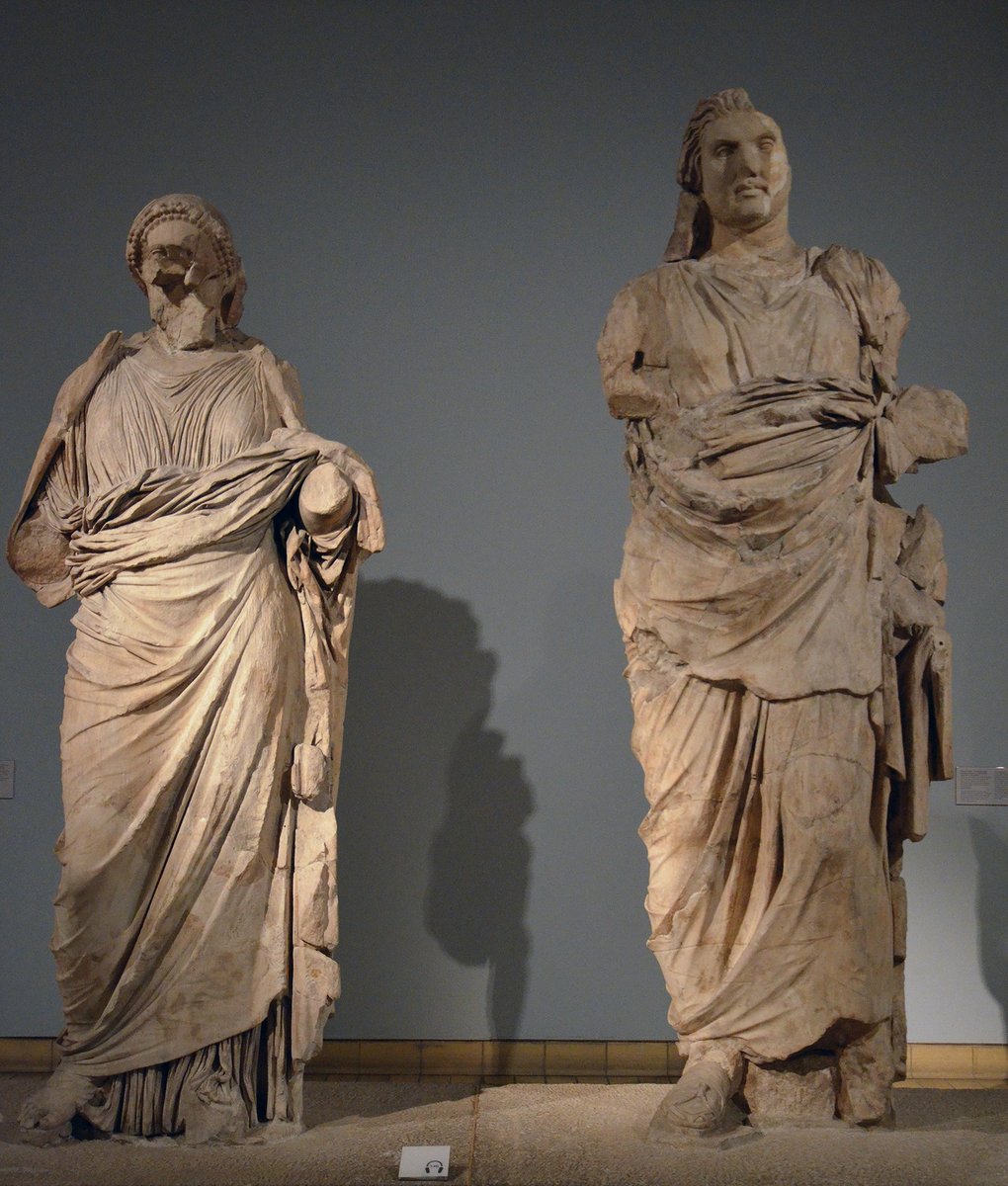
5. Mausoleum at Halicarnassus This tomb was built in about 350 BC for Mausolus, the ruler of a region in Western Anatolia called Caria, by his wife Artemisia. It's from Mausolus' tomb that the word mausoleum itself originates.

It was situated in Halicarnassus (modern-day Bodrum in Turkey) which at that time was ruled by the Persian Empire. And so Mausolus was a "satrap" - a type of Persian governor appointed by the king to rule a specific region. These satraps were minor kings in their own right.
Successive earthquakes destroyed the Mausoleum during the Middle Ages and its ruins used to built Bodrum Castle, though many of its original statues and friezes remain. They were made by famous Greek artists and are a testament to the wealth and prestige Mausolus must have had.

6. Colossus of Rhodes It was built in 280 BC by the people of Rhodes to celebrate the defence of their island against a long siege. They melted their enemies' weapons and built the Colossus - a statue of the sun god Helios - from bronze and iron, somewhere near the harbour.

It never straddled the harbour entrace - that's a Medieval fantasy. But it was, so we are told, about 100 feet tall. It fell during by an earthquake just fifty years later and was never rebuilt, though its ruins lay around for centuries. Where are they now? Nobody knows.
