Canvas & Ratio
Choose your destination platform format
Layout Template
Choose a content structure for your slides
Preset Themes
Typography & Sizing
Brand Kit Customization
AGENCYConfigure brand assets for headers & footers
Outro Slide CTA
Customize your closing call-to-action slide
Background Pattern
Build Your Carousel
Drag and drop any post card below onto a slide, or use the quick buttons to insert content/images instantly!

The market crash is here Forget profits -- Free cash flow matters now more than ever If you're an individual investor, you MUST know how to read a CASH FLOW STATEMENT Here's what you need to know:
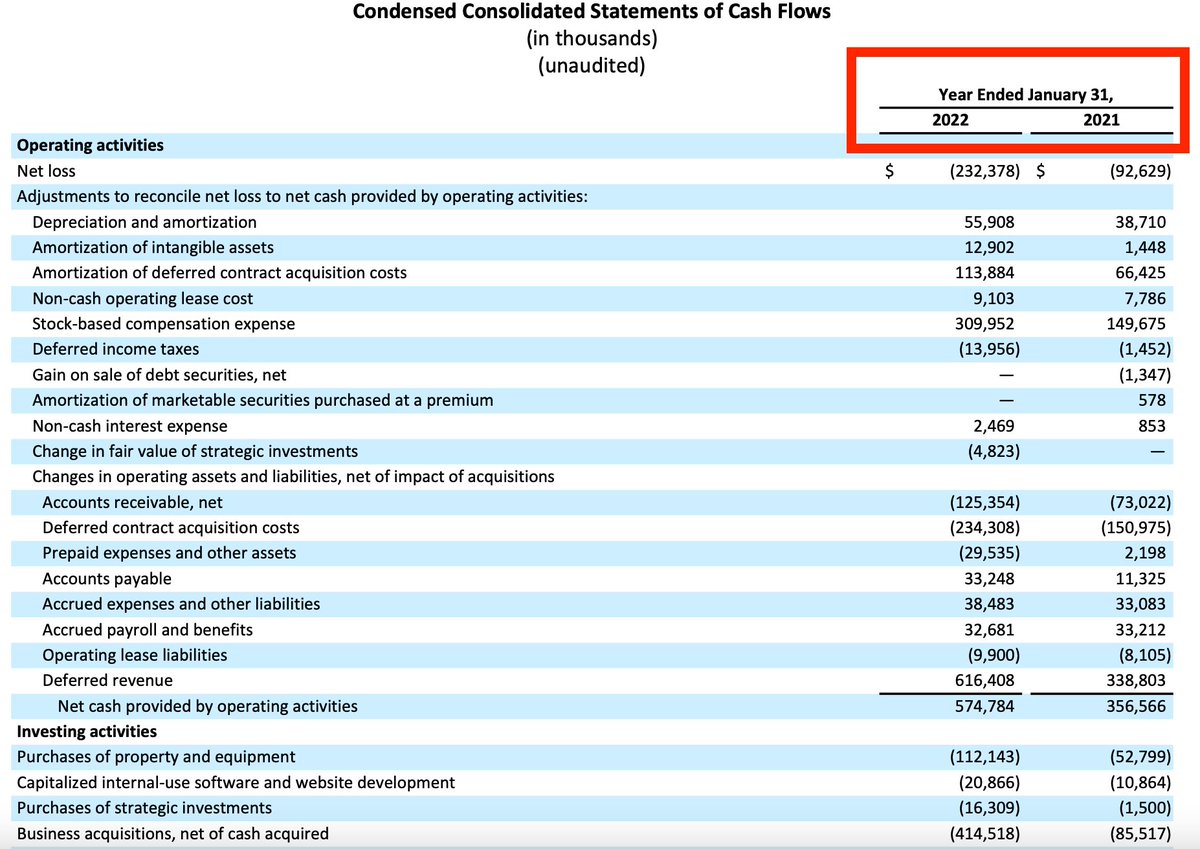
The cash flow statement shows cash moving in and out of a company over specific time periods. Since it's May right now, the two most common will be: ⚫️ 1 Quarter ⚫️ 1 Year Below, we can see CrowdStrike's cash flow over the past year. The time frame is at the top $CRWD
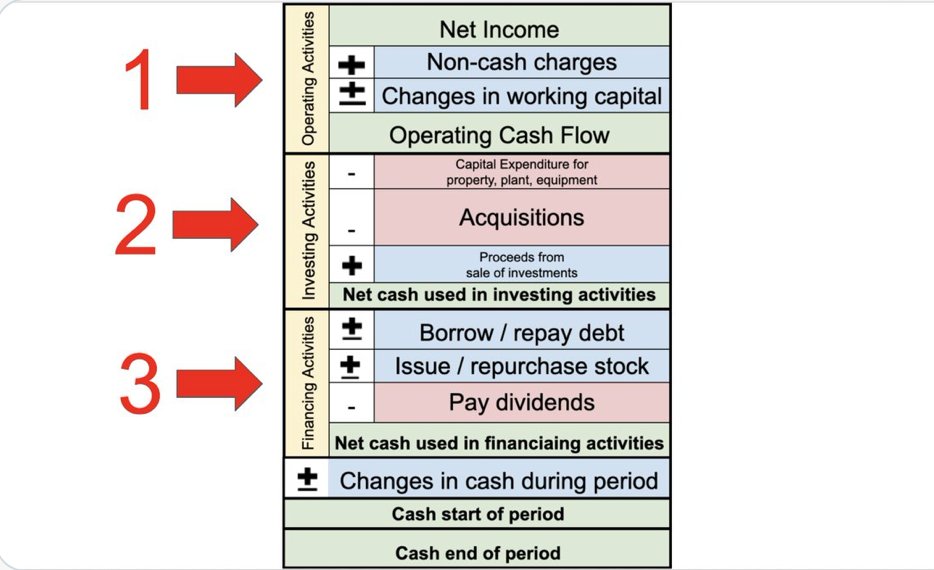
There are three key parts to a cash flow statement: 1⃣ Operating Activities (Running the business) 2⃣ Investing Activities (Investing in the business) 3⃣ Financing Activities (Paying for the business) There's freedom in how it gets reported, but this is the basic structure
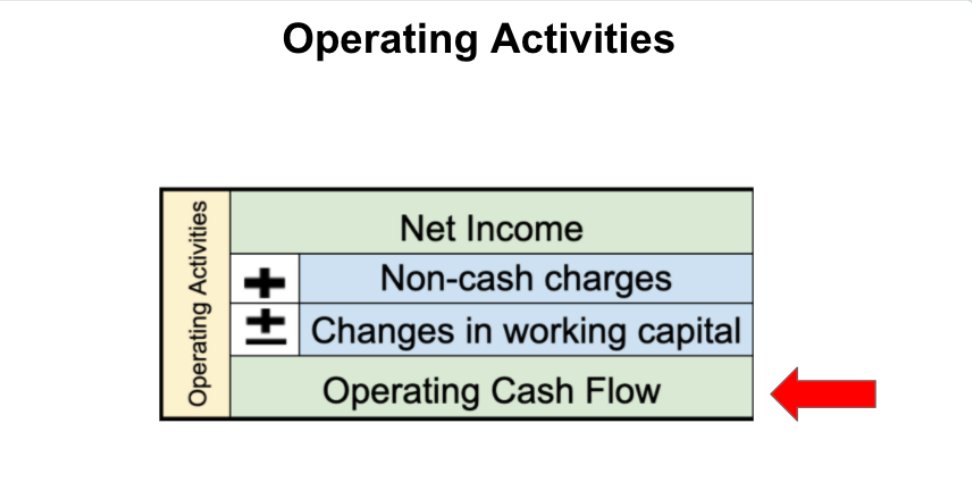
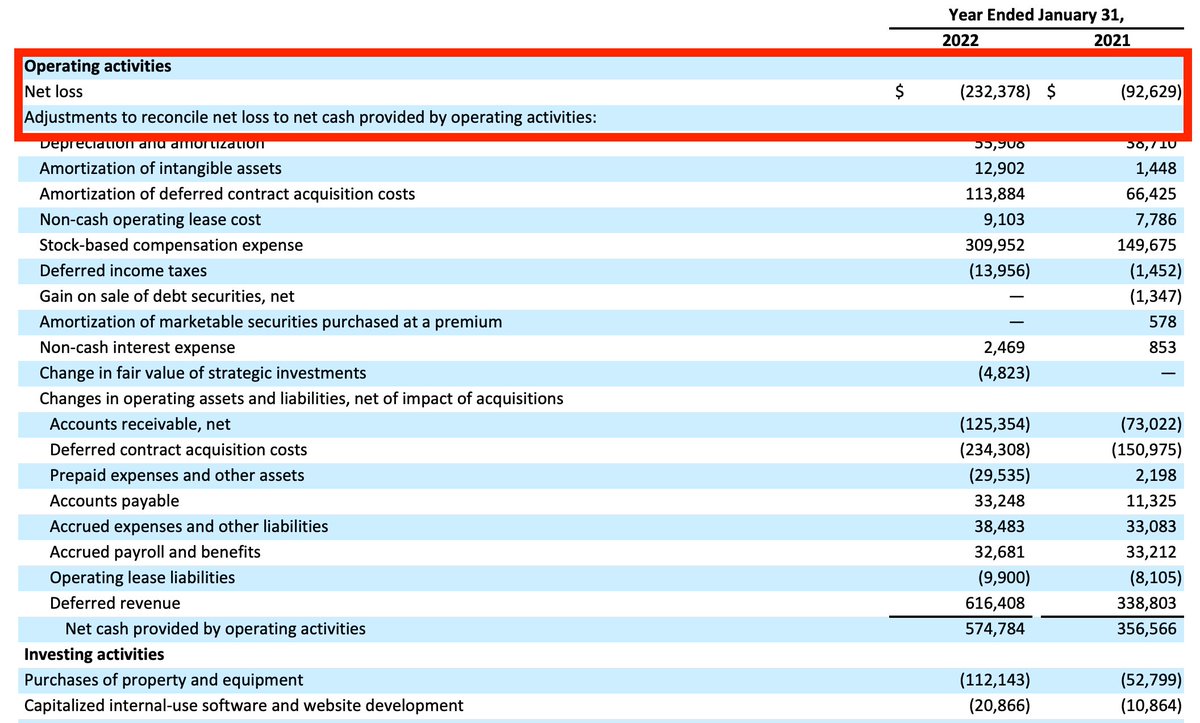
Let's specifically look at operating activities The top line-item is NET INCOME. You'd think this would represent the money a company puts in the bank at the end of the year. But that's NOT THE CASE
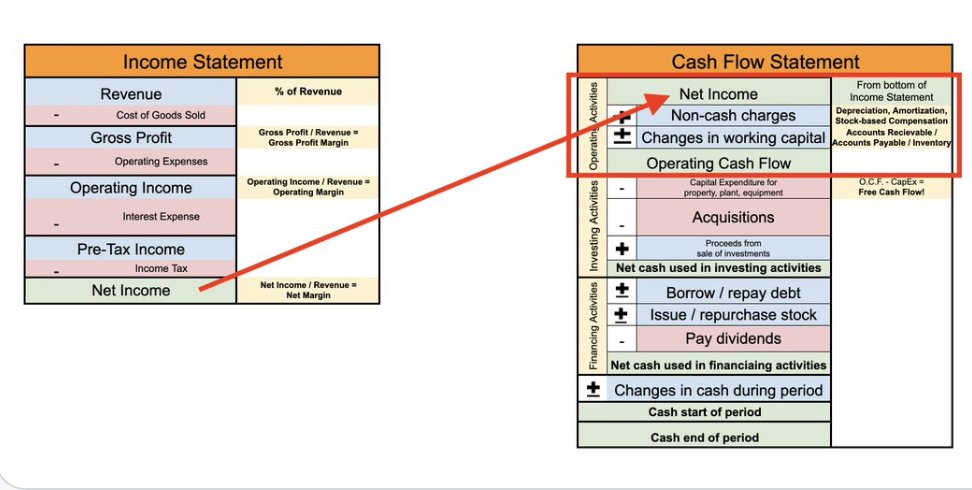
Net Income backs out NON-CASH charges. The cash flow statement adds them back in. Including: ⚫️ Depreciation: Value of asset decreasing ⚫️ Amortization: Expensing pre-paid cost ⚫️ Stock-Based Compensation: Paying employees w/ equity

Next, working capital leads to cash being added or subtracted. This covers: ⚫️ Accounts Receivable: Sales not yet collected ⚫️ Accounts Payable: Bills not yet paid ⚫️ Inventory: Value of "stuff" not yet sold
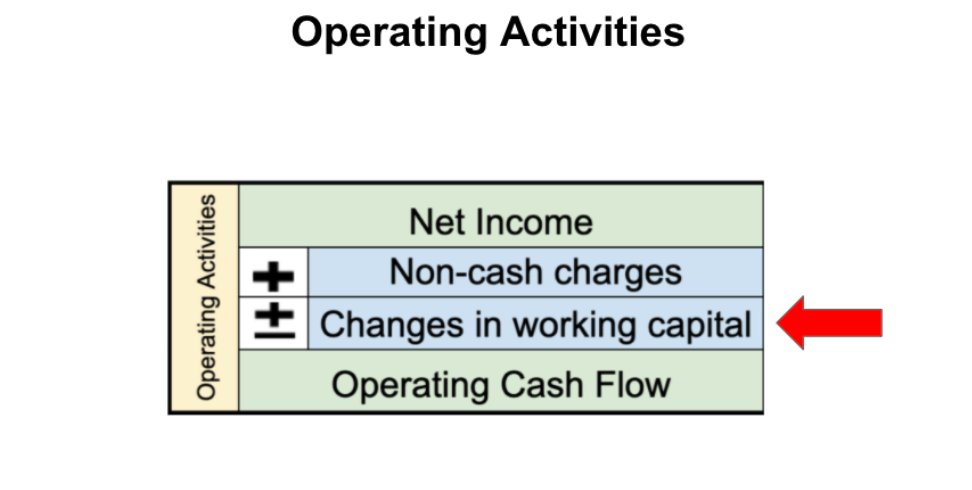
When all of those things are accounted for, you get OPERATING CASH FLOW. The easiest way of thinking about it: this is a company's REAL net income -- on a cash (and not accrual) basis.
The next section is investing activities. The first line item is very important: CAPITAL EXPENDITURES ⚫️ Cash spent to acquire or maintain property, plant, buildings, or equipment. ⚫️ Cash spent to develop internally-used software

With these figures, we can now calculate FREE CASH FLOW. This is the money a company generates from business after paying for capital expenditures. This is one of the most important financial metrics in my investing framework

Why? FCF tells a very different story than NET INCOME Consider $CRWD 📉Net LOSSES last year expanded nearly 150% to ($232 million) 😟That seems pretty bad
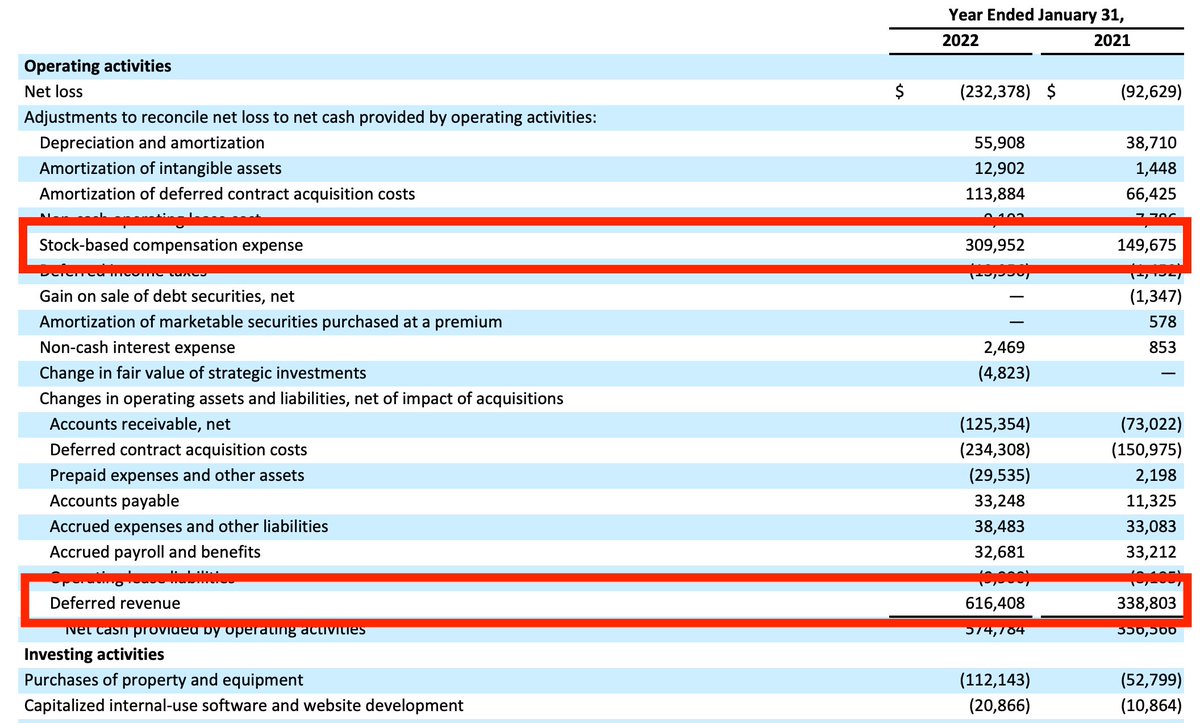
But there are two HUGE caveats: 1⃣ ~$450 million in stock-based compensation (SBC). 2⃣ ~$950 million in deferred revenue. The latter represents fees $CRWD has already collected for service in the future. It's in the bank. (Note: SBC *does* dilute shareholders)
Incredibly, when you do the math, $CRWD produced: 💰$357 million in Operating Cash Flow in Fiscal 2021 💰$575 million in Operating Cash Flow in Fiscal 2021

To find Free Cash Flow, we subtract out Capital Expenditures. When we do, $CRWD Free Cash Flow numbers are: 💰$293 million in Fiscal 2021 💰$442 million in Fiscal 2021
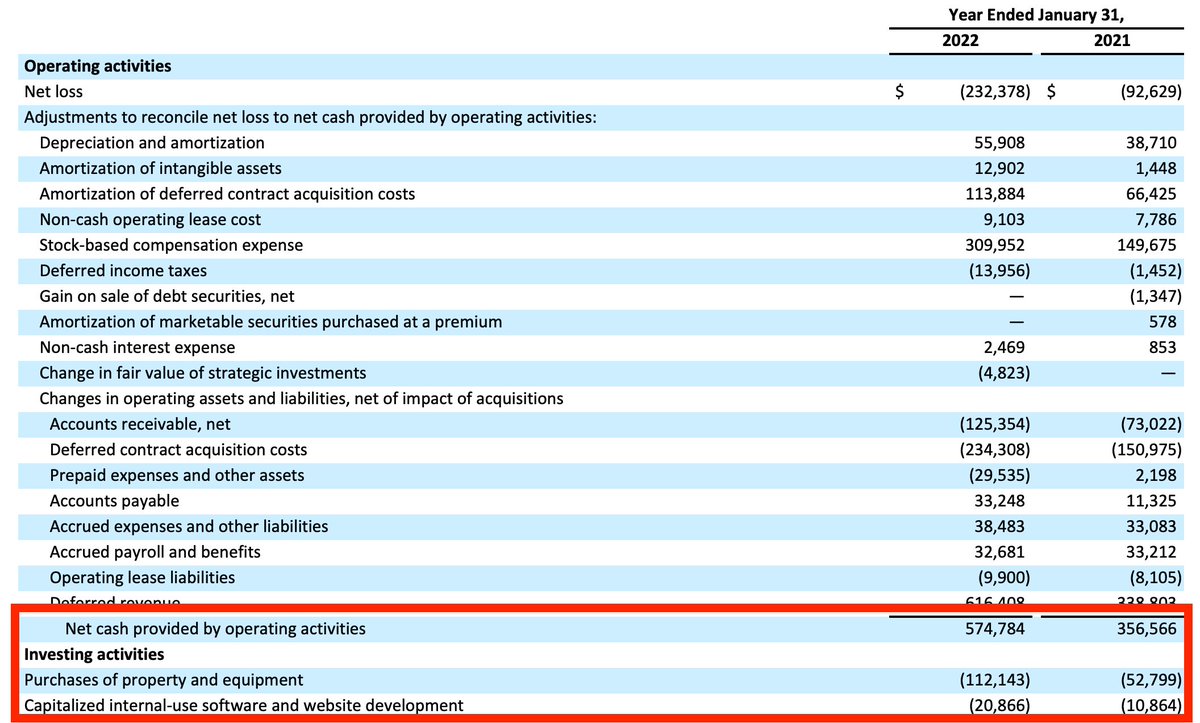
Think about that. 😟While it's true that $CRWD Net Income LOSSES WIDENED 150% 🤑It's also true that $CRWD Free Cash Flow GAINS EXPANDED 51% Knowing that is vitally important with stocks tanking and sources of funding drying up. The company can self-fund if it wants!
You MUST know how to read a cash flow statement if you invest in stocks. That's why @BrianFeroldi and I are excited to announce our first ever LIVE course: Financial Statements Explained Simply Click below to find out more and enroll <a target="_blank" href="https://maven.com/brian-feroldi/financials" color="blue">maven.com/brian-feroldi/…</a>