Thread Truncated (Cap Enforced)
Only the first 20 tweets are unrolled into slides to ensure reliable PDF exporting and high server performance.
Canvas & Ratio
Choose your destination platform format
Layout Template
Choose a content structure for your slides
Preset Themes
Typography & Sizing
Brand Kit Customization
AGENCYConfigure brand assets for headers & footers
Outro Slide CTA
Customize your closing call-to-action slide
Background Pattern
Build Your Carousel
Drag and drop any post card below onto a slide, or use the quick buttons to insert content/images instantly!

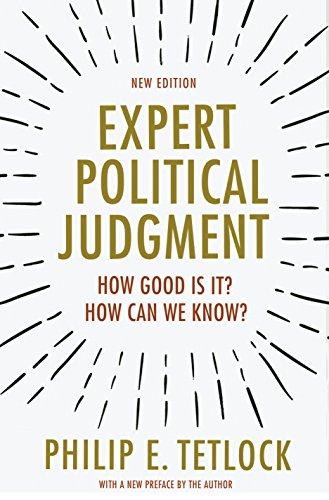
1/ Expert Political Judgment (Philip Tetlock) "What experts think matters far less than how they think. We are better off with experts who draw from an eclectic array of traditions and accept ambiguity/contradiction as inevitable features of life." (p. 2) <a target="_blank" href="https://www.amazon.com/Expert-Political-Judgment-Good-Know-ebook/dp/B072F4X6QY/" color="blue">amazon.com/Expert-Politic…</a>
2/ "Forecasting exercises' winners and losers are not clustered along left/right partisan lines. "There is an inverse relationship between indicators of good judgment and the qualities the media prizes in pundits—the tenacity required to prevail in ideological combat." (p. 2)
3/ "Disagreements hinge on hard-to-refute counterfactual claims about what would have happened if we had taken different policy paths and on moral claims about the types of people we should be—all claims partisans can use to fortify their positions against falsification." (p. 4)

4/ "When we pit experts against minimalist performance benchmarks—dilettantes, dart-throwing chimps, and assorted extrapolation algorithms—we find few signs that expertise translates into greater ability to make either “well-calibrated” or “discriminating” forecasts.
5/ "Who experts were (professional background, status) made scarcely an iota of difference to accuracy. Nor did what experts thought (liberals or conservatives, realists or institutionalists, optimists or pessimists). But how experts thought—their style of reasoning—did matter.
6/ "Foxes know many little things, draw from an eclectic array of traditions, and accept ambiguity/contradiction as inevitable features of life. "Hedgehogs know one big thing, toil devotedly within one tradition, and reach for formulaic solutions to ill-defined problems."
7/ "Foxes consistently edge out hedgehogs, esp. for long-term predictions in their domains of expertise. "Their self-critical, point-counterpoint thinking prevented them from building up the excessive enthusiasm that hedgehogs, esp. well-informed ones, had for their predictions.
8/ "Foxes were more sensitive to how contradictory forces can yield stable equilibria and, as a result, “overpredicted” fewer departures (good or bad) from the status quo. They also recognized the precariousness of equilibria rarely ruled out anything as impossible." (p. 21)
9/ "Radical skeptics argue that history is a succession of chaotic shocks reverberating through incomprehensibly intricate networks. "When well-established nonlinear relationships are linked into positive feedback loops in simulations, tiny input variations have large effects.
10/ "More deer means more reproduction but also exhausts food and attracts wolves. A tiny shift in beta (3.94 to 3.935) alters history. The populations remain almost identical but then, for mysterious tipping-point reasons, decisively part ways 25 years into the simulation.
11/ "Who among us cannot imagine our lives unfolding differently but for tiny accidents of fate that shaped the jobs we hold, the people we marry, and so on? "Accounts of military campaigns abound with tales of how horseshoe-nail-sized causes determined the outcomes of battles.
12/ "Mokyr compares searching for the seeds of the Industrial Revolution to studying the history of Jewish dissenters from 50 A.D.-50 B.C. We are looking for something that at its inception was insignificant, even bizarre, but destined to change the life of everyone in the West.
13/ "Butterfly effects undercut pet theories. Wars break out not due to grand causes—primordial hatreds or power imbalances—but to petty ones—royal carriage drivers making wrong turns, giving astonished assassins who had botched their jobs earlier that day second chances." (p.31)
14/ "A prospective study of how well retrospectively identified causes, either singly or in combination, predict events, a squared multiple correlation coefficient would reveal gross unpredictability. And retrodiction is enormously easier than prediction." (p. 35)

15/ "Intelligent people have enormous difficulty tracking complex patterns of covariation, such as, “effect y1 rises in likelihood when x1 is falling, x2 is rising, and x3 takes on an intermediate set of values.”
16/ "Policy makers rarely invoke nuanced reasoning: “Saddam resembles Hitler in risk-taking, but he also has the shrewd street smarts of Stalin, the vaingloriousness of Mussolini, and the demagoguery of Nasser; the usefulness of each analogy depends on context.” " (p. 38)
17/ "History heaps ambiguity on us. It requires us to keep track of many things and offers few clues as to which things made critical differences. "We know from experimental work that people fill in the missing data points with ideologically scripted event sequences.
18/ "Observers of world politics are overconfident, declaring with eerie certainty exactly what would have happened in counterfactual worlds that no one can visit "The world is messy: policies that one is predisposed to detest (embrace) sometimes have positive (noxious) effects.
19/ "The core function of political beliefs is to promote the comforting illusion of predictability. "Prediction suffers b/c we are deterministic thinkers with an aversion to probabilistic strategies that accept the inevitability of error. We look for order in random sequences.
20/ "When we know the base rates—say, the incumbent wins 80% of the time—and not much else, we should simply predict the more common outcome. But work on base rate neglect suggests that people insist on attaching high probabilities to low-frequency events.