This is Dr. Gábor Somlyai.
A Hungarian molecular biologist & cancer researcher who followed 2,600+ cancer patients over 32+ years.
His message? Cancer is driven by a variable almost nobody in medicine talks about: Deuterium.
Here is his framework: 🧵


1/ Cancer keeps rising despite decades of research & billions spent.
By 2050, cancer incidence is projected to increase by 80% in men — & deaths caused by cancer to double.
Somlyai:
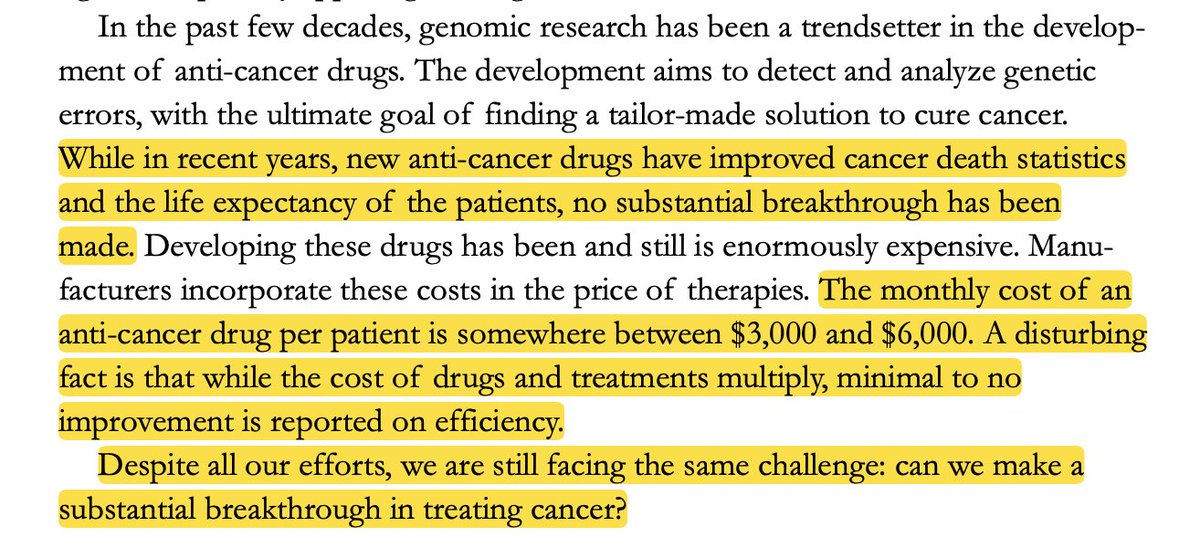
"Despite all our efforts, we are still facing the same challenge: can we make a substantial breakthrough in treating cancer?"
By 2050, cancer incidence is projected to increase by 80% in men — & deaths caused by cancer to double.
Somlyai:
"Despite all our efforts, we are still facing the same challenge: can we make a substantial breakthrough in treating cancer?"
2/ By the time cancer is detected — it's been growing for years.
It takes 4-5 years for a single cell to become a tumor 0.5-1 cm in size — the minimum detectable by current technology.
By then there are already over 10 million cells in that tumor.
During those same years, cells can break off and travel elsewhere. Another 4-5 years before those form metastases.
The 5-year survival marker in oncology — the standard used to declare someone cured — reflects this timeline exactly.
If cancer hasn't come back in 5 years, the window in which those travelling cells would have formed new tumors has passed.
And this is why the only intelligent strategy isn't just detection — it's prevention.
It takes 4-5 years for a single cell to become a tumor 0.5-1 cm in size — the minimum detectable by current technology.
By then there are already over 10 million cells in that tumor.
During those same years, cells can break off and travel elsewhere. Another 4-5 years before those form metastases.
The 5-year survival marker in oncology — the standard used to declare someone cured — reflects this timeline exactly.
If cancer hasn't come back in 5 years, the window in which those travelling cells would have formed new tumors has passed.
And this is why the only intelligent strategy isn't just detection — it's prevention.

3/ Somlyai: cancer is driven by a variable modern medicine barely discusses: deuterium.
Deuterium (D) is a heavy isotope of hydrogen (H) — present in water, fats, carbohydrates, proteins and virtually every molecule in your body.
Normal hydrogen has 1 proton. Deuterium has 1 proton + 1 neutron, making it twice as heavy.
Because of that weight difference, molecules containing deuterium behave differently in chemical reactions.
Bonds containing deuterium take 6–10x longer to split.
This is known as the Kinetic Isotope Effect — replacing hydrogen with heavier deuterium changes reaction speed inside the cell.
Deuterium (D) is a heavy isotope of hydrogen (H) — present in water, fats, carbohydrates, proteins and virtually every molecule in your body.
Normal hydrogen has 1 proton. Deuterium has 1 proton + 1 neutron, making it twice as heavy.
Because of that weight difference, molecules containing deuterium behave differently in chemical reactions.
Bonds containing deuterium take 6–10x longer to split.
This is known as the Kinetic Isotope Effect — replacing hydrogen with heavier deuterium changes reaction speed inside the cell.

VIDEO
4/ Deuterium exists in higher concentration in your blood than potassium, calcium, or magnesium — yet medicine almost never talks about it.
Human blood contains deuterium at concentrations roughly:
- 6x higher than calcium
- 10x higher than magnesium
- 3x higher than potassium
We consider calcium, magnesium, and potassium indispensable for life.
Somlyai's question: how did science ignore deuterium for over 60 years?
Human blood contains deuterium at concentrations roughly:
- 6x higher than calcium
- 10x higher than magnesium
- 3x higher than potassium
We consider calcium, magnesium, and potassium indispensable for life.
Somlyai's question: how did science ignore deuterium for over 60 years?

VIDEO
5/ Somlyai's framework began with Albert Szent-Györgyi's idea that cancer can only be solved at the submolecular level.
In 1973, Somlyai watched a television interview with the Hungarian Nobel laureate — and it planted one word in his mind: submolecular.
Large protein molecules — the main targets of drug development — are too big and too slow to regulate the rapid, complex processes happening inside cells.
Something smaller had to be doing it.
Szent-Györgyi thought it was electrons.
Somlyai thought it was the positively charged hydrogen ions that have a key role in regulating cell division and thus the formation of cancer — specifically, the ratio between deuterium and regular hydrogen.
In 1973, Somlyai watched a television interview with the Hungarian Nobel laureate — and it planted one word in his mind: submolecular.
Large protein molecules — the main targets of drug development — are too big and too slow to regulate the rapid, complex processes happening inside cells.
Something smaller had to be doing it.
Szent-Györgyi thought it was electrons.
Somlyai thought it was the positively charged hydrogen ions that have a key role in regulating cell division and thus the formation of cancer — specifically, the ratio between deuterium and regular hydrogen.

VIDEO
6/ Albert Szent-Györgyi believed cancer was fundamentally a failure of cellular regulation, structure and electron transport.
If you understand Szent-Györgyi, you understand health and disease.
After reading 7 of his books, I broke down his framework here:
If you understand Szent-Györgyi, you understand health and disease.
After reading 7 of his books, I broke down his framework here:
View Tweet
7/ Deuterium isn't the enemy. Life requires it.
But experiments from the 1930s onward show a consistent pattern: when deuterium concentration gets too high, biology changes.
Tobacco plants watered with increasing heavy water developed shorter and shorter shoots — growth inhibited directly in proportion to deuterium concentration.
Green algae grown in heavy water showed altered protein, carbohydrate, and nucleic acid composition — while photosynthesis slowed to one-third normal speed.
Single-cell organisms exposed to water above 45% deuterium lost their ability to react to light entirely. Returned to normal water, they regained the ability — but their circadian rhythm had changed.
The longer the exposure to high-deuterium water, the more their circadian rhythm changed.
Among all known environmental and chemical factors — only deuterium can change an organism's circadian rhythm.
In dogs, heavy water above ~35% concentration caused death.
The question was never whether deuterium matters biologically.
The question is what concentration biology evolved to run on.
But experiments from the 1930s onward show a consistent pattern: when deuterium concentration gets too high, biology changes.
Tobacco plants watered with increasing heavy water developed shorter and shorter shoots — growth inhibited directly in proportion to deuterium concentration.
Green algae grown in heavy water showed altered protein, carbohydrate, and nucleic acid composition — while photosynthesis slowed to one-third normal speed.
Single-cell organisms exposed to water above 45% deuterium lost their ability to react to light entirely. Returned to normal water, they regained the ability — but their circadian rhythm had changed.
The longer the exposure to high-deuterium water, the more their circadian rhythm changed.
Among all known environmental and chemical factors — only deuterium can change an organism's circadian rhythm.
In dogs, heavy water above ~35% concentration caused death.
The question was never whether deuterium matters biologically.
The question is what concentration biology evolved to run on.

VIDEO
8/ Is cancer genetic or metabolic?
Somlyai's answer: both — and deuterium is the bridge.
Healthy mitochondria produce low-deuterium metabolic water, keeping the deuterium/hydrogen ratio low inside the cell.
Low ratio = brake on cell division.
As Szent-Györgyi put it: traffic cannot be controlled with green lights alone.
Red lights matter too.
In healthy cells, healthy mitochondria are the red lights.
Somlyai's answer: both — and deuterium is the bridge.
Healthy mitochondria produce low-deuterium metabolic water, keeping the deuterium/hydrogen ratio low inside the cell.
Low ratio = brake on cell division.
As Szent-Györgyi put it: traffic cannot be controlled with green lights alone.
Red lights matter too.
In healthy cells, healthy mitochondria are the red lights.

VIDEO
9/ Tumor cells have one thing in common: their mitochondria are dysfunctional.
Dysfunctional mitochondria can no longer produce low-deuterium metabolic water.
The deuterium/hydrogen ratio inside the cell rises unchecked.
A rising deuterium/hydrogen ratio is one of the signals that triggers cell division.
Without properly functioning mitochondria to reduce deuterium levels — the brake fails. Cell division becomes uncontrolled.
Warburg showed tumor cells use glycolysis instead of mitochondrial oxidation.
Through the deuterium lens — this means tumor cells don't produce low-deuterium metabolic water.
The end product is lactic acid — not clean metabolic water.
No low-deuterium water = no brake on cell division.
Dysfunctional mitochondria can no longer produce low-deuterium metabolic water.
The deuterium/hydrogen ratio inside the cell rises unchecked.
A rising deuterium/hydrogen ratio is one of the signals that triggers cell division.
Without properly functioning mitochondria to reduce deuterium levels — the brake fails. Cell division becomes uncontrolled.
Warburg showed tumor cells use glycolysis instead of mitochondrial oxidation.
Through the deuterium lens — this means tumor cells don't produce low-deuterium metabolic water.
The end product is lactic acid — not clean metabolic water.
No low-deuterium water = no brake on cell division.

VIDEO
10/ Thomas Seyfried has spent 30+ years studying cancer & argues that cancer is fundamentally a metabolic-mitochondrial disease.
You don’t get cancer if your mitochondria are healthy.
I broke down his full cancer framework here:
You don’t get cancer if your mitochondria are healthy.
I broke down his full cancer framework here:
View Tweet
11/ Deuterium doesn't target one gene. It influences the entire genotype simultaneously.
This resolves the genetic vs metabolic debate.
Of 536 kinase genes studied — 25.3% showed significant expression changes under different deuterium concentrations.
Of 236 tumor-related genes — 52.5% showed significant changes.
At 300 ppm deuterium concentration — 97.3% of all genes studied were stimulated.
Whether cancer develops through genetic defects or cellular metabolism — both can be traced back to disruptions in the deuterium/hydrogen ratio.
Evolution built a regulatory system operating below the molecular level — it uses the deuterium/hydrogen ratio to regulate genetic, biochemical, and physiological processes simultaneously.
This is why deuterium depletion affects hundreds of genes at once rather than one pathway — it operates at a level upstream of molecular regulation.
This resolves the genetic vs metabolic debate.
Of 536 kinase genes studied — 25.3% showed significant expression changes under different deuterium concentrations.
Of 236 tumor-related genes — 52.5% showed significant changes.
At 300 ppm deuterium concentration — 97.3% of all genes studied were stimulated.
Whether cancer develops through genetic defects or cellular metabolism — both can be traced back to disruptions in the deuterium/hydrogen ratio.
Evolution built a regulatory system operating below the molecular level — it uses the deuterium/hydrogen ratio to regulate genetic, biochemical, and physiological processes simultaneously.
This is why deuterium depletion affects hundreds of genes at once rather than one pathway — it operates at a level upstream of molecular regulation.

VIDEO
12/ Healthy cells and cancer cells respond to deuterium depletion differently.
When deuterium concentration drops, it induces oxidative stress inside the cell.
Mitochondrial proteins play the predominant role.
Healthy cells adapt rapidly.
Enzymes like superoxide dismutase neutralize reactive radicals and restore balance.
Tumor cells cannot adapt the same way.
Professor Roman Zubarev's team at the Karolinska Institutet showed deuterium depletion induced oxidative stress that ultimately triggered apoptosis — programmed cancer cell death.
Deuterium depletion creates conditions healthy cells can navigate and tumor cells cannot.
When deuterium concentration drops, it induces oxidative stress inside the cell.
Mitochondrial proteins play the predominant role.
Healthy cells adapt rapidly.
Enzymes like superoxide dismutase neutralize reactive radicals and restore balance.
Tumor cells cannot adapt the same way.
Professor Roman Zubarev's team at the Karolinska Institutet showed deuterium depletion induced oxidative stress that ultimately triggered apoptosis — programmed cancer cell death.
Deuterium depletion creates conditions healthy cells can navigate and tumor cells cannot.

VIDEO
13/ Important: deuterium doesn't cause cancer.
Somlyai's actual position: deuterium doesn't cause cancer — it raises the probability that a cell can initiate division.
When mitochondria are already damaged, elevated deuterium makes it easier for cells to cross the threshold into uncontrolled growth.
Damage the mitochondria, remove the brake.
Now elevated deuterium becomes the problem.
Somlyai's actual position: deuterium doesn't cause cancer — it raises the probability that a cell can initiate division.
When mitochondria are already damaged, elevated deuterium makes it easier for cells to cross the threshold into uncontrolled growth.
Damage the mitochondria, remove the brake.
Now elevated deuterium becomes the problem.

VIDEO
14/ How do you influence deuterium in your body?
Deuterium concentration in your body is determined by two things.
What you eat and what you drink.
1) What you eat:
Your mitochondria produce 0.3–0.4 liters of metabolic water daily — and its deuterium concentration depends entirely on what you eat.
Fat metabolism produces metabolic water at ~118 ppm.
Carbohydrate metabolism produces metabolic water at ~150 ppm.
Every meal shifts the deuterium concentration of the water your mitochondria produce.
2) What you drink:
Natural water contains approximately 150 PPM deuterium — but this varies by location.
Closer to the equator: ~155 PPM.
Central Europe: ~148 PPM.
Norway: ~140 PPM.
North Pole: ~120-125 PPM.
If you drink water with a lower deuterium concentration — deuterium-depleted water (DDW) — the deuterium concentration in your body's fluid compartments gradually decreases.
Two levers. Both influenceable.
In 1990, Somlyai prepared deuterium-depleted water in his garage, brought it to the National Institute of Oncology & tested it on cancer cell lines.
The growth slowed. Then stopped.
He then transplanted human breast cancer into mice.
One group drank normal water. The other drank DDW.
Nearly all the control mice were dead within 87 days.
In the DDW group, 11 out of 17 were still alive at the end of the study.
In 1993 he published these findings in FEBS Letters — concluding that naturally occurring deuterium is essential for normal cell growth rate & that depleting it could slow or stop cancer cell division.
That was the beginning.
Deuterium concentration in your body is determined by two things.
What you eat and what you drink.
1) What you eat:
Your mitochondria produce 0.3–0.4 liters of metabolic water daily — and its deuterium concentration depends entirely on what you eat.
Fat metabolism produces metabolic water at ~118 ppm.
Carbohydrate metabolism produces metabolic water at ~150 ppm.
Every meal shifts the deuterium concentration of the water your mitochondria produce.
2) What you drink:
Natural water contains approximately 150 PPM deuterium — but this varies by location.
Closer to the equator: ~155 PPM.
Central Europe: ~148 PPM.
Norway: ~140 PPM.
North Pole: ~120-125 PPM.
If you drink water with a lower deuterium concentration — deuterium-depleted water (DDW) — the deuterium concentration in your body's fluid compartments gradually decreases.
Two levers. Both influenceable.
In 1990, Somlyai prepared deuterium-depleted water in his garage, brought it to the National Institute of Oncology & tested it on cancer cell lines.
The growth slowed. Then stopped.
He then transplanted human breast cancer into mice.
One group drank normal water. The other drank DDW.
Nearly all the control mice were dead within 87 days.
In the DDW group, 11 out of 17 were still alive at the end of the study.
In 1993 he published these findings in FEBS Letters — concluding that naturally occurring deuterium is essential for normal cell growth rate & that depleting it could slow or stop cancer cell division.
That was the beginning.

VIDEO
15/ Modern life has quietly created a high-deuterium biological environment.
We eat far more carbohydrates than fat.
Carbohydrates carry ~150 ppm deuterium.
Animal fats carry ~118 ppm.
The numbers tell the story:
Flour: 150 ppm
Sugar: 146 ppm
Beef: 138 ppm
Pork: 138 ppm
Cottage cheese: 136 ppm
Olive oil: 130 ppm
Butter: 124 ppm
Pig fat: 118 ppm
These values correspond to the deuterium concentration of 0.3–0.4 liters of metabolic water your mitochondria produce from each food source.
What you eat directly determines the deuterium concentration of the water your mitochondria produce.
The modern food pyramid — heavy in grains, sugar, and processed carbohydrates — is the inverse of what ancestral biology ran on.
Our ancestors ate more fat. Their mitochondria produced lower-deuterium metabolic water.
We eat more sugar. Our mitochondria produce higher-deuterium metabolic water.
The food pyramid didn't just change body weight.
It changed the submolecular environment biology runs in.
We eat far more carbohydrates than fat.
Carbohydrates carry ~150 ppm deuterium.
Animal fats carry ~118 ppm.
The numbers tell the story:
Flour: 150 ppm
Sugar: 146 ppm
Beef: 138 ppm
Pork: 138 ppm
Cottage cheese: 136 ppm
Olive oil: 130 ppm
Butter: 124 ppm
Pig fat: 118 ppm
These values correspond to the deuterium concentration of 0.3–0.4 liters of metabolic water your mitochondria produce from each food source.
What you eat directly determines the deuterium concentration of the water your mitochondria produce.
The modern food pyramid — heavy in grains, sugar, and processed carbohydrates — is the inverse of what ancestral biology ran on.
Our ancestors ate more fat. Their mitochondria produced lower-deuterium metabolic water.
We eat more sugar. Our mitochondria produce higher-deuterium metabolic water.
The food pyramid didn't just change body weight.
It changed the submolecular environment biology runs in.

VIDEO
16/ This explains why ketogenic diets show benefit in cancer — and it goes deeper than glucose restriction.
In a ketogenic diet, 80–90% of daily calorie intake comes from fats.
The more carbon atoms originate from fatty acids — the lower the deuterium concentration of metabolic water produced in the mitochondria.
At 80–90% fat intake, mitochondrial metabolic water drops to ~118 ppm.
The ketogenic diet doesn't just starve cancer cells of glucose.
It reduces the deuterium/hydrogen ratio — restoring the mitochondria's ability to act as the brake on cell division.
In a ketogenic diet, 80–90% of daily calorie intake comes from fats.
The more carbon atoms originate from fatty acids — the lower the deuterium concentration of metabolic water produced in the mitochondria.
At 80–90% fat intake, mitochondrial metabolic water drops to ~118 ppm.
The ketogenic diet doesn't just starve cancer cells of glucose.
It reduces the deuterium/hydrogen ratio — restoring the mitochondria's ability to act as the brake on cell division.

VIDEO
17/ Seasonal eating and latitude directly influence your body's deuterium environment.
Closer to the equator — higher deuterium concentration in precipitation. Higher deuterium in plants and fruits grown there.
Bananas, oranges, pineapple — tropical fruits grown under equatorial sunlight carry higher deuterium loads than fruits grown at higher latitudes.
Somlyai's point: human populations evolved eating the food and drinking the water of the region they inhabited.
That food matched their biology.
Today someone in Norway eats bananas from Ecuador, oranges from Spain, pineapple from Costa Rica.
Every one of those choices shifts the average deuterium burden upward.
Eat local. Eat seasonal. Match food to the geography your biology evolved in.
Not complicated in principle. Just largely ignored.
Closer to the equator — higher deuterium concentration in precipitation. Higher deuterium in plants and fruits grown there.
Bananas, oranges, pineapple — tropical fruits grown under equatorial sunlight carry higher deuterium loads than fruits grown at higher latitudes.
Somlyai's point: human populations evolved eating the food and drinking the water of the region they inhabited.
That food matched their biology.
Today someone in Norway eats bananas from Ecuador, oranges from Spain, pineapple from Costa Rica.
Every one of those choices shifts the average deuterium burden upward.
Eat local. Eat seasonal. Match food to the geography your biology evolved in.
Not complicated in principle. Just largely ignored.

VIDEO
18/ Somlyai followed 2,649 cancer patients over 30 years — all consuming deuterium-depleted water (DDW) as part of their treatment.
Here are the numbers:
Glioblastoma — the most aggressive primary brain tumor. Median survival without treatment: 3 months. Standard of care: 15–18 months.
Somlyai's 55 GBM patients consuming DDW: median survival 36 months. Combined with radiotherapy: 47 months. More than 3x the historical median.
Lung cancer — historical median 8–10 months. His population: 48 months. Women specifically: over 100 months.
Breast cancer — Stage 4 historical median 1–2 years. His stage 4 patients: 4.3 years. Early stage: 18 years.
Remission patients — 204 tumor-free cancer patients consuming DDW on repeat cycles. Followed for over 1,000 cumulative years. 159 never relapsed.
Of the 13 lost, 8 had stopped drinking DDW.
Full dataset — 2,649 patients. Hungarian population median survival: 2.4 years. His population: 11.6 years.
If you start DDW within 9 months of diagnosis, consume for at least 120 days — projected reduction in cancer mortality: 75–80%.
These are not anecdotes.
This is 30 years. 9,690 cumulative follow-up years. Published data.
Here are the numbers:
Glioblastoma — the most aggressive primary brain tumor. Median survival without treatment: 3 months. Standard of care: 15–18 months.
Somlyai's 55 GBM patients consuming DDW: median survival 36 months. Combined with radiotherapy: 47 months. More than 3x the historical median.
Lung cancer — historical median 8–10 months. His population: 48 months. Women specifically: over 100 months.
Breast cancer — Stage 4 historical median 1–2 years. His stage 4 patients: 4.3 years. Early stage: 18 years.
Remission patients — 204 tumor-free cancer patients consuming DDW on repeat cycles. Followed for over 1,000 cumulative years. 159 never relapsed.
Of the 13 lost, 8 had stopped drinking DDW.
Full dataset — 2,649 patients. Hungarian population median survival: 2.4 years. His population: 11.6 years.
If you start DDW within 9 months of diagnosis, consume for at least 120 days — projected reduction in cancer mortality: 75–80%.
These are not anecdotes.
This is 30 years. 9,690 cumulative follow-up years. Published data.

19/ Four case studies from Somlyai’s book. Exact patient data:
1) 66-year-old male. Colon cancer. 3 surgeries: 1998, 2000, 2001.
Started DDW after the third surgery. Over the next 10 years: 13 DDW courses, 46 months total consumption.
No recurrence after 2001. No complaints reported in 2015.
2) 68-year-old male. Inoperable prostate cancer diagnosed 1992.
Started DDW. Within weeks: urination improved, PSA decreased, tumor no longer palpable. Became operable but rejected surgery.
Consumed DDW for one year. Remained symptom-free for 10 years.
At year 10: vertebrae collapsed, bedridden. Resumed DDW. Left his bed and returned to active life.
Died 11 years after diagnosis.
3) 37-year-old female. Breast cancer with bone metastasis.
Consumed DDW consistently from 1996 onward. Weight increased. Mobility returned. Bone calcification improved. Swimming. Hiking.
Brain metastasis removed in 2000. MRIs negative in 2001, 2002, 2003, 2004.
4) 39-year-old female. Breast cancer with bone + lung metastasis. Disease progressed despite intensive conventional treatment. On morphine for pain.
After starting DDW: off analgesics within weeks. Lung metastasis regression confirmed. Bone regression confirmed. Complete lung regression by 1996.
Stopped DDW in 1998. Resumed months later. Pain returned in 2001. Died March 2001.
The book contains many more case studies. These are the ones I highlighted.
But the pattern across them was hard to ignore:
Consistent DDW consumption correlated with long-term stability.
Interruption or discontinuation repeatedly correlated with progression or relapse.
1) 66-year-old male. Colon cancer. 3 surgeries: 1998, 2000, 2001.
Started DDW after the third surgery. Over the next 10 years: 13 DDW courses, 46 months total consumption.
No recurrence after 2001. No complaints reported in 2015.
2) 68-year-old male. Inoperable prostate cancer diagnosed 1992.
Started DDW. Within weeks: urination improved, PSA decreased, tumor no longer palpable. Became operable but rejected surgery.
Consumed DDW for one year. Remained symptom-free for 10 years.
At year 10: vertebrae collapsed, bedridden. Resumed DDW. Left his bed and returned to active life.
Died 11 years after diagnosis.
3) 37-year-old female. Breast cancer with bone metastasis.
Consumed DDW consistently from 1996 onward. Weight increased. Mobility returned. Bone calcification improved. Swimming. Hiking.
Brain metastasis removed in 2000. MRIs negative in 2001, 2002, 2003, 2004.
4) 39-year-old female. Breast cancer with bone + lung metastasis. Disease progressed despite intensive conventional treatment. On morphine for pain.
After starting DDW: off analgesics within weeks. Lung metastasis regression confirmed. Bone regression confirmed. Complete lung regression by 1996.
Stopped DDW in 1998. Resumed months later. Pain returned in 2001. Died March 2001.
The book contains many more case studies. These are the ones I highlighted.
But the pattern across them was hard to ignore:
Consistent DDW consumption correlated with long-term stability.
Interruption or discontinuation repeatedly correlated with progression or relapse.

VIDEO
Generated by Thread Navigator
Press ⌘ + S to quick-export