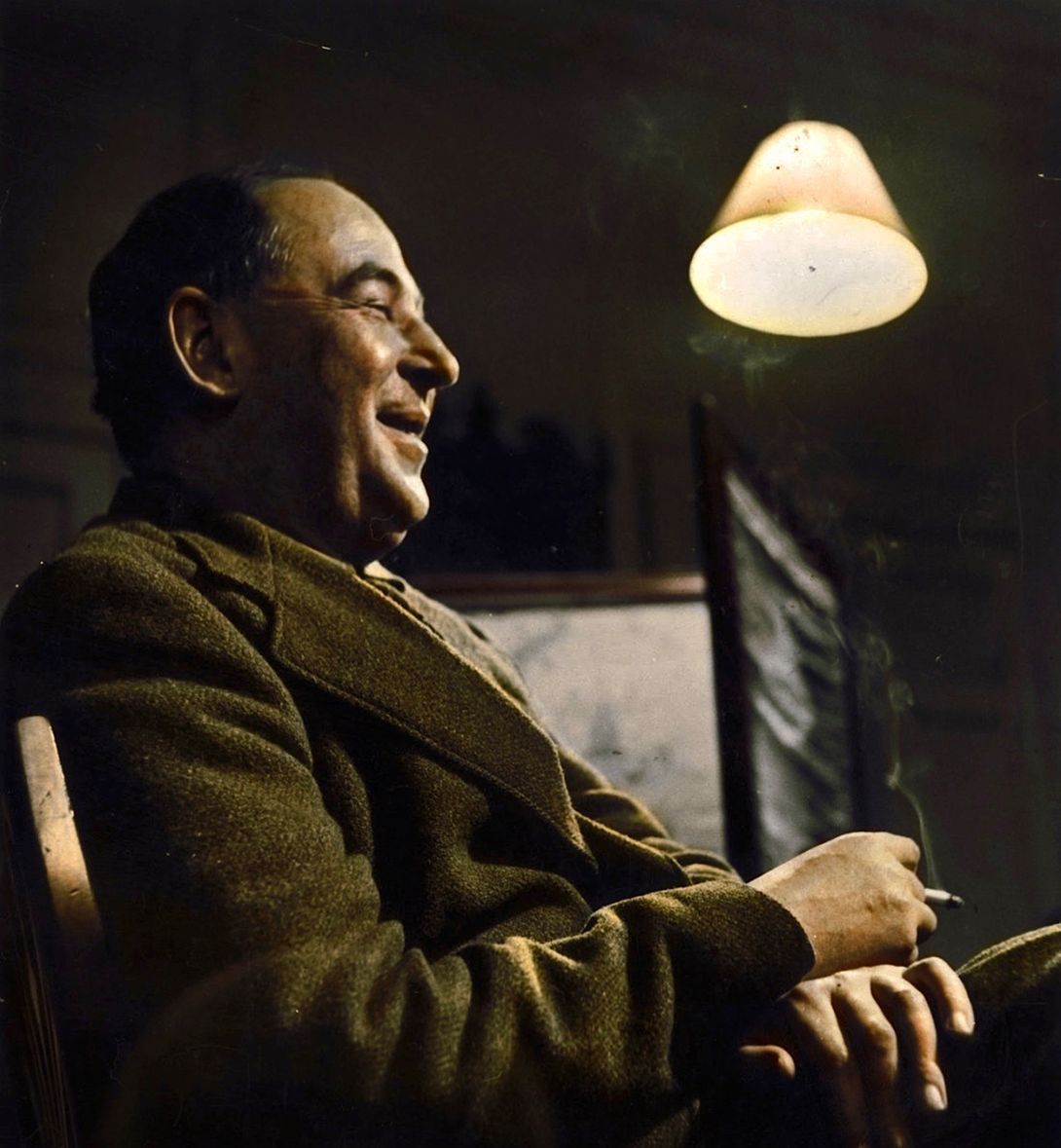
In 1962, C.S. Lewis was asked to name the books that most influenced his life philosophy.
The list he came up had many classics, but also some lesser known gems. Here’s his list:

1. The Consolation of Philosophy, Boethius
Written while he awaited execution, the work is a dialogue between Boethius and Lady Philosophy who consoles the author by discussing the fleeting nature of worldly goods. It influenced the late-antique mind more than any other work.
Written while he awaited execution, the work is a dialogue between Boethius and Lady Philosophy who consoles the author by discussing the fleeting nature of worldly goods. It influenced the late-antique mind more than any other work.

2. Theism and Humanism, Arthur Balfour
Based on a 1914 lecture, Balfour discusses naturalism and challenges adherents to explain phenomena like art, human reason, and human rights. He states:
“My desire has been to show that all we think best in human culture…requires God…”
Based on a 1914 lecture, Balfour discusses naturalism and challenges adherents to explain phenomena like art, human reason, and human rights. He states:
“My desire has been to show that all we think best in human culture…requires God…”

3. Descent into Hell, Charles Williams
Written by one of Lewis’s fellow “Inklings”, the novel is a spiritual tale about humans who isolate themselves due narcissism, making it impossible to truly love one another. Due to their inability to love, they find themselves in Hell.
Written by one of Lewis’s fellow “Inklings”, the novel is a spiritual tale about humans who isolate themselves due narcissism, making it impossible to truly love one another. Due to their inability to love, they find themselves in Hell.

4. The Life of Samuel Johnson, James Boswell
Thomas Carlyle had high praise for the work, calling it “beyond any other product of the eighteenth century”.
It details the life of English writer Samuel Johnson, “one of the most distinguished man of letters in English history".
Thomas Carlyle had high praise for the work, calling it “beyond any other product of the eighteenth century”.
It details the life of English writer Samuel Johnson, “one of the most distinguished man of letters in English history".

5. The Idea of the Holy, Rudolf Otto
Otto’s work had a big impact on religious studies in the 20th century. It explores a phenomenon called “the numinous”— a “non-rational, non-sensory experience or feeling whose primary and immediate object is outside the self.”
Otto’s work had a big impact on religious studies in the 20th century. It explores a phenomenon called “the numinous”— a “non-rational, non-sensory experience or feeling whose primary and immediate object is outside the self.”

6. The Everlasting Man, G.K. Chesterton
Lewis claimed it was the “contemporary book that has helped me the most”.
Here Chesterton responds to materialism, affirming the uniqueness of humanity and the powerful message of Christianity while arguing against social Darwinism.
Lewis claimed it was the “contemporary book that has helped me the most”.
Here Chesterton responds to materialism, affirming the uniqueness of humanity and the powerful message of Christianity while arguing against social Darwinism.

7. The Prelude, William Wordsworth
A autobiographical poem in blank verse, it was originally intended as an introduction to another poem, “The Recluse”, but that poem was never finished. It’s a personal work that reveals intimate details about Wordsworth's life.
A autobiographical poem in blank verse, it was originally intended as an introduction to another poem, “The Recluse”, but that poem was never finished. It’s a personal work that reveals intimate details about Wordsworth's life.

8. The Temple, George Herbert
Published in 1633, it’s one of the best-known collections of religious poems of all time.
The work follows the liturgy and ritual of the Church, discussing theological ideas like death judgment, the Eucharist, baptism, and heaven.
Published in 1633, it’s one of the best-known collections of religious poems of all time.
The work follows the liturgy and ritual of the Church, discussing theological ideas like death judgment, the Eucharist, baptism, and heaven.

9. The Aeneid, Virgil
Rome’s national epic tells of the founding of Rome by Trojan refugee Aeneas. The hero confronts raging storms, gigantic Cyclopes, and an unrelenting queen. He travels to the Underworld to confront his father before warring for a new home in Italy.
Rome’s national epic tells of the founding of Rome by Trojan refugee Aeneas. The hero confronts raging storms, gigantic Cyclopes, and an unrelenting queen. He travels to the Underworld to confront his father before warring for a new home in Italy.

10. Phantastes, George MacDonald
Lewis claimed he "crossed a great frontier" after reading this 19th-century tale.
Highly allegorical, it's the story of a young man journeying through a land which represents the spiritual world—a realm that demands ultimate surrender of self.
Lewis claimed he "crossed a great frontier" after reading this 19th-century tale.
Highly allegorical, it's the story of a young man journeying through a land which represents the spiritual world—a realm that demands ultimate surrender of self.

C.S. Lewis was one of the most well-known writers of the 20th century—a testament to the quality of work that influenced him.
Tell me, what’s a work that has influenced your thought?
Tell me, what’s a work that has influenced your thought?
Enjoy this content?
We write in-depth articles each week about Western culture, history, and art, and how they are deeply relevant to our modern world.
Join us👇
buff.ly/mRGibiN
We write in-depth articles each week about Western culture, history, and art, and how they are deeply relevant to our modern world.
Join us👇
buff.ly/mRGibiN
Generated by Thread Navigator
Press ⌘ + S to quick-export