
When Israel and the US launched their war on Iran, they claimed it would last a few days. A few days later, they said it would last 3 to 4 weeks. As the fourth week ends, it is a good time to take stock of what has happened and the war’s scoreboard, and the political and economic implications. Military matters are unpredictable, and everything can change quickly in battlefields, so this analysis is tentative, but there are clear changes in the facts on the ground so far that indicate the US has suffered a significant setback with important ramifications, and if the US chooses to double down, it may exacerbate it, with momentous political, economic, and military implications for the Middle East, the US, and the world at large.
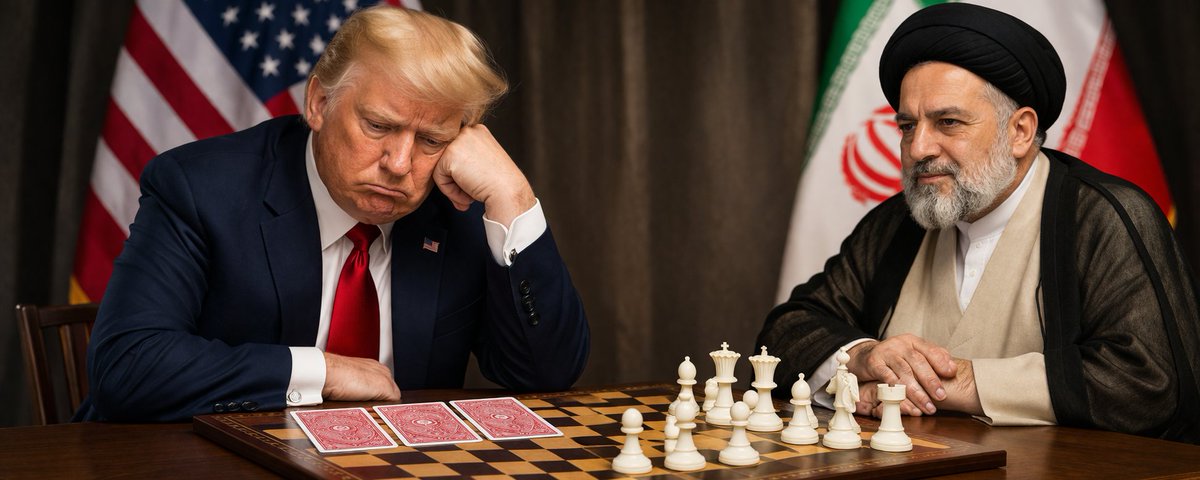
A massive global economic crisis might unfold, the presence of the US in the Middle East is in serious danger, the US Empire may be in its death throes, the fiscal fate of the US hangs in the balance, and the world may finally be free of dollar slavery. Militarily and technologically, this might go down in history as a decisive turning point in which a twentieth-century superpower was defeated by a twenty-first-century medium power, which used newer technology at ~1% of the cost. Drones and hypersonic missiles that defeat aircraft carriers, jet fighters, tanks, and other twentieth-century relics remind us of small gun-wielding armies defeating larger armies carrying swords.
What is remarkable about this war is the disconnect between the real-world battlefield outcomes and the public understanding of what is happening. Over the past few decades, American military dominance has been so complete, and its opponents so mismatched, that Americans seem no longer capable of even conceiving of defeat, and cannot recognize it even as it stares them down. In America’s other recent conflicts, the range of outcomes was almost entirely determined by inter-American politics, with the opponent a passive subject. ‘Defeat’ simply referred to the other country failing to fully adopt the form of government and social customs that America sought to impose; it did not mean the failure to achieve military and strategic objectives, as American soldiers conquered Kabul and Baghdad in a matter of weeks. But in Iran, we have so far had a remarkable American failure to achieve strategic objectives, and the option of escalating to achieve these objectives threatens dire consequences.
To assess the war so far, we look at the objectives set by each party and how they have fared. At the initiation of the American Zionist regime’s attack on Iran, these appear to be its declared goals:
US goals:
1. Unconditional surrender ❌
1. Regime change ❌
1. End of Iran’s nuclear program❓
1. Destroy Iranian industrial, military, air force, and navy capacity (partial✅)
1. End of Iran’s missile program ❌
US achievements so far: 1 or 2 out of 5 achieved
The US has likely not achieved any of the essential goals in the fourth week of what was initially sold as a quick operation that would take a few days, then later revised to 3-4 weeks.
1. Surrender seems out of the question in a country that has been preparing for this very war for decades, and in which millions are seemingly happy to die. ❌
1. The Israel-US forces have succeeded in assassinating many individual leaders, which is the Israeli regime’s signature move, and something that its American puppet has recently adopted in contravention of centuries of civilized Western norms of war. The regime has survived so far, Iranians seem to have rallied around it, and it seems unlikely that it will fall, even after countless senior assassinations. The country is large enough, and the regime established enough, that individuals do not seem to matter so much, and the institutions continue to operate. The extent of domestic opposition to the regime was likely overstated by Israeli intelligence to sell this war to America’s easily impressionable president. Opposition to the government is one thing, but support for a foreign war is something entirely different. As Professor Robert Pape has argued, aerial bombardment alone has never produced regime change. Instead, it usually causes people to rally around the flag, and that seems to have happened in Iran. This has likely been intensified by Zionist regimes targeting more Iranian civilians, schools, and hospitals. Trump has already conceded defeat on this as he’s desperately trying to assure markets that he is negotiating with the regime he promised to destroy, while the regime denies talking to him or his intermediaries. ❌
1. We do not know what happened to the Iranian nuclear materials, but we do know that the regime now has a far stronger incentive to acquire a nuclear bomb. ❓
1. The US has likely succeeded in destroying much of Iran’s industrial capacity, and the longer the war goes on, the more of it will be destroyed. This terrorism will cost the people of Iran dearly in the many years to come, whatever the outcome of the war. The US has also massively degraded Iran’s conventional military forces, but this is a pyrrhic victory. Conventional military equipment constitutes very little threat to Israel and the US, and is not very useful for Iran in this war, which is why they control Hormuz even if their navy is gone. Iran does not need tanks, helicopters, boats, airplanes, or other twentieth-century technologies to achieve its objectives in this war. It has high-precision hypersonic missiles and cheap, accurate drones, which are allowing it to achieve its objectives. When Trump brags about destroying conventional military assets, he may as well be bragging about murdering Iranian horses and cavalry divisions. Zionist regimes’ forces have also succeeded in bombing many civilian targets, most notably the Minab girls’ school, demonstrating that schools, hospitals, and civilian structures are among potential targets, terrorizing the civilian population, which is another signature Israeli move. Both the assassinations and the targeting of civilians are unlikely to make a difference to the outcome of the war, but Israel observers will not be surprised to find Israel persists with them, because Israel’s real objective is to turn Iran into a failed state, as discussed below.✅
1. The biggest and most consequential failure so far is the failure to eliminate the threat of Iranian missiles and drones, which continue to rain on US bases in the region and on Israel, and show no signs of abating. As I write this in Amman, Jordan, on the 26th day of the war, in the pathway of Iranian missiles to Israel, we may be witnessing the day with the most missile sirens since the war started, a clear indication that Iran’s missile capabilities are still strong. Further, Iran’s missiles and drones remain intact enough for Iran to credibly threaten energy infrastructure in the region and deter attacks on Iranian energy infrastructure. If the Iranians destroy energy infrastructure in the Gulf, the impact on the US and world economies will be devastating for many years.
Iranian drones
View Tweet, as cheap as the average social media influencer Israel buys. They weigh 200 pounds and are easy to hide. They are easy to manufacture from cheap parts, earning the nickname “flying lawnmower”. There is an enormous productive capacity of these drones in Iran, and it is extremely unrealistic to imagine that aerial bombardment can destroy all its production capabilities.
Iranian missiles have improved significantly in accuracy in this war compared to the previous war. Many of these missiles and drones can be fired from trucks, which means it is not simple to just pinpoint their bases and destroy them. The bases are hidden underground, and the trucks can fire from a different location every time.
The continued sustained pace of Iranian rocket and drone attacks suggests that there will likely be serious shortages in the Zionist alliance’s defensive capabilities, and that explains why Air defense systems have been moved from Korea to the Middle East, and WaPo reports more defense systems may be moved from Europe. On March 19, Rheinmetall’s CEO said the war lasting another month would deplete air defense stockpiles. Given that Iranian drones and missiles are very cheap and fast to produce, whereas American interceptors are expensive and slow to produce, the longer the war lasts, the more vulnerable regional defenses are, and the more likely interceptors are to become insufficient. Rather than the US destroying Iran’s military capabilities, Iran is depleting American weapons stocks, leaving American allies exposed worldwide, and exposing how limited the American military really is in this new military technology world. If America is faring like this against a medium-sized, relatively poor country under sanctions, imagine how it would fare against China. ❌
Generated by Thread Navigator
Press ⌘ + S to quick-export