📝Trading Strategy - POB
Many traders use order blocks - I do too.
But while backtesting them on crypto, they often:
-> got front-run
-> were more reliable on higher timeframes
-> or didn’t get triggered at all
Instead, price often reacts at more specific levels inside the move.
> So I simplified it and built a rule-based framework around it.
This is what led to trades like the one below.
-> POB-> my variation of order blocks
Thread 👇


Classical Order blocks work for a reason.
> Before price moves, it needs liquidity.
That can happen in different ways:
> through a liquidity sweep
> or through aggressive counter participation inside a move
-> large orders get filled
-> imbalance is created
That’s what drives the initial move.
> Before price moves, it needs liquidity.
That can happen in different ways:
> through a liquidity sweep
> or through aggressive counter participation inside a move
-> large orders get filled
-> imbalance is created
That’s what drives the initial move.
Order blocks are built on this idea.
Once liquidity is taken and imbalance is created:
-> price moves aggressively
The common approach is to use that move:
1. mark the last opposing candlebefore the impulse
2. wait for the retest
3. enter at the edge
4. invalidation below
The problem: They often get:
-> front-run I partially respected I or not triggered at all
Once liquidity is taken and imbalance is created:
-> price moves aggressively
The common approach is to use that move:
1. mark the last opposing candlebefore the impulse
2. wait for the retest
3. enter at the edge
4. invalidation below
The problem: They often get:
-> front-run I partially respected I or not triggered at all

POB logic
POBs work slighlty different
Instead of marking the last opposing candle before the move, I focus on the reaction after the sweep.
-> the candle with the deepest wick
-> Because that’s where the strongest opposing force appears.
That’s where I define the level.
POBs work slighlty different
Instead of marking the last opposing candle before the move, I focus on the reaction after the sweep.
-> the candle with the deepest wick
-> Because that’s where the strongest opposing force appears.
That’s where I define the level.
First requirement: liquidity sweep
You want to see:
> price take local highs/lows
-> and trigger stops
Then:
-> a strong reaction in the opposite direction creating distance to the candle with the deepest wick
-> leaving a wick behind
That wick matters - It shows rejection
and defines the reaction point.
No sweep I no wick -> no setup
You want to see:
> price take local highs/lows
-> and trigger stops
Then:
-> a strong reaction in the opposite direction creating distance to the candle with the deepest wick
-> leaving a wick behind
That wick matters - It shows rejection
and defines the reaction point.
No sweep I no wick -> no setup

Afterwards: define the level
> Mark the entire candle with the deepest wick
after the sweep.
-> That’s your POB.
Then: wait for the retest
To refine the setup:Measure the reaction.
> from the wick to the maximum reaction point
> The wick should form within the lower 50% of that move.
If not:
> weaker rejection-> lower probability
> Mark the entire candle with the deepest wick
after the sweep.
-> That’s your POB.
Then: wait for the retest
To refine the setup:Measure the reaction.
> from the wick to the maximum reaction point
> The wick should form within the lower 50% of that move.
If not:
> weaker rejection-> lower probability

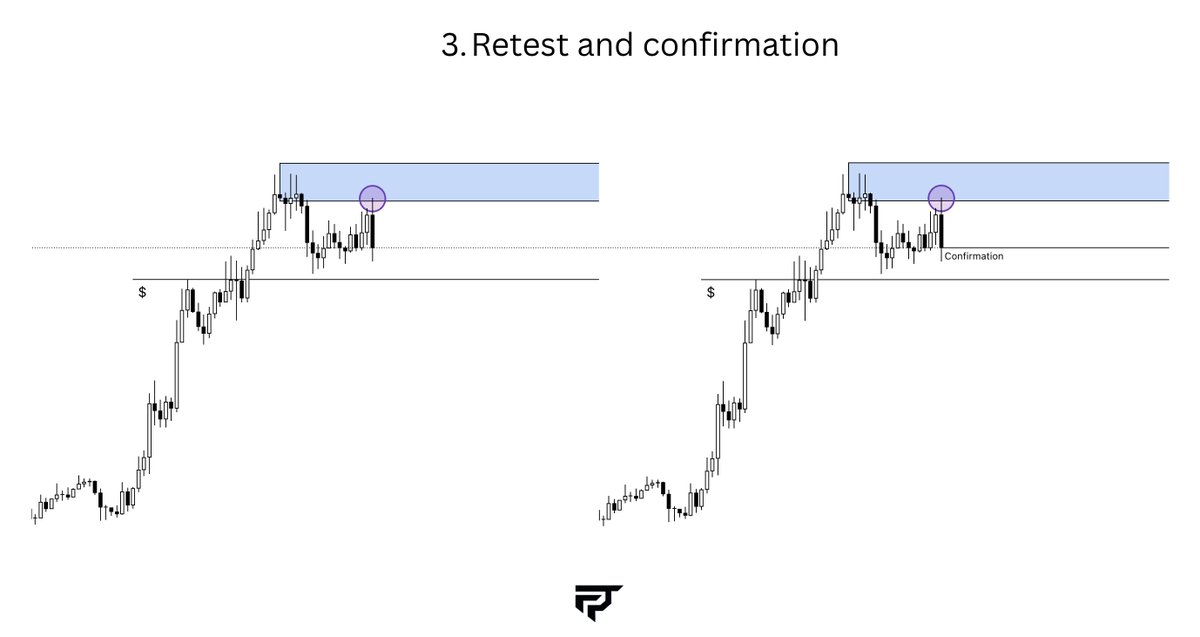
Next step: retest and confirmation
You want price to:
-> touch the POB
-> ideally only with a wick and an acceleration of price out of the zone
For the confirmation: You want a candle close...
> back outside the POB
> on the same timeframe.
-> That’s your trigger.
Avoid:
-> deep closes inside the POB (these tend to be less reliable) ->The depth of the close is somewhat subjective
Best case:
-> wick into the level and clean close back outside within the same candle
You want price to:
-> touch the POB
-> ideally only with a wick and an acceleration of price out of the zone
For the confirmation: You want a candle close...
> back outside the POB
> on the same timeframe.
-> That’s your trigger.
Avoid:
-> deep closes inside the POB (these tend to be less reliable) ->The depth of the close is somewhat subjective
Best case:
-> wick into the level and clean close back outside within the same candle
Next: Execution and risk management
Entry: -> after confirmation (candle close outside the POB)
> Aggressive entries at the edge are possible with confluence (FVG, golden pocket, .786, VAL/VAH...)
> but confirmation is safer.
My preferred risk management:
> max ~1% per trade
> minimum 3:1 RR
Trade management:
At ~1R:
-> move stop to breakeven
-> take small partials (to cover fees)
From there: risk free
Entry: -> after confirmation (candle close outside the POB)
> Aggressive entries at the edge are possible with confluence (FVG, golden pocket, .786, VAL/VAH...)
> but confirmation is safer.
My preferred risk management:
> max ~1% per trade
> minimum 3:1 RR
Trade management:
At ~1R:
-> move stop to breakeven
-> take small partials (to cover fees)
From there: risk free

Take profit
Targets are not random.
I aim for:
-> liquidity
-> inefficiencies
-> prior structure
Targets are not random.
I aim for:
-> liquidity
-> inefficiencies
-> prior structure
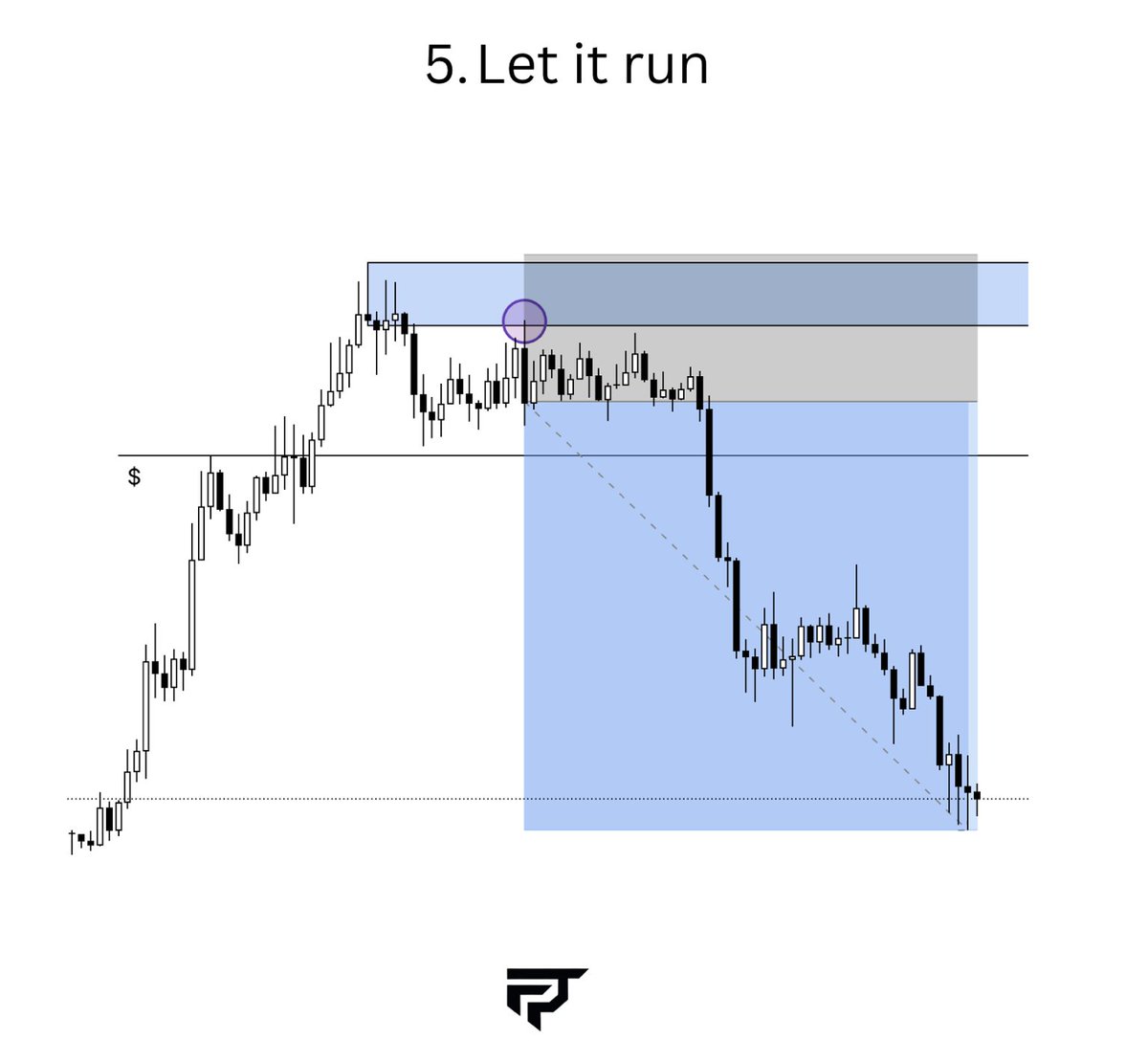
In this example: I split my entries.
> one at the edge of the POB
-> within the golden pocket (0.618-0.65)
> scaled then after confirmation (candle close outside)
This adds flexibility but also increases risk.
Best used:
-> with confluence; on higher timeframes
> one at the edge of the POB
-> within the golden pocket (0.618-0.65)
> scaled then after confirmation (candle close outside)
This adds flexibility but also increases risk.
Best used:
-> with confluence; on higher timeframes

Final notes
Don’t follow this blindly.
> If it makes sense to you:
-> backtest it -> validate it
-> see if it fits your approach
> There is no strategy with a 100% win rate.
> Execution and risk management -> always matter more than the setup.
Avoid trading into resistance:
-> significant EMAs; VWAPs; VAH / VAL
> This model works across all timeframes,
but is most reliable on:
-> 4H; 1H; Daily
-> in a huge POB on HTF -> you can search for a local LTF POB within the HTF POB -> works well and brings higher level of confirmation
> LTF (5m, 15m) require more experience.
The goal is consistency. The strategy provides
> logical, institutional concept
> rule-based approach
> reduction of emotional decision-making
> repeatable strategy
If applied correctly and managed properly:
-> you win more often than you lose (> 60%)
Don’t follow this blindly.
> If it makes sense to you:
-> backtest it -> validate it
-> see if it fits your approach
> There is no strategy with a 100% win rate.
> Execution and risk management -> always matter more than the setup.
Avoid trading into resistance:
-> significant EMAs; VWAPs; VAH / VAL
> This model works across all timeframes,
but is most reliable on:
-> 4H; 1H; Daily
-> in a huge POB on HTF -> you can search for a local LTF POB within the HTF POB -> works well and brings higher level of confirmation
> LTF (5m, 15m) require more experience.
The goal is consistency. The strategy provides
> logical, institutional concept
> rule-based approach
> reduction of emotional decision-making
> repeatable strategy
If applied correctly and managed properly:
-> you win more often than you lose (> 60%)
Generated by Thread Navigator
Press ⌘ + S to quick-export