Isometric training (IST) for endurance runners has grown in popularity recently but remains relatively under-studied.
This article presents a strong theoretical rationale.
Potential benefits most likely via improved economy rather than via VO₂max or lactate threshold.

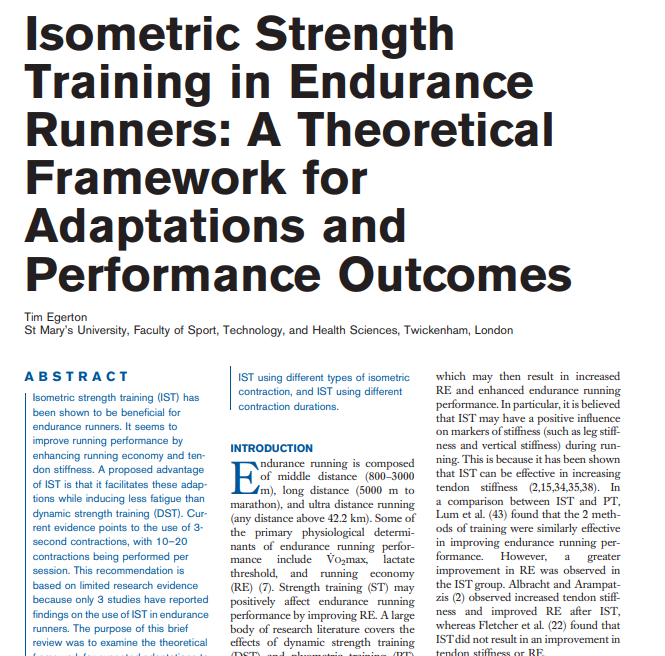
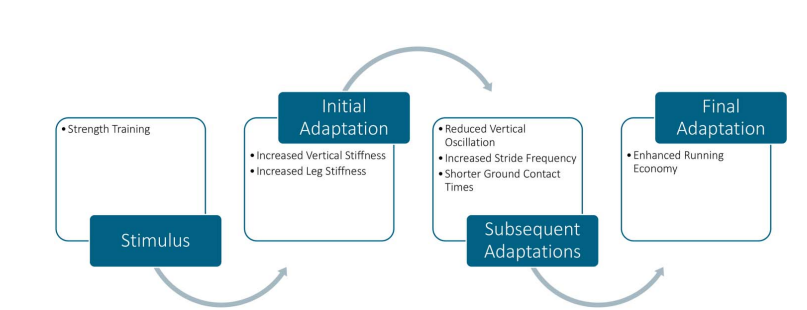
The proposed mechanism is biomechanical:
increased tendon and joint stiffness
⬇️
shorter ground contact times
⬇️
better elastic energy return
⬇️
improved running economy.
Evidence isn't definitive, but studies w/ positive outcomes involve high-intensity, high-effort actions
increased tendon and joint stiffness
⬇️
shorter ground contact times
⬇️
better elastic energy return
⬇️
improved running economy.
Evidence isn't definitive, but studies w/ positive outcomes involve high-intensity, high-effort actions
Practical recommendations:
✅ ~3-second maximal contractions
✅ 10–20 reps per session
✅ ≥90% MVC
✅ Target ankle plantar flexors & knee extensors.
Use as a complement to dynamic strength and plyometric training. A low-fatigue tool with likely upside
✅ ~3-second maximal contractions
✅ 10–20 reps per session
✅ ≥90% MVC
✅ Target ankle plantar flexors & knee extensors.
Use as a complement to dynamic strength and plyometric training. A low-fatigue tool with likely upside

More on isometric testing and training here in thread below
If you're interested in this topic and strength diagnostics more generally, get in touch. I’m planning a small in-person, practical session on this later in the spring
If you're interested in this topic and strength diagnostics more generally, get in touch. I’m planning a small in-person, practical session on this later in the spring
View Tweet
Generated by Thread Navigator
Press ⌘ + S to quick-export