She predicted:
• The Deep Learning revolution (2012)
• AI's blindness to the physical world (2018)
• The shift to world models (2024)
Now Fei-Fei Li revealed the 5 next AI waves reshaping every physical industry.
Here's what you should know (& how to position yourself): 🧵


First, her track record:
Li created ImageNet, the dataset that triggered the AI revolution.
She leads Stanford's Human-Centered AI Institute. Her startup World Labs just raised $230 million.
When Li makes predictions, the entire AI industry pays attention.
Li created ImageNet, the dataset that triggered the AI revolution.
She leads Stanford's Human-Centered AI Institute. Her startup World Labs just raised $230 million.
When Li makes predictions, the entire AI industry pays attention.

VIDEO
1/ Spatial intelligence is the missing piece for AGI
Current AI lives in flat, 2D space. It can write essays about riding a bike but can't understand balance or how objects interact.
Li's World Labs raised $230M to build systems that perceive and interact with 3D environments.
Current AI lives in flat, 2D space. It can write essays about riding a bike but can't understand balance or how objects interact.
Li's World Labs raised $230M to build systems that perceive and interact with 3D environments.

VIDEO
2/ Embodied AI will define the next decade
While everyone chases better chatbots, Li's building AI that operates in the physical world.
Her vision: infinite simulated universes where robots train before entering reality.
Manufacturing and logistics will be transformed first.
While everyone chases better chatbots, Li's building AI that operates in the physical world.
Her vision: infinite simulated universes where robots train before entering reality.
Manufacturing and logistics will be transformed first.

VIDEO
3/ Human-centered AI beats pure scaling
Li directly challenges Silicon Valley's obsession with superintelligent AGI through brute-force scaling.
Her bet: AI designed for human values outperforms billion-dollar compute clusters.
Timeline: 10-15 years with spatial breakthroughs.
Li directly challenges Silicon Valley's obsession with superintelligent AGI through brute-force scaling.
Her bet: AI designed for human values outperforms billion-dollar compute clusters.
Timeline: 10-15 years with spatial breakthroughs.
4/ Healthcare AI will save 250,000+ lives annually
Medical errors kill 250,000 Americans yearly.
Li's ambient AI systems monitor surgical procedures in real-time—not replacing doctors, but augmenting them to identify complications before they happen.
Medical errors kill 250,000 Americans yearly.
Li's ambient AI systems monitor surgical procedures in real-time—not replacing doctors, but augmenting them to identify complications before they happen.

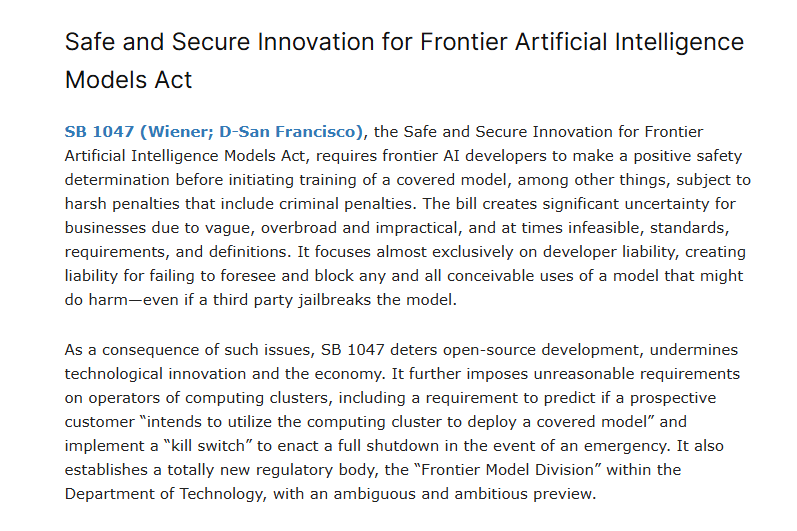
5/ AI regulation must anticipate future risks
Li's March 2025 policy report: "We don't need to see a nuclear weapon explode to predict harm."
Her framework: mandatory third-party evaluations, public testing disclosure, evidence-based regulations.
Balance innovation with accountability.
Li's March 2025 policy report: "We don't need to see a nuclear weapon explode to predict harm."
Her framework: mandatory third-party evaluations, public testing disclosure, evidence-based regulations.
Balance innovation with accountability.
Think about it:
As AI moves from text generation into physical spaces—controlling robots, monitoring hospitals, managing supply chains—the stakes change completely.
One bad model can cause real-world harm.
Validation isn't optional anymore.
As AI moves from text generation into physical spaces—controlling robots, monitoring hospitals, managing supply chains—the stakes change completely.
One bad model can cause real-world harm.
Validation isn't optional anymore.
Here's what most leaders miss:
In a world where spatial AI controls physical operations, competitive advantage comes from trusted AI.
Your customers demand it. Regulators require it. Partners expect proof your models are safe and reliable.
In a world where spatial AI controls physical operations, competitive advantage comes from trusted AI.
Your customers demand it. Regulators require it. Partners expect proof your models are safe and reliable.
The key insight:
Most companies lack the governance frameworks to deliver this trust.
They deploy models without proper validation, monitoring, or transparency.
This separates the leaders from the followers.
Most companies lack the governance frameworks to deliver this trust.
They deploy models without proper validation, monitoring, or transparency.
This separates the leaders from the followers.
If you're an Enterprise Leader, validating and governing your AI models isn't optional anymore...
TrustModel.ai provides the model validation, governance frameworks for compliance, and transparency you need.
Get your audit: TrustModel.ai
TrustModel.ai provides the model validation, governance frameworks for compliance, and transparency you need.
Get your audit: TrustModel.ai

Thanks for reading.
If you enjoyed this post, follow @karlmehta for more content on AI Safety and Health.
Repost the first tweet to help more people see it:
Appreciate the support.
If you enjoyed this post, follow @karlmehta for more content on AI Safety and Health.
Repost the first tweet to help more people see it:
Appreciate the support.
View Tweet
Generated by Thread Navigator
Press ⌘ + S to quick-export