Ambedkar: A loyal sepoy of Britishers or a Reformer
Choose wisely after knowing the facts
Thread 🧵
👇👇
Ambedkar with Jinnah and Periyar


1/20 :-
Ambedkar never stood with India’s freedom struggle; instead Ambedkar sided with the British, asserting that “If India became independent, it would be one of the greatest disasters that could happen.”
Source :- [ The Transfer of Power, 1942-47, Vol. 7, pp. 144-147].
Ambedkar never stood with India’s freedom struggle; instead Ambedkar sided with the British, asserting that “If India became independent, it would be one of the greatest disasters that could happen.”
Source :- [ The Transfer of Power, 1942-47, Vol. 7, pp. 144-147].

2/20:-
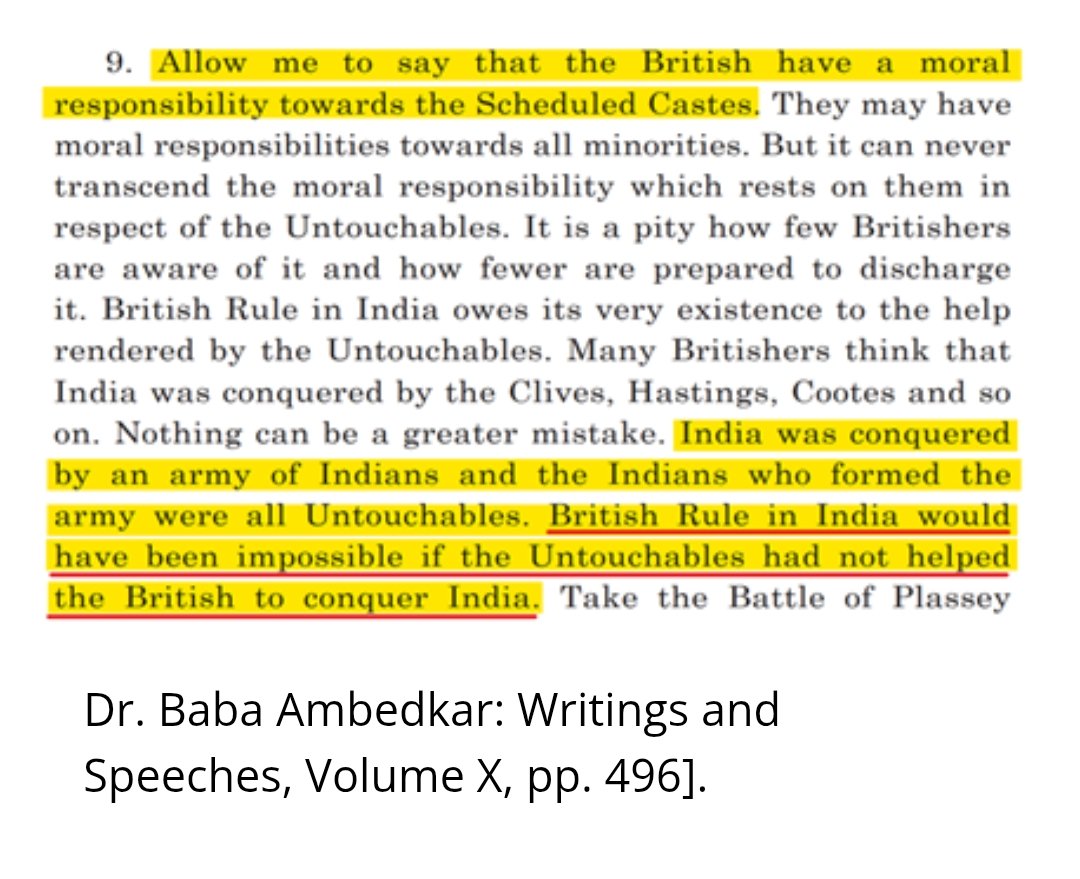
Ambedkar’s rhetoric was crafted to please the British and justify their continued rule over India. Far from being a nationalist, he constantly portrayed the so-called ‘Untouchables’ and other minorities as the most faithful servants and allies of the British Empire.
Ambedkar’s rhetoric was crafted to please the British and justify their continued rule over India. Far from being a nationalist, he constantly portrayed the so-called ‘Untouchables’ and other minorities as the most faithful servants and allies of the British Empire.
3/20 :-
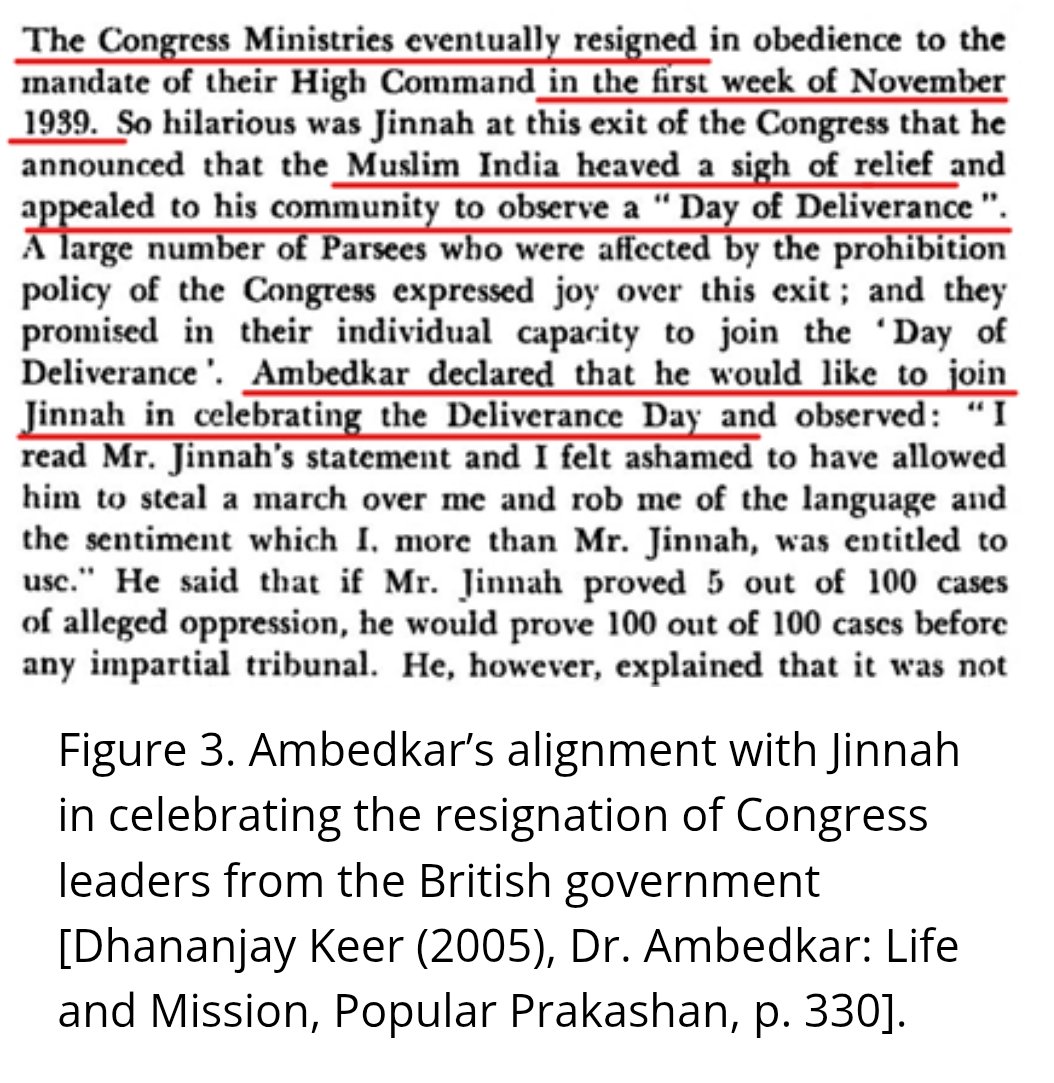
Ambedkar not only fueled caste hatred among Hindus but also sided with the Muslim League. When Jinnah marked Congress’s resignation in 1939 as a “Day of Deliverance,” Ambedkar eagerly joined the celebration aligning with forces that aided the British in dividing India.
Ambedkar not only fueled caste hatred among Hindus but also sided with the Muslim League. When Jinnah marked Congress’s resignation in 1939 as a “Day of Deliverance,” Ambedkar eagerly joined the celebration aligning with forces that aided the British in dividing India.
4/20 :-
Ambedkar consistently sided with the British. Even in 1939, as Congress demanded self-rule and World War II loomed, he stood with the colonizers-telling the Secretary of State that Indian self-governance must be completely opposed.
Ambedkar consistently sided with the British. Even in 1939, as Congress demanded self-rule and World War II loomed, he stood with the colonizers-telling the Secretary of State that Indian self-governance must be completely opposed.

5/20 :- Ambedkar’s loyalty to the British earned him praise from top colonial officials, as reflected in their correspondences. In return, they sought to reward him with a powerful post in the Viceroy’s Council.

6/20 :-
On 20 July 1942, Ambedkar joined the Viceroy’s Executive Council, serving British interests and helping detach SCs from Hindu society for easier missionary conversions.
On 20 July 1942, Ambedkar joined the Viceroy’s Executive Council, serving British interests and helping detach SCs from Hindu society for easier missionary conversions.

7/20 :- Ambedkar proved a loyal British minister: during the 1942 Quit India movement, he defended colonial brutality, called British rule “the best government for Indians,” and used his Labour Ministry to slander the freedom struggle as “a fetish of nationalism.”

8/
Ambedkar whitewashed British brutality during the Quit India movement, ignoring official reports that 10,000–25,000 were shot, countless students flogged, and some entire villages beaten to death.
Ambedkar whitewashed British brutality during the Quit India movement, ignoring official reports that 10,000–25,000 were shot, countless students flogged, and some entire villages beaten to death.

9/ During the 1943 Bengal Famine, which killed 1–2 million, Ambedkar still hailed British rule as “the best government” and spread propaganda to whitewash their horrific crimes.

10/
In 1931, Ambedkar declared SCs eternally opposed to Hindus and pushed for separate electorates, seeking to fracture Hindu society despite Gandhi’s objections.
In 1931, Ambedkar declared SCs eternally opposed to Hindus and pushed for separate electorates, seeking to fracture Hindu society despite Gandhi’s objections.

11/
During colonial times, Europeans used native “atrocities” to justify rule. Ambedkar aided them by portraying Hindus as horrific, even likening Hinduism to Nazism -> spreading dangerous falsehoods and deepening societal divisions.
During colonial times, Europeans used native “atrocities” to justify rule. Ambedkar aided them by portraying Hindus as horrific, even likening Hinduism to Nazism -> spreading dangerous falsehoods and deepening societal divisions.

12/ Shockingly, Ambedkar opposed an Indian Constituent Assembly, preferring a foreign lawyer to draft the constitution and limiting the commission to tweaking the British 1935 Act 👉favoring continued colonial rule over self-governance.

13/
In 1939, Ambedkar joined the Muslim League in vilifying Hindu society, promising to document even more “atrocities” than Muslims->>using one-sided propaganda tactics still employed today to malign Hindus.
In 1939, Ambedkar joined the Muslim League in vilifying Hindu society, promising to document even more “atrocities” than Muslims->>using one-sided propaganda tactics still employed today to malign Hindus.

14/ Ambedkar sought to extend British control even after independence, pushing for treaties allowing colonial interference and planning autonomous SC territories to fragment India.

15/
As late as 1946, Ambedkar pushed to fragment India, demanding separate electorates and “SC villages” to create sub-nations within the nation ->>a dangerous plan thankfully rejected, echoing today’s calls for ‘Dalitstan.’
As late as 1946, Ambedkar pushed to fragment India, demanding separate electorates and “SC villages” to create sub-nations within the nation ->>a dangerous plan thankfully rejected, echoing today’s calls for ‘Dalitstan.’

16/
Despite pandering to the British, Ambedkar failed to win support from the SC community. In the 1946 elections, his Scheduled Castes Federation suffered a crushing defeat, even in Mahar-dominated areas, losing decisively to Congress.
Despite pandering to the British, Ambedkar failed to win support from the SC community. In the 1946 elections, his Scheduled Castes Federation suffered a crushing defeat, even in Mahar-dominated areas, losing decisively to Congress.

17/
As India’s independence became inevitable, Ambedkar rushed to the British, seeking positions in the interim government ->>exposing his relentless drive to curry colonial favor for power.
As India’s independence became inevitable, Ambedkar rushed to the British, seeking positions in the interim government ->>exposing his relentless drive to curry colonial favor for power.

18/
Despite years of abusing Hinduism and Hindu leaders, Ambedkar secured a seat in the Constituent Assembly and the Drafting Committee chairmanship only due to Congress leaders’ “forget and forgive” generosity, led by Sardar Patel.
Despite years of abusing Hinduism and Hindu leaders, Ambedkar secured a seat in the Constituent Assembly and the Drafting Committee chairmanship only due to Congress leaders’ “forget and forgive” generosity, led by Sardar Patel.

19/
Even after Hindu Leaders’ generosity, Ambedkar continued attacking Hindus, claiming fundamental rights weren’t needed under the British but only after independence to “protect minorities” ->skillfully fostering a victim mentality and dividing SCs from Hindu society.
Even after Hindu Leaders’ generosity, Ambedkar continued attacking Hindus, claiming fundamental rights weren’t needed under the British but only after independence to “protect minorities” ->skillfully fostering a victim mentality and dividing SCs from Hindu society.

Generated by Thread Navigator
Press ⌘ + S to quick-export