🧵 THREAD: The worldview of George Soros, the self-styled Messiah who reshaped the modern age
He once admitted:
"If truth be known, I carried some rather potent messianic fantasies with me from childhood… But when I had made my way in the world I wanted to indulge my fantasies to the extent that I could afford."
And indulge them he did.
I’ve written many threads about Soros, but never one that lays out his ideology in full, why his money carried more weight than Rockefeller or Bezos, why his methods proved uniquely disruptive.
Soros’s time is running short. But the system he engineered, the ripple effects of his philosophy, will outlive him by generations.
The question isn’t whether we agree with him. It’s whether we’re willing to study his playbook... and use the same tools ourselves.
Stay with me as I pull this thread together.


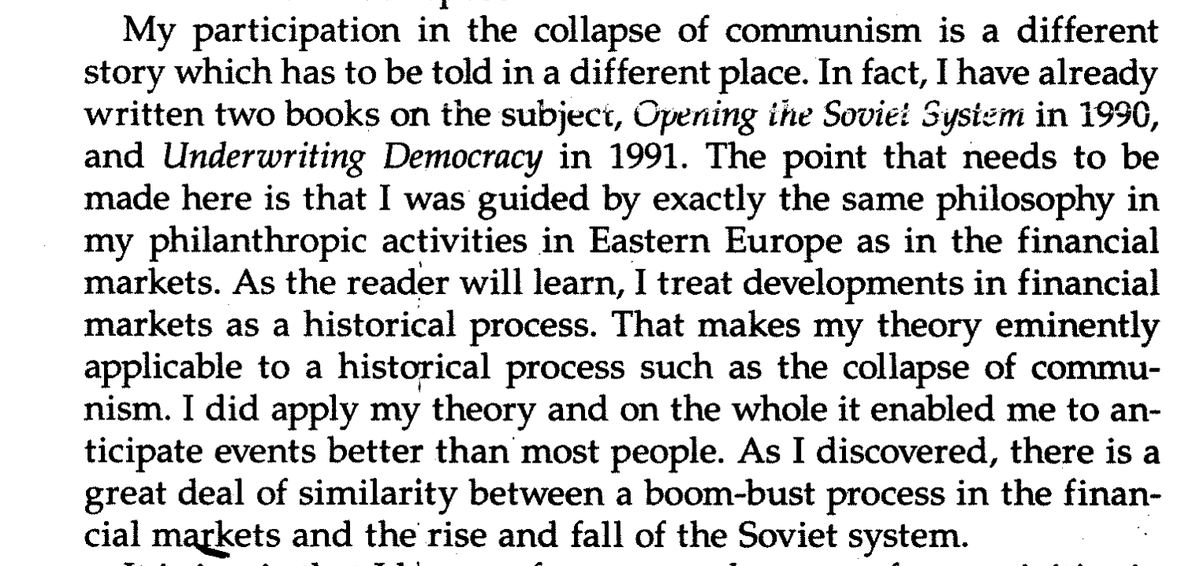
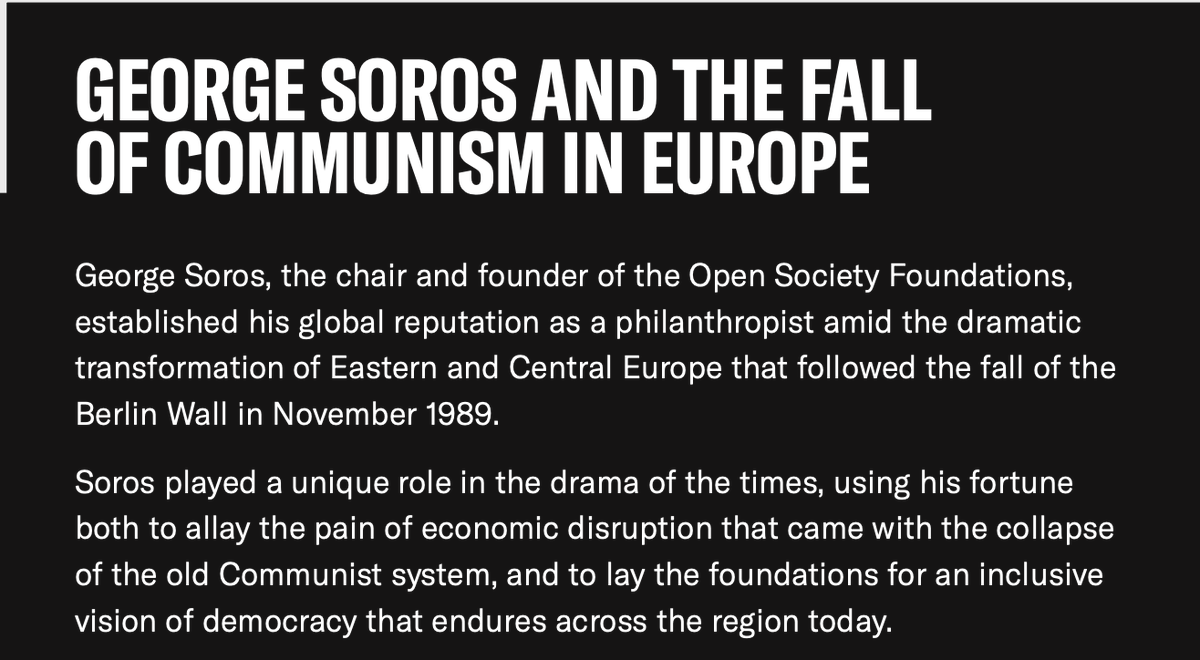
As we will soon see, Soros played a non-trivial role in the collapse of the Soviet Union.
In the 1960s and 1970s, he developed a financial theory called reflexivity. He went onto applying it to be one of the most successful hedge fund managers ever, if not hte most successful.
He found that it applied to history as well as finances and used it to hasten the Soviet Union's collapse.
In the 1960s and 1970s, he developed a financial theory called reflexivity. He went onto applying it to be one of the most successful hedge fund managers ever, if not hte most successful.
He found that it applied to history as well as finances and used it to hasten the Soviet Union's collapse.
What is reflexivity?
Traditional economics assume that price is a reflection of market facts. That everything settles to its usual price.
Soros assumed the opposite: Prices are always wrong, but not only that, but and prices reshape facts.
Traditional economics assume that price is a reflection of market facts. That everything settles to its usual price.
Soros assumed the opposite: Prices are always wrong, but not only that, but and prices reshape facts.

To understand reflexivity, think of a startup company.
A startup may initially have nothing than hype. Investors throw millions at it anyway.
Then the startup starts hiring coders, marketers, etc. Now the hype is real! The product is real!
A startup may initially have nothing than hype. Investors throw millions at it anyway.
Then the startup starts hiring coders, marketers, etc. Now the hype is real! The product is real!
Investors throw more money at the startup ... and the startup keeps making more products.
Until it all crashes.
As my husband put it, reflexivity assumes "everything is a Ponzi scheme."
To Soros, everything -- stocks, history, currencies -- lies on some point in that cycle.
Until it all crashes.
As my husband put it, reflexivity assumes "everything is a Ponzi scheme."
To Soros, everything -- stocks, history, currencies -- lies on some point in that cycle.
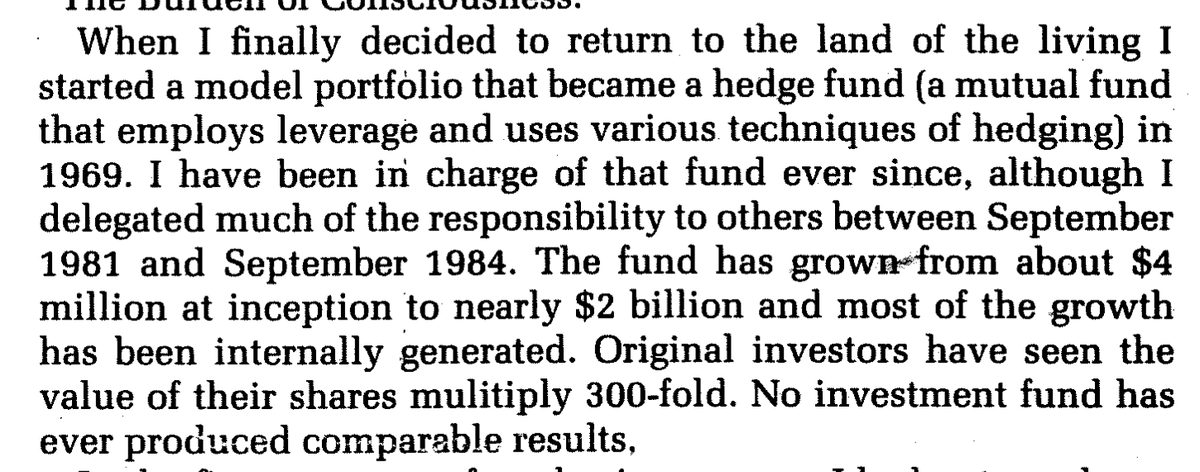
Soros' fund grew 300-fund in a short time just by going all-in in these assumptions.
A big part of why his methodology hasn't been reproduced is because he was independent. He made big, all-in moves repeatedly. Your average trader at an institutional company is beholden to a process and might be fired for one wrong big trade.
A big part of why his methodology hasn't been reproduced is because he was independent. He made big, all-in moves repeatedly. Your average trader at an institutional company is beholden to a process and might be fired for one wrong big trade.
Now, before I go into the details of how he applied this to hasten the Soviet Union fall (and how his people are trying the same thing here in the United States) ...
I need to backtrack and explain WHY he hated Communism.
I need to backtrack and explain WHY he hated Communism.
Most Americans imagine left-wing politics as a straight line: starting with Democrats, then moving further left to Marxism, and further still to Leninism.
This view wrongly equates leftism with non-pluralism.
This view wrongly equates leftism with non-pluralism.
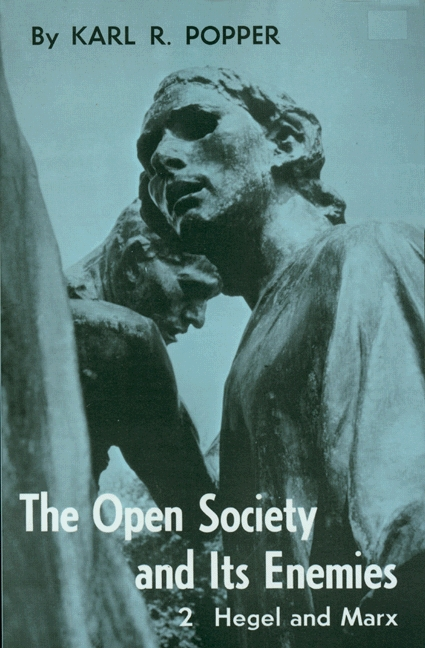
Everything George Soros did was to bring the world under one "Open Society" umbrella. Popper envisioned a Pantheon of "open societies" -- where individual countries co-exist with each other and nobody has a monopoly on truth.
People have told me - no, Soros twisted Karl Popper, Popper wanted freedoms and hated tyranny.
I argue the opposite. Soros carried out Popper's ideology more loyally than anyone.
People have told me - no, Soros twisted Karl Popper, Popper wanted freedoms and hated tyranny.
I argue the opposite. Soros carried out Popper's ideology more loyally than anyone.
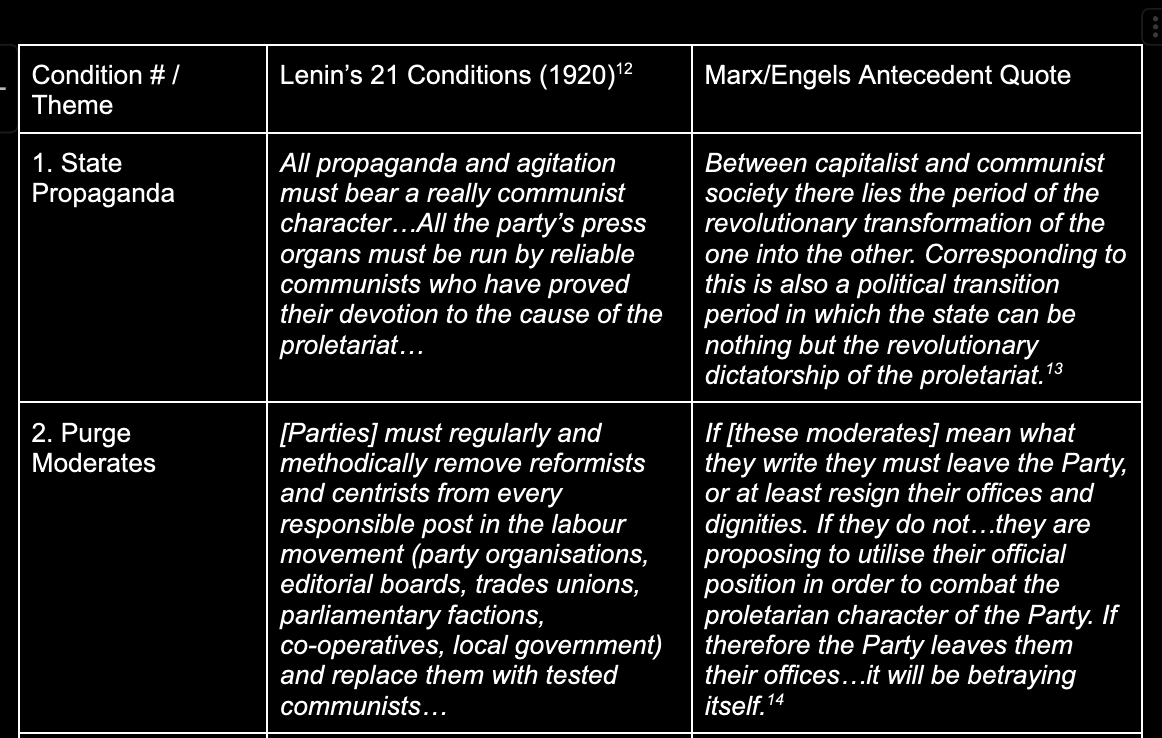
How Popper's "Open Society" became twisted to the current state of globalism is the exact same process by which Marx's ideal of a classless society becomes totalitarian in practice.
Every single one of Lenin's infamous 21 Conditions which created the tyranny of Communist states is found in Marx's writings. Lenin only codified them.
Every single one of Lenin's infamous 21 Conditions which created the tyranny of Communist states is found in Marx's writings. Lenin only codified them.
Marx believed his historical materialism, that mankind ultimately progresses through stages to a classless utopia, was an immutable scientific law. Any deviation from this was denying science.
And the logical institutional end of purity, it turns out, is the one-party dictatorship.
And the logical institutional end of purity, it turns out, is the one-party dictatorship.
It's also worth noticing that Ayn Rand also based her theories on immutable scientific laws.
"All the disasters that have wrecked your world, came from your leaders' attempt to evade the fact that A is A. All the secret evil you dread to face within you and all the pain you have ever endured, came from your own attempt to evade the fact that A is A. The purpose of those who taught you to evade it, was to make you forget that Man is Man."
She also similarly told her followers to never join any "impure" organizations such as libertarians.
"All the disasters that have wrecked your world, came from your leaders' attempt to evade the fact that A is A. All the secret evil you dread to face within you and all the pain you have ever endured, came from your own attempt to evade the fact that A is A. The purpose of those who taught you to evade it, was to make you forget that Man is Man."
She also similarly told her followers to never join any "impure" organizations such as libertarians.
Karl Popper took the opposite view: nobody knew the truth.
He divided into "open societies" and "closed societies."
He divided into "open societies" and "closed societies."
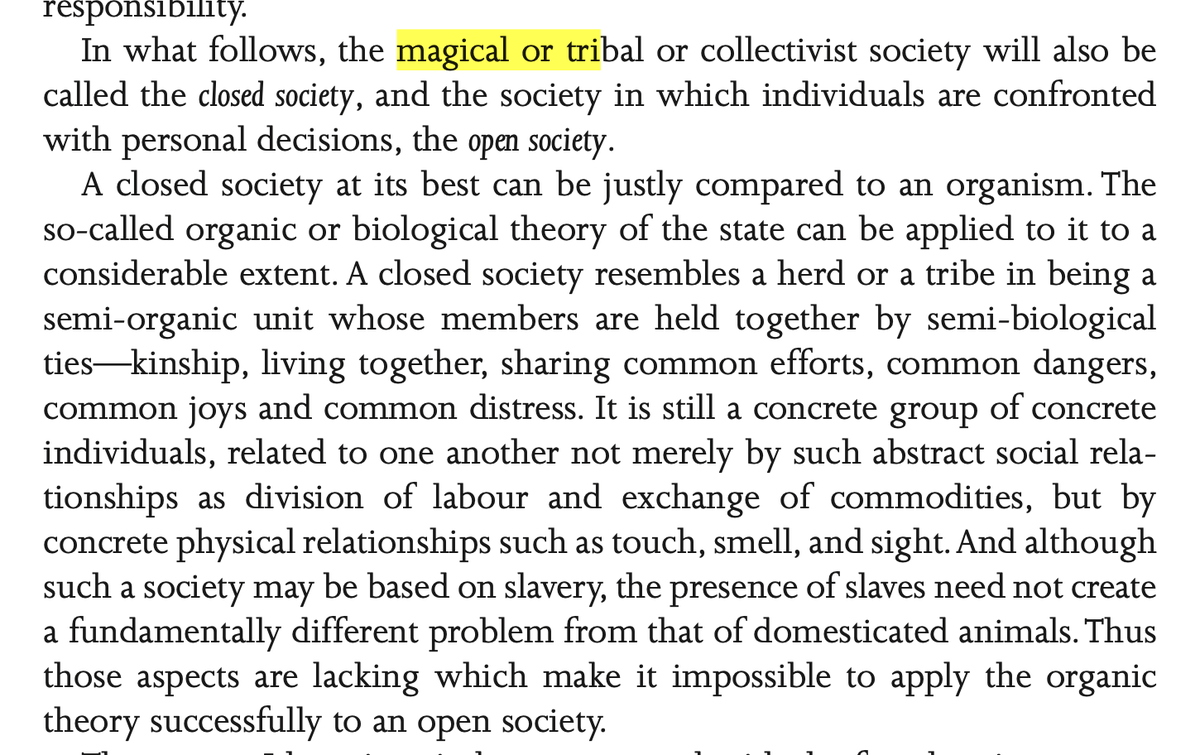
As Popper wrote, "A closed society binds the individual into the tribe, demanding conformity and obedience; an open society releases him to act and decide for himself."
It sounds good, until you realize that sows the seeds of anti-faith, anti-tradition, and anti-patriotism.
It sounds good, until you realize that sows the seeds of anti-faith, anti-tradition, and anti-patriotism.
Popper's idea of avoiding tyrannical states such as the Soviet Union was to have open societies participate in what he called "piecemeal engineering" -- gradual, reversible, evolving decisions.
Note that this implicitly excludes closed societies.
Note that this implicitly excludes closed societies.
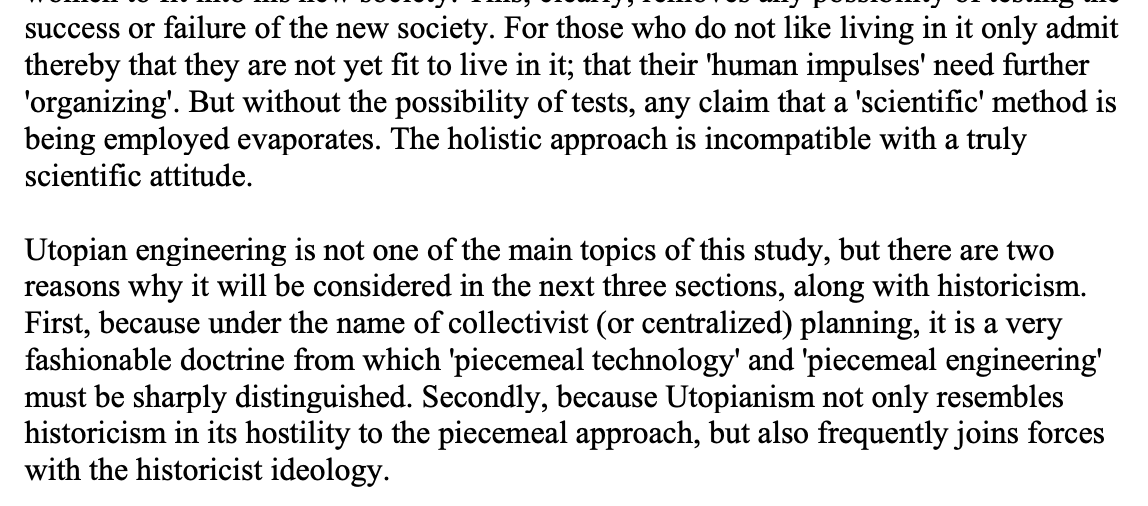
If an open society is inherently exclusionary of closed societies, then that implies it is inherently exclusionary of ideas which bring on closed societies.
This is the "hidden clause" within Popper. It has credentialism built into it.
This is the "hidden clause" within Popper. It has credentialism built into it.
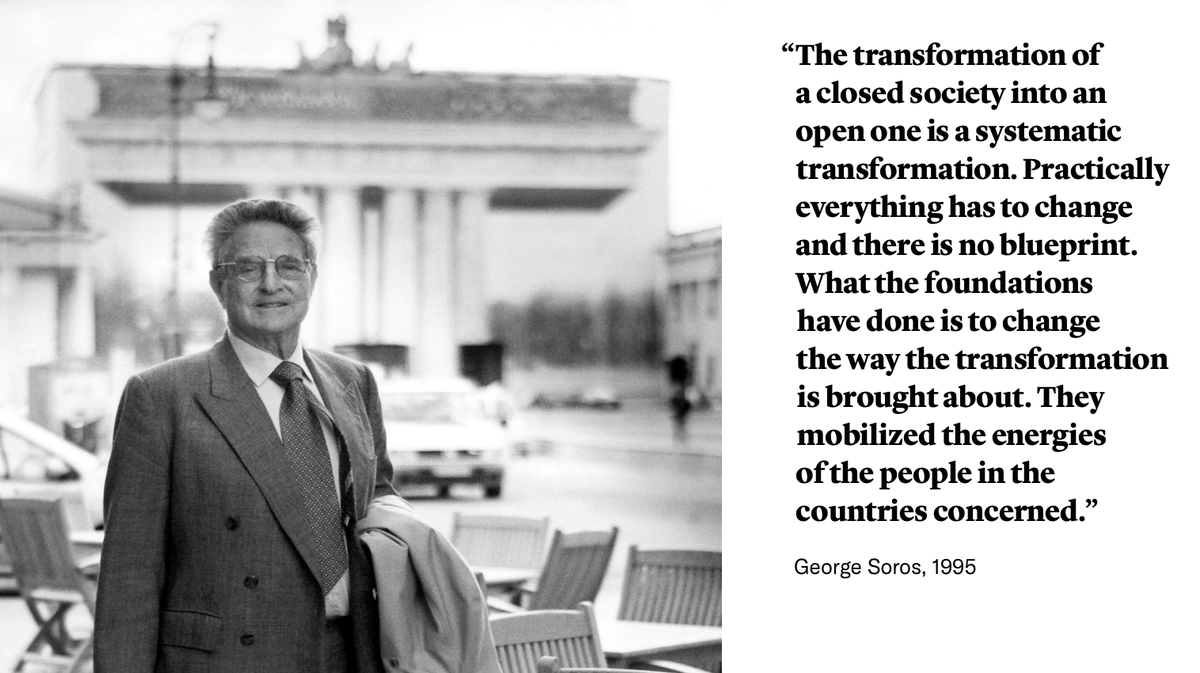
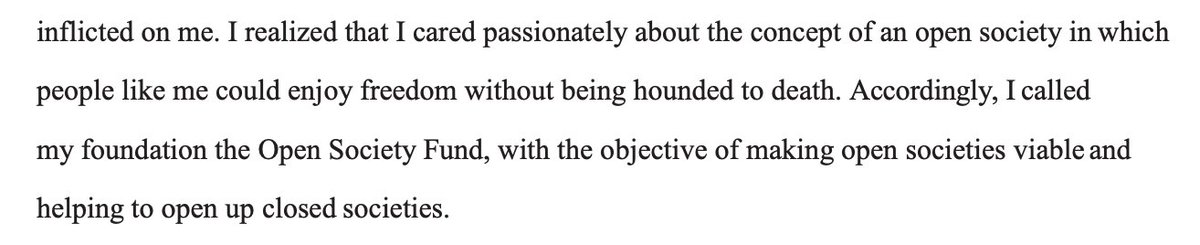
Soros' goal: transform the whole world into a coalition of Open Societies.
"I realized that I cared passionately about the concept of an open society in which people like me could enjoy freedom without being hounded to death."
"I realized that I cared passionately about the concept of an open society in which people like me could enjoy freedom without being hounded to death."
The epistemological foundation of Soros’s “Open Society” is institutionalized pluralism, the belief that no single truth or authority is legitimate, and that society must be organized around the permanent negotiation of competing views.
But pluralism, when carried to its logical conclusion, is inherently corrosive of any fixed loyalties. If no one can claim binding truth, then no institution can demand unquestioned allegiance.
But pluralism, when carried to its logical conclusion, is inherently corrosive of any fixed loyalties. If no one can claim binding truth, then no institution can demand unquestioned allegiance.
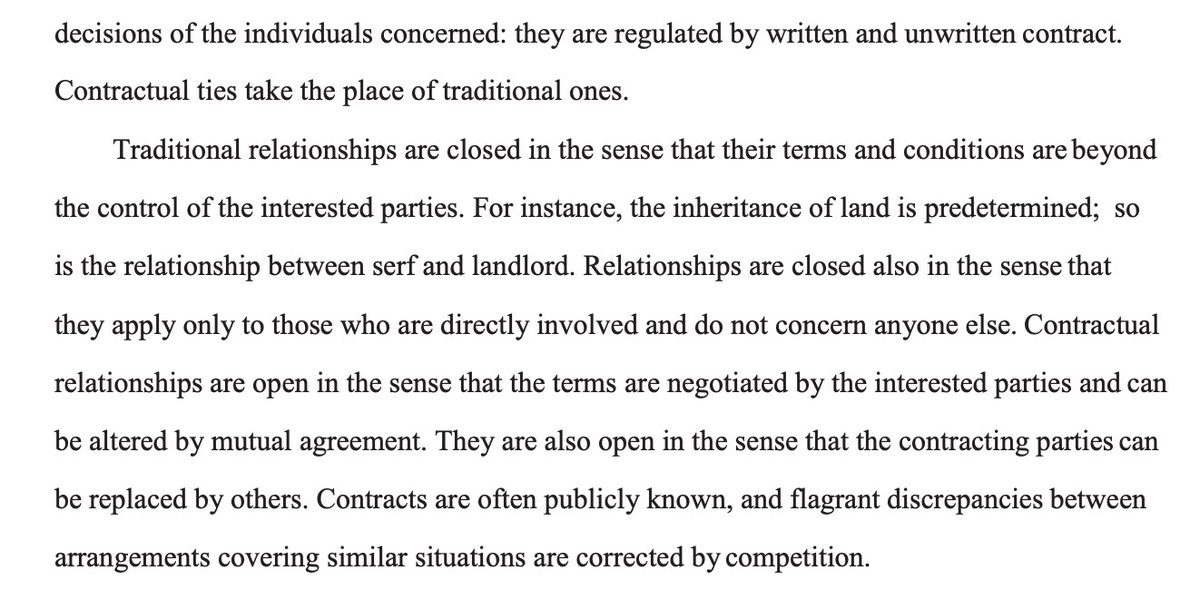
What begins as a rejection of dogma extends outward to undermine inherited ties of every sort: nation, church, tradition, and even family.
The end state of pure pluralism is a society in which every bond must be continuously renegotiated, and nothing is taken as given.
The end state of pure pluralism is a society in which every bond must be continuously renegotiated, and nothing is taken as given.
So, Soros' extreme left-wing tyranny of globalism is the institutional outcome of Popper, just as Leninist one-party states were the institutional outcome of Marx.
Even though Popper and Communism were opposing ideologies!
Even though Popper and Communism were opposing ideologies!
Generated by Thread Navigator
Press ⌘ + S to quick-export