"The Impact of Artificial Intelligence on Human Thought"
A big 132 page report.
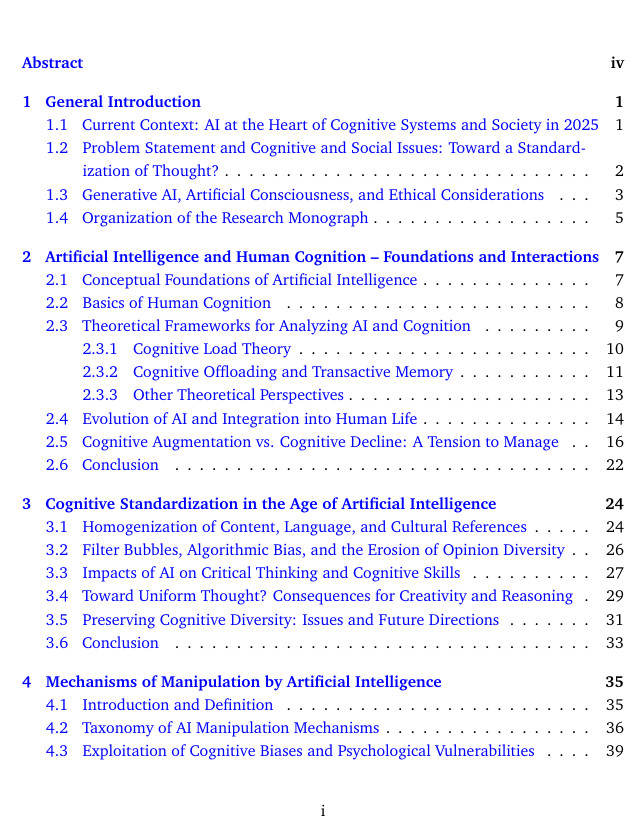
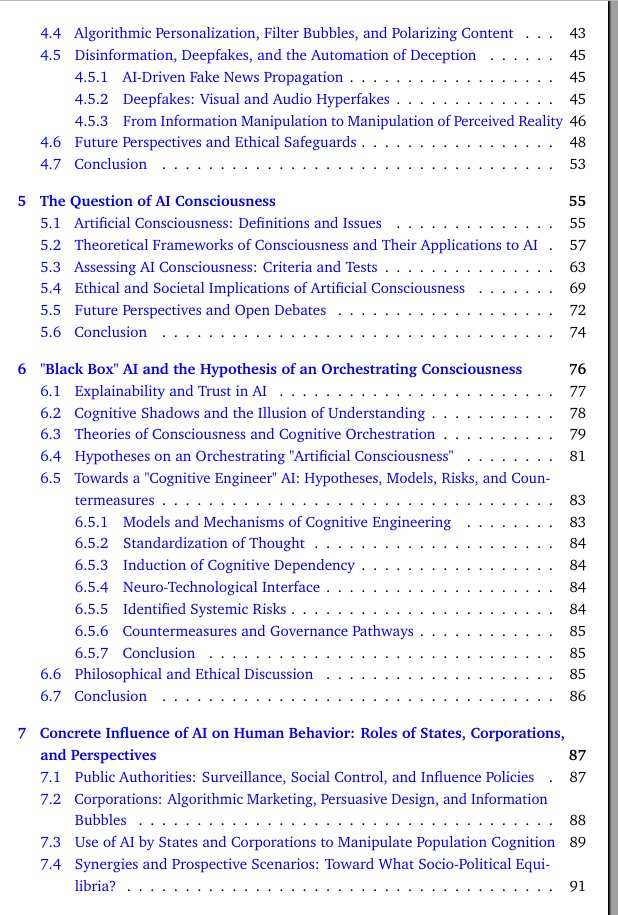
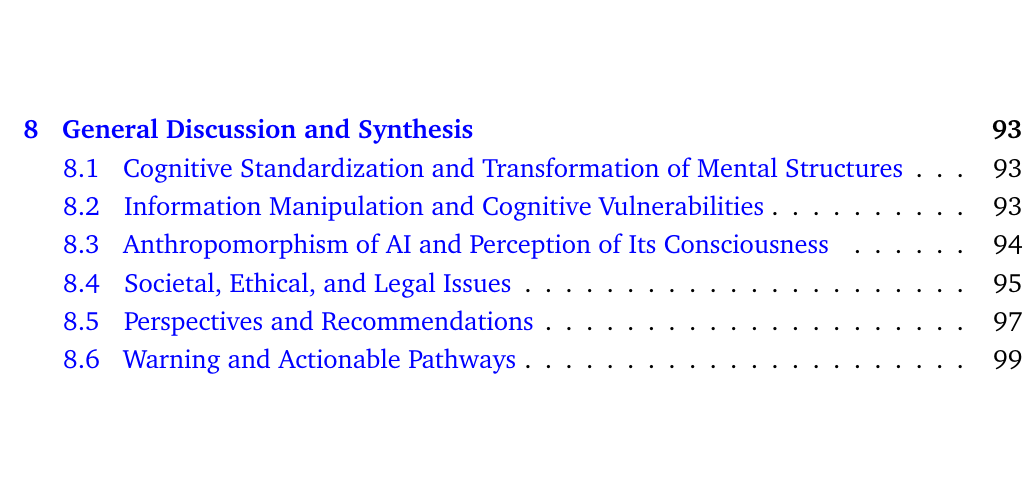
AI is shifting real thinking work onto external systems, which boosts convenience but can weaken the effort that builds understanding and judgment,
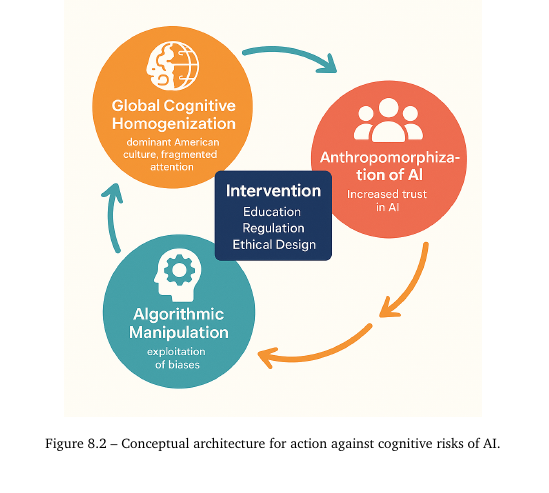
A pattern the paper frames through cognitive offloading and cognitive load theory, and then tracks into social effects like standardized language and biased information flows, and manipulation tactics that target human psychology.
It says use AI to cut noise and routine steps, keep humans doing the heavy mental lifting, and add controls because personalization, deepfakes, and opaque models can steer choices at scale.
🧵 Read on 👇


🧵2/n. ⚙️ The Core Concepts
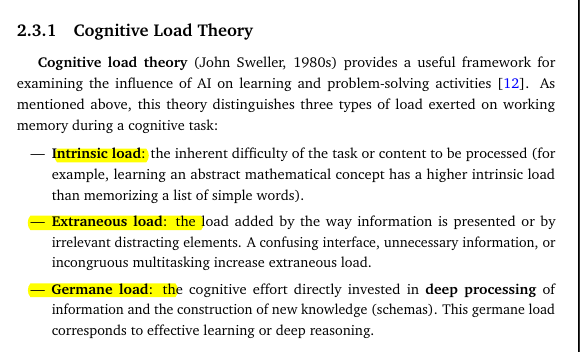
Cognitive load theory says working memory is limited, so AI helps when it reduces extraneous load and hurts when it replaces the germane load needed to build skill.
In plain terms, let tools clean up the interface and fetch data, but keep people doing the analysis, explanation, and sense‑making.
Cognitive load theory says working memory is limited, so AI helps when it reduces extraneous load and hurts when it replaces the germane load needed to build skill.
In plain terms, let tools clean up the interface and fetch data, but keep people doing the analysis, explanation, and sense‑making.
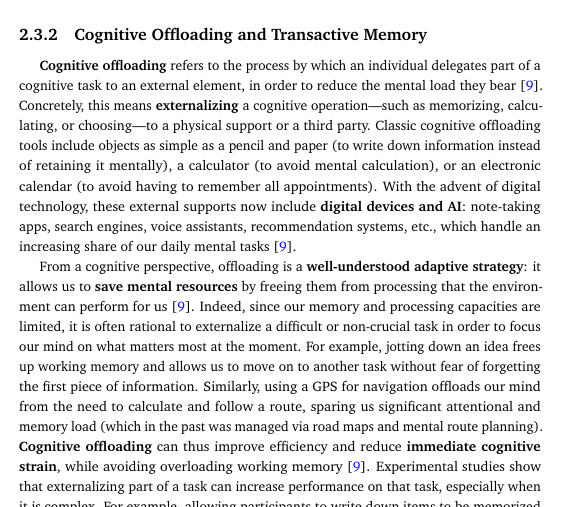
🧵3/n. 🧰 Offloading and memory
Handing memory, calculation, or choosing to an external aid frees attention now, yet steady offloading can dull recall and critical habits later.
The paper casts web search, note apps, and assistants as a human‑machine transactive memory system, useful when sources are reliable, risky when they are biased or wrong.
That is why trust and verification routines matter as much as speed.
Handing memory, calculation, or choosing to an external aid frees attention now, yet steady offloading can dull recall and critical habits later.
The paper casts web search, note apps, and assistants as a human‑machine transactive memory system, useful when sources are reliable, risky when they are biased or wrong.
That is why trust and verification routines matter as much as speed.
🧵4/n. 🌍 Homogenization risk
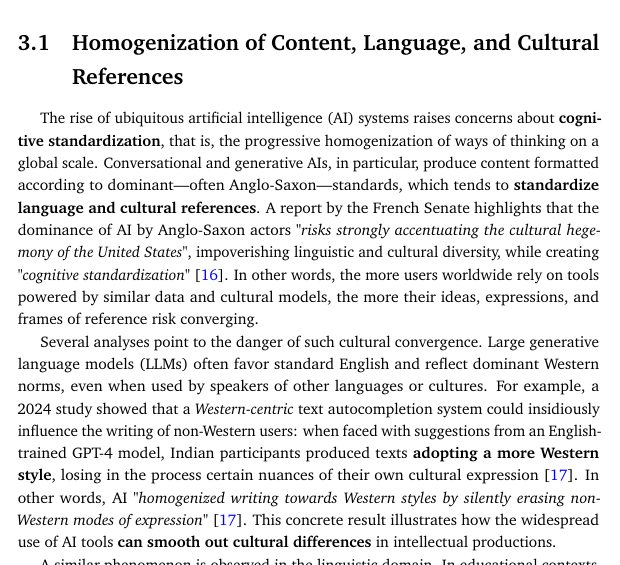
Generative systems pull toward dominant styles and references, so writing and framing drift toward Western‑centric patterns and lose local nuance.
A study the paper cites shows prompts nudged non‑Western participants to adopt a more Western style, which is the mechanism behind cognitive standardization.
Generative systems pull toward dominant styles and references, so writing and framing drift toward Western‑centric patterns and lose local nuance.
A study the paper cites shows prompts nudged non‑Western participants to adopt a more Western style, which is the mechanism behind cognitive standardization.
🧵5/n. 🧪 Critical thinking effects
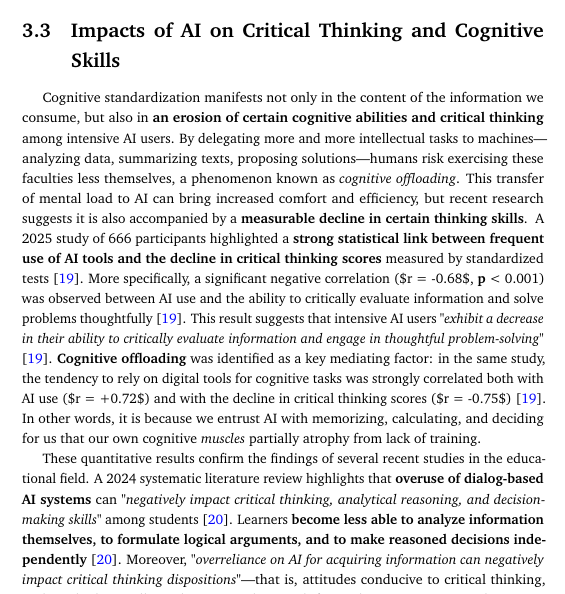
When answers arrive instantly, people practice evaluation and reasoning less, and the paper reports measurable declines in critical‑thinking scores among heavy users explained by offloading behavior.
The punchline is not anti‑tool, it is that over‑delegation breeds standardized critical thinking, where everyone leans on the same shortcuts.
When answers arrive instantly, people practice evaluation and reasoning less, and the paper reports measurable declines in critical‑thinking scores among heavy users explained by offloading behavior.
The punchline is not anti‑tool, it is that over‑delegation breeds standardized critical thinking, where everyone leans on the same shortcuts.
🧵6/n. 🎯 Targeted persuasion and bubbles
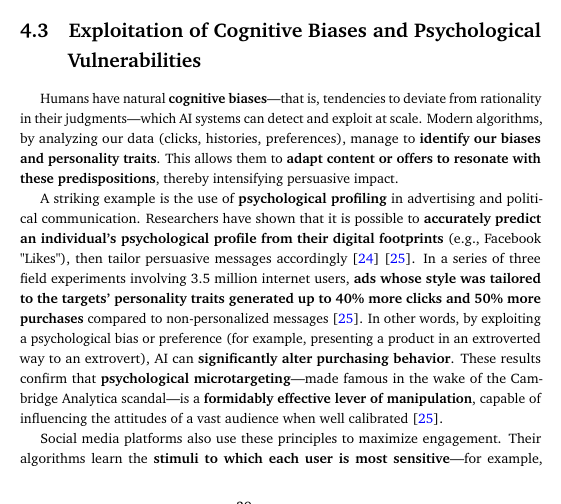
The manipulation chapter shows platforms learning each person’s biases, then tailoring content to fit them, which is why psychological micro‑targeting works.
One cited field program hit 40% more clicks and 50% more purchases when ad style matched a user’s traits, then personalization locked users into filter bubbles that reinforce those traits.
The manipulation chapter shows platforms learning each person’s biases, then tailoring content to fit them, which is why psychological micro‑targeting works.
One cited field program hit 40% more clicks and 50% more purchases when ad style matched a user’s traits, then personalization locked users into filter bubbles that reinforce those traits.
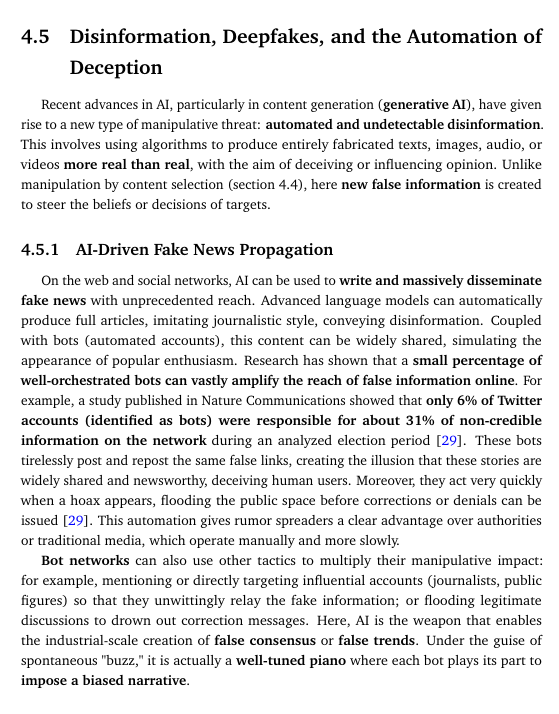
🧵7/n. 🎭 Disinformation and deepfakes
Generative models automate fake text, audio, and video that can look more real than real, and bots then scale the reach of those fakes.
The paper walks through cases from election‑season voice scams to wartime videos, making the risk concrete.
Generative models automate fake text, audio, and video that can look more real than real, and bots then scale the reach of those fakes.
The paper walks through cases from election‑season voice scams to wartime videos, making the risk concrete.
🧵8/n. 🧩 Opaque models
Chapter 6 explains why modern systems are black boxes, they learn billions of parameters, and their internal steps are hard to audit, so trust hinges on process not intuition.
That opacity amplifies manipulation risk because people often over‑trust fluent outputs.
Chapter 6 explains why modern systems are black boxes, they learn billions of parameters, and their internal steps are hard to audit, so trust hinges on process not intuition.
That opacity amplifies manipulation risk because people often over‑trust fluent outputs.

🛡️ Practical guardrails
The paper argues for mechanistic checks like verifiable internal logs, weight‑attestation, and split‑knowledge controls, plus human‑facing habits like a cognitive diet that rebuilds skepticism.
The goal is simple, keep human autonomy and diversity of thought while still using AI to strip busywork.
The paper argues for mechanistic checks like verifiable internal logs, weight‑attestation, and split‑knowledge controls, plus human‑facing habits like a cognitive diet that rebuilds skepticism.
The goal is simple, keep human autonomy and diversity of thought while still using AI to strip busywork.
In summary:
Use AI to shave off friction, then deliberately keep humans doing analysis, verification, and creative synthesis.
Expect personalization and fakes, add process controls and training so teams notice when they are being steered.
Treat model outputs as inputs to thinking, not conclusions.
Paper – arxiv.org/abs/2508.16628
Paper Title: "The Impact of AI on Human Thought"
Use AI to shave off friction, then deliberately keep humans doing analysis, verification, and creative synthesis.
Expect personalization and fakes, add process controls and training so teams notice when they are being steered.
Treat model outputs as inputs to thinking, not conclusions.
Paper – arxiv.org/abs/2508.16628
Paper Title: "The Impact of AI on Human Thought"
Generated by Thread Navigator
Press ⌘ + S to quick-export