
1/ Phaistos was one of the most important palatial centers of Minoan Crete; probably only Knossos overshadowed it. But what criteria was used to select the location and what were the factors that led to its rise? To find the answers, we will have to go back several centuries.
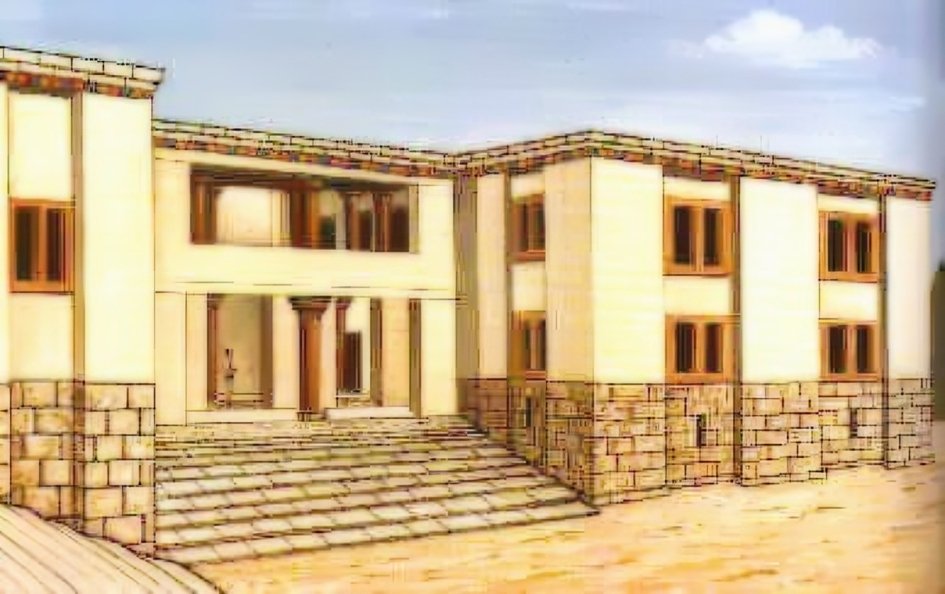
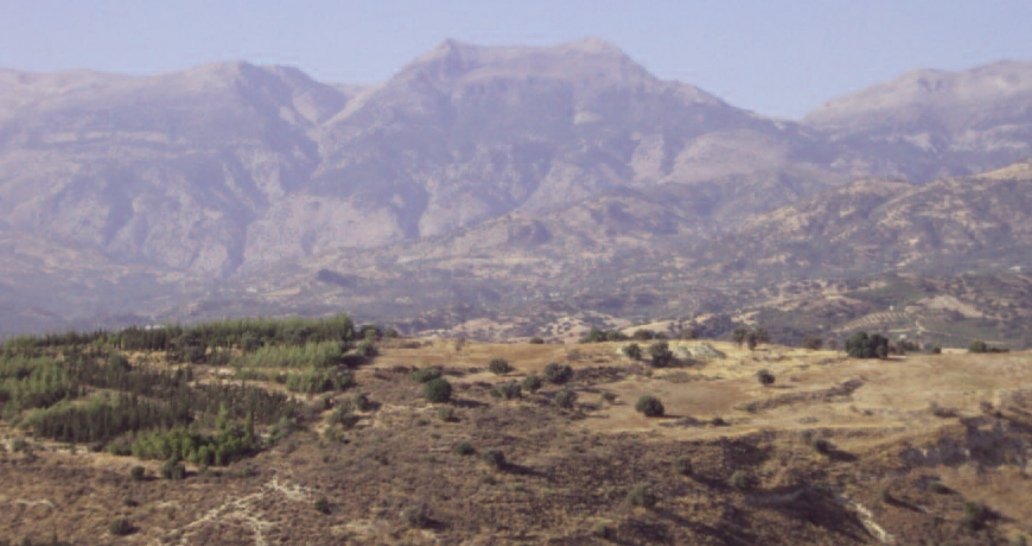
2/ Phaistos was located on a strategic importance hill, which overlooked the fertile valley of Messara, surrounded by imposing mountains (Ida), and with easy access to important natural anchorages (Kommos). However, at the beginning of the Holocene, the things were different.

3/ At that age, the plain of Messara was a clayey basin, where it collected large quantities of water from the surrounding mountains through the Ieropotamos River and its many tributaries, which in many cases created extreme seasonal floods, while at the westernmost end of 👉
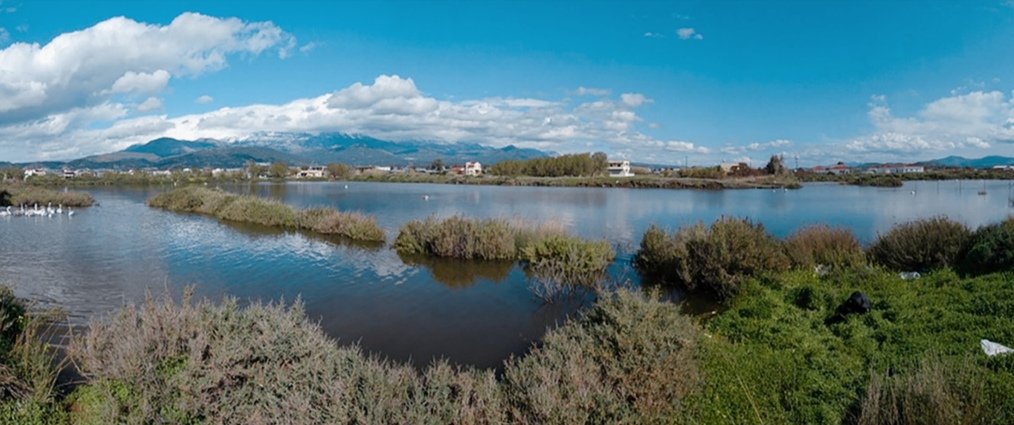
👉 Messara a marshy coastal lagoon had been created. Thus, Messara was an unsuitable place for the settlement of early agricultural communities, which based their existence on the cultivation of the land and the breeding of domesticated animals.

4/ But one element attracted the attention of Neolithic people: an imposing and quite visible hill from the sea in a naturally protected location that dominated over a deep bay. A topographical landmark for the early seafarers of the time who had the opportunity to exploit 👉

👉 the large elevated flat area of the hill to engage in various activities there and at the same time obtain supplies of fresh water and food, while being in an active wetland, as well as valuable red ochre that existed in abundance at the foot of the hill. 👉

👉 At the same time, the hill of Phaistos was located in close proximity to the most important topographical landmark of Crete, Ida, which, being majestic and bearing horn-shaped peaks, also gave it a religious background.
5/ During the first half of the 5th millennium BC some of these occasional marine visitors decided to settle permanently on the hill of Phaistos, developing over time a network of sites near sources of hematite and quartz. These settlers came from the wider Aegean region, 👉

👉 having cultural parallels in the Cyclades and the islands of the Eastern Aegean. However, the archaeological evidence shows that Phaistos gradually lost the contact with the rest of the Aegean and became a meeting place for members of local communities. 👉

👉 Within this context, population groups characterized by a nomadic lifeway, moving from lowland to mountainous areas and vice versa, came to Phaistos in order to exchange specialized products suitable for their seasonal activities.

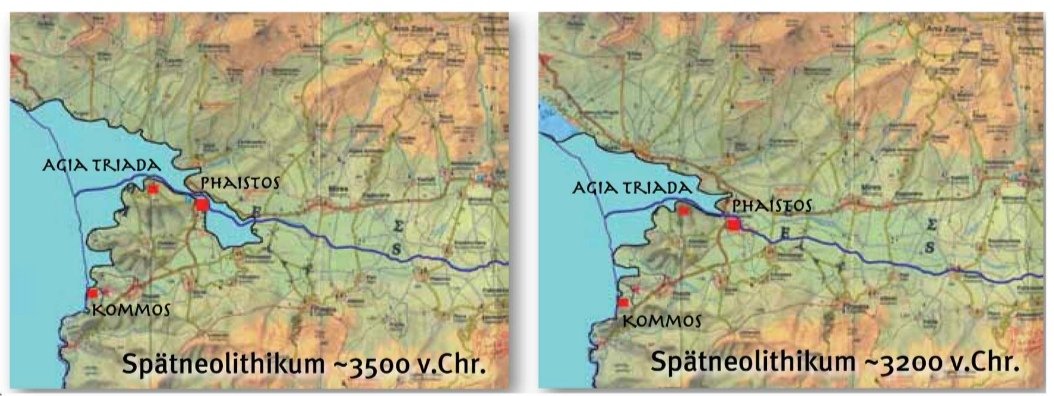
6/ The Messara basin was a demanding, almost marginal environment, which required particular adaptation practices, the result of which was often counterproductive for its Neolithic inhabitants. However, some of these survival practices played a decisive role in the 👉

👉 topographical change of the region. For example, the periodic subsidence of the floodplain led to an overexploitation of the hillsides that began with an intensive deforestation which, in a relatively short period of time, caused the filling of the Tympaki Bay and 👉

👉 the extension of the coastline from Phaistos to Agia Triada, due to massive soil erosion (during the 4th millennium BC). Amidst these adverse conditions, local communities quickly realized that they must work together to thrive in this environment.
7/ Thus, a regional network of cooperative organization is created, centered on Phaistos, where meetings of members of local communities were organized, during which conditions for flourishing barter trade between them developed (a large local barter bazaar) and 👉

👉for strengthening their ties through the holding of large feasts that probably also had a ritual character. During the transition to the 3rd millennium BC, new population groups arrived in Crete from Anatolia, resulting in the strengthening of relations with the Near East and👉
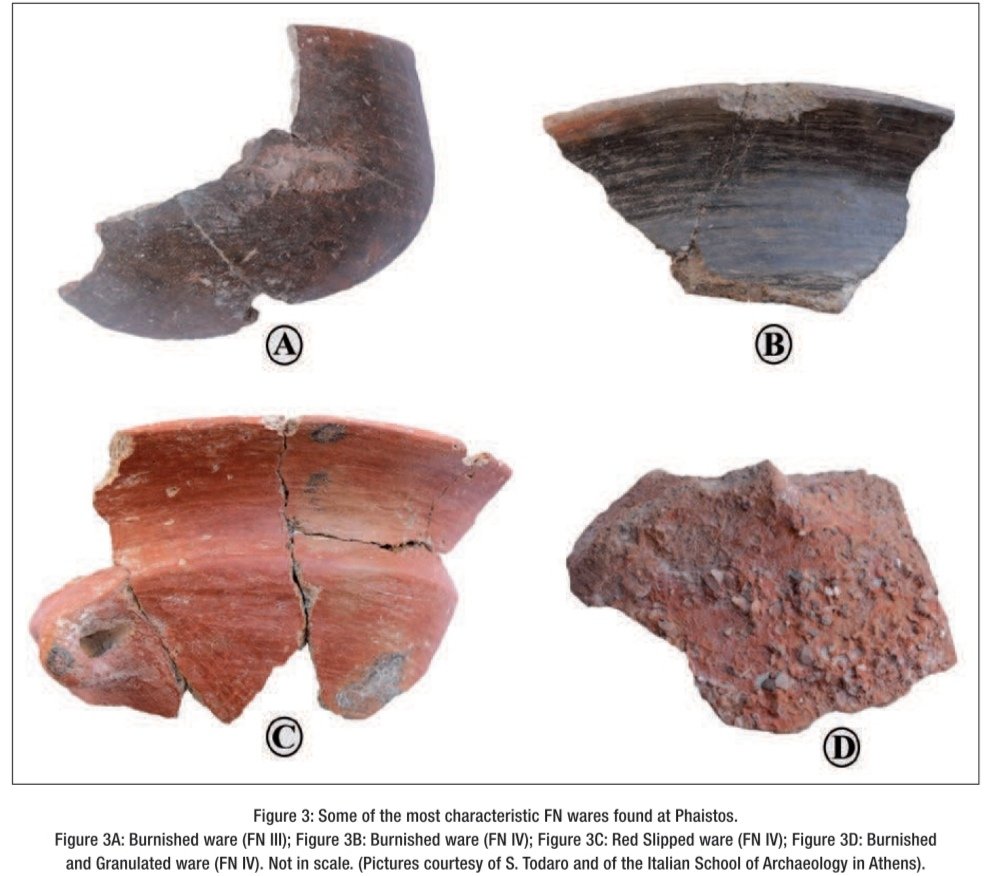
👉 the emergence of new ideas, technologies and practices. Everything is changing in the management of the productive resources of the Messara, as the inhabitants of the area stop adapting to the natural environment and begin a process of adapting the environment to their needs.

8/ The new practices of exploitation of the local environment required new forms of political, social and economic management with the existence of a central administration and a controlled production model that was based on dependent labor, 👉

👉 on the central storage of production and the redistribution of part of it. Thus, the proto-palatial center of Messara was built on the hill of Phaistos, a location that was a point of reference for the local population with special emphasis on its memories and traditions.

Generated by Thread Navigator
Press ⌘ + S to quick-export