The hidden cost of living inside other people’s worldviews:
Anxiety.
Overthinking.
People-pleasing.
Ludwig Wittgenstein points the way, and I'll show you how to break free.🧵


You weren’t born anxious.
You were trained to ignore your inner voice and obey invisible rules.
This training came from parents, your culture, and school.
Each had an agenda for who you should be.
You inherited their worldviews.
And now you call it “reality.”
You were trained to ignore your inner voice and obey invisible rules.
This training came from parents, your culture, and school.
Each had an agenda for who you should be.
You inherited their worldviews.
And now you call it “reality.”
Ludwig Wittgenstein-- one of the most influential philosophers of the 20th century--warned us of this mistake.
He understood how language, logic, and understanding shape our worldviews.
He understood how language, logic, and understanding shape our worldviews.

But it wasn't until his later work, "Philosophical Investigations"-- (published posthumously in 1953)-- Wittgenstein delivered the most profound warning of all.
He said:
"Pictures hold us captive. And we can't get outside of them because they are embedded in our language, our grammar, and the way we talk to each other."
He said:
"Pictures hold us captive. And we can't get outside of them because they are embedded in our language, our grammar, and the way we talk to each other."

What did he mean by “a picture”?
Not a literal image—
But a "metaphor" we mistake for the truth.
A mental model.
A way of seeing the world so embedded in our private self-talk, we don’t realize its influence on how it shapes our actions.
Not a literal image—
But a "metaphor" we mistake for the truth.
A mental model.
A way of seeing the world so embedded in our private self-talk, we don’t realize its influence on how it shapes our actions.

These pictures shape how we ask questions, define problems, and imagine solutions in our lives.
They trap us—
Not because they’re wrong, but because they disappear into common sense.
We think they are LOGICAL and RATIONAL!
They trap us—
Not because they’re wrong, but because they disappear into common sense.
We think they are LOGICAL and RATIONAL!
When we investigate philosophers like Wittgenstein, we are trying to understand the truth about life.
Yet, these days, we are captured by a picture of science and neuroscience.
As if these fields are the truth.
But they only give us a worldview, a picture.
And, freedom begins when we notice the picture you've been living in… and step outside of it.
Yet, these days, we are captured by a picture of science and neuroscience.
As if these fields are the truth.
But they only give us a worldview, a picture.
And, freedom begins when we notice the picture you've been living in… and step outside of it.
These days, everyone is scrambling to:
1. Outperform others.
2. Overthink our competitors.
3. Optimize our potential based on outside metrics.
But this worldview only leads us to burnout and unhappiness.
We're struggling inside a worldview we never decided upon.
1. Outperform others.
2. Overthink our competitors.
3. Optimize our potential based on outside metrics.
But this worldview only leads us to burnout and unhappiness.
We're struggling inside a worldview we never decided upon.
Irony is: your brain remembers who you REALLY are.
Who you came into this life to be.
Because of the dominant worldview, most of us are disconnected from our soul's code, our authentic selves.
Here are five ways to come out of this unconscious, robotic existence.
Who you came into this life to be.
Because of the dominant worldview, most of us are disconnected from our soul's code, our authentic selves.
Here are five ways to come out of this unconscious, robotic existence.
Step #1: Question the internal conflict you're experiencing.
Notice how it creates the anxiety–overthinking–people-pleasing loop you're experiencing.
Notice your authentic self.
How does your inner truth collide with your learned self?
This is the first step to discovering who you truly are.
It's not a mindset problem.
It’s neurobiological dissonance.
Notice how it creates the anxiety–overthinking–people-pleasing loop you're experiencing.
Notice your authentic self.
How does your inner truth collide with your learned self?
This is the first step to discovering who you truly are.
It's not a mindset problem.
It’s neurobiological dissonance.

VIDEO
Cognitive neuroscience calls this cognitive dissonance a certain name.
It's called "prediction error minimization".
This means your brain is trying to match your internal world with your external reality.
When your inner self-talk is:
“I must be perfect to be loved.”
You can't relax, you can't thrive, you can't enjoy.
Stress becomes your baseline.
It's called "prediction error minimization".
This means your brain is trying to match your internal world with your external reality.
When your inner self-talk is:
“I must be perfect to be loved.”
You can't relax, you can't thrive, you can't enjoy.
Stress becomes your baseline.

VIDEO
Step #2: Question your overthinking and overanalyzing.
It's a form of mental survival.
You’re trying to calculate how to “get everything right” in a system you never chose to live in.
And, the rules keep shifting.
The rewards feel hollow.
And your mind never rests.
Because you’re not playing from your truth.
You're playing a mental model that you inherited.
It's a form of mental survival.
You’re trying to calculate how to “get everything right” in a system you never chose to live in.
And, the rules keep shifting.
The rewards feel hollow.
And your mind never rests.
Because you’re not playing from your truth.
You're playing a mental model that you inherited.

VIDEO
In this case, the Prefrontal Cortex (PFC)—your decision-making center—becomes hijacked by fear.
When your PFC is in survival mode, it favors safety over truth.
1. You become obedient.
2. Polished.
3. Exhausted.
Your true self becomes a liability, not an asset.
When your PFC is in survival mode, it favors safety over truth.
1. You become obedient.
2. Polished.
3. Exhausted.
Your true self becomes a liability, not an asset.
Step #3: Question how often you try to please others.
Your nervous system learned early:
“If I attune to everyone else’s needs, I’ll be safe.”
This is stored not just as a thought—but as procedural memory.
It's become an automatic habit.
Your nervous system learned early:
“If I attune to everyone else’s needs, I’ll be safe.”
This is stored not just as a thought—but as procedural memory.
It's become an automatic habit.

VIDEO
So what happens when you stack productivity hacks on top of a false self?
You become efficient at betraying yourself.
1. High output.
2. Low fulfillment.
3. An unhappy existence.
You get successful business results, but you feel empty inside.
Your lifestyle doesn't match the you inside your head.
You become efficient at betraying yourself.
1. High output.
2. Low fulfillment.
3. An unhappy existence.
You get successful business results, but you feel empty inside.
Your lifestyle doesn't match the you inside your head.
Step #4: Question doing more and enjoying it less.
You’re acting from someone else’s blueprint.
Your brain experiences this as a kind of self-abandonment—a split between inner and outer realities.
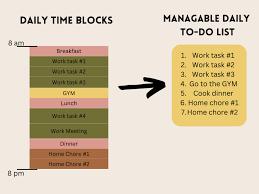
No amount of time-blocking can fix this.
You’re acting from someone else’s blueprint.
Your brain experiences this as a kind of self-abandonment—a split between inner and outer realities.
No amount of time-blocking can fix this.
Step #5: Question every implicit assumption you've ever lived by.
“I must be perfect to be loved.”
“If I rest, I’m worthless.”
“Success means proving myself.”
These aren’t truths.
They’re templates, and you can choose different ones.
“I must be perfect to be loved.”
“If I rest, I’m worthless.”
“Success means proving myself.”
These aren’t truths.
They’re templates, and you can choose different ones.
To escape the anxiety loop, you don’t need better mental tools.
You need to question your basic assumptions about life.
1. What does success look like?
2. How does love show up when I let go?
3. Who must I be to feel truly worthy in my life?
You need to question your basic assumptions about life.
1. What does success look like?
2. How does love show up when I let go?
3. Who must I be to feel truly worthy in my life?

Neuroscientist Lisa Feldman Barrett calls emotions “constructed experiences.”
That means:
Your feelings are shaped by the concepts you’ve internalized.
Change the concepts—change your emotional world.
That means:
Your feelings are shaped by the concepts you’ve internalized.
Change the concepts—change your emotional world.

VIDEO
The most powerful form of self-improvement isn’t behavior change.
It’s a conceptual change.
You don't need to “try harder.”
You need to see things differently.
That’s how the brain rewires: not through effort, but through insight.
It’s a conceptual change.
You don't need to “try harder.”
You need to see things differently.
That’s how the brain rewires: not through effort, but through insight.
Generated by Thread Navigator
Press ⌘ + S to quick-export