Do we really need to train to failure to optimise strength gains?
(What the research says about training to failure vs. 1-3 reps in reserve for increasing maximal strength)

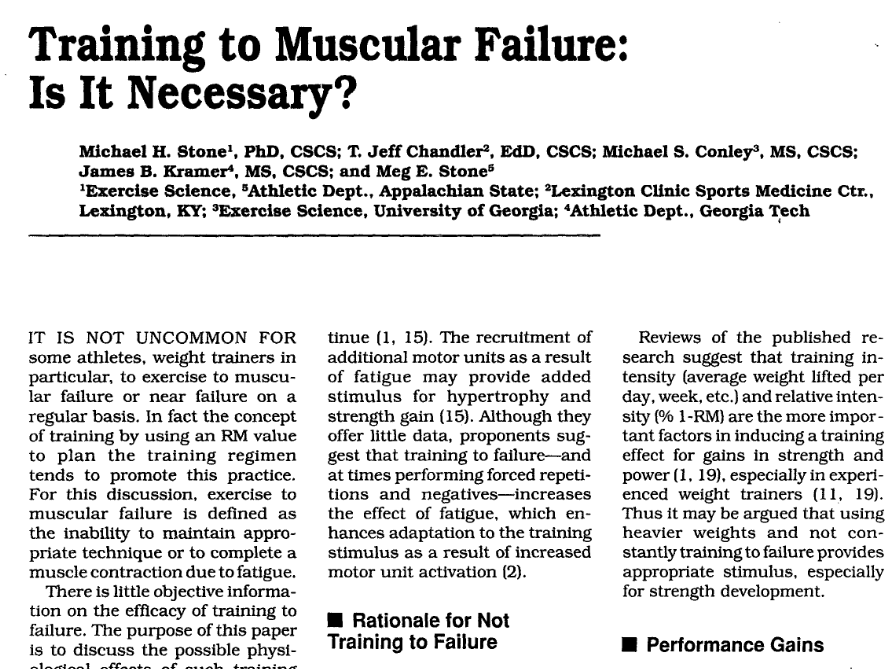
📊Across multiple studies on trained lifters:
Training to failure ≈ Training with 1–3 RIR
1RM gains are comparable
Overall volume and fatigue management matter more than reaching true exhaustive failure
Training to failure ≈ Training with 1–3 RIR
1RM gains are comparable
Overall volume and fatigue management matter more than reaching true exhaustive failure
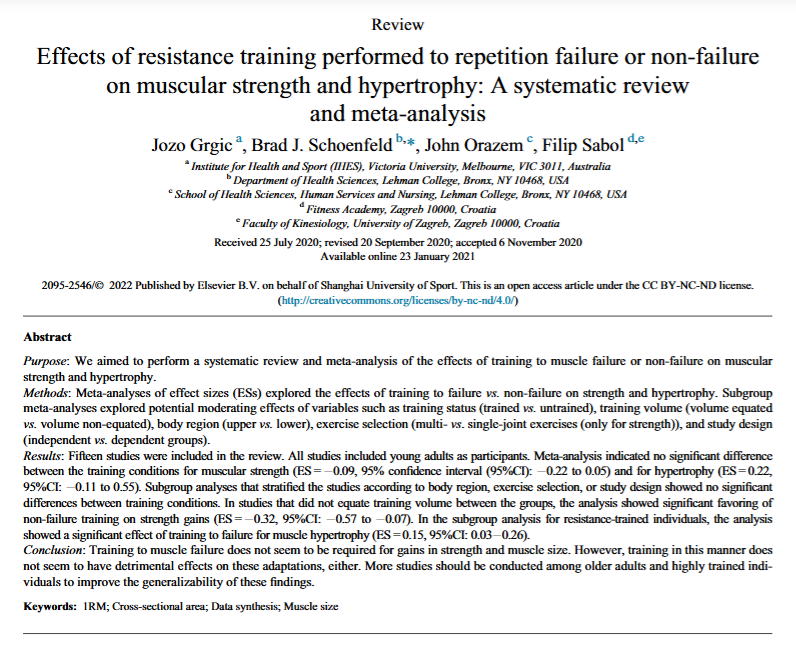
Why doesn’t failure help more?
Because heavy loads already recruit high-threshold motor units needed for strength (and recruit them early in sets)
You don’t need to hit true failure to get high MU recruitment.... especially when lifting ~80–90% 1RM for multiple sets
Because heavy loads already recruit high-threshold motor units needed for strength (and recruit them early in sets)
You don’t need to hit true failure to get high MU recruitment.... especially when lifting ~80–90% 1RM for multiple sets
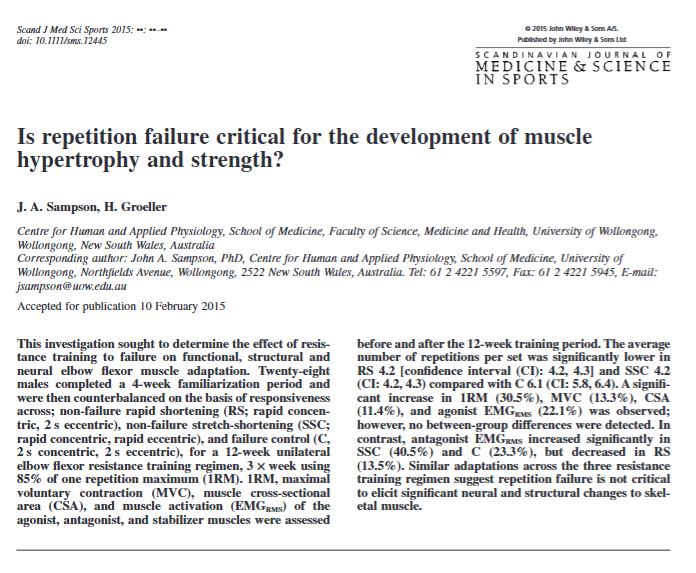
More reps ≠ better stimulus if it drastically reduces technical execution, training quality or bar speed (within appropriate range)
Use RPE 7–9 or stop at 1–2 RIR on main lifts to manage:
⬆️ technical skill
⬆️ recovery
⬆️ training frequency
⬆️ neuromuscular fatigue
Use RPE 7–9 or stop at 1–2 RIR on main lifts to manage:
⬆️ technical skill
⬆️ recovery
⬆️ training frequency
⬆️ neuromuscular fatigue
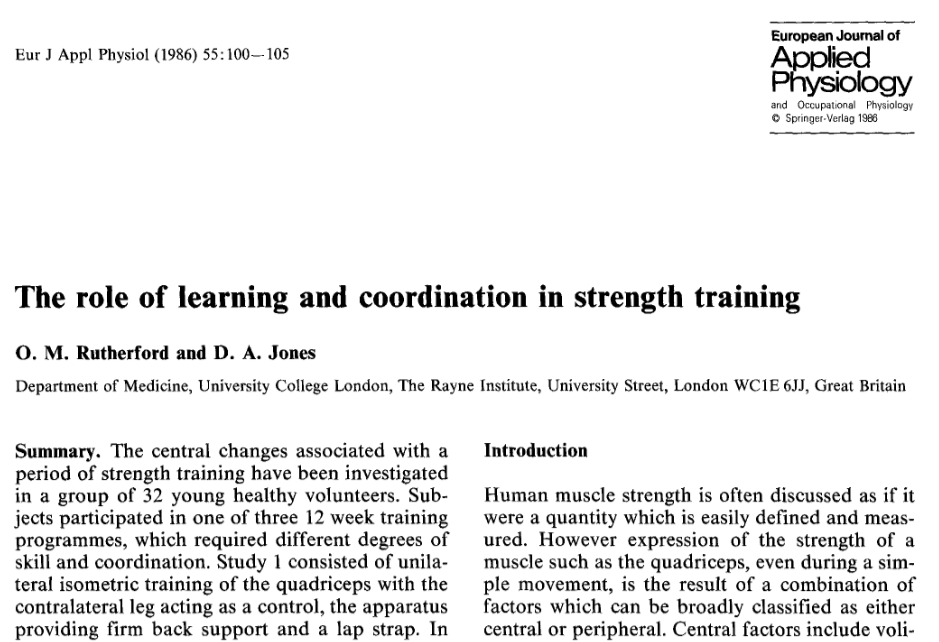
For trained lifters, consistent high-quality volume with 1–3 RIR is just as effective as grinding every set to failure.... and drasticially reduces the recovery cost.
Failure is a tool. And can have some benefits on local muscular endurance.
But its not a necessity.
Failure is a tool. And can have some benefits on local muscular endurance.
But its not a necessity.
A great perspective here from @SandCResearch which illustrates the potential folly of overcooking with sets to true failure
View Tweet
Generated by Thread Navigator
Press ⌘ + S to quick-export