The New York Times is preparing to publish a hit piece on me.
I found out this story is running because a reporter from NYT emailed me and my colleagues her “fact-checking” questions. This is standard practice before publishing a story.
“I am working on a story about Bryan Johnson and his weaponization of non-disclosure agreements over the years to cover a range of bad behavior…”
This journalist is trying to construct a narrative about me.
Let’s take a look at what she’s trying to do.🧵

Step 0: Motive.
Why is The New York Times coming after me? It’s a clash of self-serving narratives:
1. The New York Times wants a sensational story. Clicks = money.
2. The journalist wants to “take down” another target.
3. My ex is chasing clout by recycling allegations that have already been rejected in two legal forums.
4. Don’t Die is growing fast, threatening status-quo power. This makes me a target.
I’m fortunate that I have social reach. But what’s really unfair is when this happens to people who have limited recourse.
This isn’t just about me, this is about how the media manufactures reality. If a journalist is going to try and construct a narrative about any one of us, we should evaluate the foundation it’s built on.
Why is The New York Times coming after me? It’s a clash of self-serving narratives:
1. The New York Times wants a sensational story. Clicks = money.
2. The journalist wants to “take down” another target.
3. My ex is chasing clout by recycling allegations that have already been rejected in two legal forums.
4. Don’t Die is growing fast, threatening status-quo power. This makes me a target.
I’m fortunate that I have social reach. But what’s really unfair is when this happens to people who have limited recourse.
This isn’t just about me, this is about how the media manufactures reality. If a journalist is going to try and construct a narrative about any one of us, we should evaluate the foundation it’s built on.
Step 1: Establish the Pretext for a Smear
For five years, my ex has been trying to extract money from me and one of her principal tools has been a series of false allegations.
All her attempts have failed.
Two separate legal forums ruled against her. The arbitrator wrote that her own evidence contradicted her own story. The District Judge not only rejected her claims, she sanctioned and fined her attorneys for their “serious allegations [that were]…factually and legally baseless and frivolous”.
She was ordered to pay me $500k.
And yet, here we are. A New York Times reporter is reviving accusations that were twice rejected by two legal forums, repackaging them for clicks. The journalist knows it’s easier to manipulate public opinion.
This is how the media operates: if they can’t get you legally, they try to get you socially. They don’t need truth. They need narrative.
For five years, my ex has been trying to extract money from me and one of her principal tools has been a series of false allegations.
All her attempts have failed.
Two separate legal forums ruled against her. The arbitrator wrote that her own evidence contradicted her own story. The District Judge not only rejected her claims, she sanctioned and fined her attorneys for their “serious allegations [that were]…factually and legally baseless and frivolous”.
She was ordered to pay me $500k.
And yet, here we are. A New York Times reporter is reviving accusations that were twice rejected by two legal forums, repackaging them for clicks. The journalist knows it’s easier to manipulate public opinion.
This is how the media operates: if they can’t get you legally, they try to get you socially. They don’t need truth. They need narrative.
Step 2: Framing the Narrative with Loaded Questions
Fact-checking is simple: verify information before publishing. Make sure it’s true, provide context, and correct mistakes if they happen.
Journalists are ethically bound to fairness, objectivity, and honesty. No twisting facts to fit a narrative. No cherry-picking details to mislead. Legally, they are not supposed to publish false claims that damage someone’s reputation (that’s defamation).
When done right, journalism informs. When done wrong, it misleads. The past few years have revealed that the mainstream media has misled.
I don’t believe this reporter is being ethical. The story hasn’t yet been published. When it is, you can decide.
Fact-checking is simple: verify information before publishing. Make sure it’s true, provide context, and correct mistakes if they happen.
Journalists are ethically bound to fairness, objectivity, and honesty. No twisting facts to fit a narrative. No cherry-picking details to mislead. Legally, they are not supposed to publish false claims that damage someone’s reputation (that’s defamation).
When done right, journalism informs. When done wrong, it misleads. The past few years have revealed that the mainstream media has misled.
I don’t believe this reporter is being ethical. The story hasn’t yet been published. When it is, you can decide.
Question:
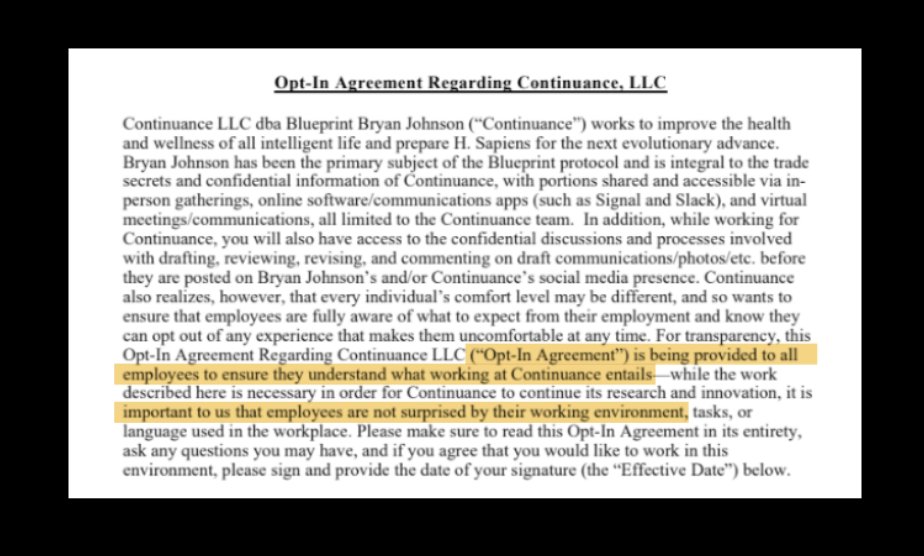
“... I'm interested in the use of your "opt-in" agreement at Blueprint. This agreement, of which I've seen a copy, makes employees attest that they are okay with a wide range of unusual workplace behavior, and that they don't find it "abusive" or "unprofessional." Some people we have spoken to said they felt coerced into signing it because they might lose their jobs if they don't, and outside lawyers we have spoken to described it as unorthodox. Can you explain why you have used this document for employees?”
Answer:
I post nudes on social media. I track my nighttime erections. My team openly discusses my semen health. We make dank memes.
Rather than letting people walk in blind, we disclose this upfront, in writing, so there are no surprises.
This isn’t coercion; it’s transparency. This practice is fair to all concerned and is in everyone’s best interest. If someone doesn’t align with our culture, they are free to work elsewhere. No one is forced to sign anything. The opt-in agreement exists to ensure that people understand and consent to the environment. It eliminates ambiguity and prevents misunderstandings.
Reader's note:
Here, the reporter’s question was designed to frame Blueprint’s workplace culture as inappropriate, coercive, and legally questionable while appearing neutral. She used loaded language (“unusual behavior,” “abusive,” “unprofessional”) to plant the idea that something is wrong, even without evidence.
By citing anonymous employees who “felt coerced” and “outside lawyers” calling it “unorthodox,” she implied ethical and legal concerns without providing concrete proof. This tactic relies on suggestion rather than fact, subtly encouraging readers to view Blueprint’s transparency agreement as problematic, rather than a straightforward disclosure of workplace culture.
“... I'm interested in the use of your "opt-in" agreement at Blueprint. This agreement, of which I've seen a copy, makes employees attest that they are okay with a wide range of unusual workplace behavior, and that they don't find it "abusive" or "unprofessional." Some people we have spoken to said they felt coerced into signing it because they might lose their jobs if they don't, and outside lawyers we have spoken to described it as unorthodox. Can you explain why you have used this document for employees?”
Answer:
I post nudes on social media. I track my nighttime erections. My team openly discusses my semen health. We make dank memes.
Rather than letting people walk in blind, we disclose this upfront, in writing, so there are no surprises.
This isn’t coercion; it’s transparency. This practice is fair to all concerned and is in everyone’s best interest. If someone doesn’t align with our culture, they are free to work elsewhere. No one is forced to sign anything. The opt-in agreement exists to ensure that people understand and consent to the environment. It eliminates ambiguity and prevents misunderstandings.
Reader's note:
Here, the reporter’s question was designed to frame Blueprint’s workplace culture as inappropriate, coercive, and legally questionable while appearing neutral. She used loaded language (“unusual behavior,” “abusive,” “unprofessional”) to plant the idea that something is wrong, even without evidence.
By citing anonymous employees who “felt coerced” and “outside lawyers” calling it “unorthodox,” she implied ethical and legal concerns without providing concrete proof. This tactic relies on suggestion rather than fact, subtly encouraging readers to view Blueprint’s transparency agreement as problematic, rather than a straightforward disclosure of workplace culture.
Question:
“My reporting shows that you have used confidentiality agreements extensively in your personal life and also at your businesses, with at least more than two dozen people over the last ten years. The agreements I have seen over the years have grown to be much longer and more detailed (the latest exit agreement for employees at Blueprint is 24 pages, with many details related to your personal relationships and other restrictions, according to a copy I have seen.) Could you explain why you have used these agreements, and what they are achieving for you?”
Answer:
Confidentiality agreements are standard and normal. I would be surprised if you didn’t sign one as a condition of employment at The New York Times.
On a personal level, my life is under constant scrutiny. These agreements try to create clear boundaries and expectations, so that trust isn’t left to chance.
Over time, our agreements have evolved, just like everything else I iterate & improve upon. The goal is precision. Clarity eliminates confusion. People know where they stand, and that’s a win for everyone.
Reader's note:
Here, the journalist is trying to imply that confidentiality agreements are suspicious when in fact they are common and normal.
“My reporting shows that you have used confidentiality agreements extensively in your personal life and also at your businesses, with at least more than two dozen people over the last ten years. The agreements I have seen over the years have grown to be much longer and more detailed (the latest exit agreement for employees at Blueprint is 24 pages, with many details related to your personal relationships and other restrictions, according to a copy I have seen.) Could you explain why you have used these agreements, and what they are achieving for you?”
Answer:
Confidentiality agreements are standard and normal. I would be surprised if you didn’t sign one as a condition of employment at The New York Times.
On a personal level, my life is under constant scrutiny. These agreements try to create clear boundaries and expectations, so that trust isn’t left to chance.
Over time, our agreements have evolved, just like everything else I iterate & improve upon. The goal is precision. Clarity eliminates confusion. People know where they stand, and that’s a win for everyone.
Reader's note:
Here, the journalist is trying to imply that confidentiality agreements are suspicious when in fact they are common and normal.
Question:
"Can you explain your use of burner phones over the years and encouraging employees and others to only use the messaging app Signal, which is known for its privacy features?"
Answer:
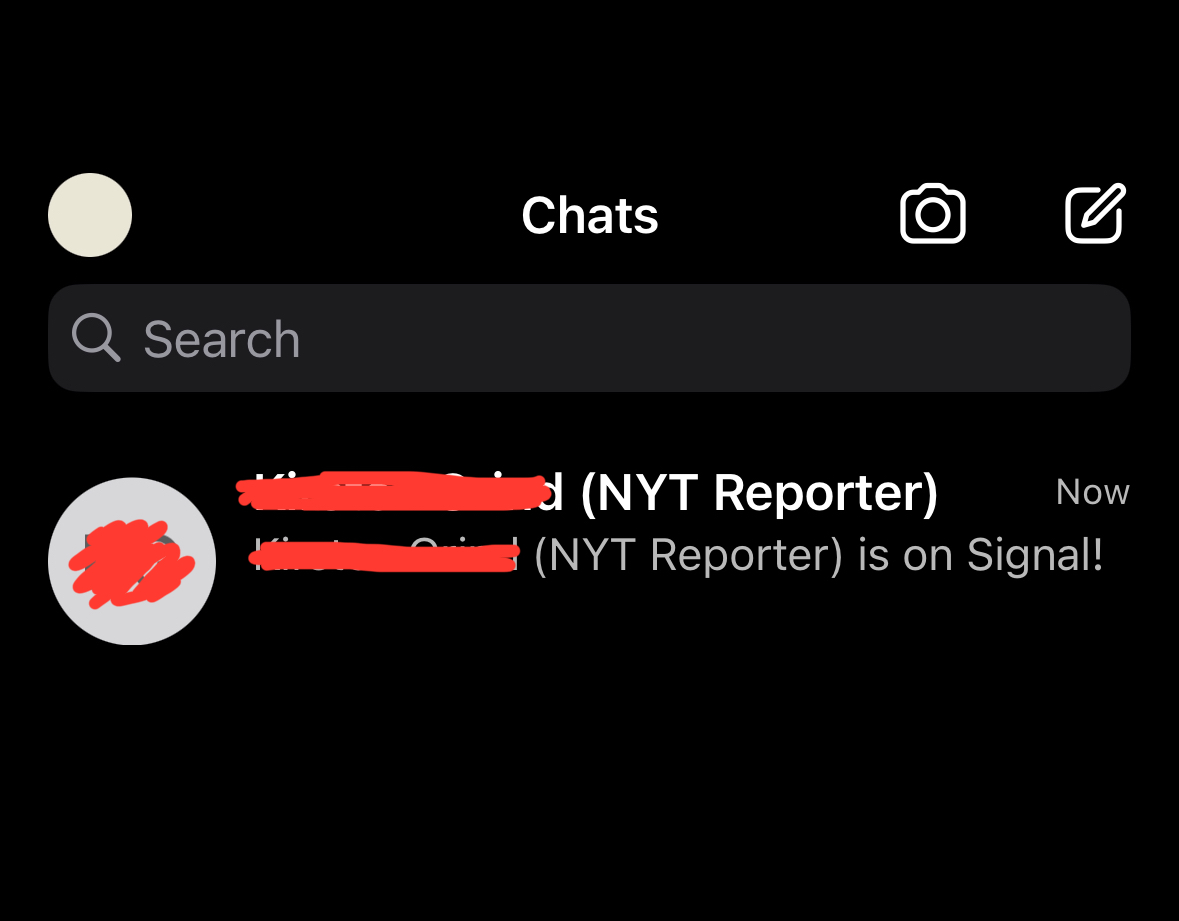
Since you also use Signal to ensure the confidentiality of your communications, I will message you there.
Reader's note
Her goal with this question is to make security measures look suspicious rather than responsible.
"Can you explain your use of burner phones over the years and encouraging employees and others to only use the messaging app Signal, which is known for its privacy features?"
Answer:
Since you also use Signal to ensure the confidentiality of your communications, I will message you there.
Reader's note
Her goal with this question is to make security measures look suspicious rather than responsible.
Question:
"My reporting shows that you have used the agreements to cover up business failings - for example, you told your leadership team at Blueprint last year that the company was running out of money (you have self-funded the business). I'm also aware that you have used them to hide details of your personal life. That includes use of prostitutes and also your drug use, including acid, Ibogain and DMT. Do you have any comment on that?"
Reader's note:
What she’s trying to do here is state assumptions as facts (“my reporting shows”) creating the illusion of wrongdoing.
She mixes professional topics (funding) with inflammatory personal allegations (prostitutes, drug use) to imply a broader pattern of secrecy and misconduct.
This is a classic guilt-by-association tactic designed to make any response seem like an admission. By framing the question this way, she forces a no-win scenario where denying, engaging, or refusing to comment all reinforce the narrative she’s trying to construct.
"My reporting shows that you have used the agreements to cover up business failings - for example, you told your leadership team at Blueprint last year that the company was running out of money (you have self-funded the business). I'm also aware that you have used them to hide details of your personal life. That includes use of prostitutes and also your drug use, including acid, Ibogain and DMT. Do you have any comment on that?"
Reader's note:
What she’s trying to do here is state assumptions as facts (“my reporting shows”) creating the illusion of wrongdoing.
She mixes professional topics (funding) with inflammatory personal allegations (prostitutes, drug use) to imply a broader pattern of secrecy and misconduct.
This is a classic guilt-by-association tactic designed to make any response seem like an admission. By framing the question this way, she forces a no-win scenario where denying, engaging, or refusing to comment all reinforce the narrative she’s trying to construct.
Twisted, right?
The New York Times reporter is not investigating objectively. She is constructing a narrative using loaded language, insinuation, and guilt by association to make normal business practices (NDAs, security measures) seem suspicious.
She misrepresents the intent behind agreements, ignoring their practical role in creating shared clarity.
By omitting key context, such as multiple legal rulings in my favor, she cherry-picks details to mislead readers. This isn’t good journalism; it’s a pre-constructed hit piece disguised as reporting.
The New York Times reporter is not investigating objectively. She is constructing a narrative using loaded language, insinuation, and guilt by association to make normal business practices (NDAs, security measures) seem suspicious.
She misrepresents the intent behind agreements, ignoring their practical role in creating shared clarity.
By omitting key context, such as multiple legal rulings in my favor, she cherry-picks details to mislead readers. This isn’t good journalism; it’s a pre-constructed hit piece disguised as reporting.
Here’s the truth: many wealthy people deal with people who use illegitimate tactics to extract money from them. It’s sad but true.
When I publicly shared my situation in being forced to respond to personal attacks against me trying to extract money, an astonishingly high percentage of my wealthy friends reached out and confessed they’d dealt with similar problems and had decided to pay up.
Human nature is what it is. Bad behavior is to be expected. This is why retailers build theft into their bottom line. The National Retail Federation reported an average shrink rate (theft, fraud, errors, damage) of 1.6% of total sales for U.S. retailers in 2022. It's also estimated that only 1 in 44 cases of financial abuse is reported, suggesting the actual number of incidents is significantly higher.
Money is important and people are understandably attracted to it. We all know this to be true.
When I publicly shared my situation in being forced to respond to personal attacks against me trying to extract money, an astonishingly high percentage of my wealthy friends reached out and confessed they’d dealt with similar problems and had decided to pay up.
Human nature is what it is. Bad behavior is to be expected. This is why retailers build theft into their bottom line. The National Retail Federation reported an average shrink rate (theft, fraud, errors, damage) of 1.6% of total sales for U.S. retailers in 2022. It's also estimated that only 1 in 44 cases of financial abuse is reported, suggesting the actual number of incidents is significantly higher.
Money is important and people are understandably attracted to it. We all know this to be true.
Once allegations are made, it is very hard to defend one’s reputation.
This is why many wealthy individuals choose to settle. Not as an admission of guilt, but because their accuser agrees to keep false claims private in exchange for a payment.
Why the innocent settle:
+ It keeps the untrue allegations private
+ It is quicker & cheaper
+ Legal fees are insanely expensive
+ Court is stressful
When false claims can be weaponized for financial gain, the truth takes a backseat to manipulation. The more this tactic is normalized, the harder it becomes to trust real accusations, real victims, and real justice. If the cost of proving innocence is too high, then guilt is no longer determined by facts, but by who can endure the fight the longest.
This is why many wealthy individuals choose to settle. Not as an admission of guilt, but because their accuser agrees to keep false claims private in exchange for a payment.
Why the innocent settle:
+ It keeps the untrue allegations private
+ It is quicker & cheaper
+ Legal fees are insanely expensive
+ Court is stressful
When false claims can be weaponized for financial gain, the truth takes a backseat to manipulation. The more this tactic is normalized, the harder it becomes to trust real accusations, real victims, and real justice. If the cost of proving innocence is too high, then guilt is no longer determined by facts, but by who can endure the fight the longest.
When I received the 13 page letter demanding me to pay my ex $9 million dollars within one week or else, I decided to fight this dark, underground practice.
Those two years of litigation were awful. And worth it. Giving in to a falsehood is wrong. I am glad the legal system worked, rejecting her false allegations and ordering her to pay me $500k.
False allegations undermine a just and fair society. It weakens our bonds of trust and makes life worse for everyone.
Is it a coincidence that a year after the court proceedings concluded, my ex posted her new and improved story on social media within hours of the New York Times sending me “fact checking” questions?
Sadly, it seems to me that she’s using her true story of cancer to somehow justify her efforts to extract money from me.
Her work title: “Chief Storytelling Officer". No, I’m not joking.
Those two years of litigation were awful. And worth it. Giving in to a falsehood is wrong. I am glad the legal system worked, rejecting her false allegations and ordering her to pay me $500k.
False allegations undermine a just and fair society. It weakens our bonds of trust and makes life worse for everyone.
Is it a coincidence that a year after the court proceedings concluded, my ex posted her new and improved story on social media within hours of the New York Times sending me “fact checking” questions?
Sadly, it seems to me that she’s using her true story of cancer to somehow justify her efforts to extract money from me.
Her work title: “Chief Storytelling Officer". No, I’m not joking.
Generated by Thread Navigator
Press ⌘ + S to quick-export