Meta-Analysis: Impact of Lower‑Volume Training on Physical
Fitness Adaptations in Team Sports Players
17 eligible research studies with "lower" vs "higher" volume training interventions
Team sport athletes ("trained or developmental level")
Three key findings below 👇


Lower volume training is relative to another training mode, emphasizing smaller training volume in terms of repetitions, duration, or frequency
Key Finding 1⃣
Low Volume vs High Volume
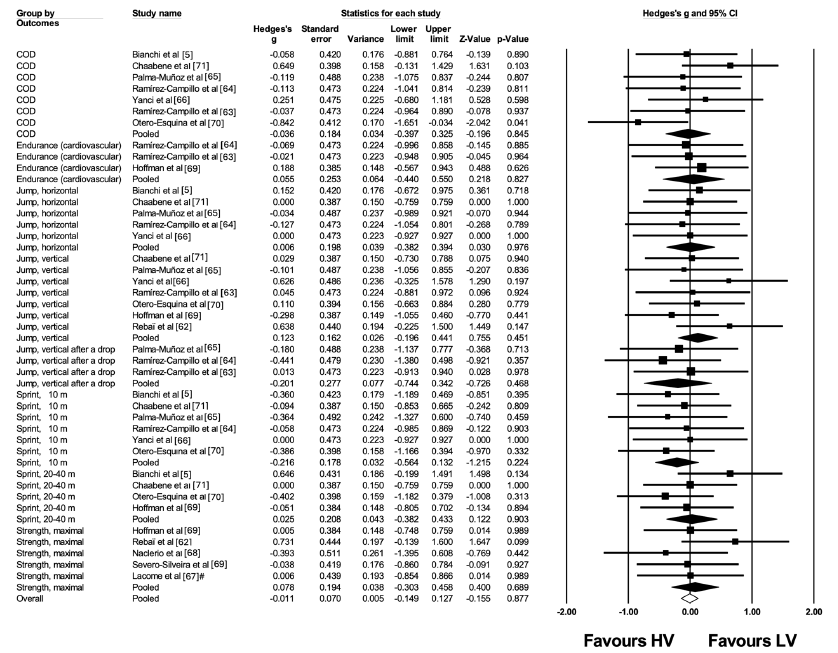
Lower-volume strength training (eg. halving # reps/session or by reducing training frequency by half produces similar positive adaptations in the physical performance of team sport athletes compared to higher-volume training.
Low Volume vs High Volume
Lower-volume strength training (eg. halving # reps/session or by reducing training frequency by half produces similar positive adaptations in the physical performance of team sport athletes compared to higher-volume training.
Key Finding 2⃣
Tapering: Volume v Intensity
In running-based & mixed-based training interventions, specifically in tapering strategies, reducing volume while maintaining intensity seems to yield a more favorable response than employing a higher volume approach
Tapering: Volume v Intensity
In running-based & mixed-based training interventions, specifically in tapering strategies, reducing volume while maintaining intensity seems to yield a more favorable response than employing a higher volume approach
Key Finding 3⃣
Tapering: Volume reduction
In tapering strategies, particularly concerning training load in field settings, more pronounced reductions
in volume seem to enhance supercompensation.
Tapering: Volume reduction
In tapering strategies, particularly concerning training load in field settings, more pronounced reductions
in volume seem to enhance supercompensation.
Generated by Thread Navigator
Press ⌘ + S to quick-export