The recent story about seed oils and colon cancer caused some controversy. However, the evidence that seed oils cause cancer has been around for decades.
It's mostly due to the linoleic acid in seed oils.
And saturated fats are protective. 🧵


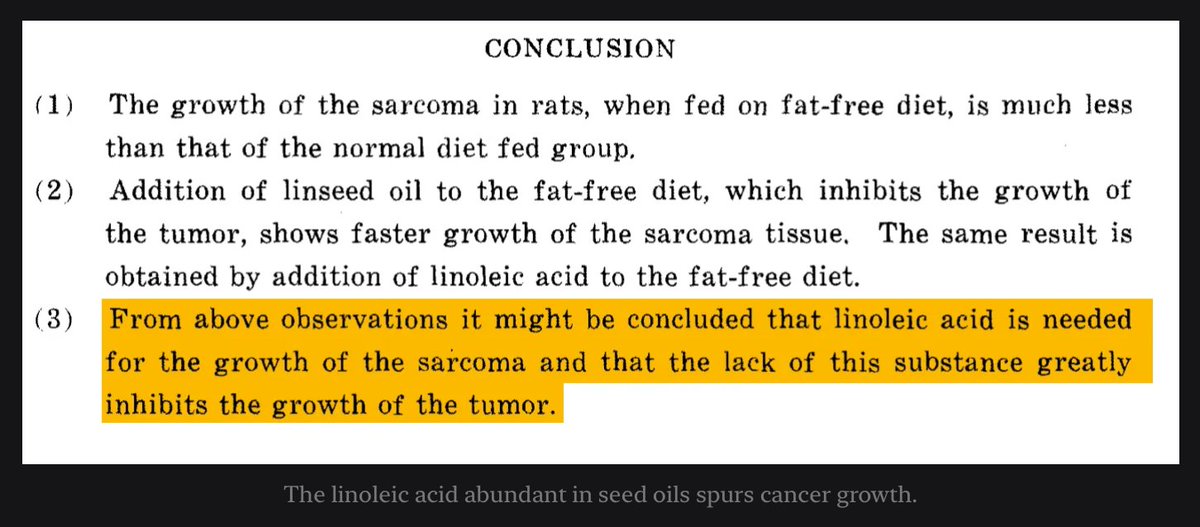
In the 1960s, Japanese researchers investigated the effect of linoleic acid on the growth of sarcoma (tumors) transplanted onto rats. Linoleic acid is a major component of seed oils.
Rats were divided into four groups. All were fed a standard lab rat diet for three weeks. The researchers then transplanted tumors onto the rats and began the experiment.
The surface area of the tumors was almost three times larger in animals consuming linoleic acid compared to animals consuming a fat-free diet. The tumors were significantly larger in all rat groups consuming fat.

The researchers concluded that linoleic acid is required to grow this tumor.
The three most commonly used cooking oils in the US are:
Soybean oil: ~50% linoleic acid
Canola oil: ~20% linoleic acid
Corn oil: ~50% linoleic acid
The three most commonly used cooking oils in the US are:
Soybean oil: ~50% linoleic acid
Canola oil: ~20% linoleic acid
Corn oil: ~50% linoleic acid
In another experiment, researchers examined the influence of linoleic acid on the effects of a chemical that increases cancer risk. They created eight identical experimental diets, except for the fat sources.
Increasing linoleic acid increases mammary (breast) tumorigenesis, transforming normal cells into cancerous ones.
The maximum carcinogenic effect was achieved when linoleic acid was 4.4% of calories.
The maximum carcinogenic effect was achieved when linoleic acid was 4.4% of calories.

A century ago, linoleic acid levels were well below the 4.4% range found to cause the maximum increase in cancer. Now, it accounts for approximately 7% of calories - a fact that may make control groups in recent human research unreliable...

High-fat diets with saturated fats don’t accelerate cancer growth like linoleic acid.
“These results are consistent with the hypothesis that tumor promotion by dietary fat is more a function of the type than the amount of fat ingested.”
“These results are consistent with the hypothesis that tumor promotion by dietary fat is more a function of the type than the amount of fat ingested.”

In fact, some saturated fatty acids, like stearic acid, seem to protect against cancer. Stearic acid is found in beef, lamb, and cocoa fat.
View Tweet

Researchers recorded multigenerational increases in breast cancer in rodents when a pregnant rodent had consumed a high corn oil diet. In some regards, the multigenerational carcinogenic effect was more substantial than that of estrogen.

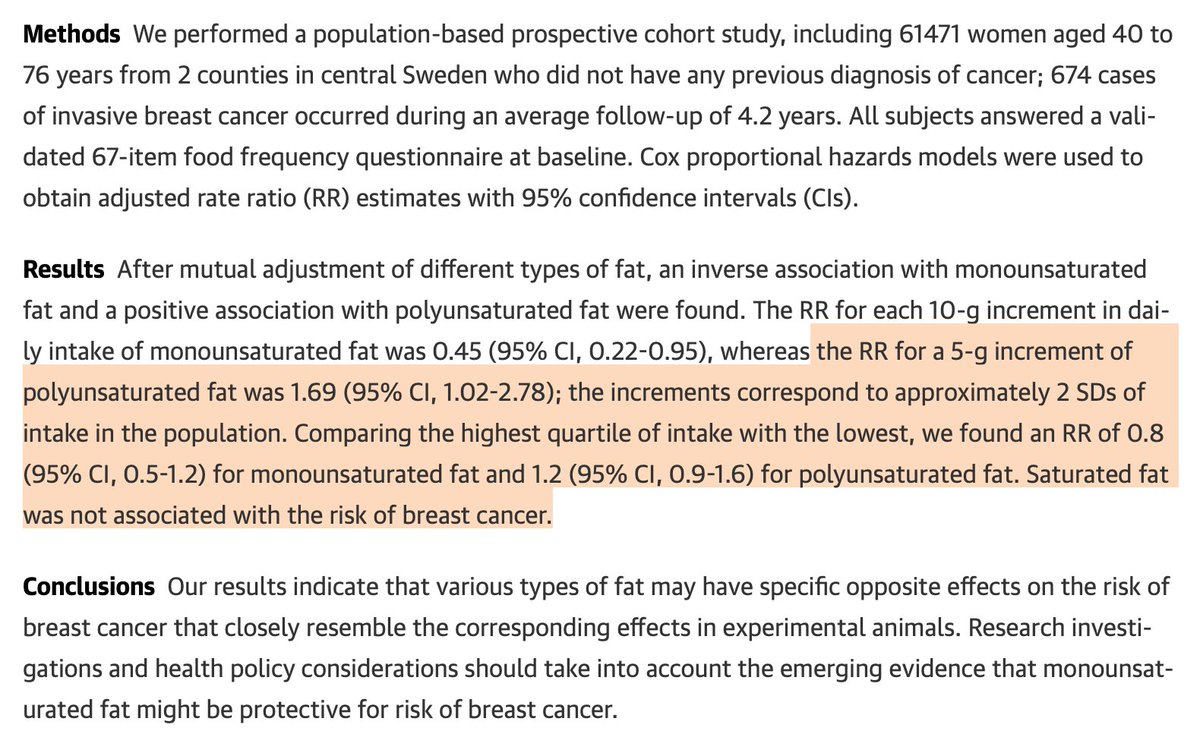
Researchers looked for a relationship between fats and breast cancer. They tracked a group of 60,000 women over four years. Women consuming the most PUFA were at a 20% higher risk of breast cancer than those consuming the least.
Most PUFA comes from seed oils.
Most PUFA comes from seed oils.
The American Heart Association conducted a trial in the 1960s examining the effect of seed oils on human health. They tracked the health of 800 men over eight years. The participants were split into two groups, each consuming a 40% fat diet.
One group consumed 10% of its total calories from PUFAs, while the other consumed 38% PUFAs, most of which were linoleic acid. The diets were the same (both 40% fat), except the second diet substituted seed oil for the traditional, more saturated fats.

Cancer deaths were 80% higher in those consuming the high-seed oil diet at 8 years. Cancer deaths began to increase in the lower PUFA group after the dietary period ended, probably because the men began consuming more seed oils.

On the topic of colon cancer, the relationship between seed oils, inflammation, IBD, and cancer is enough to raise all sorts of red flags.
View Tweet
Some of the fatty acids in seed oils are considered essential, which may be true. But the amount consumed these days is vastly more than needed to prevent a deficiency.
View Tweet
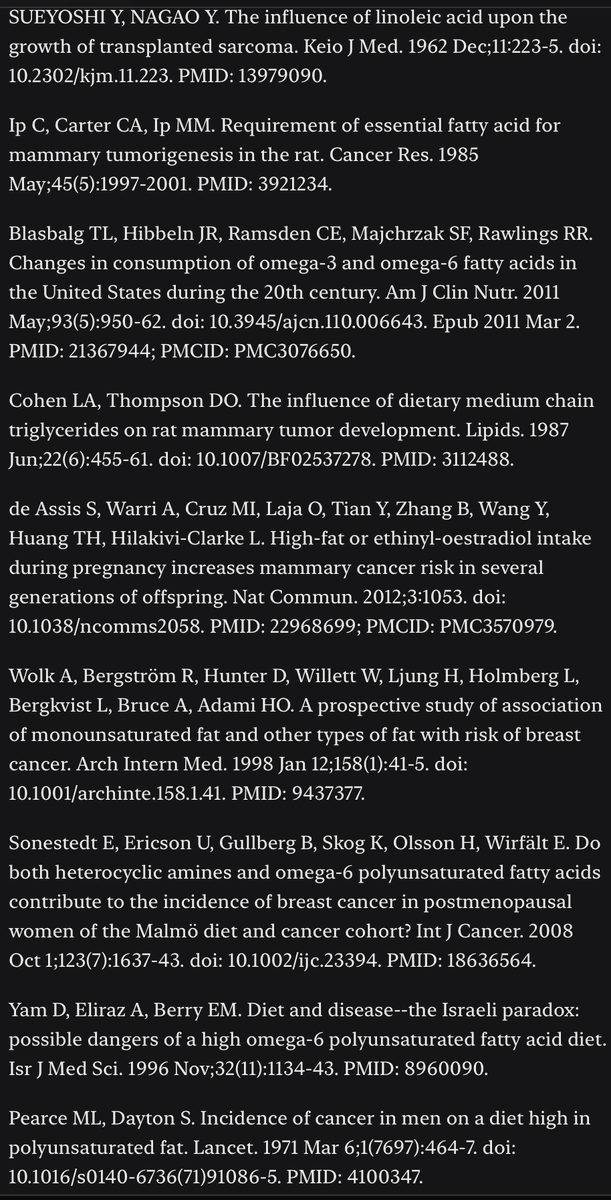
Sources
Generated by Thread Navigator
Press ⌘ + S to quick-export