Thiamine triphosphate... the other ATP?
For the last year or so I've been developing a theory around this interesting active form of one of my favorite nutrients, thiamine or vitamin B1
Let's expand on its function, and look at some of its implications
THREAD //


For those that don't know, thiamine is one of the B-vitamins which serves a primary role in different aspects of energy metabolism
It works primarily with decarboxlase and dehydrogenase enzymes, which remove CO2 and water during glycolysis and Krebs cycle
It works primarily with decarboxlase and dehydrogenase enzymes, which remove CO2 and water during glycolysis and Krebs cycle
By far the most important enzyme that thiamine works with is pyruvate dehydrogenase (PDH)
PDH is the bridge which connects glycolysis to the Krebs cycle
It convert pyruvate into acetyl-coa which is then fed into energy metabolism, acetylation reactions, or energy storage
PDH is the bridge which connects glycolysis to the Krebs cycle
It convert pyruvate into acetyl-coa which is then fed into energy metabolism, acetylation reactions, or energy storage
Now the interesting thing is that like many vitamins, thiamine has an "active" form which it must be converted into
This form is thiamine pyrophosphate (TPP), but it's also called thiamine diphosphate because it consists of thiamine bound to two connected phosphate groups
This form is thiamine pyrophosphate (TPP), but it's also called thiamine diphosphate because it consists of thiamine bound to two connected phosphate groups

Things get even more interesting when we find out that there's a similar compound called thiamine triphosphate (TTP) which looks VERY similar to ATP
Thiamine triphosphate is under researched, but quite interesting
I don't see the similarity to ATP as a coincidence
Thiamine triphosphate is under researched, but quite interesting
I don't see the similarity to ATP as a coincidence
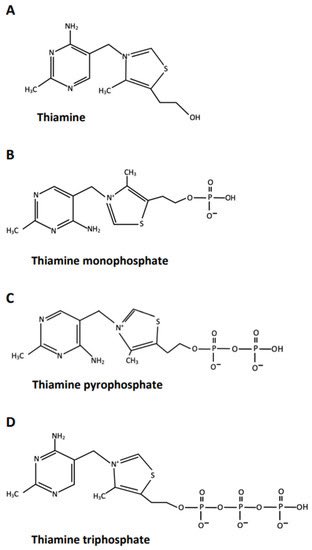

I've written quite a bit about phosphate recently
One of my favorite things is to look at small molecules or minerals at the atomic scale to see what sets them apart
For example calcium and magnesium both have a +2 charge and have similar bonds, but behave differently in biology because of their atomic radii and interactions with water
One of my favorite things is to look at small molecules or minerals at the atomic scale to see what sets them apart
For example calcium and magnesium both have a +2 charge and have similar bonds, but behave differently in biology because of their atomic radii and interactions with water
Phosphorus is similar to nitrogen in the fact that it has electrons extending into the d-orbital
This means an "extra" electron from one of its inner orbitals can move to the d-orbital allowing it to form 4-5 bonds when it only has a +3 charge on its own
This means an "extra" electron from one of its inner orbitals can move to the d-orbital allowing it to form 4-5 bonds when it only has a +3 charge on its own
In a phosphate ion four oxygen atoms bind to phosphorus using this mechanism
Oxygen is electronegative and has one of the highest electron affinities of any element
This helps it pull extra electrons to the surface in phosphorus and create an extra double bond through resonance
Oxygen is electronegative and has one of the highest electron affinities of any element
This helps it pull extra electrons to the surface in phosphorus and create an extra double bond through resonance

This makes phosphate chains useful to life
Phosphate groups have a strong negative charge and repel each other, but can still form stable bonds
This means they are one of the primary ways cells store "potential" energy in chemical form
This doesn't work how most people think
Phosphate groups have a strong negative charge and repel each other, but can still form stable bonds
This means they are one of the primary ways cells store "potential" energy in chemical form
This doesn't work how most people think
There's a natural equilibrium between ATP and its byproducts ADP and AMP
ATP will naturally break down entropically in solution to its one or two phosphate byproducts
This means by maintaining a high ATP/ADP ratio the cell is pushing a boulder uphill, which store energy
ATP will naturally break down entropically in solution to its one or two phosphate byproducts
This means by maintaining a high ATP/ADP ratio the cell is pushing a boulder uphill, which store energy
ATP is NOT a uniquely high energy molecule
A lot of people think of the phosphate bond in ATP as releasing a ton of free energy, like striking a match and lighting a fire, and that fire can then power enzymes
The reality is that usually the reaction depends on ATP's tendency to donate a phosphate group rather than "free energy" release per se
A lot of people think of the phosphate bond in ATP as releasing a ton of free energy, like striking a match and lighting a fire, and that fire can then power enzymes
The reality is that usually the reaction depends on ATP's tendency to donate a phosphate group rather than "free energy" release per se
Gilbert Ling, one of my favorite biochemists, built an alternative theory of life around this idea
Put simply, he suggested that ATP's main role in cells is to unfold proteins, allowing ions and water to be attracted to certain sites
This could lead to natural gradients forming, with higher concentrations of potassium and magnesium being maintained without relying solely on protein "pumps"
Put simply, he suggested that ATP's main role in cells is to unfold proteins, allowing ions and water to be attracted to certain sites
This could lead to natural gradients forming, with higher concentrations of potassium and magnesium being maintained without relying solely on protein "pumps"


Ling references this key paper by Podolsky and Morales, who showed that ATP provides no more energy than any other triphosphate and stores less energy than expected
researchgate.net/publication/27…
So what does this imply about thiamine triphosphate?
researchgate.net/publication/27…
So what does this imply about thiamine triphosphate?
It turns out there are many phosphate-containing molecules that cells use to store energy
Guanosine triphosphate (GTP) is very important in cell signaling, and creatine phosphate is the form in which creatine stores energy in muscle
Guanosine triphosphate (GTP) is very important in cell signaling, and creatine phosphate is the form in which creatine stores energy in muscle
Creatine phosphate and GTP:
1. Act as a phosphate source for ATP to be created
2. Alter how proteins fold and activate them, like ATP
3. GTP acts as an energy source, and as a cofactor for "G-protein coupled receptors" which make up receptors for neurotransmitters and hormones
1. Act as a phosphate source for ATP to be created
2. Alter how proteins fold and activate them, like ATP
3. GTP acts as an energy source, and as a cofactor for "G-protein coupled receptors" which make up receptors for neurotransmitters and hormones
Now let's look at thiamine triphosphate (TTP)
It turns out there's a complex system of enzymes in place that take phosphate groups from ATP in order to create it!
TTP is in a constant cycle of donating and accepting phosphate groups from ATP and ADP
It turns out there's a complex system of enzymes in place that take phosphate groups from ATP in order to create it!
TTP is in a constant cycle of donating and accepting phosphate groups from ATP and ADP

So what are some of its potential functions in cells?
This paper gives us several interesting pieces of information:
mdpi.com/2218-273X/11/1…
- TTP is produced in most or all prokaryotes and eukaryotes
- TTP levels in plants rise and fall in a circadian rhythm
- TTP levels are lower in heart tissue of patients with heart failure
- TTP seems to modulate or play a role in chloride channels in the brain
- free thiamine is released when neurons are stimulated, possibly because TTP is broken down
- TTP and TDP both cause more dopamine to be released from neurons
- some cells contain mostly TTP rather than free thiamine or TDP, in some cases up to 70%!
This paper gives us several interesting pieces of information:
mdpi.com/2218-273X/11/1…
- TTP is produced in most or all prokaryotes and eukaryotes
- TTP levels in plants rise and fall in a circadian rhythm
- TTP levels are lower in heart tissue of patients with heart failure
- TTP seems to modulate or play a role in chloride channels in the brain
- free thiamine is released when neurons are stimulated, possibly because TTP is broken down
- TTP and TDP both cause more dopamine to be released from neurons
- some cells contain mostly TTP rather than free thiamine or TDP, in some cases up to 70%!
The most fascinating thing is that ATPase, the enzyme which makes ATP, has an affinity for TDP and can convert it into TTP!
This means TTP is essentially guaranteed to be synthesized by mitochondria, and that the electron transport chain supports this
This means TTP is essentially guaranteed to be synthesized by mitochondria, and that the electron transport chain supports this
Most people don't know this, but the ATPase is also bi-directional
Mitochondria depend on a proton gradient to generate energy
They act as capacitors with a strong positive charge on one side of their inner membrane that's harnessed to drive different processes
If the gradient starts to deflate, the ATPases rotate backwards to burn ATP up and push protons back where they belong
TTP could power this process!
Mitochondria depend on a proton gradient to generate energy
They act as capacitors with a strong positive charge on one side of their inner membrane that's harnessed to drive different processes
If the gradient starts to deflate, the ATPases rotate backwards to burn ATP up and push protons back where they belong
TTP could power this process!

Magnesium is also necessary for essentially all phosphate-related processes
It binds to both ATP and TTP and stabilizes their negative phosphate chains
It's also a cofactor for the enzymes which use thiamine and synthesize TDP and TTP
It binds to both ATP and TTP and stabilizes their negative phosphate chains
It's also a cofactor for the enzymes which use thiamine and synthesize TDP and TTP

Generated by Thread Navigator
Press ⌘ + S to quick-export