This 2-minute post workout habit will change your life:
The Dead Hang.
(Bookmark this for your next workout):

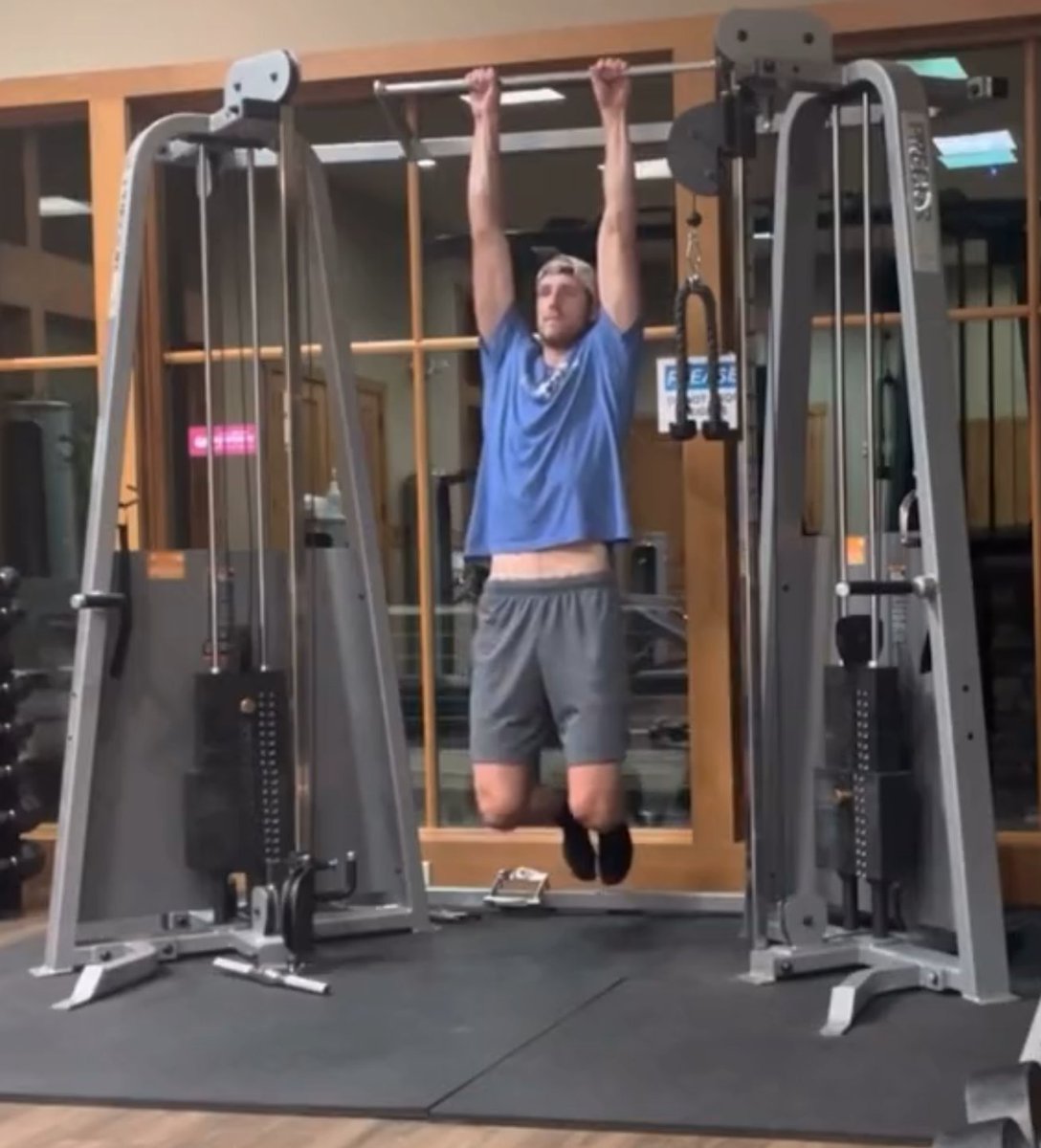
What are dead hangs?
A dead hang is exactly what the name suggests:
Dead - without movement or tension
Hang - hanging from the bar
So how do you do it?
A dead hang is exactly what the name suggests:
Dead - without movement or tension
Hang - hanging from the bar
So how do you do it?
First, find a pull-up bar.
Then, approach the bar as if you were going to do a pull-up:
- Overhand grip
- Hands slightly wider than shoulder-width
- Legs straight and off the ground
But before you try, one quick recommendation:
Then, approach the bar as if you were going to do a pull-up:
- Overhand grip
- Hands slightly wider than shoulder-width
- Legs straight and off the ground
But before you try, one quick recommendation:
DON'T jump or swing to grab the bar.
This could be harmful to your shoulders.
Instead, stand on a bench or a box and line your hands up correctly before removing your legs from the platform.
This could be harmful to your shoulders.
Instead, stand on a bench or a box and line your hands up correctly before removing your legs from the platform.
What now?
Let your body passively hang.
You want to think about removing the STRAIN from your shoulders and arm muscles.
Instead, let them STRETCH.
Then, breathe deeply through your nose.
Let your body passively hang.
You want to think about removing the STRAIN from your shoulders and arm muscles.
Instead, let them STRETCH.
Then, breathe deeply through your nose.
What are the benefits?
- Decompressed spine
- Improved grip strength
- Open and improved posture
- Improved shoulder joint mobility
- Stretched upper body and chest
You should walk away feeling loose, open, and upright.
- Decompressed spine
- Improved grip strength
- Open and improved posture
- Improved shoulder joint mobility
- Stretched upper body and chest
You should walk away feeling loose, open, and upright.
How long should I hang?
Depending on your experience, the times will vary:
Beginner: 20-30 seconds
Intermediate: 60 seconds
Advanced: 90-180 seconds
Depending on your experience, the times will vary:
Beginner: 20-30 seconds
Intermediate: 60 seconds
Advanced: 90-180 seconds
How many times a week should I dead-hang?
Every day you lift upper-body is a great starting point.
As you get more comfortable and are able to notice better when you're tight, incorporate whenever you feel you need it.
Every day you lift upper-body is a great starting point.
As you get more comfortable and are able to notice better when you're tight, incorporate whenever you feel you need it.
Recap:
Dead hangs are a great post-workout habit to stretch, improve posture, and increase mobility.
Incorporating them after upper body lift days a few days a week is a great low-effort habit for various areas of your health.
Dead hangs are a great post-workout habit to stretch, improve posture, and increase mobility.
Incorporating them after upper body lift days a few days a week is a great low-effort habit for various areas of your health.
Creating a healthy lifestyle starts with momentum.
Stack some quick wins with our "Ultimate Guide to Health Starter Pack."
This system helped 148 men lose 3,517 pounds last year.
Here's a link to get it for free: thoughtful-crafter-258.ck.page/7a8a09ce07
Stack some quick wins with our "Ultimate Guide to Health Starter Pack."
This system helped 148 men lose 3,517 pounds last year.
Here's a link to get it for free: thoughtful-crafter-258.ck.page/7a8a09ce07

Generated by Thread Navigator
Press ⌘ + S to quick-export