AI will be one of crypto's top performing sectors this bull run.
But instead of buying random AI coins, I'm focused on one key beneficiary: DePIN.
It's projected to be a $3.5T industry by 2028, and you have a chance to be EARLY.
🧵: My ULTIMATE DePIN guide (+ top picks).👇

In this thread, I'll cover:
• How DePIN works
• Why DePIN is poised for significant growth in 2024 (and beyond)
• The specific DePIN projects I'm investing in
Let's dive in.
• How DePIN works
• Why DePIN is poised for significant growth in 2024 (and beyond)
• The specific DePIN projects I'm investing in
Let's dive in.
Firstly, what is DePIN?
DePIN stands for 'Decentralised Physical Infrastructure'.
These are blockchain protocols that incentivise decentralised communities to build & maintain physical hardware.
Users supply hardware or software resources to the network & get token rewards.
DePIN stands for 'Decentralised Physical Infrastructure'.
These are blockchain protocols that incentivise decentralised communities to build & maintain physical hardware.
Users supply hardware or software resources to the network & get token rewards.
The DePIN landscape is vast, and spans across multi billion-dollar hardware sectors.
• Cloud storage
• Computing power
• Wireless sensor networks
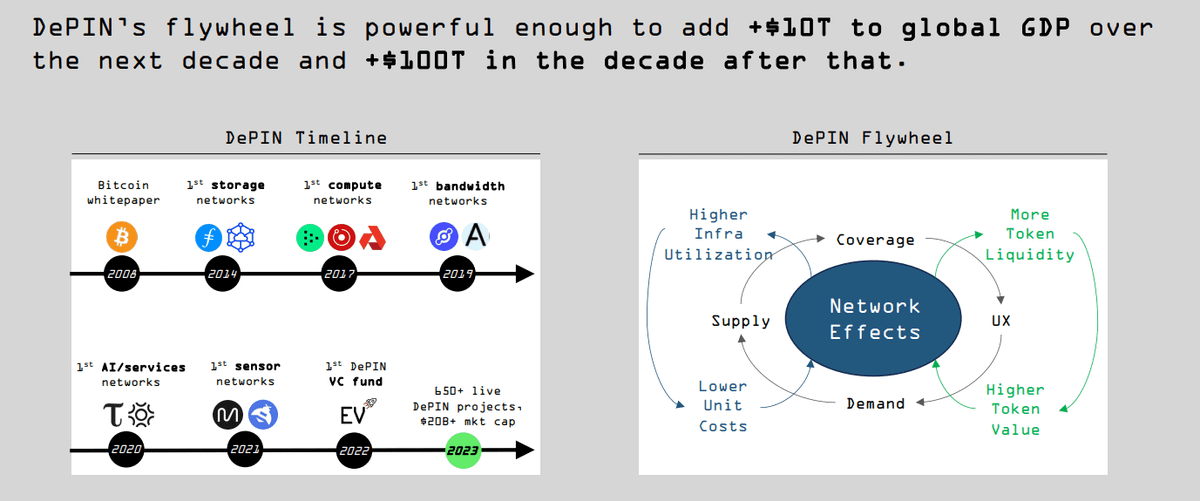
Messari predicts that DePIN could add $10T to the global GDP in the next decade (and $100T the decade after). 👀
• Cloud storage
• Computing power
• Wireless sensor networks
Messari predicts that DePIN could add $10T to the global GDP in the next decade (and $100T the decade after). 👀
Physical infra has historically been a Big Tech monopoly.
It has significant capital & maintenance costs, out of reach for small players.
Giants like AWS capitalise on this by selling their services at a premium.
It has significant capital & maintenance costs, out of reach for small players.
Giants like AWS capitalise on this by selling their services at a premium.
However DePIN (decentralised physical infra networks) has many benefits over centralised solutions due to its ability to:
• Reduce costs
• Horizontally scale
• Reward network contributors
• Enhance security
• Reduce costs
• Horizontally scale
• Reward network contributors
• Enhance security
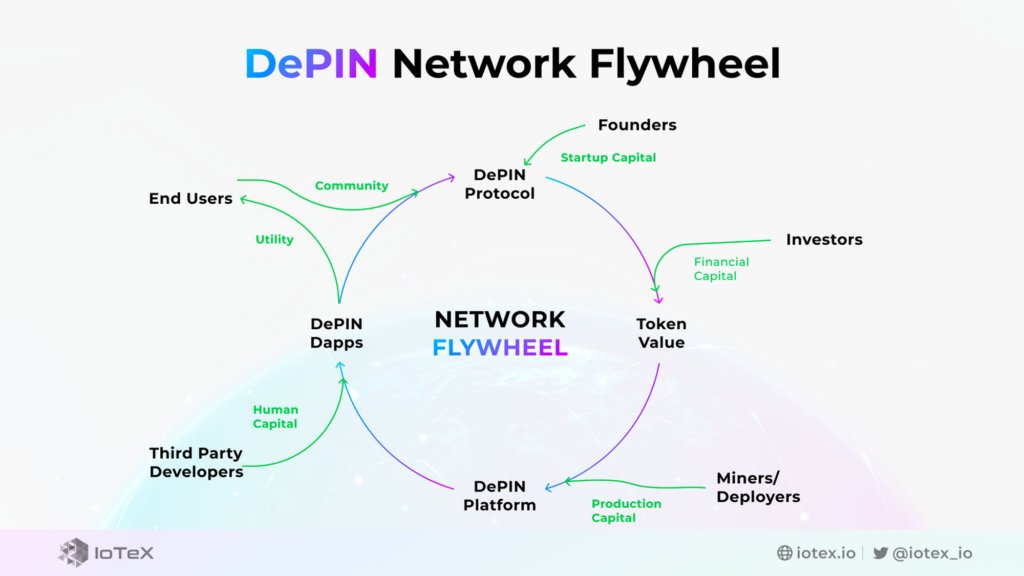
Here's how DePIN works:
• Supply-side users commit their resources for token rewards from the network.
• These rewards incentivise network participants to deploy more infrastructure.
• Supply-side users commit their resources for token rewards from the network.
• These rewards incentivise network participants to deploy more infrastructure.
Infra growth attracts more demand from end users, leading to increased network activity.
Network growth leads to higher rewards, which incentivises more supply side users.
As you can see, DePIN has a built-in flywheel effect, helping projects gain traction as they expand.
Network growth leads to higher rewards, which incentivises more supply side users.
As you can see, DePIN has a built-in flywheel effect, helping projects gain traction as they expand.
According to @MessariCrypto, the DePIN sector is projected to reach $3.5 trillion in the next four years.
Longer term, I'm anticipating that number to go much higher, due to the strong aforementioned flywheel mechanics involved.
Longer term, I'm anticipating that number to go much higher, due to the strong aforementioned flywheel mechanics involved.
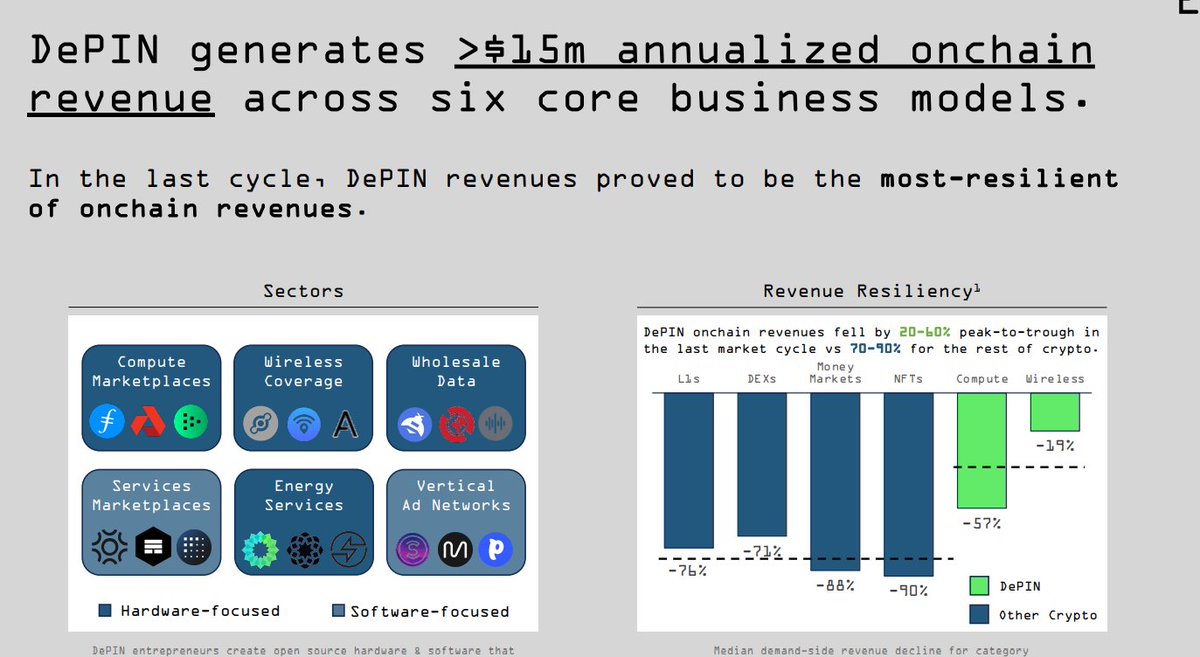
Unlike many other crypto sectors, it's a model that's already been generating revenue.
DePIN generates more than $15 million in annual on-chain revenue, and this number is set to grow rapidly in the coming years.
DePIN generates more than $15 million in annual on-chain revenue, and this number is set to grow rapidly in the coming years.
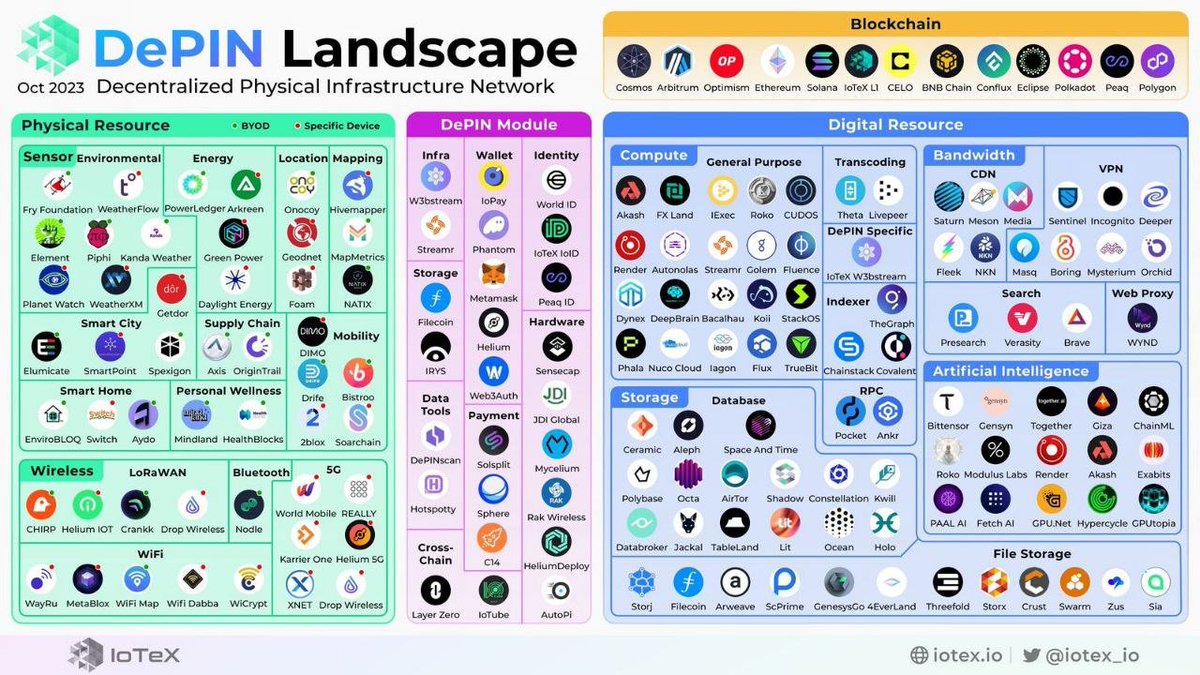
Broadly, DePIN projects can be grouped into:
• Physical Resource Networks (Sensor, Wireless)
• Digital Resource Networks (Compute, Bandwidth, AI, Storage)
• DePIN Module
Each sub-sector disrupts a $1T dollar industry, which means DePIN's upside potential is MASSIVE.
• Physical Resource Networks (Sensor, Wireless)
• Digital Resource Networks (Compute, Bandwidth, AI, Storage)
• DePIN Module
Each sub-sector disrupts a $1T dollar industry, which means DePIN's upside potential is MASSIVE.
Let's break down some of these sub-sectors even further.👇
1. Decentralised storage
These projects create a marketplace for unused storage capacity.
• Providers offer computing resources for token-incentives.
• Projects encrypt & split up client data across this network.
• Clients pay the network to store & retrieve their data.
These projects create a marketplace for unused storage capacity.
• Providers offer computing resources for token-incentives.
• Projects encrypt & split up client data across this network.
• Clients pay the network to store & retrieve their data.
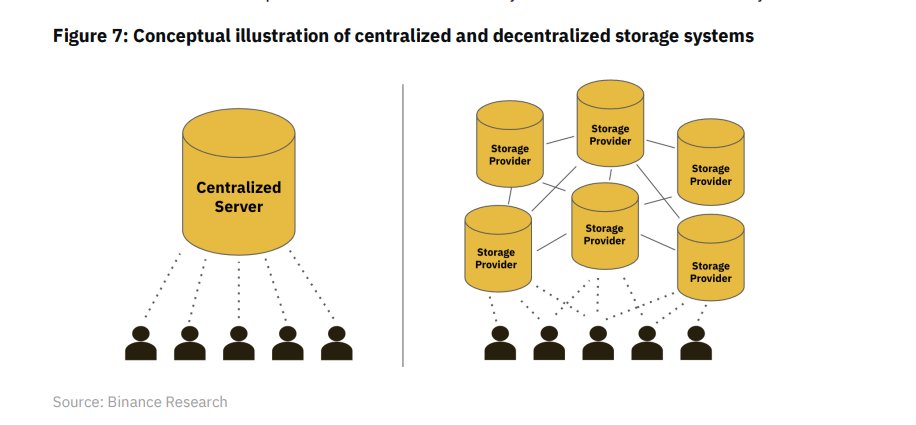
Storage is a key adoption vertical for DePIN as it has the perfect product market fit.
Splitting data removes the single point of failure, improving accessibility & security.
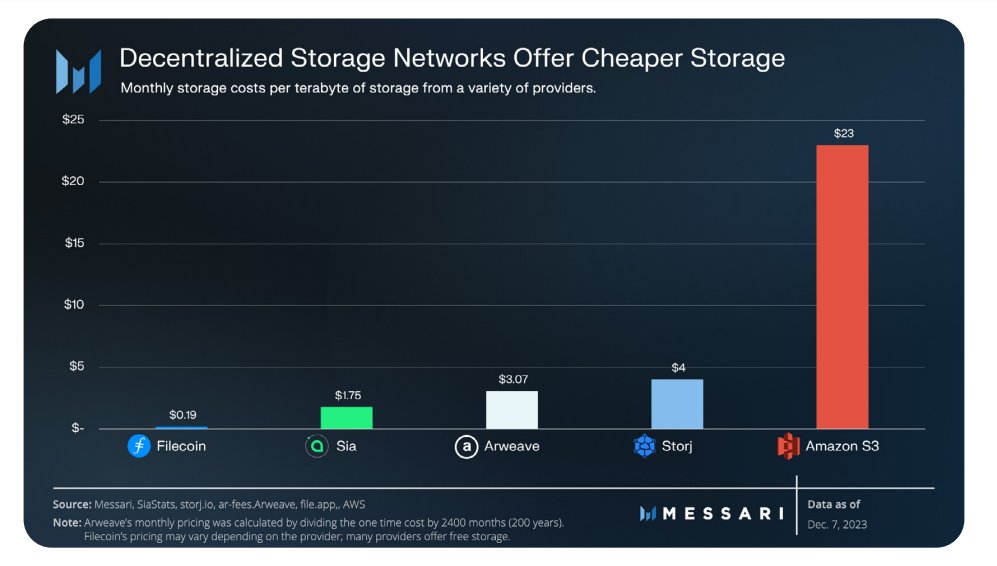
These networks are also ~78% cheaper than their centralised counterparts.
Splitting data removes the single point of failure, improving accessibility & security.
These networks are also ~78% cheaper than their centralised counterparts.
2. Decentralised computing
Decentralised compute networks let you to borrow GPU power to run complex computations on the cloud.
You can use it to power AI innovation, render cool scenes or run a blockchain node.
Decentralised compute networks let you to borrow GPU power to run complex computations on the cloud.
You can use it to power AI innovation, render cool scenes or run a blockchain node.
Legacy computing networks are currently at a $5T market cap.
Even if DePIN captures just 1% of this market, that's a potential 10x growth on utilisation rates.
Even if DePIN captures just 1% of this market, that's a potential 10x growth on utilisation rates.
View Tweet
3. Artificial intelligence infrastructure
AI's exponential growth in the last decade has exposed some key scaling challenges:
• Lack of specialised hardware
• Lack of effective collaboration
• Ineffective data storage
DePIN can tackle these issues & more.
AI's exponential growth in the last decade has exposed some key scaling challenges:
• Lack of specialised hardware
• Lack of effective collaboration
• Ineffective data storage
DePIN can tackle these issues & more.
For instance, compute networks like $AKT can reduce the hardware crunch by crowdsourcing GPU power.
Similarly, $TAO gamifies research collaboration through crypto incentives.
These are just some examples, but DePIN has many applications across the ML pipeline.
Similarly, $TAO gamifies research collaboration through crypto incentives.
These are just some examples, but DePIN has many applications across the ML pipeline.
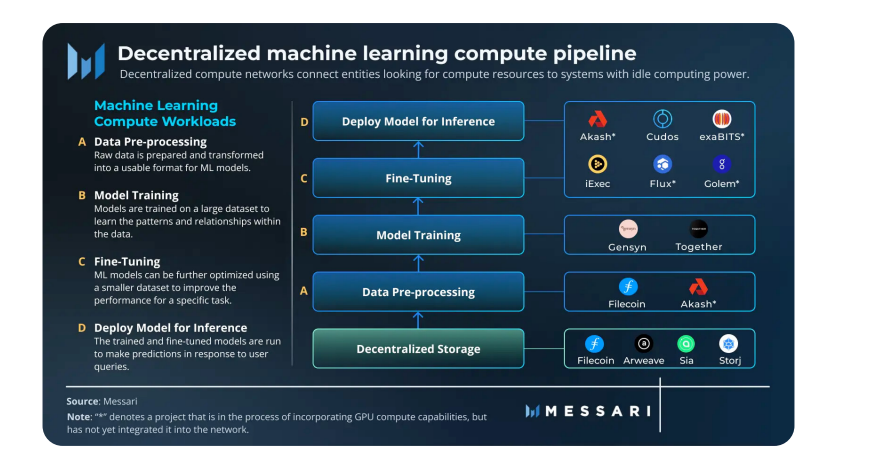
Honestly, we're just scratching the surface of AI + crypto. I'm excited to see more synergies and use cases emerge as the sector matures.
I'll elaborate more on the AI sector specifically in a future thread, so make sure you're following @milesdeutscher if you're interested.
I'll elaborate more on the AI sector specifically in a future thread, so make sure you're following @milesdeutscher if you're interested.
Now that you have a deeper understanding of what DePIN is (and how it works), let's dive deeper into the specific projects that interest me across the sector.👇
Generated by Thread Navigator
Press ⌘ + S to quick-export