Why you should try writing a letter:
(a handwritten letter, even just once)

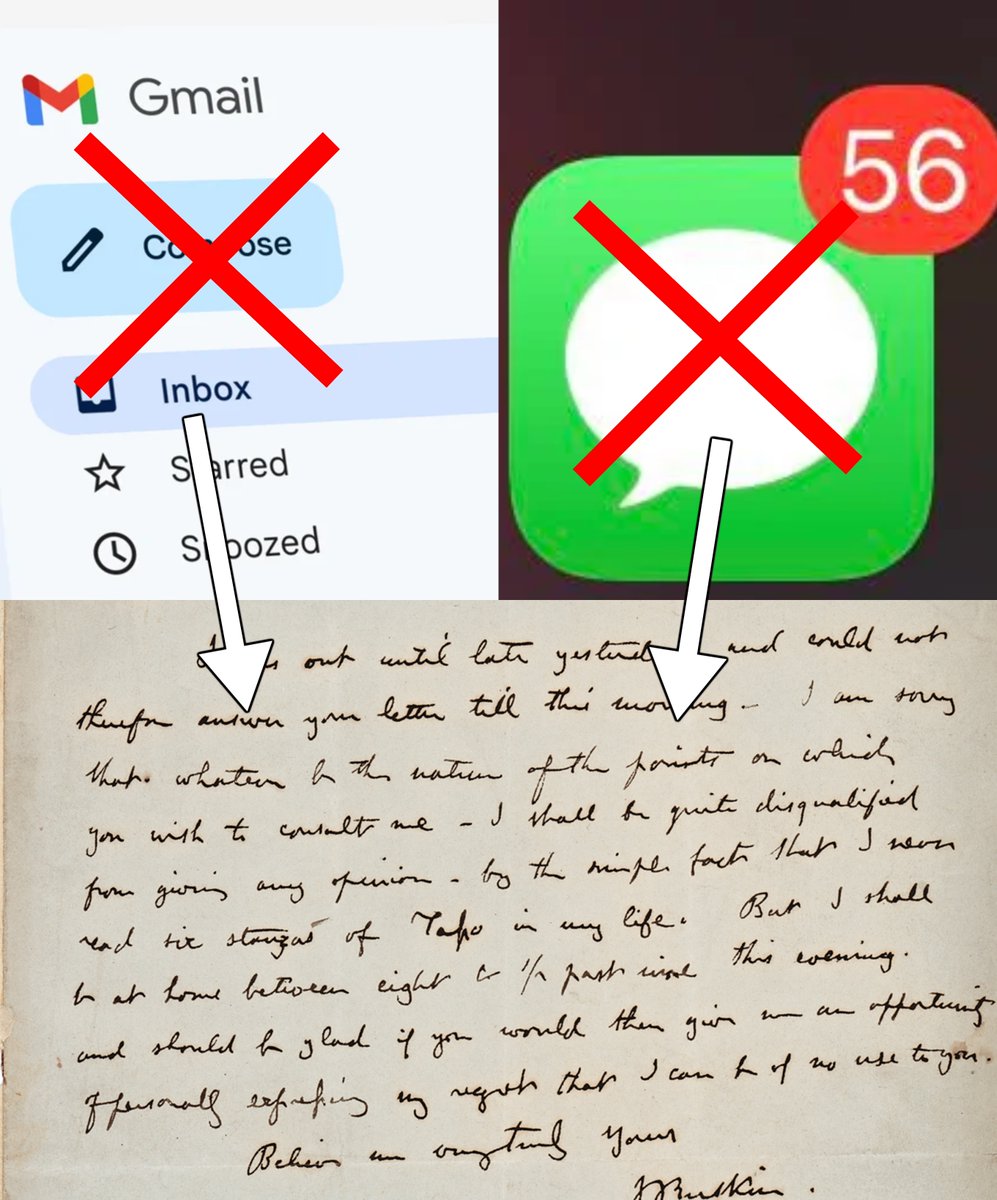
The modern world is remarkable.
As William Morris once said, we are surrounded by things our ancestors couldn't have imagined, and yet we pay no more attention to them than we do to the sunlight or the air.
Cars, flushing toilets, air conditioning... the list goes on.
As William Morris once said, we are surrounded by things our ancestors couldn't have imagined, and yet we pay no more attention to them than we do to the sunlight or the air.
Cars, flushing toilets, air conditioning... the list goes on.

Another example is instant communication.
We can talk to anyone, anywhere in the world, at a moment's notice. We fire off a message and they reply in seconds.
Communication was once tied to distance; now the only barrier is how willing we are to reply.
We can talk to anyone, anywhere in the world, at a moment's notice. We fire off a message and they reply in seconds.
Communication was once tied to distance; now the only barrier is how willing we are to reply.
The benefits of instant communication have been colossal, of course.
Everything moves faster and more efficiently, we can respond more quickly to emergencies, power has been democratised, and we can make new friends and forge communities previously impossible...
Everything moves faster and more efficiently, we can respond more quickly to emergencies, power has been democratised, and we can make new friends and forge communities previously impossible...
But every gain is also a tradeoff.
And with the rise of telephones, emails, and online messaging, we have lost the art of writing letters.
Polls show most young people have never written or received a letter, while the posting of letters has dropped off a cliff globally.
And with the rise of telephones, emails, and online messaging, we have lost the art of writing letters.
Polls show most young people have never written or received a letter, while the posting of letters has dropped off a cliff globally.
An important caveat here is that plenty of letters were no less brief or functional than many of our messages and emails.
And, at times, they were an impressively rapid form of communication; in Victorian London the mail was delivered twelve times per day.
And, at times, they were an impressively rapid form of communication; in Victorian London the mail was delivered twelve times per day.

But the point here isn't that letters are better than instant communication, or that we should return to them.
It is simply that writing a letter does certain things instant communication can't, because they are fundamentally different *types* of writing.
It is simply that writing a letter does certain things instant communication can't, because they are fundamentally different *types* of writing.
Writing alone, with no possibility of immediate response, we are naturally inclined to move slower and go deeper.
Conversational fragments aren't an option; we have to lay everything out.
The defining traits of a letter — elaboration and solitude — encourage real introspection.
Conversational fragments aren't an option; we have to lay everything out.
The defining traits of a letter — elaboration and solitude — encourage real introspection.
And serious introspection has become much harder in the 21st century, when our phones mean we are never alone and when messages and emails have turned most communication into conversation.
Depth, elaboration, and introspection are discouraged by instant messaging.
Depth, elaboration, and introspection are discouraged by instant messaging.
But why does introspection matter?
Well, the proof is in the pudding. Much of what we know about people from history comes to us from the letters they wrote.
Not the facts of their lives but their thoughts, feelings, ideas, and personality.
Well, the proof is in the pudding. Much of what we know about people from history comes to us from the letters they wrote.
Not the facts of their lives but their thoughts, feelings, ideas, and personality.
Perhaps the best example of this is none other than Vincent van Gogh, whose lengthy correspondence with his brother Theo makes for an extraordinarily complete self-portrait of the artist now so beloved around the world.
Letters force us to explain ourselves better.
Letters force us to explain ourselves better.

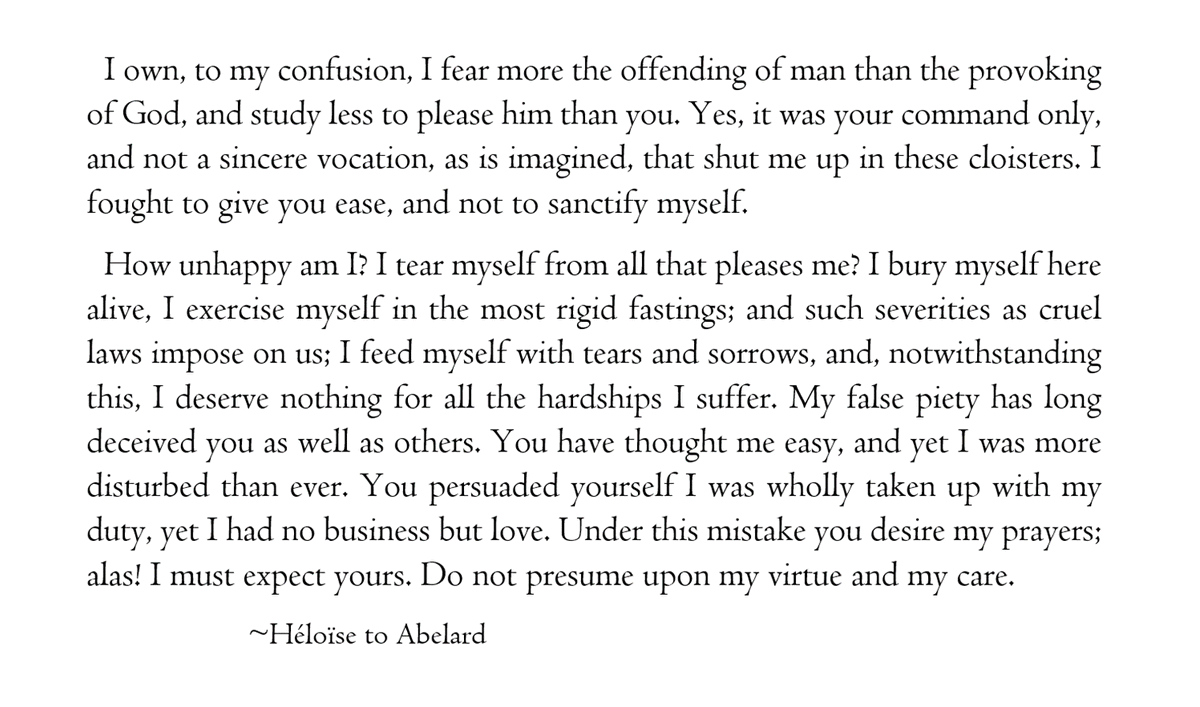
Then there's Abelard and Héloïse, the famous 12th century lovers whose tumultuous, tragic, impassioned relationship has come down to us because of their letters.
And, in their letters, we find them searching their souls to try and understand what has happened:
And, in their letters, we find them searching their souls to try and understand what has happened:

Héloïse, had she been texting Abelard, could probably not have written this.
In other words, the very nature of writing a letter allowed her to arrive at a deeper understanding of her own nature.
You sit in solitude, hear yourself think, and write your way inwards.
In other words, the very nature of writing a letter allowed her to arrive at a deeper understanding of her own nature.
You sit in solitude, hear yourself think, and write your way inwards.
Or Pliny the Younger, an Ancient Roman lawyer.
We know him better than any other member of his generation because his letters have survived.
As Dr Johnson said, "the true characters of men may be found in their letters... he who writes to his friend lays his heart open."
We know him better than any other member of his generation because his letters have survived.
As Dr Johnson said, "the true characters of men may be found in their letters... he who writes to his friend lays his heart open."

Many quotes attributed to famous people are taken straight from their letters — because that is where their thinking was the deepest.
Here is the novelist Fyodor Dostoyevsky writing to his brother.
The absence of immediacy facilitates profounder and more thorough exploration.
Here is the novelist Fyodor Dostoyevsky writing to his brother.
The absence of immediacy facilitates profounder and more thorough exploration.

To write about your thoughts and feelings in real depth you must know what they are, and so writing a letter — which encourages depth, reflection, and introspection — forces us find out.
It isn't inevitable, of course, but letters make it easier to go beyond the surface level.
It isn't inevitable, of course, but letters make it easier to go beyond the surface level.
In a world of relentless distraction and instant response it's difficult to introspect properly.
So taking the time to write a letter — a process in which you simply cannot hide from yourself — might just help you to find out who you really are...
So taking the time to write a letter — a process in which you simply cannot hide from yourself — might just help you to find out who you really are...
Generated by Thread Navigator
Press ⌘ + S to quick-export