AGI is not coming any time soon.
Many people anticipate and fear the emergence of powerful #AI or #AGI, but we won't be technically prepared for it in the near future.
Why is that? Here's my take on it: 🧵
1/23

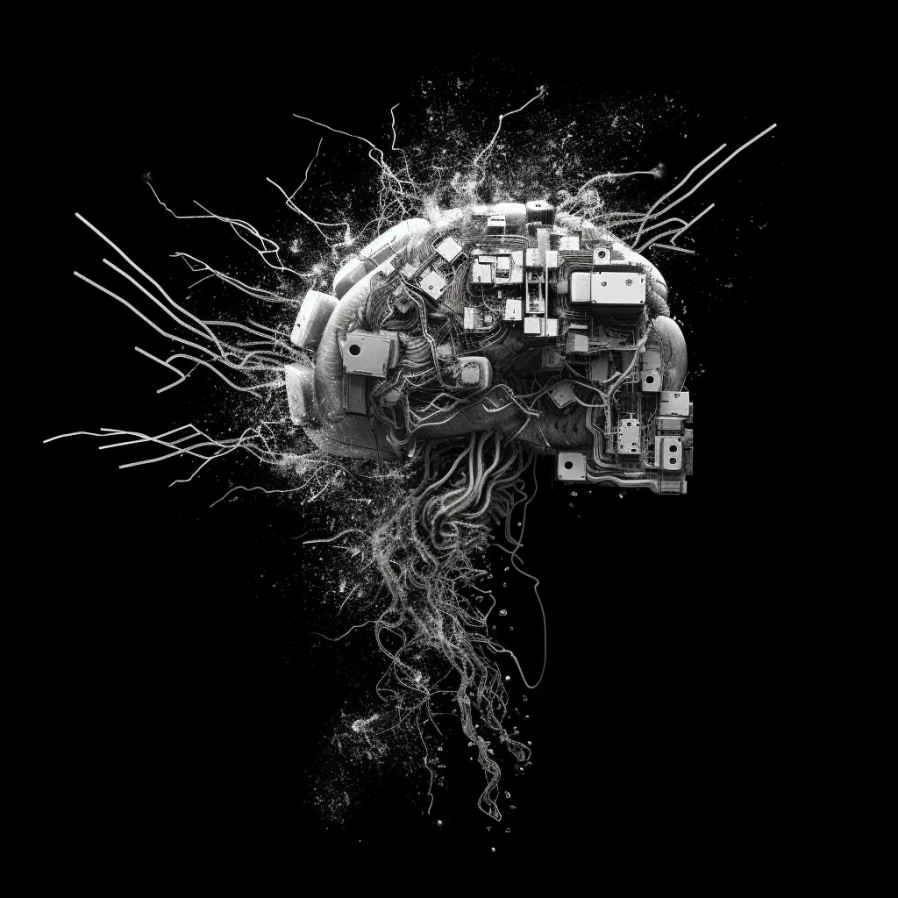
The rapid growth of AI remains a prominent topic currently, largely due to the increasing popularity of GPT chat and Midjourney.
Alongside this, discussions about the potential dangers of AI and the impending emergence of AGI are also gaining traction.
2/23
Alongside this, discussions about the potential dangers of AI and the impending emergence of AGI are also gaining traction.
2/23
What is AGI?
AGI (Artificial General Intelligence) is the next step in AI evolution, allowing machines to understand, learn, and apply knowledge like humans beyond specialized tasks.
In other words, AGI is a powerful version of AI.
3/23
AGI (Artificial General Intelligence) is the next step in AI evolution, allowing machines to understand, learn, and apply knowledge like humans beyond specialized tasks.
In other words, AGI is a powerful version of AI.
3/23
As a former hardware engineer, I am intrigued by the technical aspects of AI and the necessary hardware for its implementation.
When I explore this field, I can't help but feel a touch of skepticism.
4/23
When I explore this field, I can't help but feel a touch of skepticism.
4/23
During my research on the technical aspects of AI development, I found myself intrigued by the following questions:
How close are we, technically speaking, to implementing AGI?
How can technical limitations limit the development of AI?
5/23
How close are we, technically speaking, to implementing AGI?
How can technical limitations limit the development of AI?
5/23
• Compute power
Training modern models is exceptionally costly. GPT chat relies on tens of thousands of top-tier NVIDIA GPU cards.
More complex models will demand increasingly more resources, making the process even more expensive.
6/23
Training modern models is exceptionally costly. GPT chat relies on tens of thousands of top-tier NVIDIA GPU cards.
More complex models will demand increasingly more resources, making the process even more expensive.
6/23
Microprocessor performance improvements are generally slowing down. Moore's Law has already faltered to some extent.
We are approaching the limits of processor computing power, meaning that computing costs may not decrease substantially.
7/23
We are approaching the limits of processor computing power, meaning that computing costs may not decrease substantially.
7/23
No major breakthroughs are expected in the roadmaps for processor manufacturers within 5-10 years. Computing power will slightly increase, but the frequency will remain similar.
A substantial breakthrough doesn't appear to be on the horizon.
8/23
A substantial breakthrough doesn't appear to be on the horizon.
8/23
Given this trend, it becomes evident that substantial computing power is necessary. However, this resource is incredibly limited, and significant growth seems unlikely.
In other words, the demand for computing power continues to rise, but its growth rate slows.
9/23
In other words, the demand for computing power continues to rise, but its growth rate slows.
9/23
The hypothesis emerges that GPT 5-6 chat represents a current limit for us, and more complex models would necessitate data centers consuming energy on par with cities.
Furthermore, such processes could trigger a new global chip shortage.
10/23
Furthermore, such processes could trigger a new global chip shortage.
10/23
• Alternatives
Currently, the von Neumann architecture dominates among processors.
Literally, all processors function based on a similar design. The processors in phones, laptops, PCs and game consoles have almost the same architecture.
11/23
Currently, the von Neumann architecture dominates among processors.
Literally, all processors function based on a similar design. The processors in phones, laptops, PCs and game consoles have almost the same architecture.
11/23
A significant jump in computing power seems to require something new. However, the development of alternative approaches, such as quantum, has not produced results and remains contentious even at the prototype stage.
A revolution in these areas doesn't seem imminent.
12/23
A revolution in these areas doesn't seem imminent.
12/23
Even when a novel architecture emerges, the QWERTY effect presents a challenge.
The existing processor architecture has been in use for 80 years. It isn't easy to imagine a rapid transition to new technology across all software and manufacturing facilities.
13/23
The existing processor architecture has been in use for 80 years. It isn't easy to imagine a rapid transition to new technology across all software and manufacturing facilities.
13/23
Processor developers and manufacturers already have well-defined plans for the next 10 years. This fact significantly slows down the introduction of something fundamentally new.
14/23
14/23
• Conclusions
Considering everything, it appears that we will possess powerful AI within 10-20 years, yet still at a level comparable to what we currently observe with GPT-4.
15/23
Considering everything, it appears that we will possess powerful AI within 10-20 years, yet still at a level comparable to what we currently observe with GPT-4.
15/23
Most people will likely be satisfied with the current level of processors that handle the majority of tasks, and Big Tech may not have motivation to pursue innovation.
Slightly more advanced AI than GPT could satisfy everyone with increased implementation in daily life.
16/23
Slightly more advanced AI than GPT could satisfy everyone with increased implementation in daily life.
16/23
As a result, it seems that due to computational limitations alone, we may not see AGI in the near future.
In other words, the current level of technology will not permit us to implement AGI. Even if it were possible, the cost would be huge.
17/23
In other words, the current level of technology will not permit us to implement AGI. Even if it were possible, the cost would be huge.
17/23
• Closing thoughts
Drawing an analogy, we've excelled at building skyscrapers with heights soaring in the 20th century. Yet, in the 21st century, we find current heights sufficient, and building over 500m demands immense resources, not to mention surpassing 1km.
18/23
Drawing an analogy, we've excelled at building skyscrapers with heights soaring in the 20th century. Yet, in the 21st century, we find current heights sufficient, and building over 500m demands immense resources, not to mention surpassing 1km.
18/23
In other words, we require a significant advancement in construction technology to construct a building several kilometers high.
Similarly, for AGI, a leap in computing power is essential.
19/23
Similarly, for AGI, a leap in computing power is essential.
19/23
Everything I wrote focused on powerful AI or AGI.
The current level of AI development already significantly impacts our lives and will persist in doing so. Even with its limitations, AI will continue to make a substantial difference in our lives.
20/23
The current level of AI development already significantly impacts our lives and will persist in doing so. Even with its limitations, AI will continue to make a substantial difference in our lives.
20/23
Generated by Thread Navigator
Press ⌘ + S to quick-export